













Baku-APA. A return to civil war in Sudan would cost the country, the region and the international community more than $100bn over 10 years, APA reports quoting aljazeera.net website.
The report, published on Thursday by a coalition of European and African economic and political think-tanks, comes amid fears that an upcoming referendum on southern independence could trigger an escalation of violence.
Coming less than 50 days ahead of the January 9 referendum, "The Cost of Future Conflict in Sudan" report by Frontier Economics presents fresh analysis on the economic costs of war.
"Apart from $50bn to Sudan itself in lost GDP, neighbours will have to bear $25bn in lost GDP and the international community will have to spend $30bn for peacekeeping and humanitarian aid," the report, co-launched by The Institute for Security Studies, the Society for International Development and the Aegis Trust, said.
The report said war would make the region a risky place for investment, make Sudan’s demand for imports drop and stretch neighbours’ resources when refugees pour in and they are forced to spend more money on their militaries.
"This report demonstrates the high cost of conflict. It implies that domestic, regional and international parties should be asking if they are we doing enough to avoid a war that might cost over $100bn and ruin countless lives?’" Matthew Bell of Frontier Economics said.
’Immense human suffering’
While the report recognises the difficulties in measuring the costs of potential future conflict, it provides different scenarios – low, medium, high conflict and peace – along with four different growth paths.
"It is widely acknowledged that a return to war in Sudan could cause immense human suffering. This report should also concentrate the minds of policymakers who are also concerned about the future economic stability of the region," James Smith of Aegis Trust said.
The report concludes that while there may be some positive impacts on the region from investment being redirected from Sudan, the evidence suggests the net impact of conflict would be significantly negative.
"There is less than 50 days from a referendum that may change the map of Africa. This report demonstrates that the neither Sudan, Sudan’s neighbours nor the international community can afford a serious escalation in violence," Kenneth Mpyisi of the Institute for Security Studies said.
An estimated two million people were killed in Sudan and four million displaced between 1983 and 2005 because of civil war.
The International Crisis Group, in a separate report, had expressed fears about renewed conflict if the north and south fail to reach a political accord before January’s referendum.
Observers from the Carter Centre, who have been monitoring preparations for the referendum, on their part said a war of words between northern and southern leaders is creating this climate of fear.
Potential economic impact
"Given the brinkmanship that has long characterised north-south politics, it is conceivable the parties will continue to circle fruitlessly before attempting to strike a grand bargain at the eleventh hour," the ICG said in its report.
"Neglecting the groundwork for positive post-referendum relations would be short-sighted and very possibly a recipe for renewed conflict," Ernst Jan Hogendoorn, the think-tank’s acting Africa director, said.
The Carter Centre urged the National Congress Party, which leads the Khartoum government, and the former rebel Sudan People’s Liberation Movement, that runs the south, to tone down their rhetoric in the run-up to the vote.
"In the last few days, the NCP and SPLM have traded accusations of intimidation and manipulation of the registration process in northern Sudan," the centre said.
Despite these grim forebodings, analysts hope the potential economic impact and their economic interdependence could deter the rivals from going to war.
Most of Sudan’s oil reserves are concentrated in the south but can only be exported through a pipeline passing through the north on the way to Port Sudan on the Red Sea.
"Oil is the greatest disincentive they have. Both parties are cognitive of the fact that their economies are reliant on oil and war would prevent access to it," Zach Vertin, an ICG analyst, said.
If oil production were to shut down at the outbreak of war, Sudan would immediately lose 10-20 per cent of its GDP, equivalent to $6.5-13bn in 2011.


 Follow us on Telegram
 t.me/apanewsaz
 Follow us on Instagram
 Follow us on TikTok
 Follow us on Facebook
 Follow us on X
Africa
Two killed, five injured in shooting in S. Africa
 16:09
16:09
 14 October 2026
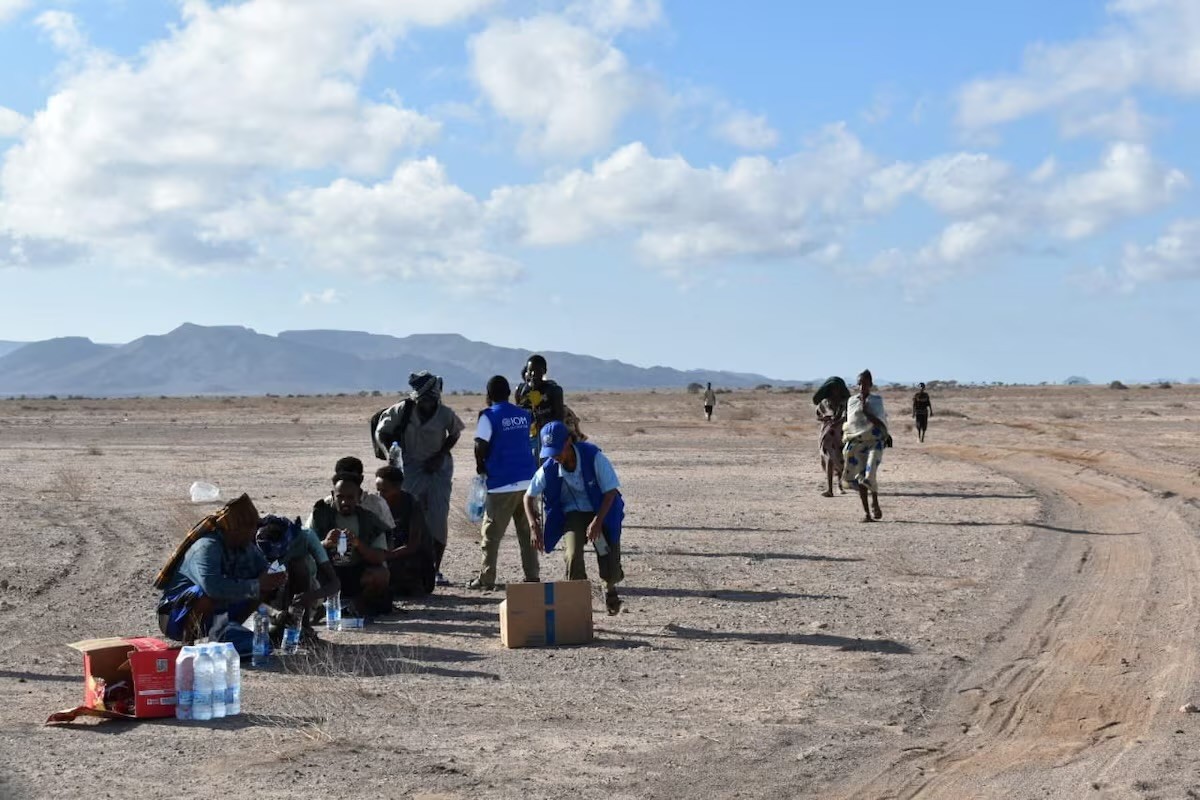
At least 139 migrants dead, including some children, after boat from Djibouti to Yemen capsizes, UN agency says
21:17
11 October 2026
Central African Republic foils planned large-scale militant attack
07:04
11 October 2026
Rebel attack kills 11 civilians in DR Congo
05:16
11 October 2026

NEWS FEED
Lavrov: Russia has always supported CICA's development through practical cooperation
14:58
15 October 2026
Foreign ministers of Azerbaijan, Uzbekistan and Turkmenistan hold trilateral meeting
14:55
15 October 2026
Turkish and Russian FMs meet in Baku
14:53
15 October 2026
Türkiye committed to strengthening CICA as Asia's most comprehensive security platform - Turkish FM
14:51
15 October 2026
Bahrain calls for ensuring safety of maritime and air navigation
14:44
15 October 2026
Pezeshkian to visit Armenia for biodiversity summit
14:40
15 October 2026
Pashinyan: Armenia has never had strained relations with Russia
14:40
15 October 2026
FM Hakan Fidan: We want COP31 to become an opportunity to strengthen climate justice
14:38
15 October 2026
Turkish FM: We support CICA's transformation into a full-fledged international organization
14:33
15 October 2026
Peskov: Moscow unaware of US proposals to Europe on unfreezing Russian assets
14:31
15 October 2026
Azerbaijani Parliament Speaker meets with Chairman of House of Representatives of Belarusian National Assembly
14:29
15 October 2026
Kremlin: Russian diesel has begun entering global markets
14:22
15 October 2026
FM: China highly appreciates Azerbaijan's efforts to strengthen CICA
14:18
15 October 2026
Chairman: Azerbaijan is effectively chairing CICA
14:14
15 October 2026
Kremlin: Ukraine's strikes on Russian oil refineries contradict US peace initiatives
14:06
15 October 2026
Belarusian representative: We are united by commitment to international law and UN Charter
13:59
15 October 2026
Cambodia strongly supports transformation of CICA into full-fledged international organization
13:56
15 October 2026
Vietnam highly appreciates Azerbaijan’s CICA chairmanship
13:53
15 October 2026
Russia may begin diesel supplies to US within 2-3 weeks
13:46
15 October 2026
President: It was an analogue of the Nuremberg Tribunal, only this time Armenian fascists were in the dock
13:45
15 October 2026
President: Laos’s accession to CICA demonstrates commitment to promoting peace and cooperation
13:42
15 October 2026
Serdar Berdimuhamedov: Turkmenistan gives special support to Azerbaijan’s CICA chairmanship
13:35
15 October 2026
President: Peace remains fragile and must be protected and strengthened
13:34
15 October 2026
Israeli President calls Rubio’s expected visit to Central Asia very important
13:29
15 October 2026
Isaac Herzog: Under President Ilham Aliyev’s wise leadership, Azerbaijan has become a model of stability
13:26
15 October 2026
Isaac Herzog: Israeli people also have sufficient resources to contribute to Asia
13:16
15 October 2026
Israeli President: Azerbaijan is a very tolerant country, Baku taking important steps for international peace under such circumstances
13:11
15 October 2026
Tajik President puts forward several proposals at CICA
13:10
15 October 2026
Sadyr Japarov: Azerbaijan has done extensive work to strengthen CICA
13:08
15 October 2026
CICA has become more substantive and effective thanks to Azerbaijan's chairmanship - Uzbekistan President
13:01
15 October 2026
Tajikistan thanks Azerbaijan for high-level organization of CICA Summit
12:58
15 October 2026
President of Kazakhstan: Peace between Azerbaijan and Armenia creates new prospects for East-West connectivity
12:52
15 October 2026
Azerbaijan's CICA chairmanship extended for another two years
12:46
15 October 2026
Azerbaijan is doing extensive work to turn CICA into an important organization in the world - Kazakhstan President
12:40
15 October 2026
President Ilham Aliyev: We took revenge on the battlefield and offered peace to Armenia
12:38
15 October 2026
President Ilham Aliyev: Azerbaijan actively opposes harmful practice of applying double standards
12:34
15 October 2026
Azerbaijan Defense Minister meets with his Kyrgyz counterpart
12:32
15 October 2026
Baku hosts 7th CICA Summit, President Ilham Aliyev addressed the event - UPDATED - 2
12:27
15 October 2026
Laos joins CICA as a member state
12:25
15 October 2026
President Ilham Aliyev: War was not our choice, Armenia forced us into it
12:21
15 October 2026
Azerbaijani President: No one condemned Armenia, UN did not insist on implementation of its resolutions
12:17
15 October 2026
President Ilham Aliyev: Azerbaijan plays an increasingly important role as a connecting hub in the Eurasian space
12:14
15 October 2026
Azerbaijan establishes Digital Communication information system -DECREE
12:08
15 October 2026
President Ilham Aliyev approves regulation on Digital Communication information system
12:03
15 October 2026
Azerbaijan Minister of Defense attends next meeting of CIS Council of Defense Ministers
12:02
15 October 2026
At least 28 killed in school roof collapse in Pakistan
12:00
15 October 2026
Istanbul records highest rainfall in 76 years, with 240 kg per square meter
11:55
15 October 2026
Mirzoyan: Armenia-Türkiye border could open at any moment
11:54
15 October 2026
IMF: GCC economies to contract by 4.8% this year
11:51
15 October 2026
Pashinyan: Peace agreement with Azerbaijan should be signed by 2031
11:44
15 October 2026


