



The processes taking place in the banking and financial sector of the Azerbaijani economy directly affect the daily life of every citizen. The level of inflation and the factors affecting it, the stability of the manat exchange rate, access to loans and loan interest rates, deposits, the stability of the banking sector, and the overall development of financial markets are among the current issues for society. The Central Bank, through its effective monetary policy and prudential regulatory measures, plays a role in maintaining macroeconomic and financial stability, as well as in developing the sustainability of the country's economy.
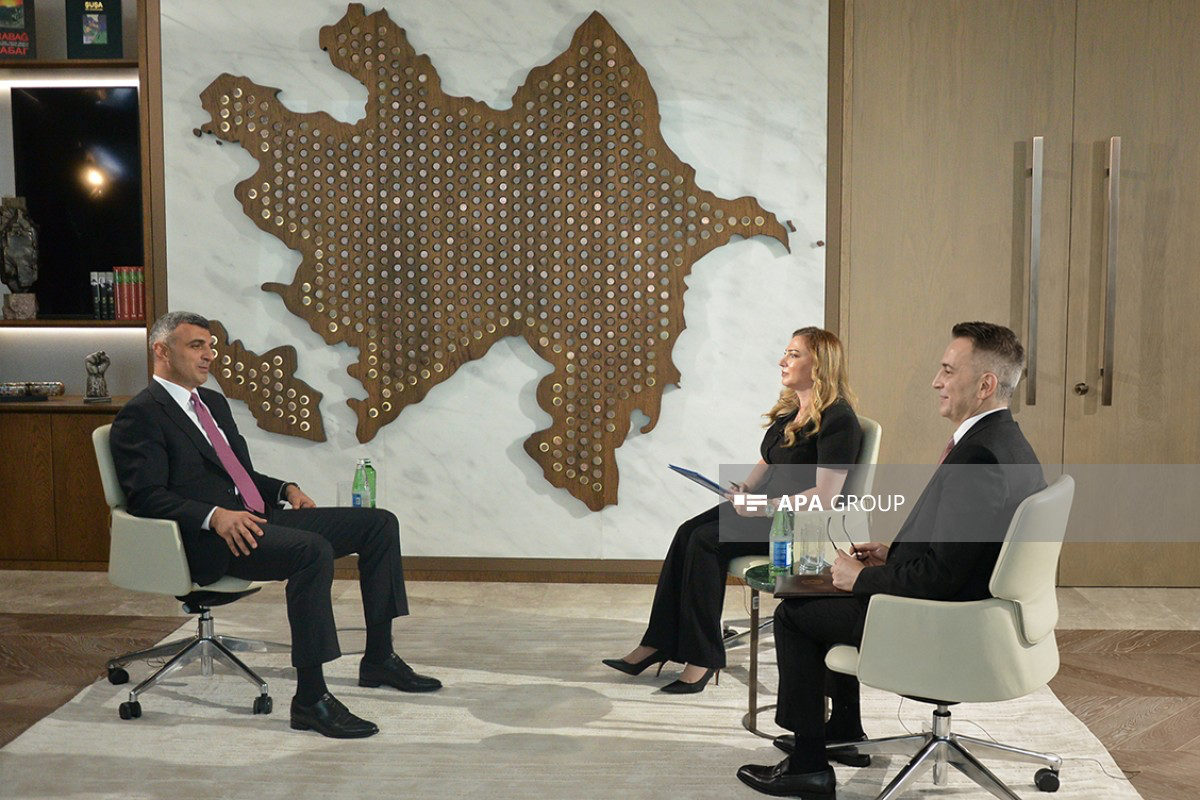
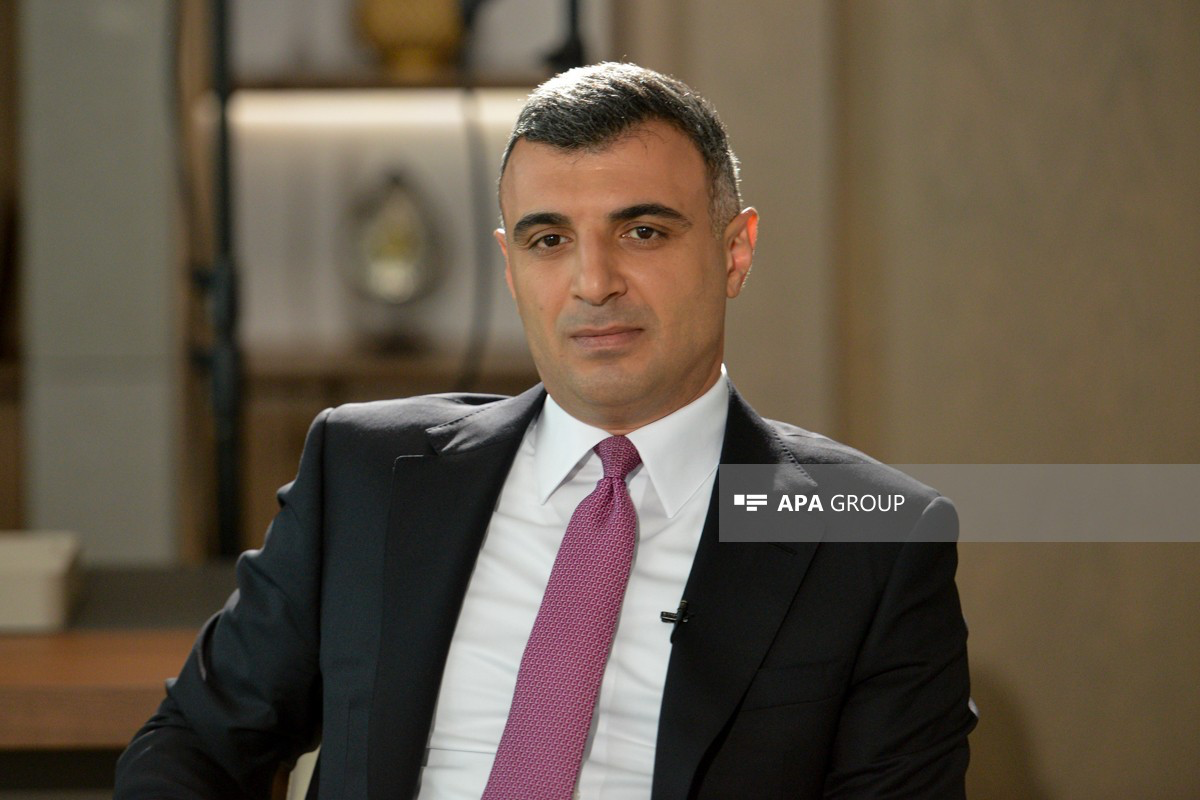
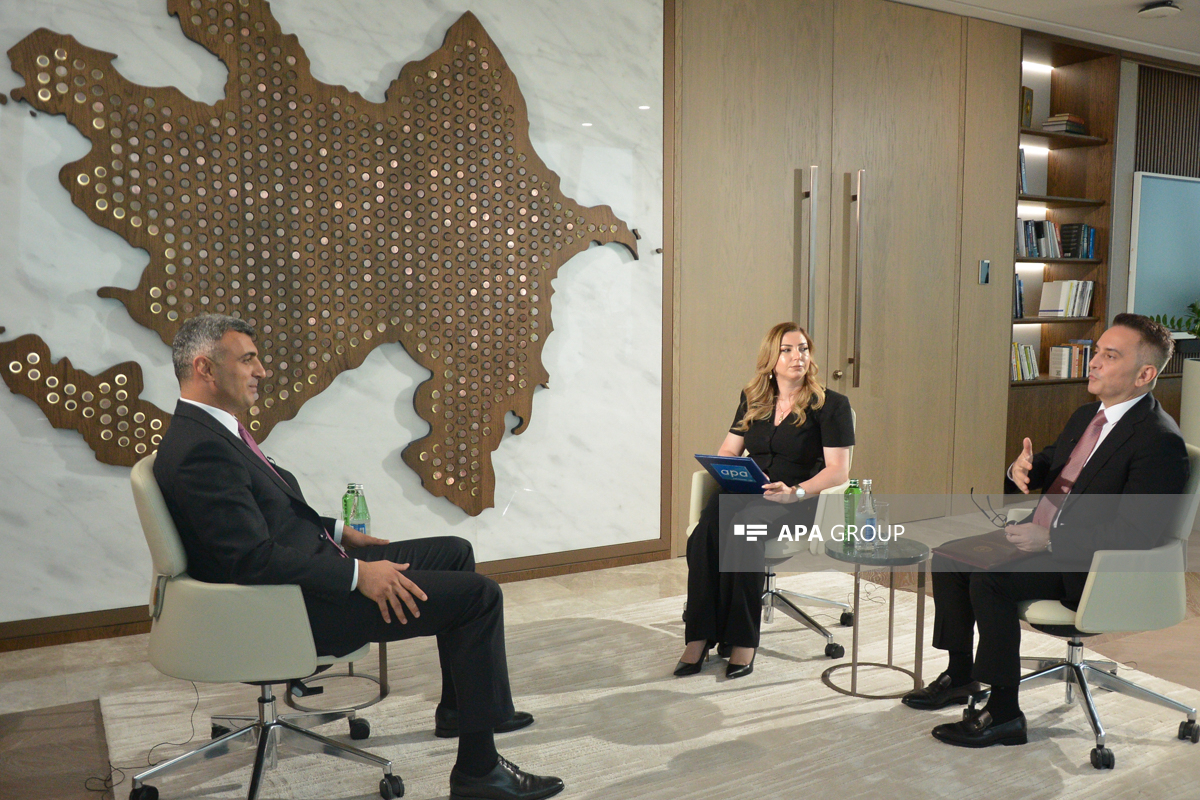
Taleh Kazimov, Chairman of the Central Bank of the Republic of Azerbaijan, gave an interview to Azerbaijan State Television and APA News Agency.
- AZTV: Currently, the global economy is facing serious challenges: geopolitical tensions continue, the conflict in the Middle East has put pressure on energy markets and supply chains, and volatility in global financial markets is increasing. How do you assess the impact of these realities on the Azerbaijani economy and what are the Central Bank's forecasts regarding the medium-term equilibrium level of oil and gas prices? Taking into account the growing role of the non-oil sector, how do you see the medium-term sustainability of the external sector and the balance of payments?
- Taleh Kazimov - Thank you very much for your question. It was chosen correctly as the first question for the interview. I am sure that one of the main issues that also worries our viewers is the impact of the processes taking place in the Middle East on the Azerbaijani economy.
As a result of the development path it has taken, the Azerbaijani economy has been integrated into the global economy. The most obvious indicator of this is the ratio of trade turnover of goods and services to gross domestic product. This is 80%.
As for the processes taking place in the Middle East, these conflicts have affected oil and gas prices, as well as the prices of energy carriers. These processes have both positive and negative sides.
First of all, I want to talk about the positive. When energy carrier prices increase, Azerbaijan's foreign exchange reserves also increase, and according to the results of the first six months, our foreign exchange reserves have increased to 85.8 billion US dollars. This means an increase of 700 million US dollars in six months. We should also take into account that the State Oil Fund of Azerbaijan transferred 3.77 billion US dollars to the budget in six months.
Our calculations show that, given the current production volumes in our economy, for every $10 increase in price, our economy receives an additional $1.2 billion in revenue. When the average annual price of 1,000 cubic meters of gas increases by $50, this is an additional revenue of approximately $900 million for our country. This figure is almost the same as when the price decreases.
Of course, when prices decrease, the impact is also of the same magnitude, but in the opposite direction.
According to our current forecasts, the average annual price of a barrel of oil this year will be $84.5, and next year it will be $78. The average price of 1,000 cubic meters of natural gas is projected to be $324 and $290, respectively, in 2026 and 2027.
These figures that I have voiced are based on forecasts prepared in May. As you know, at the end of this month we will hold a large press conference dedicated to monetary policy, and at that event we will announce our forecasts for July. The figures I mentioned in the interview today are based on the forecasts for May, and looking at these forecasts, our current account surplus will be 5.5 billion US dollars at the end of this year, and at the end of next year the current account surplus will be around 4 - 4.4 billion US dollars. In other words, the main positive impact of the processes on us is the increase in our current account surplus, which is affected by the increase in strategic currency reserves. Another positive aspect concerns the transport and warehousing sector. This is a great potential for us to use Azerbaijan as a logistics center. The work done by the government in this area is quite satisfactory, and I believe that we will realize this potential.
We import inflation
When it comes to negative impacts, the main issue here is inflation. 80% of the goods and services we import depend on countries that import energy carriers. That is, when energy carrier prices increase, our trading partners, from whom we import goods and services, have their production costs increase. Energy prices rise and when production costs increase, inflation occurs.
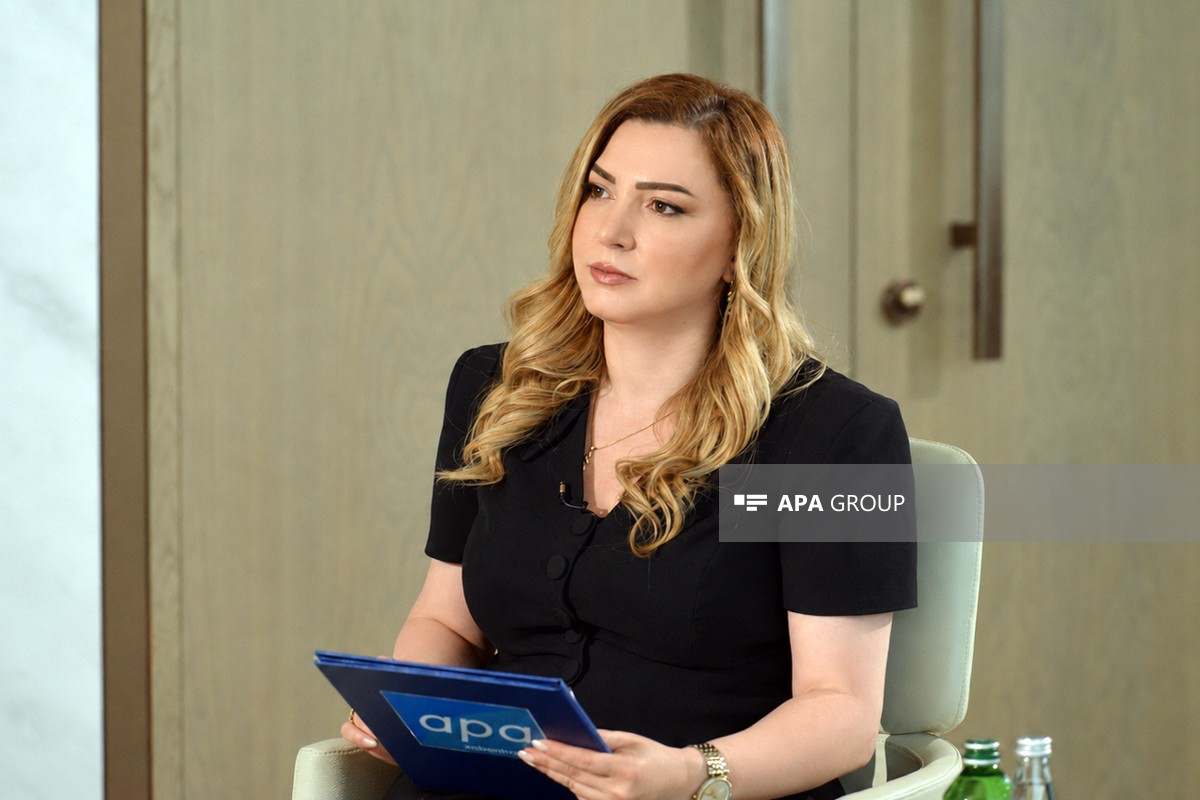
- APA: Mr. Kazimov, inflationary pressures have been increasing in our trading partners in recent months, a number of leading countries have revised their forecasts upwards and there are even central banks that have raised the interest rate. Against this background, to what extent is the risk of import inflation assessed and how do these new realities affect the Central Bank's forecasts for 2026-2027? On the other hand, you note that inflation is mainly caused by external supply factors. But how do you see the impact of demand factors, that is, state budget expenditures and lending? In other words, is there a risk of demand-pull inflation in the medium term?
- We do not overestimate the impact of demand factors on inflation. Our calculations show that a 10% increase in budget expenditures, current expenditures and a 10% increase in the credit portfolio, the credit portfolio through the banking sector, have an increasing effect of 0.29% and 0.12%, respectively. This is not a high indicator in our conditions. This gives grounds to say that the overall inflationary impact of demand-pull inflation is low.
But I would like to explain the general situation in very simple language. You know that inflation is formed by demand and supply factors. I also mentioned in the first question that we mainly import inflation and in the last 4 years we have observed that the factor that increases inflation is precisely the supply factor.
When looking at supply factors, there are two main channels here. First, the price of goods and services we import, that is, prices that increase as a result of inflation in trading partners, are imported into Azerbaijan. There is also an increase in the cost factors of producers in the local market. When we talk about cost factors, we have regulated services, for example, prices for electricity, gas, water and other fuels, which are controlled by the state. Their change, as a result of the increase in the cost of goods or services we produce, causes inflation in our country.
When looking at demand factors, the main channel here is the consumption of households and the public sector. If there are two main parameters of consumption, these are mainly budget expenditures and lending. However, as I mentioned earlier, the impact of both on inflation is insignificant. We are mainly affected by supply-side inflation. Our forecasts show that inflation at the end of 2026 will be 5.9%, and at the end of 2027 - 4.5%. Again, the inflation we forecast is within the target range of the Central Bank.
The main anchor of our monetary policy is our fixed exchange rate regime
AZTV: Considering the two-way risks mentioned, I would like to ask: is the current monetary policy framework sufficient to adequately respond to such risks and does the Central Bank keep the improvement of the monetary policy framework on its agenda in the medium term, taking into account the reforms it has implemented in recent years?
- If the monetary policy did not respond adequately, we would probably change it. Our monetary policy allows us to adequately respond to potential challenges in the economy. But in general, I think the question you asked is fundamental.
It would be better if I could provide information about the principles on which our monetary policy is based, what it stems from, and what framework it is formed from. The main anchor of our monetary policy is our fixed exchange rate regime. A fixed exchange rate regime has been applied in Azerbaijan since 2017. Until 2022, our interest rate anchor, that is, the Central Bank, announces its interest rate decisions every 45 days. Our discount rate has never had any effects until 2023. We are already seeing the effects of the new reforms we started in 2022 - namely the interest rate, the Central Bank's discount rate - on the economy. Changes in that discount rate affect deposit and loan interest rates in the economy and the financial sector.
Today, our analysis shows that with a 1 percentage point increase or decrease in the discount rate, deposits of individuals change by 0.4 percentage points in the same direction. Both when the discount rate changes in the direction of increase and decrease, this happens within 3 months. That is, the main anchor of our monetary policy is the fixed exchange rate regime, and the supporting one is our interest channel, our discount rate.
APA: Mr. Kazimov, as you said, the stability of the manat exchange rate acts as the main anchor of monetary policy. Although in recent years there have been pressures on the exchange rate both towards depreciation and appreciation, the Central Bank's foreign exchange reserves have increased and continue to increase in recent months. Does this increase mean that appreciation pressures are currently prevailing and what are the forecasts regarding foreign exchange reserves in general? On the other hand, the decrease in dollarization in the population's deposits indicates that confidence in the manat is strengthening. In your opinion, is this trend sustainable and what other conditions should be formed for the expansion of long-term savings in manat?
- I think this will be the most interesting question for the audience. Because we are talking about the exchange rate of the manat. Thank you very much for your question. First of all, I would like to bring to your attention the current situation. Over the past 18 months, supply in the foreign exchange market has exceeded demand. This is a fact.
The second fact is that in the first six months of 2026, 757 million US dollars were sold at foreign exchange auctions held by the Central Bank. For comparison, I note that in the same period of 2025 this figure was 2.7 billion US dollars, and in the first six months of 2024 it was 3.5 billion US dollars. As you can see, there is a considerable decrease.
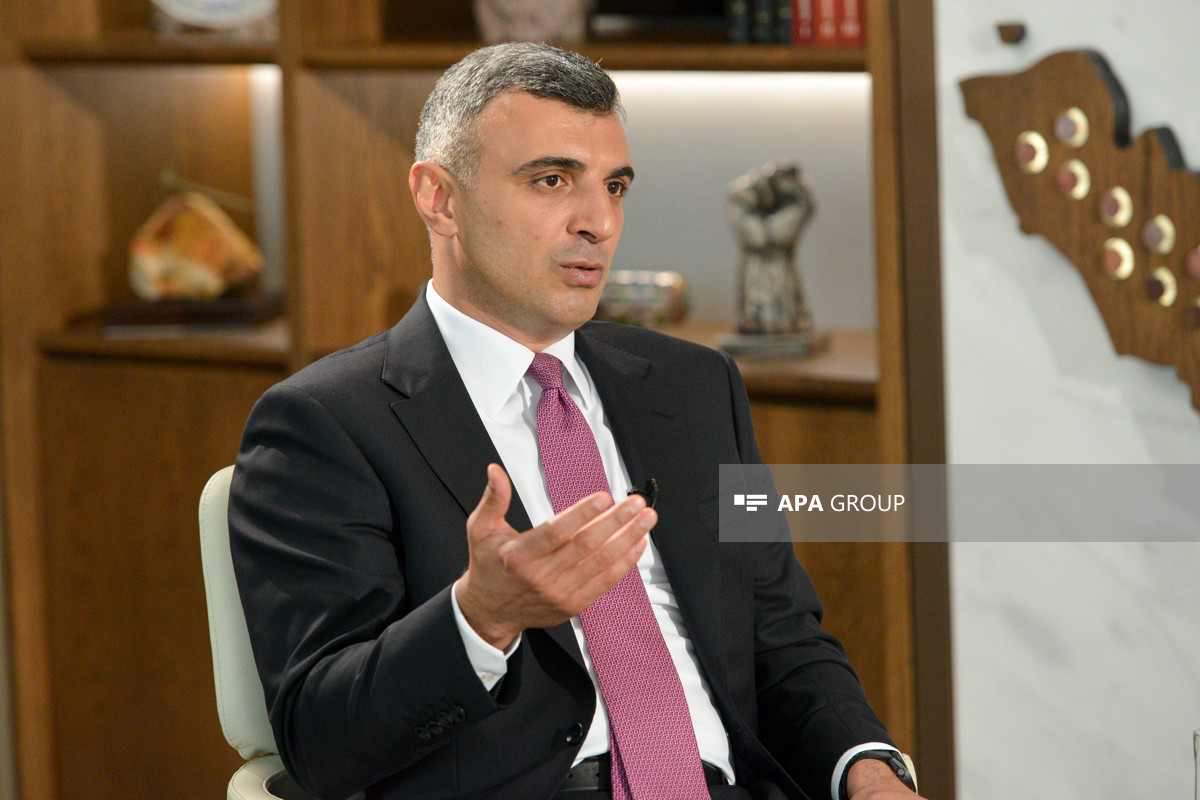
At the same time, during the first six months of this year, the Central Bank made a purchase-oriented intervention of 1.5 billion US dollars. We intervened to prevent the strengthening of the Azerbaijani manat so that the exchange rate remained at 1.7. In other words, as I said again, supply exceeds demand in the foreign exchange market. The population's confidence in the manat has increased significantly over the past 4 years. These are not just words, there are also numbers behind this.
If in 2021 40% of the deposits of resident individuals were in foreign currency, today this figure is only 25%. That is, the level of dollarization is gradually decreasing. Over the past 4 years, the volume of deposits in manat has more than doubled. In terms of numbers, it has increased by 6.3 billion and is formed at the level of 12.5 billion manat. This also indicates that the population's confidence in the manat has strengthened and the demand for currency has decreased.
Taking this opportunity, I would like to explain the Central Bank's approach to the exchange rate in a simple way. I think the opinion of the Chairman of the Central Bank is also interesting for viewers:
The foreign exchange market is affected by 3 directions: First of all, I would like to note the effects of the current account balance (CAB) on the foreign exchange market. In very simple terms, the current account balance is the balance of currency leaving and entering the country as a result of the operations and activities of our economy. In other words, when the balance is in surplus, it means that more currency has come into the country, and when it is in deficit, it means that currency has left the country. In countries with a fixed exchange rate regime, when there is a deficit in the CAB, the Central Bank closes this deficit. We have had a surplus in recent years, and next year will be in surplus.
There is an important point here. I would like to explain this as much as possible. Given that the average annual price of oil is $45, our current account balance is in surplus.
I also mentioned in the first question that every $10 change in the price of oil affects the economy by approximately $1.2 billion. When the price increases, this means additional income, and when it decreases, it means a deficit of the same amount.
Currently, the Central Bank's foreign exchange reserves are 13.2 billion US dollars, and the country's total strategic foreign exchange reserves are 85.8 billion US dollars.
"Even if the average annual price of oil is 45 dollars, Azerbaijan's current account balance will remain in surplus"
A very important point is that over the past 20 years, the average annual price of oil in 2020 alone was 42 dollars. That is, it has not been lower than that. We need to look at the average annual price. Sometimes I see that as soon as the price of oil drops for a short period, both citizens and business representatives immediately become worried. During the year, the price of oil can drop to 0, or it can rise to 200. The main indicator that is important to us is the average annual price.
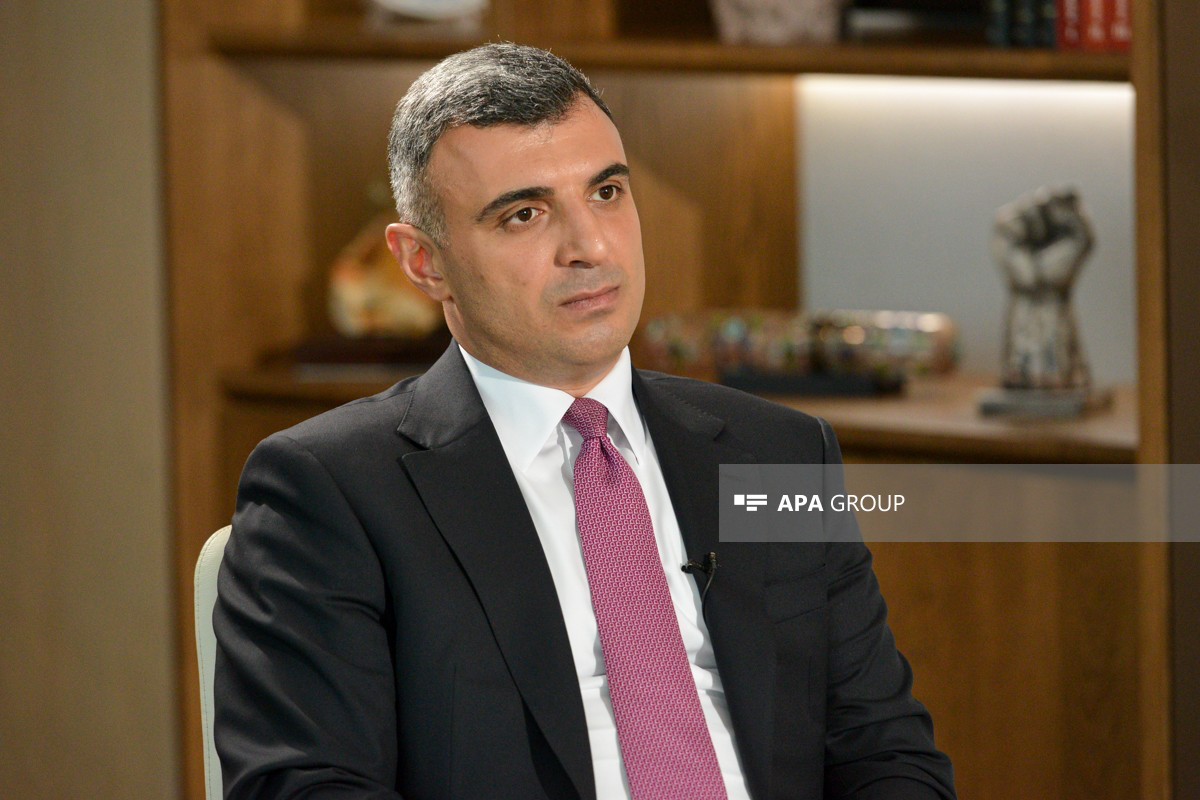
As I mentioned earlier, even if the average annual price of oil is $45, taking into account today's production volumes, our current account balance is in surplus.
The second channel is the budget. Currently, the average annual price of oil in the budget has been approved at $65. Here, our calculations show that a change of $10 affects the consolidated budget by 1.4 billion manat.
This is not a large figure for the current budget volume of Azerbaijan. In other words, by reducing some of our expenses or by transferring some of our investment projects and capital expenditures to the next year, we can easily prevent potential negative impacts. In other words, we do not see a major problem in the current account balance or the budget in the decrease in oil prices.
The third direction affecting the currency market is the expectations of economic entities, especially the population and business.
Unfortunately, in the last 4 years, I don't know how to call them, those who don't want us, those inside the country, our own Azerbaijanis, I apologize for my expression, we get angry and say that they are mercenaries. That is, without any fundamental basis, they start saying that "the exchange rate will change". People also start to worry and everyone takes their last manat and runs to the currency exchange office to buy dollars, and after a week they sell them again. The only ones who win here are those people I mentioned, who want to gain "likes" for themselves on social networks. And then there are currency exchange offices. Because the population buys dollars, sells them after a week, after a month. That's why I want to explain this in very simple language. There is no fundamental basis for this. Before making any decision, we need to conduct analyses, that is, do we really have a problem? I return to the monetary policy of the Central Bank and I answered the previous question that our main goal, our mandate is price stability and macroeconomic stability. The current framework, the fixed exchange rate regime, is fully suitable for achieving this. We plan to continue this policy in the coming years.
AZTV: Mr. Kazimov, let's take a look at the general picture of the country's banking and financial sector: how do you assess it in terms of capitalization, liquidity and asset quality? How do you see the sector's stability and ability to absorb risks, especially in the current conditions where indices fluctuate in global financial markets? Of course, this stability did not form by chance. What work has been done in recent years to strengthen the stability of the sector and expand competition? What new policy framework has been introduced as a regulator? What steps are expected to be taken in the coming period?
- You have emphasized it very well. When we say financial sector, we mean both banking and non-banking credit institutions (NBCI), insurance companies, investment and capital markets, payment service providers, electronic money institutions and fintechs. All of these together constitute the country's financial system.
Our financial system is bank-based, and today 95% of the financial sector belongs to the banking sector. The banking sector was our first focus, both in terms of regulation and as a result of regulation, in terms of strengthening the sector's sustainability and realizing its development potential.
Quite a lot of work has been done in the banking sector over the past 4 years. In this direction, new corporate governance requirements based on international experience have been applied, a risk-based control system has been formed, new liquidity ratios have been determined, and capital requirements in accordance with Basel III standards have been applied. In addition, a lot of work has been done in the field of cyber and information security.
The work done in this direction is quite extensive, and each of them is the subject of separate discussion. Therefore, without going into details, I would like to highlight the results achieved, as assessed by reputable international organizations.
First of all, I would like to note that in 2024, Azerbaijan's sovereign rating was raised to investment grade. You can see in those reports that our country earned an investment rating, taking into account both economic growth and fiscal sustainability, as well as reforms in our monetary policy, the country's monetary policy, and the regulation of the stability of the banking sector.
In addition, there is the World Bank's "Business Ready" report. In the financial services report, we received the highest result among 101 countries. In addition, the S&P Global Ratings agency's BICRA (Banking Industry Country Risk Assessment) report, which assesses the institutional and infrastructure risks of the banking sector, is also one of the important indicators. This assessment is carried out on a 10-point scale. Here, 1 is the best, and 10 is the weakest. Azerbaijan was in 9th place in 2023, and in 2026 our country rose to 7th place.
When compared with the CIS countries or Central Asian countries, only Georgia and Kazakhstan are on that level. Turkey, Uzbekistan, Armenia and other countries are on higher levels. Azerbaijan has advanced 2 steps in terms of risk in a very short period of time, from the end of 2023 to 2026. This also assesses the performance of the sector very well, as well as the work done by the regulator.
"The Central Bank of Azerbaijan is one of the world's strictest regulators of consumer loans"


 Follow us on Telegram
 t.me/apanewsaz
 Follow us on Instagram
 Follow us on TikTok
 Follow us on Facebook
 Follow us on X