

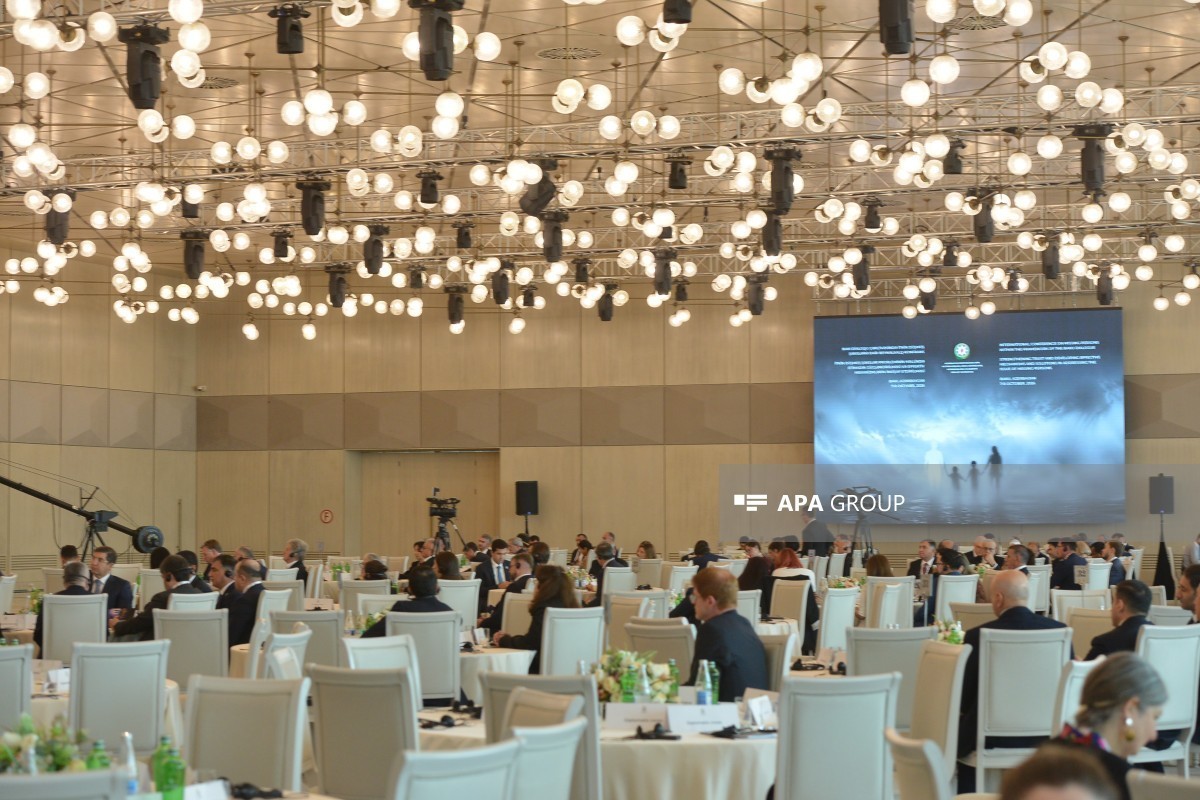


“The issue of missing persons should be humanitarian in nature and should not be politicized,” Mohammed Al-Obaidi, representative of the UN Working Group on Enforced or Involuntary Disappearances, said during a panel session held as part of the 4th International Conference within the Baku Dialogue on Missing Persons, APA reports.
He stated that the families of missing persons suffer from the consequences of long-term uncertainty and lack of information: “As the United Nations has also noted, missing persons are not the only victims. At the heart of this issue is the right of families to know the truth about the fate and whereabouts of their relatives and, where necessary, the circumstances in which they disappeared.
This principle is also of particular importance in the context of the conflict between Armenia and Azerbaijan. The military operations that took place in 2020 and their consequences once again demonstrate the importance of making continued efforts to determine the whereabouts and fate of all persons whose fate remains unknown.
The passage of time does not eliminate the humanitarian needs of families. For this reason, it is important to continue efforts, collect and preserve information, as well as support identification processes.”
He noted that efforts to clarify the fate of missing persons should not depend on the political settlement of the conflict: “Some families affected by the conflict in this region have already been waiting for more than 30 years. They should not be forced to have another generation live with this uncertainty.”


 Follow us on Telegram
 t.me/apanewsaz
 Follow us on Instagram
 Follow us on TikTok
 Follow us on Facebook
 Follow us on X