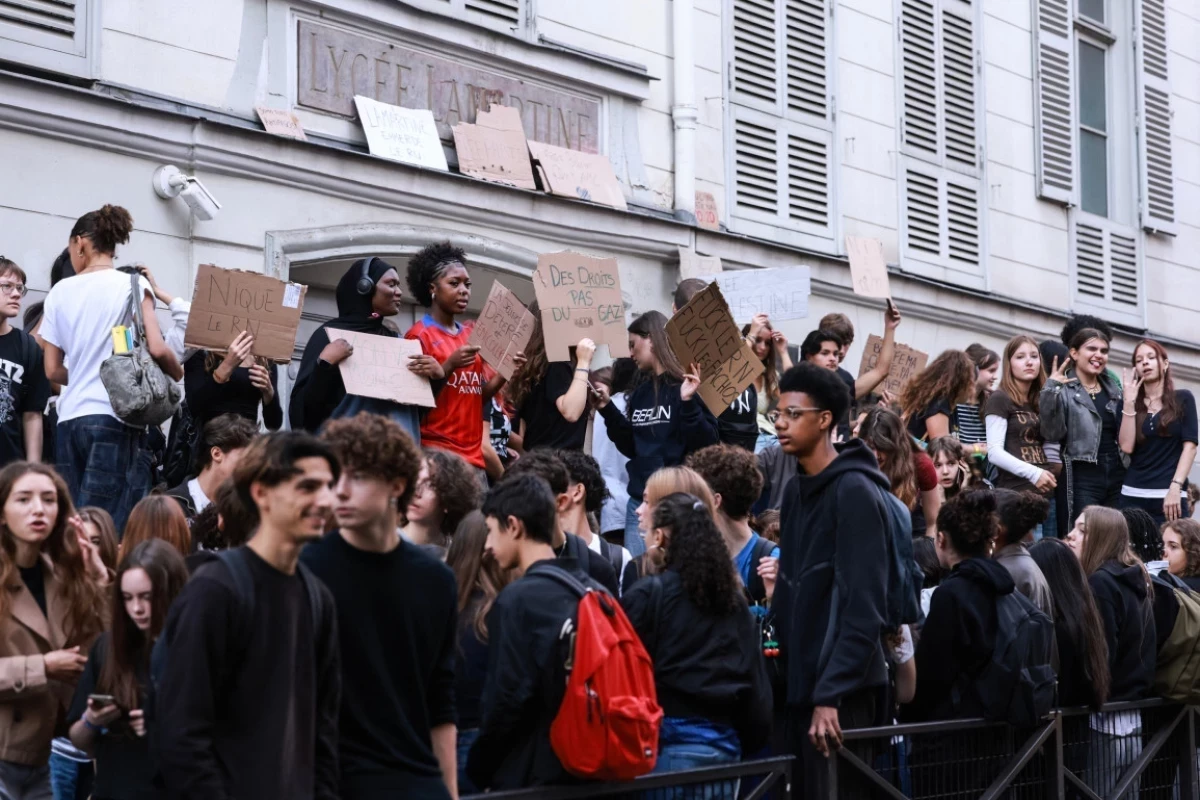


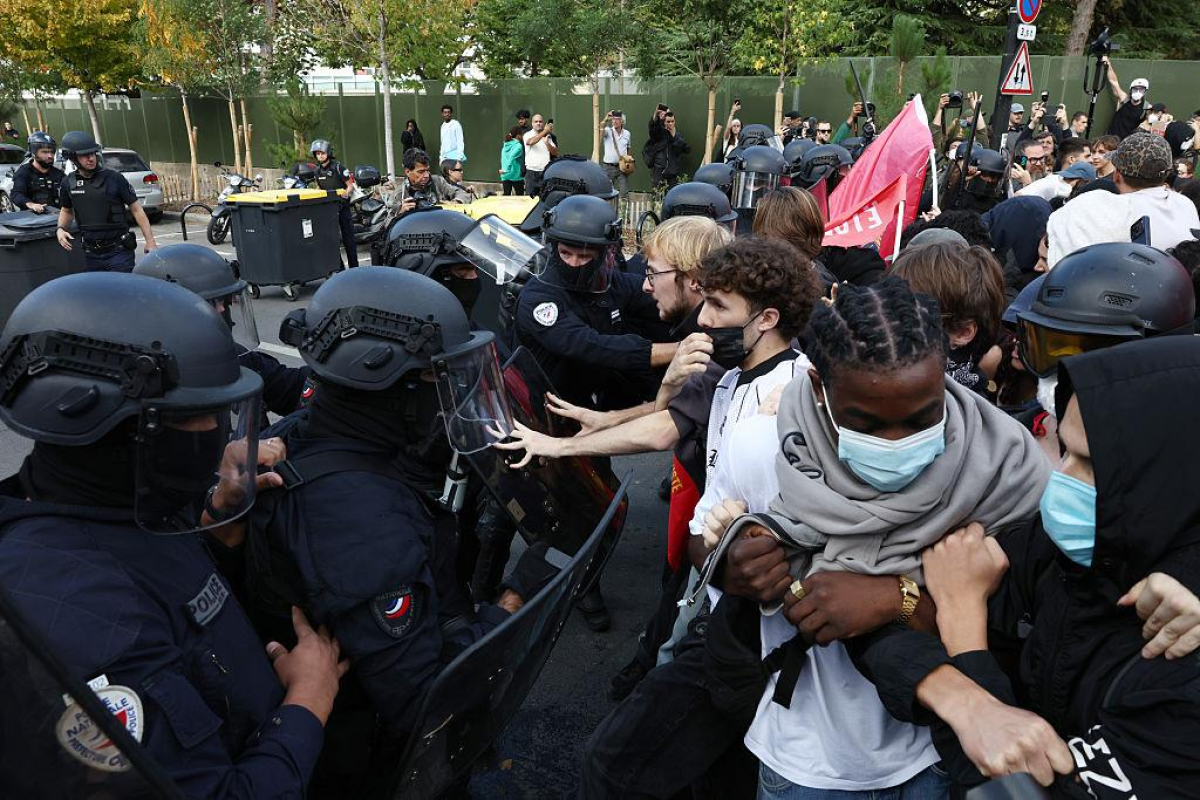
Protests by high school students in France, which have been expanding since late September, have gone beyond social discontent over problems in the education system and have now become a serious issue of public order and human rights. Although the main causes of the protests are teacher shortages, the material and technical condition of schools, overcrowded classrooms and other problems in the education system, violence at some of the demonstrations, as well as the severity of police intervention, have also become subjects of serious debate.
Thousands detained, hundreds injured
From September 21 to October 5, 24 educational institutions were set on fire or seriously damaged, while hundreds of people were injured, including 78 education workers. The scale of the events is particularly striking in terms of the age composition of those detained. More than 5,000 people have been detained, 85% of whom are minors. A total of 164 detentions were recorded on September 28, 440 on September 29, 625 on September 30, and 1,948 on October 1. These figures show how rapidly the protests have grown in recent days and the scale of law enforcement intervention.
A particularly notable point is that a large proportion of those detained are children and teenagers. The participation of minors in protest actions does not mean that they bear no legal responsibility. However, special legal safeguards must be in place during their detention, questioning and treatment, and the measures applied must be necessary and proportionate.
There is no doubt that the state has the right to maintain public order, prevent schools from being set on fire and avert threats to people’s lives. At the same time, those who commit violence during demonstrations should also bear legal responsibility. However, when considering the steps the state should take in response to the protests, this does not mean that law enforcement agencies may use any means they choose. Particularly when minors are participating in demonstrations, the principles of necessity, legality and proportionality are of particular importance during detention and the use of force. While preventing violence, the state itself must also refrain from using excessive force.
Serious questions over police intervention and silence of international human rights organizations
One of the most serious aspects of the events in France concerns the use of special means by the police. During the protests by high school students, tear gas, grenades, batons and detentions have been widely used, while serious allegations have been made that the use of force was disproportionate.
One of the more serious examples occurred on October 5 in the city of Lens, where a 15-year-old student lost a hand as a result of the explosion of a grenade used by police. This fact alone raises serious questions about the safety of the means used by law enforcement agencies during demonstrations and the rules governing their use.
Serious injuries to minors, large-scale detentions and the use of special means by police cannot but raise questions from a human rights perspective. Nor is this only about the rights of demonstrators. The way a state treats its own citizens, especially children, is one of the important indicators of its approach to protecting rights and freedoms.
It is precisely at this point that the issue of the response of international human rights organizations comes to the fore, and their silence so far is noteworthy. For example, Human Rights Watch has not issued a statement specifically addressing police intervention during the high school protests.
“Reporters Without Borders” has also remained silent.
However, the question arises precisely after this: how can the failure of these organizations to express a position on the specific incident be explained when, during protests involving schoolchildren in France, thousands of people are detained, the majority of them are minors, and minors suffer serious injuries?

Double standards
Although these organizations react immediately and make a fuss whenever even an ordinary incident occurs in Azerbaijan, there are numerous statements by Human Rights Watch and Reporters Without Borders.
Against this backdrop, their silence in the face of the latest events in France naturally cannot but raise questions. If the issue is the violation of human rights, the main criterion should not be the name of the country, but the nature of the incident that has occurred.
The detention of more than 5,000 people in France, 85% of them minors, the use of special police equipment and the serious injury of a minor are sufficiently serious facts to attract the attention of international human rights organizations. The absence of a response, particularly to the events that occurred during school student protests, raises even more questions. This is because, against the backdrop of the reactions international organizations give to ordinary incidents in Azerbaijan, their failure to demonstrate the same sensitivity toward serious events in France is evident.
If human rights are universal in nature, their protection must also be based on universal principles. How is it possible that the excessive use of force by police against underage demonstrators in one country does not immediately attract the attention of international human rights organizations?! If the goal is truly the protection of human rights, this protection should not be limited by political and geographical boundaries.
The detentions, serious injuries and use of police force during school student protests in France should be in the focus not only of domestic debate, but also of international human rights mechanisms. At the same time, violence committed by demonstrators, the destruction of schools and other violations of the law should also be assessed with the same objectivity. Human rights encompass not only the rights of protesters, but also those of teachers, police officers and other citizens who become victims of violence.
However, it is clear that the reality is different. Differences in the intensity and speed of international organizations’ reactions toward individual countries inevitably raise questions about double standards. Against the backdrop of organizations such as Human Rights Watch and Reporters Without Borders reacting very quickly and harshly to ordinary incidents in Azerbaijan, the lack of attention so far to such events as the detention of thousands of school students and serious injuries to minors in France makes these questions even more relevant.
The protection of human rights cannot be based on a selective principle. An action that constitutes a rights violation in one country should not be assessed differently in another country on the basis of political or security arguments. Otherwise, questions concerning the objectivity and impartiality of international human rights institutions will inevitably arise.
Thus, what happened during the school student protests in France has brought to the agenda not only the crisis in the education system, but also the issue of human rights and the consistency of the activities of international organizations. These events once again show that if the protection of human rights is truly accepted as a universal principle, its criteria should also be applied equally to all countries. Human Rights Watch, Reporters Without Borders and other international organizations should not allow double standards in their activities.


 Follow us on Telegram
 t.me/apanewsaz
 Follow us on Instagram
 Follow us on TikTok
 Follow us on Facebook
 Follow us on X