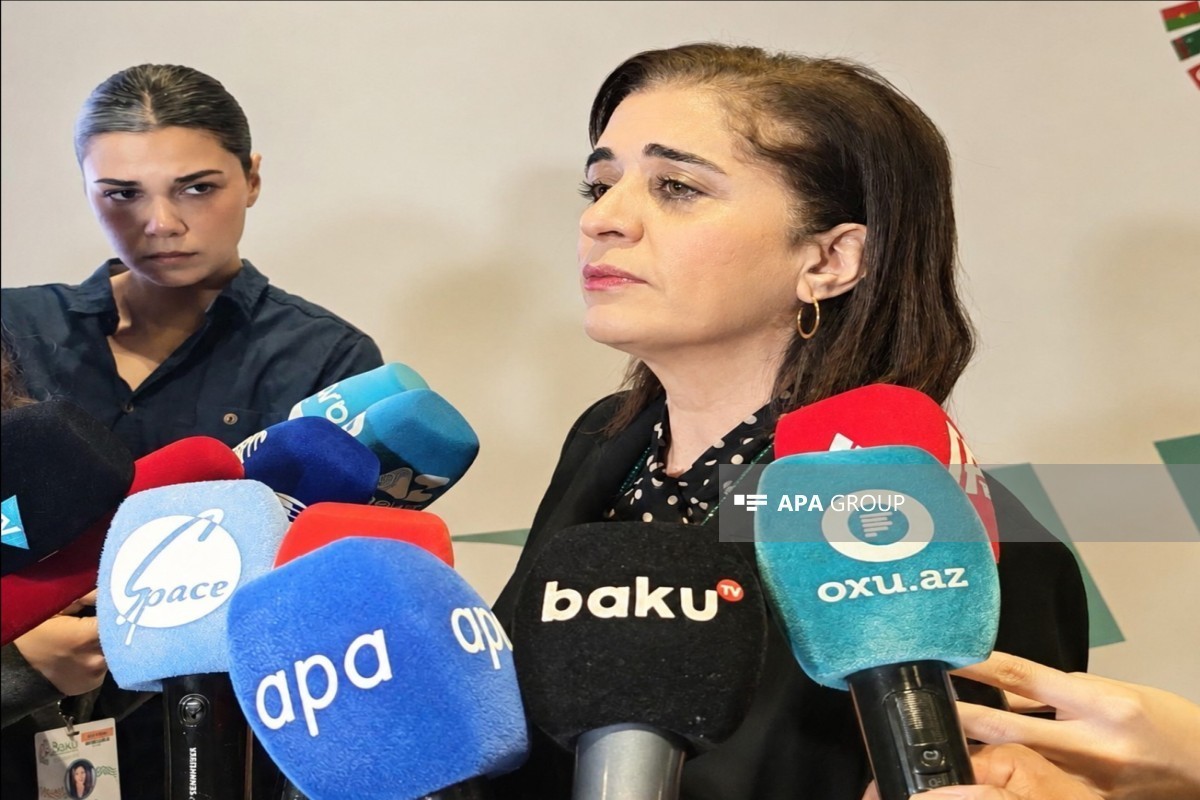

We support member states in reducing health risks, strengthening primary healthcare services, and ensuring that health systems operate more effectively at all levels, Hanan Balkhy, Regional Director for the Eastern Mediterranean Region of the World Health Organization (WHO), told journalists on the sidelines of the Islamic Development Bank Annual Meetings held in Baku, APA-Economics reports.
“The world is becoming increasingly interconnected, travel is expanding, integration among different communities is strengthening, and major global events are being held. This always creates a certain level of risk – there is a possibility of any pathogen, whether a bacterium or a virus, spreading. One of the simplest ways to prevent this is environmental monitoring, particularly wastewater surveillance. This is a relatively inexpensive and simple technical method that allows us to understand what is spreading within communities. One of the key points we discussed today, and one that I emphasized, is that through cooperation with WHO, UNICEF, GAVI and other partners, including the Islamic Development Bank, the Global Fund, the European Investment Bank and the World Bank, we have achieved significant results in preventing infections,” she noted.
According to her, a concrete example of this was the emergence of poliomyelitis in Gaza in 2024–2025:
“There, the severe destruction of infrastructure, damage to sewage and water systems, repeated displacement of the population, and the suspension of routine immunization had created ideal conditions for the spread of pathogens. Thanks to the strong wastewater monitoring system already in place, we detected the spread of the poliovirus in time. This was very important because that signal enabled us to take rapid and robust response measures. As a result, the disease was prevented from spreading to a wider area, and we vaccinated approximately 600,000 children in three phases. This played a crucial role in preventing the wider resurgence of this paralytic disease.”
The Regional Director added that WHO's cooperation with the Islamic Development Bank is deeper and more strategic in nature:
“The relationship between WHO and the Islamic Development Bank is not merely a financing arrangement, but a deeper and more strategic partnership. The Islamic Development Bank is one of WHO’s key partners in eradicating poliomyelitis and preventing vaccine-related polio cases in certain countries. The Bank also plays an important role in strengthening primary healthcare services through health initiatives and the Health Impact Platform.”
She also spoke about the World Health Organization’s cooperation with Azerbaijan:
“WHO has offices in more than 150 countries. Azerbaijan is part of the European Region, and cooperation within this region is coordinated by the Regional Director. Numerous cooperation projects are currently being implemented.
We support member states in reducing health risks, strengthening primary healthcare services, and ensuring that health systems operate more effectively at all levels. Like every member state, Azerbaijan is important to us.”


 Follow us on Telegram
 t.me/apanewsaz
 Follow us on Instagram
 Follow us on TikTok
 Follow us on Facebook
 Follow us on X