Israel’s recent airstrikes in southern Syria have triggered significant debates regarding security and political balance in the region. Official Tel Aviv links this move primarily to increasing security risks in border areas and the protection of the Druze community. At the same time, these operations are also evaluated within the context of preemptive measures against Iran’s military presence in Syria. Israel’s concerns about stability in the region are an integral part of its national security strategy.
The Syrian side, however, regards these operations as a violation of the country’s sovereignty and claims that international law has been breached.
Against the backdrop of these events, the positions and interests of other regional actors, including Türkiye, add further dimensions to the issue.
Israel’s growing military activity in Syria amid the Druze crisis

Michael Borodkin, a political expert on the Middle East from Israel, told APA that following clashes between Bedouins and Druze in the Suwayda province, Israel conducted a military intervention against Syrian government forces to protect the Druze and ensure border security.
According to him, the increasing pressure on the Druze in Suwayda prompted Israel’s military response and led to the withdrawal of Syrian forces from the area: “In Syria’s Suwayda province, approximately 70 km from the Israeli border, clashes occurred between Bedouins and Druze. Reportedly, the events began with Bedouins looting the Druze. The Druze attempted to respond, but soon military units composed of former jihadists and affiliated with the government intervened and sided with the Bedouins. Numerous reports have surfaced regarding brutal violence against the Druze. Subsequently, the Israeli army intervened. Israel had previously warned the Syrian government not to attack the Druze. After the Israel Defense Forces bombed several convoys of armored vehicles, the General Staff building, and other facilities, government troops announced their withdrawal from Suwayda province.”
The political expert emphasized that Israel pursued two main objectives in this operation: “Firstly, to protect the Druze, both for humanitarian reasons and due to pressure from the large Druze community living in Israel demanding intervention; secondly, to prevent the deployment of heavy weaponry in the border zone. This is related to the ongoing instability of the Syrian government and its inability to fully control its extremist allies. For instance, these extremists committed massacres against Alawites, yet no one was held accountable. Therefore, their presence near the border is considered a threat to Israel’s security.”
According to Borodkin, although the incident appears to be over, the ongoing instability in Syria and distrust among minority groups make the recurrence of such clashes likely: “The incident appears to have ended for now, but similar events may happen again. However, I believe the likelihood of a large-scale new war in southern Syria involving Israel is low. Nevertheless, as long as instability persists in Syria—especially amid deep mistrust between minorities such as Druze, Alawites, Kurds, and Christians towards former jihadists—such events are inevitable from time to time.”
“Israel is increasing its geopolitical influence in Syria…”
Syrian-Lebanese political commentator Ahmad Ghosn believes that Israel is exploiting the power vacuum in Syria to expand its military and political influence in the region as part of both security and broader geopolitical and geo-economic strategies.

In an interview with APA, Mr Ghosn noted that following the collapse of the Assad regime, Israel significantly increased its military activity in Syria, aiming to shape a broader strategic agenda.
“While Israeli airstrikes have historically targeted Iranian-linked militias and weapons transfers to Hezbollah, recent developments suggest a deeper geopolitical recalibration. With Iran reportedly scaling back its presence, Israel seems to be positioning itself as a counterweight to Turkish expansionism in northern Syria, particularly in areas where power vacuums persist. Beyond airstrikes on regime and militia positions, Israel has expanded its presence in the occupied Golan Heights and Mount Hermon, effectively establishing a semi-permanent foothold. Israeli leadership has even gone as far as advocating for the partition of Syria into separate, autonomous entities—reflecting a broader vision of reshaping the region’s post-war landscape. Prime Minister Benjamin Netanyahu has explicitly stated that the Syrian army will not be allowed to operate south of Damascus. He has called for the full demilitarization of southern Syria, including Quneitra, Daraa, and As-Suwayda—areas home to a significant Druze population. His rationale is rooted not only in maintaining Israeli security but also in preventing the empowerment of jihadist factions near its borders, especially given Damascus’s limited control over these groups. Israel’s actions are therefore as much about strategic depth as they are about managing future threats from fragmented actors in the Syrian conflict - as also, about the geoeconomics engineering of the “New Middle East” and its trades/logistics initiatives and projects,” he added.
“Protection of the Druze is a cover for Israel’s strategic plans in Syria…”

According to Mr. Ghosn, while the argument of protecting the Druze community may appear legitimate on the surface, in reality, it is a convenient and instrumental justification used to rationalize Israel’s increased military presence in Syria. In practice, Israeli interventions are shaped more by geography and strategic interests than by ethnic or religious affiliations:
“Protection of the Druze community may appear to be a legitimate concern—especially given that Israeli Druze serve in the military and are integrated into Israeli society—it should not be viewed as the primary motive behind Israel's intervention. The Druze, by virtue of their position in Israeli society, do have the capacity to lobby and exert pressure within political and military circles. However, this justification often serves more as a convenient narrative than a strategic necessity. In reality, if any other community were situated along Israel’s borders under similar conditions, the same logic would apply. Whether it’s Jordan and Egypt—states with which Israel has formed pragmatic security arrangements—or Hezbollah in Lebanon—a perceived existential threat—Israel adapts its approach accordingly. The Druze are not unique in this regard. What matters most is not identity, but the geostrategic implications of proximity, governance, and alignment. This speaks to a broader reality that must be recognized: Israel no longer operates as a narrowly defensive state, but as a regional power with the will and capacity to shape events beyond its borders. It will interfere, support, lobby, or oppose any cause that serves its strategic interests. In a region fractured by internal rivalries and power vacuums, Israel finds repeated opportunities to position itself—either through force or invitation. This pattern illustrates its long-term objective: to secure a presence, and ideally a decisive voice, at every negotiating table shaping the region’s future.”
“The army did not collapse—It was systematically undermined; The country is becoming a ‘deserted land’…”
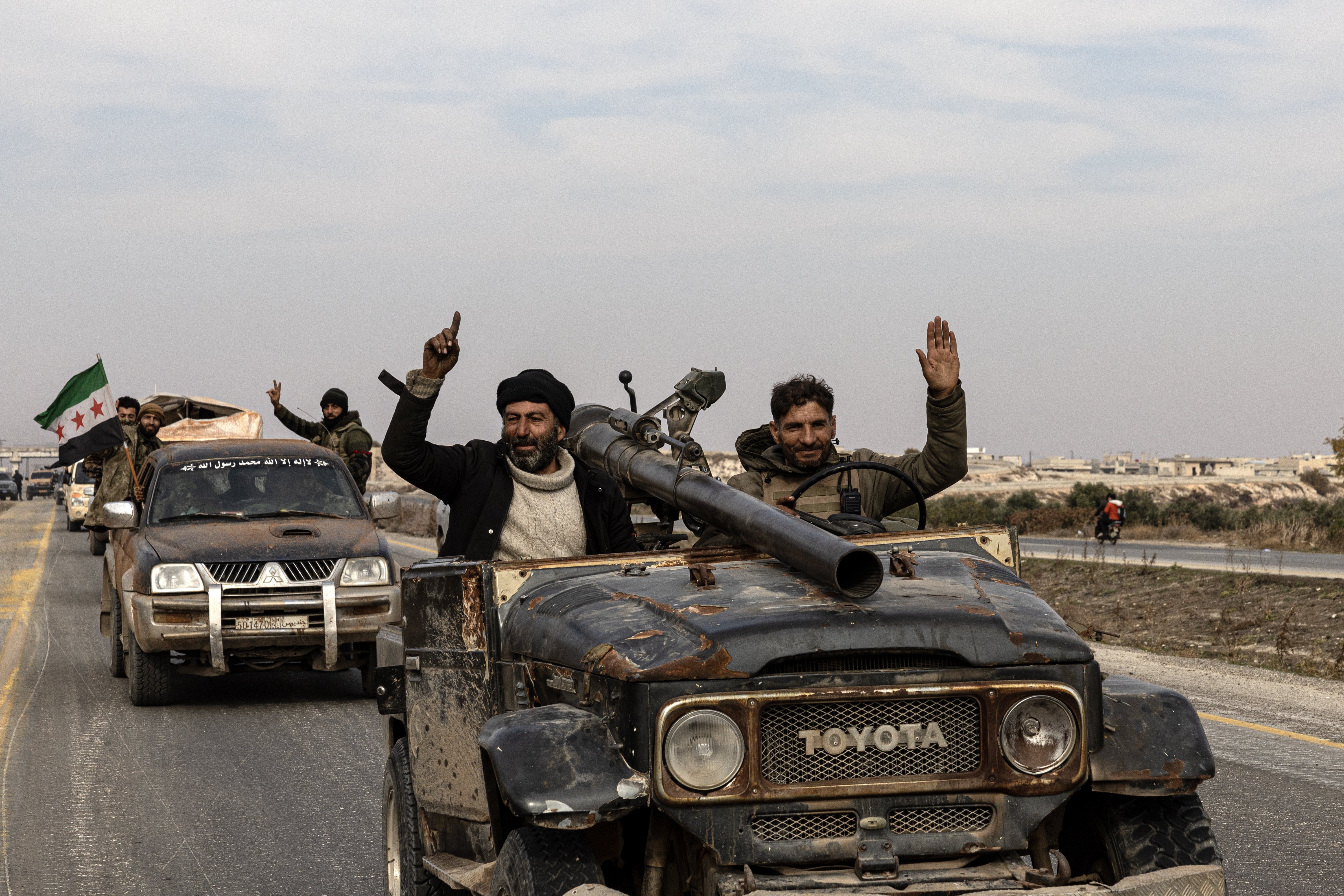
Commenting on the current state of the Syrian army and the country's defense capabilities, Mr. Ghosn stated that the army’s collapse should not be seen merely as a breakdown of military infrastructure but as a systematic unraveling driven by the weakening of domestic institutions and the clashing interests of regional powers:
“The disintegration of the Syrian army was not merely a military collapse, but a strategic unraveling shaped by both internal failures and regional agendas. Once considered a serious force—despite lacking advanced technology—the Syrian military had numbers, discipline, and a clear combat doctrine. Israeli experiences with Syrian special forces during the battles of Beirut left a lasting impression, reinforcing the perception of a well-trained and dangerous adversary. Yet the Assad regime itself was the first to undermine this institution, concentrating power and wealth in the hands of a ruling elite while neglecting its rank-and-file soldiers, who were paid as little as $16 per month. In the army’s absence, what remains are fragmented jihadist and Islamist factions—ISIS, al-Qaeda, Hay’at Tahrir al-Sham, and Ansar al-Sunna—groups that lack conventional military structure and operate without any standard combat ethics. These factions do not resemble national liberation movements. They are unstructured, violent, and ideologically driven, guided not by a military doctrine but by a jihadist worldview. Their presence on the battlefield is marked by chaos, brutality, and destruction rather than coordinated warfare. Their actions—indiscriminate killing, looting, the torching of homes and forests, destruction of public spaces—are not incidental. Whether consciously or not, they behave as if these territories are alien to them, acting more like invaders than liberators. This extends beyond the battlefield into something deeper: a psychological and philosophical detachment from the land. The way both these factions and some pro-regime security units treat civilians, towns, and nature itself suggests an effort to render these areas unlivable. Their behavior reflects not a desire to reclaim and inhabit Syria, but to deface and abandon it. The current role of the Syrian army appears less focused on national defense and more aligned with reshaping Syria demographically, geographically, and historically—aligning the country with the contours of a reimagined "New Middle East.”
“Israel’s attacks on Syria aim to balance both Iranian and Turkish influence…”
Israel’s recent attacks on Syria are impacting the existing balance of power in the region. Although not a direct party to the conflict, Türkiye stands out with its presence in northern Syria and its status as a regional power. Ankara is trying to ensure border security while maintaining stability in the humanitarian situation in the region. Türkiye prefers to avoid escalation and supports preserving stability through diplomatic means.

Turkish political commentator Dilara Aslan stated to APA that Israel’s attack on Syria not only aims to guarantee security and reduce Iranian influence in the region but also seeks to balance Türkiye’s growing clout.
She emphasized that three primary goals lie behind the recent attacks on Syria and other interventions observed since the fall of the Bashar al-Assad regime.
“First, in the wake of the Gaza war and the emergence of a new regional context, Israel is trying to secure its national security by strengthening its military and strategic positions, especially in border areas. The recent attacks targeting southern Syria can be seen as a clear message to Damascus to refrain from establishing a strong military presence in these territories. Although justified as protecting the Druze community, these operations essentially seek to legitimize intervention in Syria in violation of the principle of territorial integrity under international law. A similar security approach by Israel can be observed in Lebanon as well.
Second, one of Israel’s main strategic concerns is limiting the influence of Islamist armed groups operating in the region. Tel Aviv currently does not trust the Syrian administration under Ahmad al-Sharaa and therefore called on the U.S. to expel Palestinian fighters located in Syria. Israel fears that these groups will exploit Syria’s power vacuum to further radicalization in the region. At the same time, Tel Aviv is wary of Syria turning into a sphere of Turkish influence and is closely watching the growing cooperation between Ankara and al-Sharaa, particularly in security and military areas.
The third primary objective is Israel’s strategy to reduce Iranian influence in the region. The U.S. and Israel have made systematic efforts to weaken Iran-aligned groups like Hamas and Hezbollah and to undermine the Assad regime, Iran’s main ally. Even the Houthi movement in Yemen has been targeted under this strategy. Israel is especially concerned about Syria turning into a logistical bridge for Iranian arms transfers to Lebanon and is pursuing a preemptive strike policy to prevent this risk,” she said.



 Follow us on Telegram
 t.me/apanewsaz
 Follow us on Instagram
 Follow us on TikTok
 Follow us on Facebook
 Follow us on X