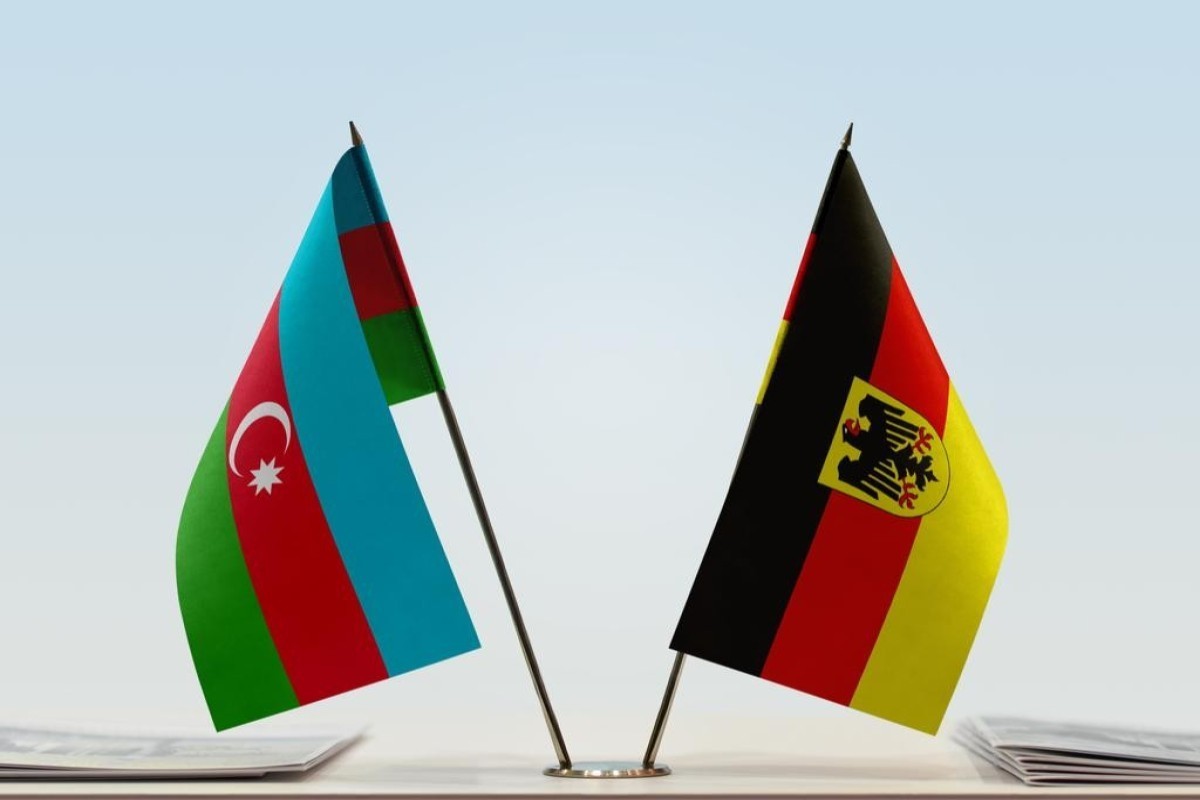

One of the main priorities of Azerbaijan’s foreign policy is developing relations with various power centers based on mutual respect, national interests, and equal cooperation. Under the leadership of President Ilham Aliyev, this multi-vector and multi-polar foreign policy has significantly strengthened our country’s position as a reliable partner at both the regional and global levels in recent years. Another important outcome of this policy was the "Joint Declaration on the Strategic Agenda for Bilateral Partnership between the Republic of Azerbaijan and the Federal Republic of Germany," signed with Chancellor of Germany Friedrich Merz during President Ilham Aliyev’s official visit to Germany. This document lays the foundation for a qualitatively new stage in Azerbaijan-Germany relations. The Declaration takes cooperation between the two countries beyond individual areas into a unified strategic framework. It unites political dialogue, the economy, energy, security, science, technology, education, and humanitarian cooperation around a long-term development concept.
Germany has become the second major Western European power—after Italy—with which Azerbaijan has signed a strategic framework document. This demonstrates the consistent deepening of Azerbaijan’s relations with Europe’s leading political and economic powers.
As the leading political and economic locomotive of the European Union, Germany holds special importance for Azerbaijan. Therefore, forming a strategic agenda with Berlin carries significant political weight, not only for developing bilateral relations but also for the future prospects of Azerbaijan-EU ties. It is no coincidence that the signed Joint Declaration specifically highlights the strategic importance of the Azerbaijan-EU partnership. Germany’s open support for this approach represents vital political backing for the further expansion of Azerbaijan’s cooperation with Europe. Furthermore, the Declaration's expression of support for the updated Azerbaijan-EU Partnership Priorities can be seen as a key contribution to a new stage in Azerbaijan-EU relations. This approach creates additional opportunities for deepening political dialogue, expanding economic cooperation, and advancing collaboration in areas such as energy security, transport and communications, green energy, and digital transformation.
Germany’s support for expanding Azerbaijan’s cooperation with Europe also reflects Azerbaijan’s growing reputation as a reliable partner for the region. In recent years, European states have highly valued Azerbaijan’s role in ensuring energy security, developing East-West and North-South transport corridors, and promoting regional stability and cooperation. In this context, establishing strategic partnership relations with Germany can be regarded as an important step that serves to further strengthen Azerbaijan’s positions in the European political and economic landscape while giving new substance to mutually beneficial cooperation with the European Union.
One of the most important features of the Joint Declaration is the strengthening of the institutional foundations of cooperation. The document envisages continuing high-level political dialogue, conducting ministerial consultations, and expanding the activities of the Azerbaijan-Germany High-Level Working Group. These mechanisms will ensure the sustained and systematic development of relations.
The energy sector remains one of the main pillars of this strategic partnership. However, the new document does not limit cooperation to traditional gas exports alone. Green energy, low-carbon hydrogen, energy efficiency, renewable energy sources, and the climate agenda are defined as new priority areas. This approach strengthens Azerbaijan’s role as an important partner in Germany’s energy transition strategy, demonstrating international support for our country’s transition to a green economy.
Economic cooperation is also acquiring new substance. In addition to increasing trade turnover, the document envisages promoting mutual investments, industrial cooperation, logistics, transport connectivity, and sustainable economic development. Germany’s expertise in high technologies and innovation aligns naturally with Azerbaijan’s economic modernization policy, opening up new opportunities for both nations.
For the first time, the Joint Declaration reflects cooperation in security and defense as a distinct strategic direction. Collaboration in the defense industry, partnerships between military educational institutions, expert and student exchanges, mine clearance, cybersecurity, and joint actions against transnational threats demonstrate that relations have expanded into a broader security dimension. In this regard, Germany’s support for the Azerbaijan-Armenia reconciliation process and the establishment of lasting regional peace carries particular importance.
Another vital area of the document encompasses science, education, and innovation. Expanding projects in digital transformation, artificial intelligence, scientific research, inter-university cooperation, and vocational education directly serves the long-term development of human capital. This underscores that bilateral relations are built not merely on current interests, but on a shared commitment to future generations.
In essence, the Azerbaijan-Germany strategic partnership is a logical continuation of Azerbaijan’s successful foreign policy in recent years. Azerbaijan is already cultivating strategic partnership with the United States and China, its cooperation with the European Union remains on an upward trajectory, and strategic partnership documents have been signed with ten EU member states. Following its strategic partnership with Italy, signing such a crucial document with Germany demonstrates that Azerbaijan has elevated its ties with two of Europe’s leading industrial and economic powerhouses to a strategic level. These milestones reaffirm that the multi-polar and balanced foreign policy pursued by President Ilham Aliyev continues to strengthen Azerbaijan’s international standing, foster new political and economic partnerships, and enhance our country’s reputation as a reliable partner in global energy security, transport, economic cooperation, and regional stability.
Ultimately, the Joint Declaration on the Strategic Agenda for Bilateral Partnership is more than just a document reflecting the growth of Azerbaijan-Germany relations. It marks a new chapter in Azerbaijan’s strategy of long-term, trust-based cooperation with Europe’s leading nations, further solidifying our country’s status as a dependable, predictable, and responsible actor across Europe’s political, economic, and energy landscape. At the same time, this strategic document highlights the broad scope of President Ilham Aliyev’s successful foreign policy on the world stage and reflects Azerbaijan’s growing influence within the system of international relations.


 Follow us on Telegram
 t.me/apanewsaz
 Follow us on Instagram
 Follow us on TikTok
 Follow us on Facebook
 Follow us on X