










Baku – APA. Anti-French sentiment sweeps across the United States. President George W. Bush and his top aides can barely contain their irritation at the French government for undermining U.S.-led efforts to get the U.N. Security Council to authorize the impending invasion of Iraq, APA reports quoting . With the aid of Germany and Russia, France torpedoes the drive for a new resolution authorizing war. Frustration erupts into anger. Bottles of French wine and champagne are emptied into toilets and some restaurants rename French fries “freedom fries.â€
The rest is history. The United States tells U.N. weapons inspectors to clear out of Iraq and launches an invasion in March 2003 to put an end to Saddam Hussein’s alleged weapons of mass destruction programs. They topple Saddam’s government and execute the deposed Iraqi leader three years later. But U.S. and British intelligence claims that Saddam Hussein had revived his nuclear, biological and chemical weapons programs turn out to be false. Seven years later. France and the U.S. are friends again and working on the same side to prevent Iraq’s neighbor, Iran, from developing nuclear weapons. (Interestingly, both France and the United States had supported Iraq during its bloody 1980-88 war with Iran.)
Some people shudder with deja vu at the mention of Iran’s nuclear program. For years, officials at the Vienna-based IAEA warned that the campaign against Iran was Iraq all over again. Mohamed ElBaradei, the Nobel Peace Prize laureate and former head of the U.N. nuclear watchdog, often spoke of the need to avoid the mistakes of Iraq by not jumping to conclusions about Iran’s atomic program, which Tehran insists is a peaceful one that will produce only electricity, not bombs.
Speaking at New York’s Columbia University this week, France’s U.N. ambassador, Gerard Araud, made clear that Iran’s nuclear program couldn’t be more different from Iraq’s phantom weapons of mass destruction. The concerns about Tehran’s nuclear ambitions, he said, are shared across the globe. He pointed out that five Security Council resolutions — three of them imposing sanctions on the Islamic Republic — had passed “without dissent†and that countries like Libya, South Africa, Russia and China had cast their votes in favor of them.
“To be blunt, it’s not Iraq revisited,†he said. “It’s not the West, the North, against Iran. It’s the international community at large which is expressing its concerns.†Araud noted that four of the six countries leading efforts to persuade Iran to halt its uranium enrichment program had actively opposed the war in Iraq — France, Germany, Russia and China. Now they’re all in it together, offering Iran the prospect of economic and political incentives if it stops enriching and new sanctions if it continues to refuse.
French-U.S. cooperation on Iran is nothing new. Even while former French President Jacques Chirac and his chief diplomats were working hard to block the U.S.-British push for war in Iraq, French intelligence agents were quietly amassing evidence of covert Iranian nuclear activities and sharing it with their American counterparts. In May 2003, France presented its intelligence assessment of Iran to a closed-door meeting of the Nuclear Suppliers Group, an informal club of 46 countries that produce raw materials or technology useful in nuclear programs. “For several years intelligence sources have been collecting evidence of a covert military program (in Iran),†the French presentation said. “France’s assessment is now that this country may obtain a sufficient quantity of fissionable materials to manufacture a nuclear weapon within a few years.†The French presentation, it said, “was coordinated with the American one.â€
These days France is considered the most hawkish of the four Western powers discussing a possible fourth round of U.N. sanctions on Iran. U.S. and French negotiators have circulated informal papers outlining possible new steps to their colleagues in Britain and Germany. The French paper, diplomats told Reuters, calls for harsh measures against Iran’s energy sector, which the French say is being used to finance Tehran’s nuclear and missile programs. The United States, afraid of angering Russia and China or undermining the robust opposition movement in Iran, is not actively pushing for limits on gasoline imports or similar measures. (Diplomats say that the French proposals will eventually be scrapped in order to secure yes votes from reluctant Russia and China.)
Araud made clear that the French hawkishness is not an attempt to bully Iran or topple its government. “We are not in the regime change game,†he said, adding that their goal was not to spark a new war but to avert one. Failure to persuade Tehran to alter its nuclear policy, he suggested, might be disastrous. It could invite an Israeli military attack and further destabilize the already unstable Middle East.
Did I hear ‘freedom fries’? – France says Iran is no Iraq

 13 February 2010 04:44 (UTC +04:00)


 İDMAN XƏBƏR
 Follow us on Telegram
 t.me/apanewsaz
 Follow us on Instagram
 Follow us on TikTok
 Follow us on Facebook
 Follow us on X
Americas
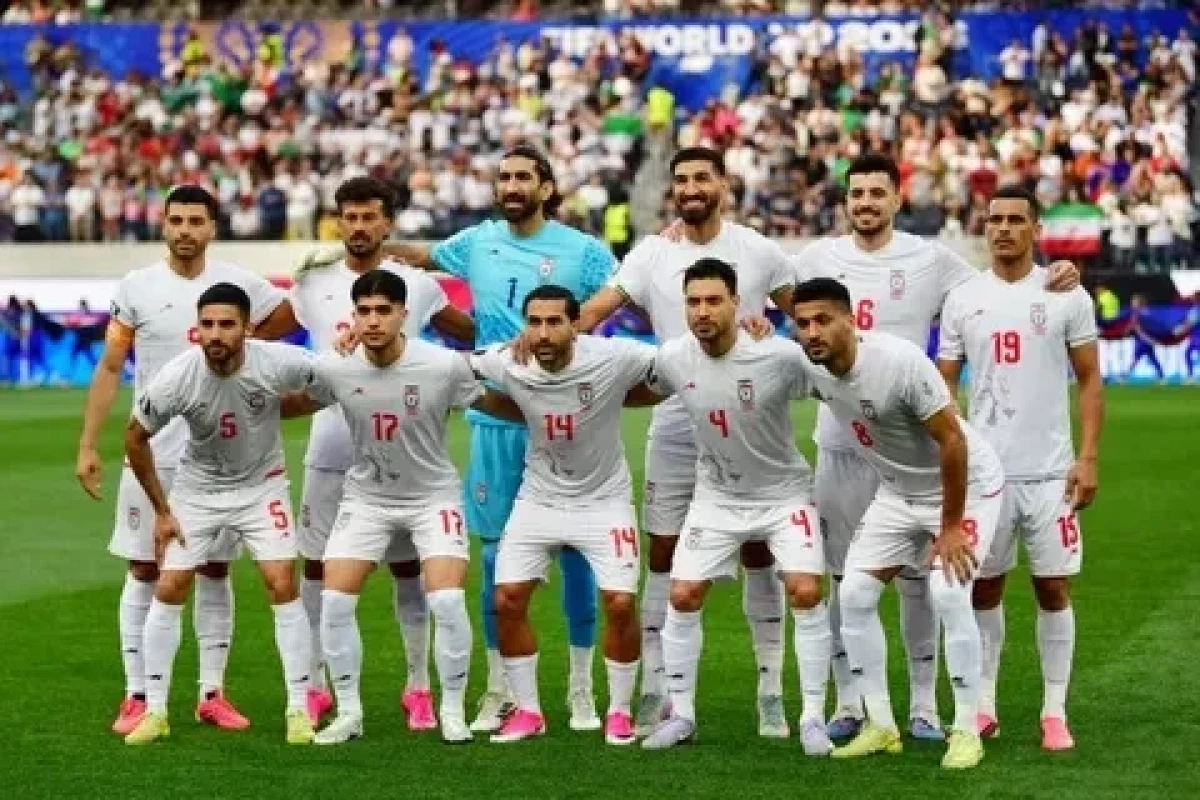
US government softens stance on Iran’s World Cup team entering country ahead of showdown against Egypt
09:24
 24 June 2026
Trump: US needs less than a week to finish job in resuming war with Iran
01:49
24 June 2026
US Senate votes to halt Iran war in latest rebuke of Trump
01:20
24 June 2026
Trump believes ceasefire in Lebanon will become reality
23:18
23 June 2026

NEWS FEED
Azerbaijan assumes chairmanship of the Parliamentary Union of OIC member states - UPDATED
15:24
24 June 2026
AZAL’s first Airbus A321neo delivered in Hamburg - PHOTO
15:23
24 June 2026
AZAL: New Airbus A321neo can be safely operated on any route - VIDEO
15:20
24 June 2026
Iran says access to attacked nuclear sites depends on final US deal
15:14
24 June 2026
Katz vows IDF won’t withdraw from south Lebanon ‘even if there’s an American demand’
15:02
24 June 2026
Media representatives visit Airbus production facility in Hamburg - PHOTO
14:50
24 June 2026
President Ilham Aliyev received delegation led by Speaker of Grand National Assembly of Türkiye
14:49
24 June 2026
Azerbaijan's insurance market grows by nearly 2% this year
14:39
24 June 2026
Erdoğan: Israel has been doing everything it can for 10 days to undermine a US-Iran agreement
14:39
24 June 2026
Lavrov: Diplomatic solution to Ukraine crisis remains possible
14:37
24 June 2026
France confirms first Ebola case in doctor returning from DR Congo mission
14:04
24 June 2026
Tehran's Mehrabad Airport to close due to Ali Khamenei's funeral ceremonies
13:52
24 June 2026
Ukraine hits two airfields and air defence systems in Crimea, including Pantsir-S1 units
13:51
24 June 2026
Drones strike major Russian gas processing plant 1,500 km from Ukraine
13:40
24 June 2026
Azercell and Samsung launch a new campaign
13:29
24 June 2026
Presidential aide: Main goal in cotton farming by 2030 is to increase average yield to 50 centners per hectare
13:27
24 June 2026
Peskov: Armenia is currently choosing its path of development
13:20
24 June 2026
AZAL: Today's Baku-Nakhchivan-Baku flights cancelled
13:09
24 June 2026
Central Bank of Azerbaijan preparing amendments to compulsory insurance regulations
13:02
24 June 2026
Azerbaijan extends special quarantine regime until October 1, 2026
12:57
24 June 2026
Sabirabad executive authority head: State Program will strengthen food security and non-oil sector growth
12:53
24 June 2026
Conference dedicated to Azerbaijan's position as a middle power held - PHOTO
12:45
24 June 2026
Azerbaijan's social reform achievements presented at UN Forum
12:43
24 June 2026
Numan Kurtulmuş: PUIC chairmanship passing to Azerbaijan is extremely important for us
12:43
24 June 2026
Azerbaijani President: We have always felt the consistent support of the OIC
12:20
24 June 2026
President Ilham Aliyev addressed participants of 20th Session of OIC Parliamentary Union Conference - UPDATED
12:15
24 June 2026
Presidential aide: Investment under the State Program will amount to approximately 700 million manats
12:11
24 June 2026
Airbus: Azerbaijan is a strategically important country for aviation
12:09
24 June 2026
Turkish Parliament to ratify memorandum on strengthening military security cooperation with Azerbaijan
12:07
24 June 2026
Numan Kurtulmuş: International platforms such as the OIC need reforms
12:04
24 June 2026
Eurasian Development Bank: Transport sector among key priorities for future cooperation with Azerbaijan
12:02
24 June 2026
First A321neo aircraft for AZAL to be delivered today - PHOTO
12:01
24 June 2026
Azerbaijan's insurance market doubles over past four years
11:59
24 June 2026
Central Bank of Azerbaijan preparing new development strategy for insurance sector
11:58
24 June 2026
Crimea and Sevastopol left without electricity-UPDATED
11:57
24 June 2026
GNAT Speaker comments on Azerbaijan-Armenia normalization process
11:56
24 June 2026
Ghalibaf: Islamabad memorandum reached with the US is a defeat for Washington
11:52
24 June 2026
Azer Amiraslanov: Business reforms may remain incomplete without a modern insurance sys
11:46
24 June 2026
Embassy: Kazakhstan-Azerbaijan logistics cooperation is developing rapidly
11:45
24 June 2026
Speaker of Parliament: Azerbaijan remains fully committed to advancing the goals of the PUIC Conference
11:44
24 June 2026
President Ilham Aliyev: Azerbaijan has always attached great importance to the protection of Islamic values
11:34
24 June 2026
President: Crimes committed against Islamic cultural heritage on our lands are a clear manifestation of Islamophobia
11:24
24 June 2026
Cash foreign currency purchases in Azerbaijan exceed sales by $311 million
11:15
24 June 2026
CBA: Risk-based supervision to be fully implemented in the insurance sector in the next phase
11:13
24 June 2026
Azerbaijan and Israel discuss prospects for startup cooperation - PHOTO
11:08
24 June 2026
Two killed in drone attack in Russia's Nizhny Novgorod region
11:01
24 June 2026
Eldar Namazov: Azerbaijan is expanding its influence beyond the region
10:53
24 June 2026
Azerbaijan and Israel discuss cooperation opportunities in water technologies - PHOTO
10:53
24 June 2026
11th Azerbaijan International Insurance Forum kicks off in Baku - PHOTO
10:48
24 June 2026
Belarusian Ambassador: Development of transport and logistics ties with Azerbaijan is of great importance
10:44
24 June 2026


