



“Specific targets have been set in the State Program. Increasing productivity in cotton growing in specialized districts, expanding areas where modern irrigation systems are applied, improving machinery provision, implementing advanced agrotechnical approaches that ensure the efficient use of land resources and increase productivity, including laser leveling technology, introducing additional product subsidies in line with the growth of cotton production, developing cotton seed production in the country, supporting the development of the cotton processing industry, and carrying out the necessary land reclamation measures are among the main priorities.
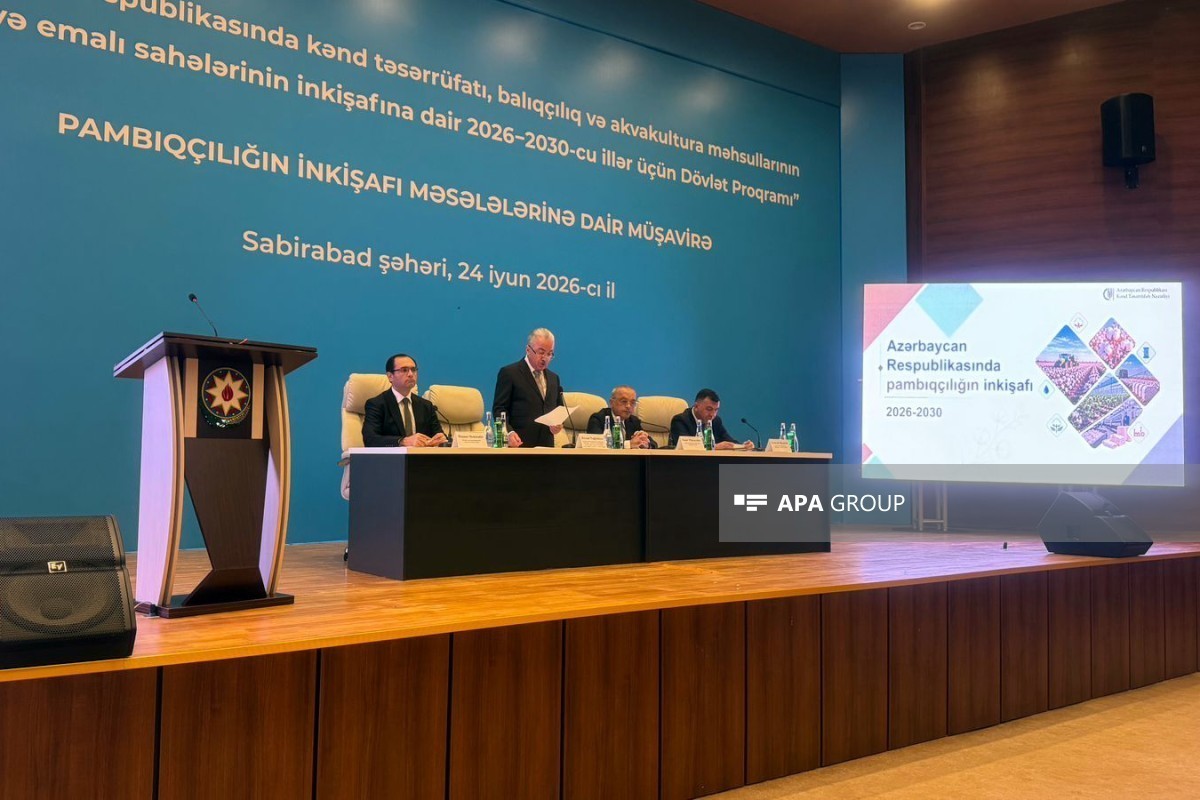
Once again, I would like to remind that the main target in the cotton sector by 2030 is to increase average productivity to 50 centners per hectare and, by developing the processing industry, achieve the export of finished products made from cotton fiber,” said Zeynal Naghdaliyev, Assistant to the President of the Republic of Azerbaijan and Head of the Territorial and Organizational Issues Department of the Presidential Administration, during his speech at a regional meeting held in Sabirabad within the framework of the State Program for the Development of Production and Processing of Agricultural, Fisheries and Aquaculture Products in the Republic of Azerbaijan for 2026–2030, APA's local correspondent reports.
Zeynal Naghdaliyev noted that serious steps must first be taken to eliminate existing problems in order to achieve the set targets: “In particular, interruptions in irrigation supply, the aging machinery fleet, limited access to financial resources, low cotton fiber sale prices, product quality indicators, weak human resources capacity, the organization of seed production, and land and infrastructure issues are among the main factors affecting the development of the sector.
Of course, resolving these problems cannot be achieved through the efforts of a single institution alone. Increasing productivity in cotton growing, protecting farmers' incomes, ensuring the financial sustainability of companies, and strengthening the raw material base of the processing industry require coordinated activities by state institutions, the active participation of local executive authorities, and a responsible approach from the private sector.
Improving irrigation and energy supply, introducing new modern technologies, and ensuring the timely implementation of agrotechnical measures can only be achieved through the joint efforts of all implementing institutions.
Efficient use of water and land resources, the application of modern irrigation systems, improvement of on-farm irrigation networks, cleaning of existing canals, and strengthening awareness efforts regarding water use require special attention.”


 Follow us on Telegram
 t.me/apanewsaz
 Follow us on Instagram
 Follow us on TikTok
 Follow us on Facebook
 Follow us on X