












Baku – APA. On a brisk January afternoon in Cairo, as the Coptic community celebrated the birth of Christ, demonstrators dressed in black lined the city’s famous, lion-headed Qasr al-Nil bridge, a busy span favoured by young couples and tourists looking to catch a shot of sunset over the Nile, APA reports quoting “Al Jazeeraâ€.
Police officers standing nearby watched the group and the passing traffic warily, while squads of helmeted riot police arranged themselves at the bridge exit, waiting for orders. As is often the case in Egypt, the police outnumbered the protesters.
Six days after a shrapnel-filled bomb killed 23 worshippers at a New Year’s Eve church service in the coastal city of Alexandria - the deadliest attack on the country’s minority Coptic Christian community in a decade - demonstrators in Cairo are still taking to the streets to show solidarity with the victims and anger at the government. But a sense of fatalism, an inability to hold the government to account or to rectify the disputes that may be driving sectarian anger, hangs over even these displays of fellowship.
Holding a sign that read “Muslim + Christian = Egyptian†and dressed in black from her headscarf to her abaya, Dalia Salaheldin described her reaction to hearing news of the bombing as “sadness, grave sadnessâ€.
Salaheldin said she and and other Muslim friends had attended Christmas Eve mass on Thursday night to show support for the Coptic community.
“I didn’t really care if the people are Muslims or Christians, they’re just Egyptians, and for me, Egypt has always been home, and I want home to be safe,†she said.
In Salaheldin’s view, the bombing shouldn’t be interpreted as a revelation that simmering sectarian tensions in Egypt have finally bubbled over. Though much of the country remains poor and undereducated, Salaheldin argued, the essential nature of the Egyptian citizen is still one of peaceful coexistence.
But she, like others, was reluctant to pin the blame for the bombing on anyone.
“Someone is not happy with this and wants the situation to be divided,†she said. “I am sure that whoever has done this is not really related to being a Christian or a Muslimâ€.
In the months leading up to the bombing, there were indications of rising tensions between Muslims and Copts, who make up around 10 per cent of Egypt’s population.
In September, the former secretary general of the International Union for Muslim Scholars accused the Coptic church of storing weapons in its religious buildings, forcibly converting Muslim women, and planning a separate Coptic state. His comments sparked a boycott of Coptic businesses.
In November, Coptic homes and businesses in a southern Egyptian town were burned and looted after word spread of a romantic relationship between a Muslim woman and a Coptic man. That same month, a group linked with al-Qaeda in Iraq announced that Christians throughout the Middle East were legitimate targets.
There is also a history of violence against Copts: At a midnight mass on Christmas Eve in 2009 in the town of Nag Hammadi, eight Copts and a Muslim bystander died in a drive-by shooting. In 2000, 21 Copts were killed and hundreds of shops and homes destroyed in the southern town of el-Kosheh after a Muslim-Christian business dispute set a spark to long-existing tensions.
Within a year, every suspect arrested in connection with the killings had been released uncharged.
For services marking the Coptic Christmas Eve on Thursday night, Egypt’s government drastically ramped up security outside most churches, and there were no reports of violence. On Friday, as the black-clad demonstrators walked in small groups from the bridge to another protest site, the riot police boarded their armoured trucks to follow.
As night fell, the crowd gathered at a memorial to Saad Zaghloul, one of the liberal founding fathers of Egyptian independence. Riot police, overseen by a dozen senior officers and twice that many plainclothes agents, hemmed the group in.
Next to a of circle of burning candles, Sherif el-Roubi, a 31-year-old coordinator for the April 6 Movement - which plays a wide-ranging role in Egyptian civil-society activism - argued that sectarian tension doesn’t exist, and that Copts who complain of it may be "spies" brought to Egypt to create unrest.
“I live in a small town in Fayoum of 150,000 inhabitants. There are about 300 Copts in this village. We don’t consider them Copts, and they don’t consider us Muslims, we’re one,†he said.
"The government wants to stir unrest and to distract citizens from whatever other actions it is taking … They create tension between Muslims and Copts."
Copts make up only a tenth of the population, Roubi added, so if the Muslim community were truly discriminating against them, they would have already driven them out of the country.
"They eat, drink, shop and practise their religious beliefs inside churches with complete freedom," he said.
As Roubi went on, a broad man with a shaved head lumbered loudly into the conversation.
Sameh el-Meery, a 58-year-old Copt and lawyer from Cairo, hotly countered Roubi’s claim - by all indications false - that 12 Muslims had died in the Alexandria bombing.
Christians in Egypt have been “paying the price†of terrorism for decades, he said, and gold shops run by Copts were attacked even before Gulf petrodollars expanded the reach of Wahhabism - a strict branch of the already extremely conservative Salafi school of Islam that many associate with modern-day jihadists and al-Qaeda.
Meery mentioned the Copts who were killed in el-Kosheh and the anaemic government response, pointing to both as examples of how Copts lack equality in Egypt.
"Christians are the ones targeted by terrorist acts," he said. "What we’re seeing is sectarian terrorism."
Nearby, sitting in a fold-out chair near the candle circle and holding a sign, Nashwa Salah was a portrait of what might be best called defeated resilience.
A professor of philosophy at Cairo’s huge Ain Shams University, Salah said that after the bombing, she felt that she shouldn’t stay silent and at home anymore. Most Egyptian Muslims may not want to believe that their neighbours could perpetrate violence like the Alexandria bombing, she said, but they need to acknowledge that there are such people in the country - those who believe and promote the idea that Christians are essentially atheists and doomed unbelievers.
In her classes, Salah said, there is a "minimum" of communication between Muslims and Christians. The Copts usually sit by themselves.
"I felt a little bit responsible [for the bombing]," she said. "I saw a little bit of this and I didn’t try to stop it in any way I could."
Egypt’s government seems less interested than Salah in attempting to address the root causes of sectarian animosity in the country. Given the security forces’ track record of investigating Muslim-Copt violence, few have faith that the investigation into the Alexandria bombing will yield a resolution, much less a conviction. The government seems eager to pin the blame on outside forces or a lone figure with no support, and its response has allegedly already led to one man’s death by torture.
Salah said she didn’t care whether police determined who lay behind the attack. "It could be al-Qaeda, it could be Mossad," she said.
For Salah, a Muslim, what matters is addressing Coptic grievances.
"I tell them they don’t have to surrender for being a minority," she said. "Some Christians, they don’t feel they are Egyptian."


 Follow us on Telegram
 t.me/apanewsaz
 Follow us on Instagram
 Follow us on TikTok
 Follow us on Facebook
 Follow us on X
Africa
Two killed, five injured in shooting in S. Africa
 16:09
16:09
 14 October 2026
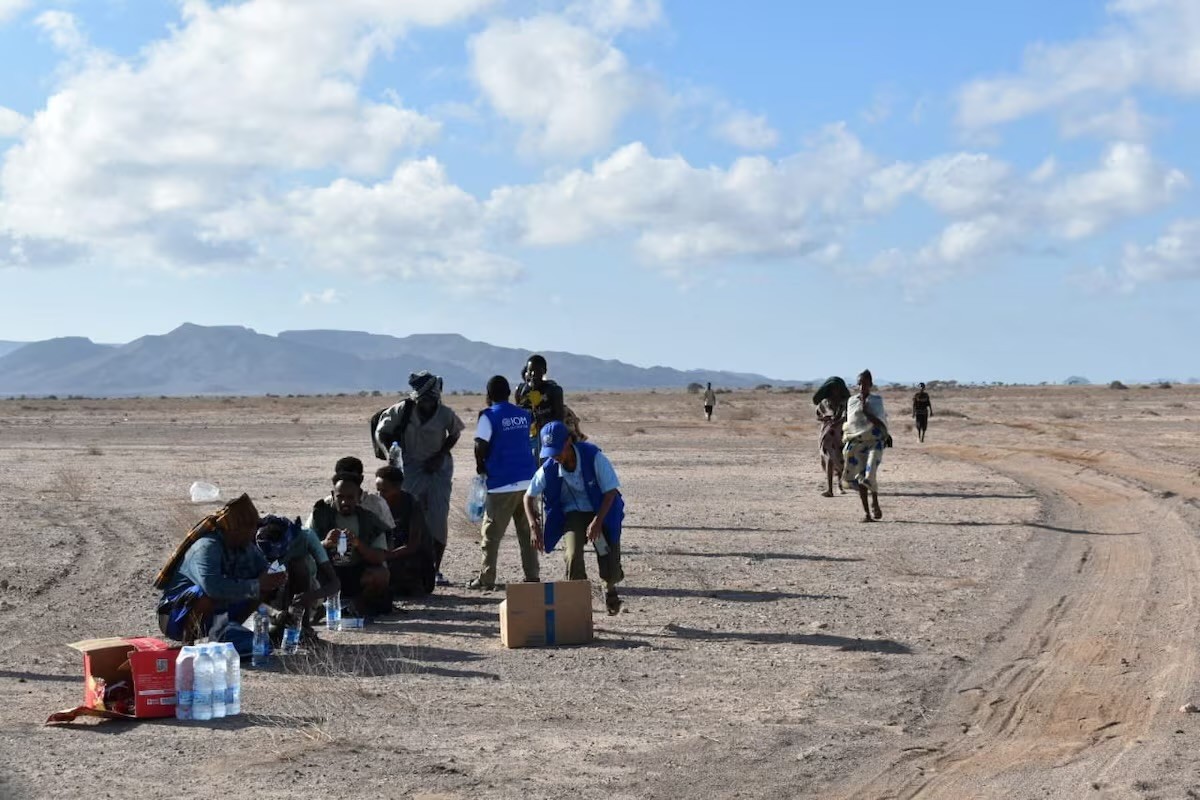
At least 139 migrants dead, including some children, after boat from Djibouti to Yemen capsizes, UN agency says
21:17
11 October 2026
Central African Republic foils planned large-scale militant attack
07:04
11 October 2026
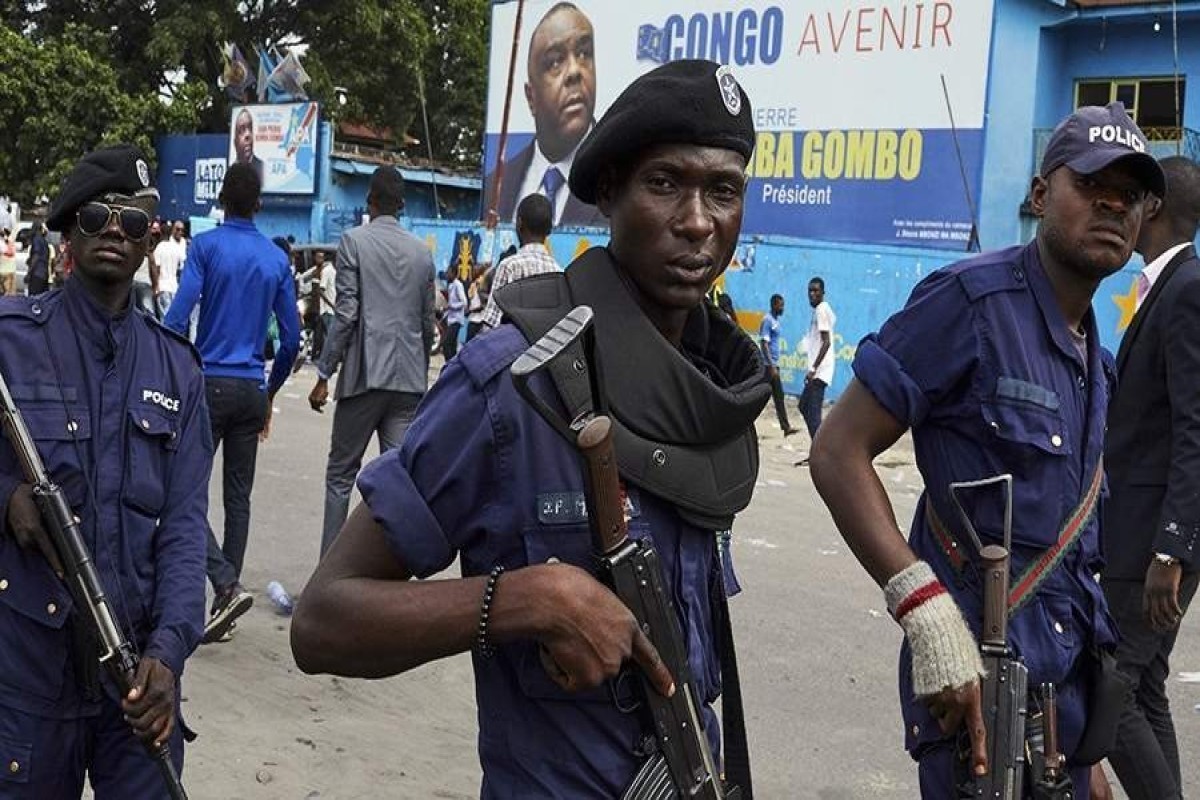
Rebel attack kills 11 civilians in DR Congo
05:16
11 October 2026

NEWS FEED
UN considers CICA's role more important now than ever
16:26
15 October 2026
Meeting held with delegation of international and foreign national Paralympic committees
16:23
15 October 2026
President Ilham Aliyev receives Turkish FM
16:16
15 October 2026
President Ilham Aliyev met with Amir of the State of Qatar
16:14
15 October 2026
7th CICA Summit concludes
16:12
15 October 2026
CICA Secretary General replaced
16:11
15 October 2026
Lavrov considers it appropriate to hold next "3+3" meeting in Azerbaijan
16:08
15 October 2026
Baku Declaration adopted following 7th CICA Summit
16:05
15 October 2026
Large amount of drugs prevented from being smuggled from Iran into Azerbaijan - PHOTO
16:02
15 October 2026
Signed documents exchanged between Azerbaijan and Kazakhstan
16:00
15 October 2026
Lavrov: Russia ready to participate in TRIPP, but has not yet received invitation
15:50
15 October 2026
Lavrov: Zelenskyy is challenging Trump, not interested in elections
15:47
15 October 2026
Presidents of Azerbaijan and Kazakhstan meet in Baku, inaugurate Trans-Caspian Fiber-Optic Cable Line
15:44
15 October 2026
9th Congress of Azerbaijani Journalists to be held tomorrow, candidates for Press Council Board announced
15:43
15 October 2026
Gharibabadi: Current difficulties in Strait of Hormuz caused by military aggression and naval blockade against Iran
15:42
15 October 2026
ING: $10 rise in oil prices could increase Azerbaijan’s exports by 2–4% of GDP
15:39
15 October 2026
UAE Minister: Priorities set during Azerbaijan’s CICA chairmanship align with UAE’s vision
15:33
15 October 2026
Palestinian issue raised at CICA Summit
15:31
15 October 2026
Baku hosts 7th CICA Summit, President Ilham Aliyev addressed the event - UPDATED - 3
15:26
15 October 2026
Indian FM: Changing geopolitical landscape necessitates more active participation of Global South countries
15:15
15 October 2026
Azerbaijan takes over chairmanship of CIS Advisory Council on Labor, Employment and Social Protection
15:14
15 October 2026
Death toll from Istanbul floods reaches 3, four people missing
15:12
15 October 2026
Azerbaijani Special Forces conduct training sessions for reservists
15:07
15 October 2026
Home of Novaya Gazeta editor-in-chief searched
15:04
15 October 2026
Lavrov: Russia has always supported CICA's development through practical cooperation
14:58
15 October 2026
Foreign ministers of Azerbaijan, Uzbekistan and Turkmenistan hold trilateral meeting
14:55
15 October 2026
Turkish and Russian FMs meet in Baku
14:53
15 October 2026
Türkiye committed to strengthening CICA as Asia's most comprehensive security platform - Turkish FM
14:51
15 October 2026
Bahrain calls for ensuring safety of maritime and air navigation
14:44
15 October 2026
Pashinyan: Armenia has never had strained relations with Russia
14:40
15 October 2026
Pezeshkian to visit Armenia for biodiversity summit
14:40
15 October 2026
FM Hakan Fidan: We want COP31 to become an opportunity to strengthen climate justice
14:38
15 October 2026
Turkish FM: We support CICA's transformation into a full-fledged international organization
14:33
15 October 2026
Peskov: Moscow unaware of US proposals to Europe on unfreezing Russian assets
14:31
15 October 2026
Azerbaijani Parliament Speaker meets with Chairman of House of Representatives of Belarusian National Assembly
14:29
15 October 2026
Kremlin: Russian diesel has begun entering global markets
14:22
15 October 2026
FM: China highly appreciates Azerbaijan's efforts to strengthen CICA
14:18
15 October 2026
Chairman: Azerbaijan is effectively chairing CICA
14:14
15 October 2026
Kremlin: Ukraine's strikes on Russian oil refineries contradict US peace initiatives
14:06
15 October 2026
Belarusian representative: We are united by commitment to international law and UN Charter
13:59
15 October 2026
Cambodia strongly supports transformation of CICA into full-fledged international organization
13:56
15 October 2026
Vietnam highly appreciates Azerbaijan’s CICA chairmanship
13:53
15 October 2026
Russia may begin diesel supplies to US within 2-3 weeks
13:46
15 October 2026
President: It was an analogue of the Nuremberg Tribunal, only this time Armenian fascists sat in the dock
13:45
15 October 2026
President: Laos’s accession to CICA demonstrates commitment to promoting peace and cooperation
13:42
15 October 2026
Serdar Berdimuhamedov: Turkmenistan gives special support to Azerbaijan’s CICA chairmanship
13:35
15 October 2026
President: Peace remains fragile and must be protected and strengthened
13:34
15 October 2026
Israeli President calls Rubio’s expected visit to Central Asia very important
13:29
15 October 2026
Isaac Herzog: Under President Ilham Aliyev’s wise leadership, Azerbaijan has become a model of stability
13:26
15 October 2026
Isaac Herzog: Israeli people also have sufficient resources to contribute to Asia
13:16
15 October 2026


