

The story of the metamorphosis of these delicious pastry parcels begins its journey in China – Central Asia – South Caucasus - Europe, APA reports citing Euronews.
In the kitchens of Azerbaijan
In Azerbaijan, the dumpling takes on two particularly distinctive forms: Düşbərə and Gürzə.
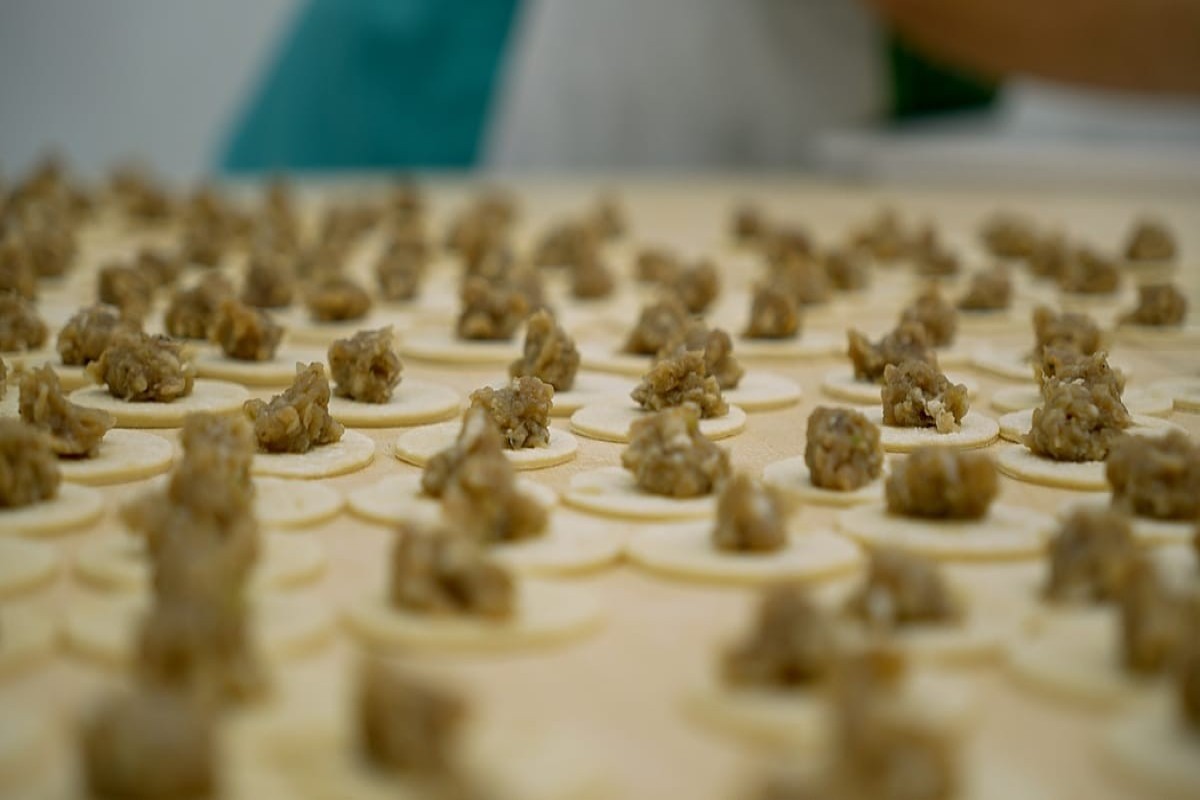
At first glance they may seem modest, but both are celebrated for the precision and care they demand. Düşbərə are famously tiny—delicate parcels of dough filled with minced lamb and served in a fragrant broth/soup—so small that tradition says dozens should fit onto a single spoon.
Gürzə, by contrast, is slightly larger and hand-pinched along the top in a braided fold said to resemble a snake, their name echoing the local word for a viper.
Both dishes rely on simple ingredients—fine dough, seasoned meat, herbs and broth—but their true character lies in the technique and patience required to shape them, where the skills are often passed from generation to generation in Azerbaijani kitchens.
Today, chefs continue to honour these traditions while adding their own interpretations, keeping these beloved dumplings at the heart of the country’s culinary identity.
Ilkin Akbarzadeh is President of the Baku Culinary Association and has a substantial following of over 60 000 on instagram. He explained why dumplings are an intrinsic part of Azerbaijani heritage.
“Dumpling, this is part of our traditional cuisine, the heritage cuisine in Azerbaijan.”
“I think probably, many of these dumplings are coming from Asia, from China, and after some kind of transformers for every culture, every people, and all regions,” he says.
All the types are made with flour, Akbarzade notes:
“I mean the dushbarar, kingels and the gurza, and different types of this type of food was cooked from the dough and stuffed with meat.”
He says the consumption of dumplings happens in the colder months: “Usually in our culture, people eat it in winter time. For energy, for the health, for cold weather, you're heating the whole body, and that usually representing this food in the winter, in our culture."
The Dumpling Belt reaches Europe
As the Dumpling Belt stretches further west, the familiar idea of dough wrapped around a savoury filling continues its quiet transformation across Europe.
In Italy, the concept evolves into elegant forms such as ravioli, tortellini and agnolotti, where delicate pasta envelopes rich fillings of meat, cheese or vegetables.
Across Eastern Europe, dumplings appear as pierogi in Poland and pelmeni in Russia, while in the United Kingdom, pastry parcels take shape in hearty regional traditions such as pasties and suet dumplings.
Even in France and Spain, echoes of the same culinary idea appear in dishes that combine dough, filling and careful folding, adapted to local tastes and ingredients.
Though the names, shapes, and techniques differ, the principle remains remarkably consistent. From the medicinal dumplings of ancient China to the family kitchens of Central Asia and the refined pasta traditions of Europe, the dumpling’s journey tells a story not just of food, but of movement, exchange and shared human creativity.
Along the old trade routes of the Silk Road, this enduring Dumpling Belt was born out of a simple idea and has travelled thousands of miles.
It proves that sometimes the most universal dishes begin with nothing more than flour, filling, and a pair of patient hands.


 Follow us on Telegram
 t.me/apanewsaz
 Follow us on Instagram
 Follow us on TikTok
 Follow us on Facebook
 Follow us on X