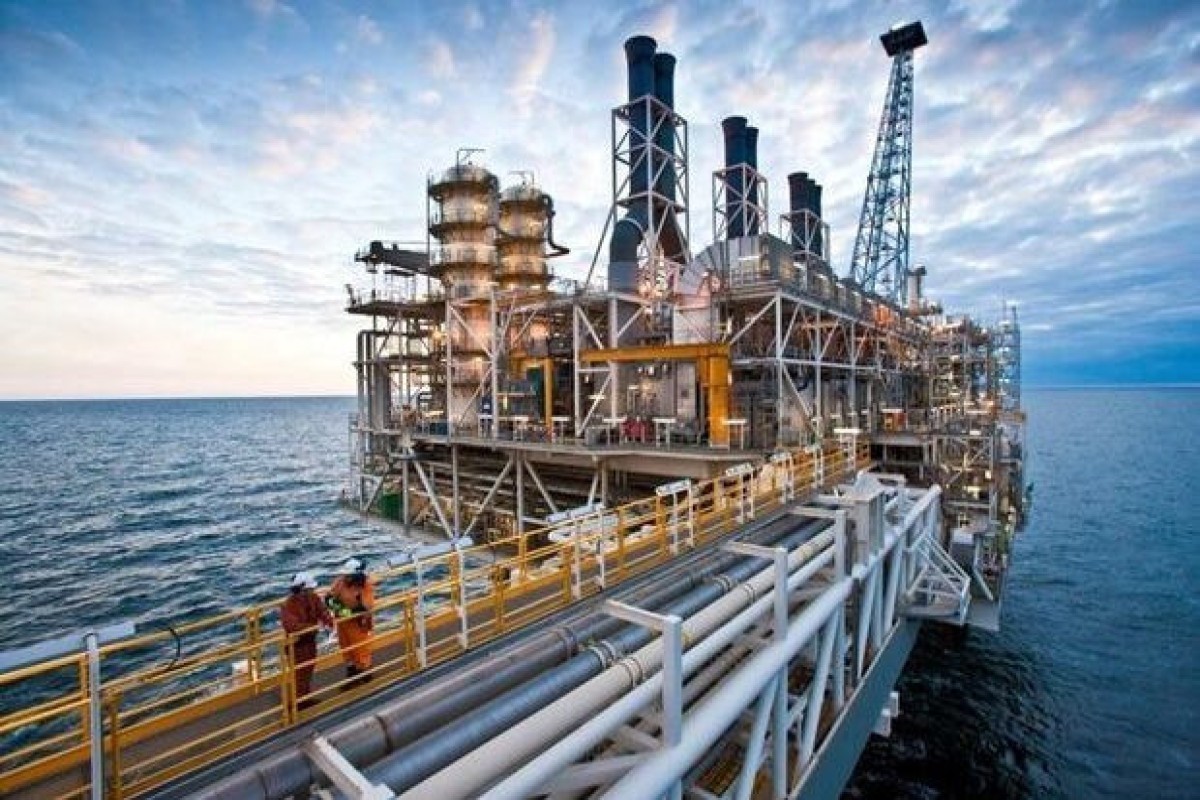



As in Azerbaijan, the oil and gas sector is the main pillar of economic development in Kazakhstan, said Assilbek Dzhakiyev, head of PetroCouncil.kz, during his speech at the 2nd Caspian and Central Asia Oil Trade and Logistics Forum held in Baku, APA-Economics reports.
He noted that although officially this sector accounts for more than 20% of GDP, according to independent assessments, this figure exceeds 35%:
“Kazakhstan’s goal by 2030 is to produce 100 million tons of oil annually. Currently, the country is among the world’s top 10 oil and gas producers. The main fields are located in western Kazakhstan, along the Caspian Sea coast.
Over the past 30 years, upstream projects have dominated, but now the focus is shifting to downstream projects. Chinese companies are involved. The total value of projects in this sector for the next five years is $15 billion.
For example, with a $7.6 billion project, it is planned to produce 1.2 million tons of polyethylene annually, and with a $1.1 billion project, 900,000 tons of butadiene.”
He stated that the main routes for transporting these products will be the Middle Corridor passing through China and Azerbaijan:
“The northern route is expected to remain limited over the next 5–10 years. Kazakhstan has rich reserves of ‘sour gas,’ and this raw material will be used in the petrochemical industry. Most of the projects are located in the Atyrau region (about a 50-minute flight from Baku).
Currently, 80% of Kazakhstan’s oil is exported via the Caspian Pipeline Consortium. This makes diversification of logistics necessary. The goal is to transport 3 million tons of oil annually via the Caspian Sea.
However, there are infrastructure constraints for this. For example, additional pipelines and the expansion of Aktau port capacities are required. Approximately $3 billion in investment is needed in this direction.”
He added that one of the main priorities is the development of the Baku-Tbilisi-Ceyhan pipeline and the Caspian route:
“Another issue is the blending of Kazakhstan’s heavier oil with Azerbaijan’s lighter oil. In terms of transportation costs, the cheapest route is the CPC pipeline – about $36 per ton. The Baku-Tbilisi-Ceyhan route costs around $90. This difference affects the economic efficiency of projects.
After the Russia–Ukraine war, discussions are ongoing in Kazakhstan regarding the future of the Caspian route.”


 Follow us on Telegram
 t.me/apanewsaz
 Follow us on Instagram
 Follow us on TikTok
 Follow us on Facebook
 Follow us on X