

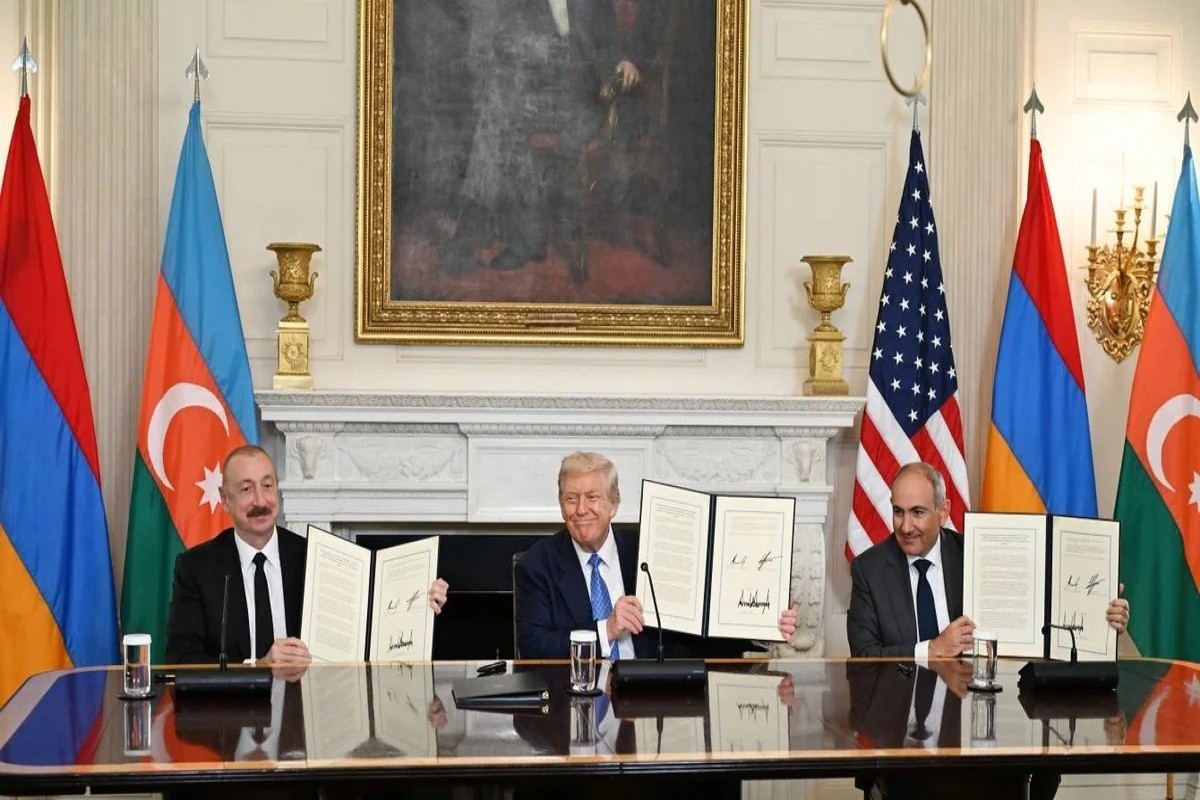


One year has passed since the agreements reached between Azerbaijan and Armenia in Washington on August 8, 2025. The meeting held with the participation of US President Donald Trump, the initialing of the text of the peace agreement between Azerbaijan and Armenia, and the political commitments undertaken by the parties became one of the key diplomatic developments of the post-conflict period in the South Caucasus.
Over the past year, a number of changes have taken place in Azerbaijan-Armenia relations. Political and diplomatic contacts have intensified, the border delimitation process has continued, steps have been taken toward dismantling international mechanisms associated with the former conflict, while concrete work is underway to open transport communications and expand opportunities for economic cooperation.
So, how do Azerbaijani and Armenian experts assess the Washington agreements?
What did the Washington meeting change?
Metin Mammadli, Head of Department at the Center of Analysis of International Relations and political scientist, believes that the August 8, 2025 Washington meeting should be regarded as one of the most important political and diplomatic achievements of Azerbaijani diplomacy in the post-conflict period.
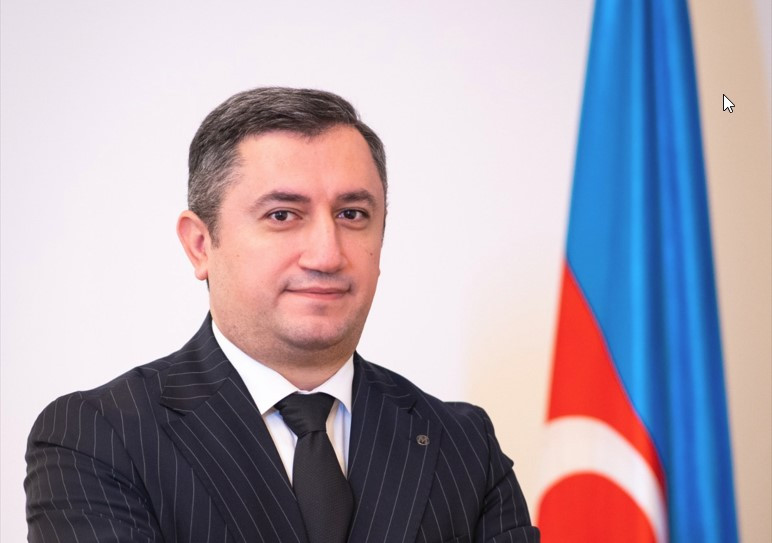
“The August 8, 2025 Washington meeting should be regarded as one of the most important political and diplomatic achievements of Azerbaijani diplomacy in the post-conflict period. The significance of this meeting is not limited solely to the initialing of the agreed text of the peace agreement. In fact, the Washington meeting became an important manifestation of international recognition of the new political and geopolitical reality that had emerged in the South Caucasus after 2020,” the expert said.
According to him, following the Second Karabakh War, instead of continuing the confrontation, Azerbaijan proposed that relations should first and foremost be moved to the interstate level and that peace should be established on the basis of the principles of international law: “An important point must be taken into account here. Following the Second Karabakh War, instead of continuing the confrontation, Azerbaijan proposed that relations should first and foremost be moved to the interstate level and that peace should be established on the basis of the principles of international law. The final document of the August 8 meeting enshrined the sovereignty and territorial integrity of states, the inviolability of international borders, and the inadmissibility of acquiring territory by force as fundamental principles.”
According to Mammadli, for this reason, the Washington summit should be viewed not simply as another stage of the negotiation process, but as the consolidation, at the international legal and diplomatic level, of the new reality created by Azerbaijan after 2020.
“It would be more accurate to describe the Washington summit as a stage in which the new reality created by Azerbaijan in the military and political sphere was consolidated at the diplomatic and legal level. The developments of the past year also confirm this. The OSCE Minsk Process and its related structures were closed on the basis of a joint appeal by the parties. Negotiations on border delimitation are continuing. Concrete institutional mechanisms have already been established toward opening communications,” he emphasized.
The political scientist believes that all of this provides grounds for viewing the Washington meeting as the stage at which the transition from conflict-management diplomacy to post-conflict and peace diplomacy was institutionalized.
Armenian political commentator Artur Aghajanov also considers the developments in Washington on August 8, 2025 a fundamental turning point in relations between the two countries.

“On August 8, 2025, documents concerning peace between Azerbaijan and Armenia were signed in Washington through the mediation of US President Donald Trump. This event became the culmination of negotiations that had continued for many years. The implementation of Trump’s initiative represents a new form of third-party involvement in the peace agenda,” Aghajanov said.
In his view, following the Washington meeting, not only political statements but also more practical and institutional ties emerged between the parties: “Both sides reached agreement on specific areas. There is permanent operational contact between the administrations. Diplomatic institutions are already interacting, and tensions within international organizations have noticeably decreased. A few years ago, there was a perception that normal relations were impossible, whereas today an intergovernmental commission headed by deputy prime ministers meets regularly. Hikmet Hajiyev, Assistant to the President of Azerbaijan, has visited Armenia, and meetings have been held between the heads of the foreign policy institutions of Armenia and Azerbaijan.”
Aghajanov also considers the increase in contacts at the civil society level to be an important factor.
“In addition, the civil societies of the two countries have created a platform for dialogue within the ‘Peace Bridge’ initiative. Representatives of public organizations have held meetings both in Armenia and Azerbaijan. These meetings and their impact on the peace process over the past year are indicators of positive dynamics. Good potential has emerged for the future normalization of relations,” Aghajanov added.
What is the political and legal significance of the initialed peace agreement?
Metin Mammadli believes that initialing and signing are legally distinct concepts and that this distinction is important for properly assessing the current stage of the process.
“First of all, it is necessary to distinguish between the concepts of initialing and signing from a legal perspective. Initialing indicates that an agreed text of the treaty already exists between the parties and that the main stage of negotiations over the text has effectively been completed. However, initialing in itself does not yet mean that the treaty has entered into force,” the expert said.
He recalled that on August 8, 2025, the foreign ministers initialed the agreed text of the peace agreement and that the Washington Declaration stated that appropriate steps toward signing and ratifying the document should continue: “From a legal perspective, the substance of the document is also highly significant. The agreed treaty provides for the mutual recognition of sovereignty, territorial integrity, the inviolability of borders and political independence, as well as confirmation that the parties have no territorial claims against each other and will not raise such claims in the future. The document refers to the UN Charter, the Helsinki Final Act and the 1991 Alma-Ata Declaration.”
Mammadli believes that the political significance of the initialing is also considerable.
“For the first time, the parties have arrived at an agreed document not on the nature of the conflict, but, more precisely, on how future relations between two sovereign states should be built,” he emphasized.
Artur Aghajanov, meanwhile, views the initialed peace agreement through the prism of changes in Armenia’s foreign policy.
“The political significance of the initialing of the peace agreement for Armenia lies in the fact that this step can be considered a turning point. For many years, Armenia was primarily oriented in one direction: toward the OSCE Minsk Group, Russia, Iran or other external actors,” Aghajanov said.
According to him, the Washington format demonstrated that Armenia has greater scope to make independent decisions as a regional political actor: “The Washington format, in which the peace agreement was initialed, demonstrated Armenia’s independence as a regional political actor. Azerbaijan had long pursued an independent political course, whereas no such course had taken shape in Armenia. Therefore, Armenia’s decision to independently conclude an agreement with Azerbaijan carries major political significance. Regardless of who the mediators were, the decision was made by Armenia and Azerbaijan.”
According to Aghajanov, it is precisely in this respect that the initialed agreement carries important political significance for both Armenia and Azerbaijan.
Washington summit is the result of Azerbaijan’s peace strategy
Metin Mammadli believes that the Washington meeting can be regarded as the political and diplomatic result of the peace strategy consistently advanced by Azerbaijan since 2020.
“The Washington meeting can be regarded as the political and diplomatic result of the peace strategy consistently advanced by Azerbaijan since 2020. The essence and philosophy of Azerbaijan’s approach was that, following the end of the former Armenia-Azerbaijan conflict, Baku and Yerevan should build their relations not on the terminology of the past conflict, but on the universal principles of normal relations between two sovereign states,” the political scientist said.
According to him, these principles are based on mutual recognition of territorial integrity, the inviolability of borders, renunciation of territorial claims against each other, and non-use of force.
“When we look at the agreement initialed in Washington, we see that precisely these principles form the legal foundation of the document,” Mammadli noted.
He believes that the issue goes beyond the acceptance of individual diplomatic demands advanced by Azerbaijan.
“This is not merely about the acceptance of certain diplomatic demands put forward by Azerbaijan, but about the acceptance of the concept proposed by Baku for the post-conflict period as a whole. The peace agenda advanced by Azerbaijan is based on universally recognized norms and principles of international law and on the sovereignty of states,” Mammadli emphasized.
According to the political scientist, the acceptance of this approach by Armenia and other actors is one of the results of Azerbaijan’s consistent foreign policy following the Second Karabakh War.
“From this perspective, the significance of the Washington meeting for Azerbaijan lies in the fact that Azerbaijan now acts not only as the victor of the war, but also as one of the initiators of the post-conflict regional order and peace agenda,” he said.
Artur Aghajanov also believes that the two countries are gradually moving toward a peace agreement.
“The countries are moving toward a peace agreement, and there was a gradual realization that continuing the conflict and tensions was pointless. This process naturally led toward a peace settlement,” Aghajanov said.
According to him, although various negotiation platforms existed in the past, they failed to produce effective results.
“Although not everyone in Armenia and Azerbaijan was fully prepared for this process, the majority of people support the normalization of relations. Various negotiation platforms existed, including the OSCE Minsk Group, but they were ineffective. This is precisely why the Washington format represents a fundamentally new stage,” the political commentator said.
Aghajanov sees the principal difference of the Washington format in the fact that the parties themselves made the final decisions.
“The Washington meeting demonstrated that Armenia and Azerbaijan can reach agreement without external pressure. Washington provided the platform, and the US President participated in the process, but the final decisions were made solely by Armenia and Azerbaijan. This is the main point that distinguishes the Washington format from previous attempts. The United States exerted pressure on neither Armenia nor Azerbaijan. The leaders of the two countries reached the agreements themselves,” he added.
What results have been achieved over the past year?
Assessing the results of the past year, Metin Mammadli identifies several important areas.
“When assessing the past year, we should highlight several important results. First is the situation that emerged following the agreement and initialing of the full text of the peace treaty. I believe this is a fundamental political outcome,” the political scientist said.
According to him, the second major result is the formal termination of the OSCE Minsk Process and its related structures, which constituted the international mediation format for the former conflict.
“Finally, as a third area, the border delimitation process continued over the past year. At the latest meeting of the border commissions in April 2026, draft procedures concerning the work of expert groups, the preparation of delimitation maps and the drafting of other documents were agreed,” Mammadli said.
He believes that although positive dynamics have been observed in these areas, a number of problems and unresolved issues remain.
“We have observed certain progress and positive dynamics in these key areas. However, naturally, a number of problems still remain. There are unresolved issues,” the political scientist noted.
Artur Aghajanov, meanwhile, links the results of the past year not only to political contacts, but also to economic and practical steps.
“Noticeable changes in Azerbaijan-Armenia relations can be seen in meetings held at the level of diplomats and civil society representatives. At the same time, following the historic Washington agreements, a number of important steps have been taken toward ensuring real peace,” Aghajanov said.
According to him, these steps include allowing goods to be transported to Armenia in transit through Azerbaijani territory and the beginning of fuel supplies from Azerbaijan to Armenia: “Yerevan and Baku are also discussing gas trade and the interconnection of electricity grids. This is of major importance both for Azerbaijan and, first and foremost, for Armenia. Azerbaijan, meanwhile, operates flights through Armenian airspace. Flights are also operated between Azerbaijan and Nakhchivan. In doing so, Azerbaijan acts as a state that prioritizes good-neighborly relations. All of this represents major progress.”
Can the economy become one of the main pillars of peace?
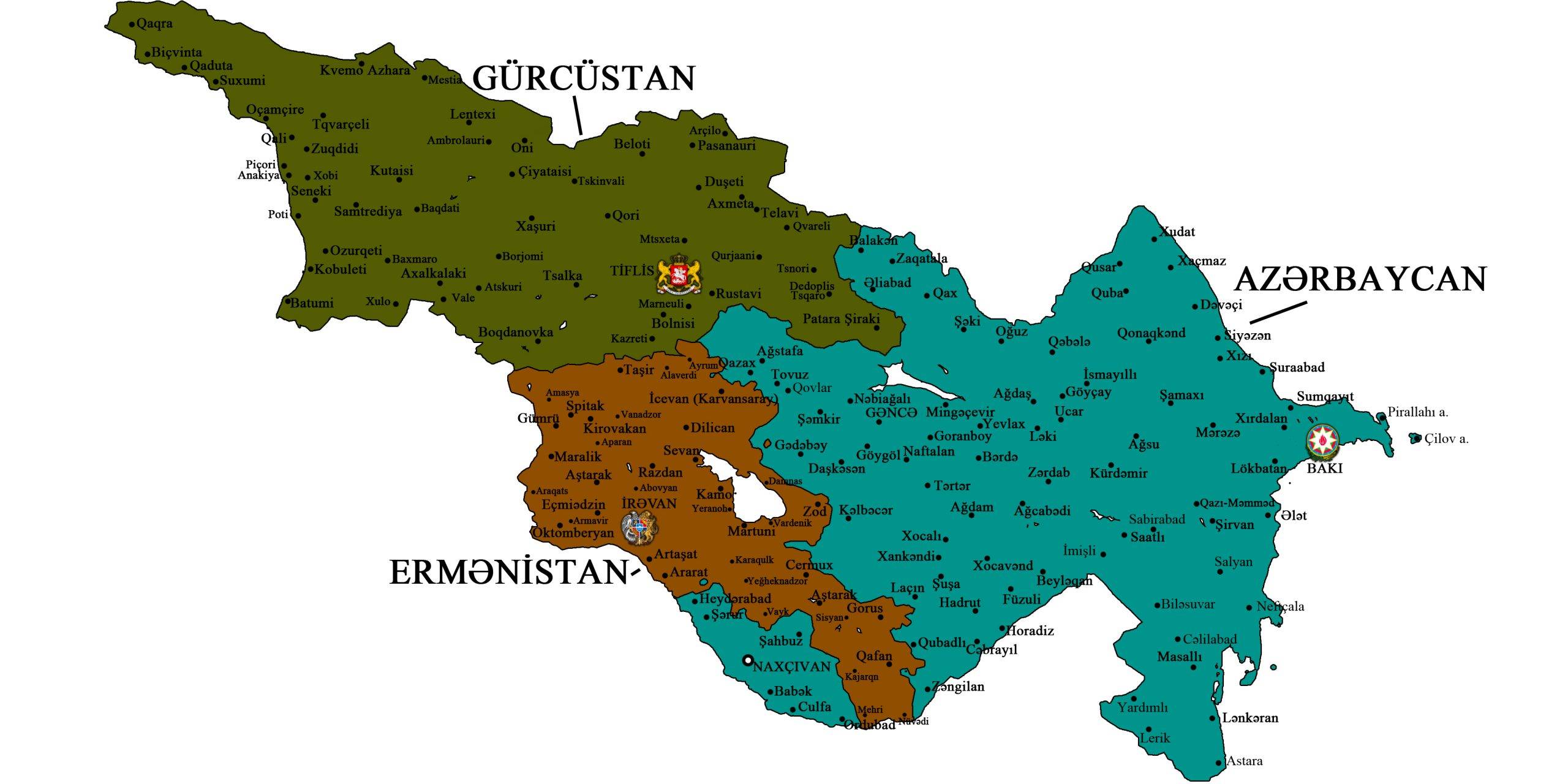
Metin Mammadli believes that for many years one of the main factors preventing the South Caucasus from fully realizing its economic potential was precisely the conflict and the communications that remained closed because of it.
“For many years, one of the main factors preventing the South Caucasus from fully realizing its economic potential was precisely the conflict and the communications that remained closed because of it. I believe that if a final peace treaty is signed between Azerbaijan and Armenia and sustainable peace is established, this could significantly transform the economic geography of the entire region,” the political scientist said.
In his view, establishing a new transport connection between mainland Azerbaijan and Nakhchivan would be important not only for the country itself, but also for the broader East-West transport network.
“The transition of the TRIPP project to an institutional stage following the Washington meeting is particularly noteworthy in this regard. Overall, this process could expand the functional capacity of the Middle Corridor,” Mammadli noted.
He emphasized that Azerbaijan is already one of the principal transit countries connecting the Caspian basin, Central Asia, the South Caucasus, Türkiye and Europe: “Opening an additional transport route through Armenia would increase the number of alternative routes in the region, strengthen logistics resilience and enable the optimization of transit costs.”
According to Mammadli, the impact of economic cooperation on sustainable peace could become even more significant in the long term.
“Most importantly, the economic dividends of peace could create interdependence over time. It is well known in international relations theory that economic interdependence increases the political cost of conflict. More precisely, mutual economic dependence contributes to eliminating conflict situations between countries,” he added.
Artur Aghajanov also regards the economy as one of the principal driving forces behind Azerbaijan-Armenia normalization.
“The process of normalizing relations between Armenia and Azerbaijan is primarily connected with the economy. The economy brings countries closer together no less than politics does,” the political commentator said.
In his view, gas trade, the interconnection of electricity grids, transit and other economic ties could also strengthen the social and political foundation for future normalization.
What is preventing the signing of the peace agreement?
Metin Mammadli says one of the main outstanding issues is that the peace agreement has yet to be formally signed.
“One of the main issues is that the peace agreement has still not been formally signed. As is known, Azerbaijan considers the removal from Armenia’s Constitution of provisions interpreted as territorial claims against Azerbaijan to be a matter of principle for the final signature. Our position has not changed,” the political scientist said.
According to him, once Armenia’s Constitution is amended, the final peace treaty between Azerbaijan and Armenia can be signed.
“After this issue is resolved and Armenia’s Constitution is amended, a final peace treaty can be signed between Azerbaijan and Armenia. This is the unchanged principled position of the Azerbaijani state,” Mammadli emphasized.
He said that the legal foundation is of fundamental importance for the sustainability of peace: “For Azerbaijan, peace must be built not merely on political statements, but on a solid legal foundation that excludes mutual territorial claims. This is our position.”
According to Mammadli, removing provisions in Armenia’s domestic legal documents that are regarded as territorial claims against Azerbaijan therefore carries strategic importance.
“Recently, Azerbaijan’s Foreign Minister also noted that the principal issue standing in the way of signing the final agreement is precisely Armenia’s Constitution. Amending Armenia’s Constitution could accelerate the process of signing a final peace treaty between the two countries,” he said.
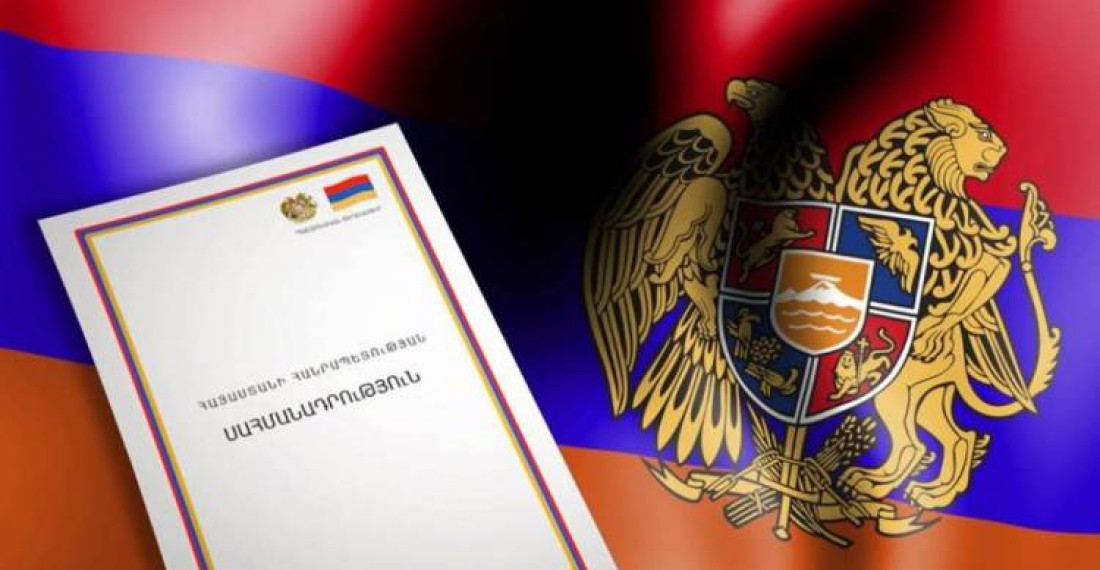
Artur Aghajanov also identifies Armenia’s Constitution as one of the main obstacles to signing the final agreement.
“One of the main issues preventing the final signing of the peace agreement is Armenia’s Constitution. Azerbaijan has consistently stated that any provisions containing territorial claims against Azerbaijan and Türkiye must be removed. This is a natural demand and can be implemented,” the Armenian political commentator said.
Aghajanov identifies the opening of the Zangezur Corridor as the second important issue.
“The second issue is the opening of the Zangezur Corridor. As relations and dialogue between the parties develop, opening this corridor will become increasingly important. Armenia must understand this, and the Pashinyan government understands it as well,” he said.
According to the Armenian political commentator, although the opposition may attempt to create certain obstacles, these issues can be resolved through public and political mechanisms: “The opposition may attempt to create certain obstacles. However, if a referendum is required on this issue, that path is also possible. Armenian society is ready both for amendments to the Constitution and for the opening of the Zangezur Corridor. These are the two main issues that need to be resolved, and they are expected to find a solution.”
How is the new regional security architecture taking shape?
According to Metin Mammadli, the geopolitical significance of the Washington meeting should not be limited solely to Azerbaijan-Armenia relations.
“The geopolitical significance of the Washington meeting can be assessed in a broader regional context. For a long time, the South Caucasus was under the influence of major powers and security mechanisms created by the former conflict. In recent years, however, the region’s political and security — or, more precisely, geopolitical — configuration has changed significantly,” the political scientist said.
According to him, one of the important outcomes of the Washington summit was the United States’ more active and institutional engagement in the South Caucasus.
“The emergence of the TRIPP project in particular demonstrated that Washington now approaches the region not only through the prism of conflict mediation, but also in the context of security, transport, energy and economic connectivity,” Mammadli noted.
He recalled that a framework agreement on TRIPP was signed between Armenia and the United States in June 2026 and that the project entered the practical implementation stage during US Secretary of State Marco Rubio’s visit to Armenia.
“The closure of the OSCE Minsk Process also means the removal of one of the key elements of the old security architecture. Many processes and structures associated with the former conflict have now passed into history. This can also be regarded as one of the elements of the new security architecture,” the political scientist said.
Mammadli stated that Azerbaijan is interested in building security in the region not on external military-political confrontation, but on the principles of regional cooperation: “Azerbaijan’s interest is that security in the South Caucasus should be built not on external military-political confrontation, but on the sovereignty of states, mutual recognition of territorial integrity, economic interdependence and regional cooperation. This is precisely why the peace process is not merely the normalization of Azerbaijan-Armenia relations, but a process of transforming the geopolitical function of the South Caucasus as a whole.”
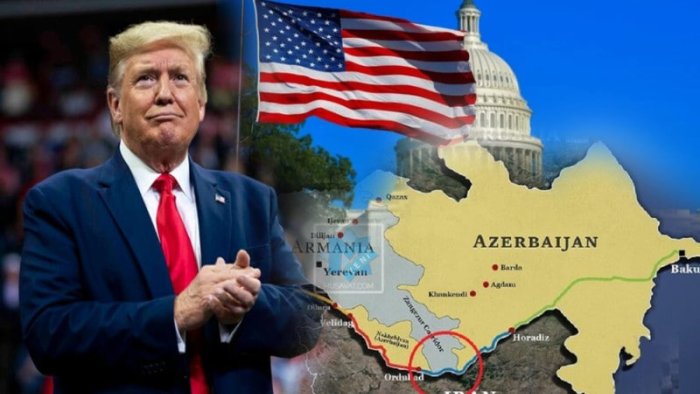
Artur Aghajanov also believes that implementing the peace agreement would be of major importance for the entire South Caucasus.
“The implementation of the peace agreement is of major importance for the entire South Caucasus region. Particularly amid continuing instability surrounding Iran, the South Caucasus remains a complex region. Once a final peace treaty is signed, Azerbaijan and Armenia can play an important role in ensuring regional stability,” Aghajanov said.
In his view, signing the final agreement would provide impetus to regional stability, economic cooperation and expanded logistics links: “The peace treaty is expected to be signed this year or early next year. This will lead to greater stability in the region, the development of economic cooperation and stronger logistics links. The economy will be the main factor bringing the parties closer together. The most important issue, however, is ensuring peace between Armenia and Azerbaijan.”
Aghajanov believes that both countries’ good relations with Iran and their developing ties with the United States could also play a positive regional role.
“Both countries have good relations with Iran, and this could also play a positive role. In addition, both Armenia and Azerbaijan are developing their relations with the United States. A rapprochement between two states that had no diplomatic relations for more than thirty years could provide a major impetus to the development of the South Caucasus as a whole. If political and economic rapprochement takes place between the countries, this will have a positive impact on all states in the region,” Aghajanov added.
What risks remain for the peace process?
Metin Mammadli says that at the current stage, the main risks to the peace process can be divided into several categories.
“At the current stage, we can divide the main risks to the peace process into several groups. The first risk is related to political processes within Armenia. In general, I consider the possible return of former conflict narratives and revanchist approaches to Armenia’s political agenda to be one of the principal risks,” the political scientist said.
According to him, revanchist tendencies and their supporters still exist in Armenia.
“I believe these revanchist tendencies within Armenia and their possible future influence on government policy can be regarded as one of the most serious threats to peace,” Mammadli said.
The second risk is legal in nature and concerns provisions in Armenia’s domestic legal documents that could be interpreted as territorial claims against Azerbaijan.
As the third risk, the political scientist points to the possible negative impact of regional competition among major powers on the peace process.
“The South Caucasus has always been a space where the interests of various centers of power intersect. Therefore, Azerbaijan’s diplomatic position is that the peace process should not become an instrument of geopolitical confrontation. This is our position,” Mammadli said.
He believes Armenia should also refrain from attempts to turn the region into an arena of geopolitical confrontation: “Our proposal and approach toward Armenia is that it should not attempt to turn the region into an arena of geopolitical confrontation. I believe such developments have a negative impact on the peace process between the two countries.”
Artur Aghajanov also acknowledges that public opinion and political positions within Armenia are not uniform.
“Public opinion is not unanimous. Not everyone supports the initialing of the peace agreement and its future signing. Different positions exist among experts and within society,” the Armenian political commentator said.
Nevertheless, in his view, Armenian society has changed noticeably in recent years.
“Five or six years ago, even four years ago, many people viewed this process with skepticism or distrust, whereas the situation has now changed. Today, both experts and society approach this agreement with greater optimism and confidence,” Aghajanov said.
According to him, the economic factor plays a particularly important role in this change: “People understand how important economic relations are for Armenia’s economy and the well-being of its citizens. The economy effectively influences every sphere. Therefore, public opinion is gradually changing. The position of the expert community is changing as well.”
Aghajanov also noted the existence of forces opposing the process.
“There are also those who do not support this process. They may represent certain political parties and other forces and possess some degree of influence. However, these forces are not expected to be able to seriously alter the choice Armenia has made,” he said.
According to the political commentator, Armenia’s principal choice is to move toward normalization of relations with Azerbaijan and the signing of a final peace agreement.
“This choice is to move toward the normalization of relations with Azerbaijan and the signing of a final peace agreement,” Aghajanov emphasized.
The historic significance of the Washington meeting
Thus, although there are differences between the Azerbaijani and Armenian commentators’ assessments of individual elements of the process, both perspectives emphasize the conclusion that the year following the Washington meeting has created a new stage in Azerbaijan-Armenia relations.
Metin Mammadli views the Washington meeting as the consolidation, at the political, diplomatic and legal levels, of the post-conflict reality created by Azerbaijan after 2020, as well as broader acceptance of the peace concept advanced by Baku.
Artur Aghajanov, meanwhile, identifies the fact that Azerbaijan and Armenia made the final decisions themselves within the Washington format, the expansion of bilateral contacts, and the emergence of new opportunities for economic cooperation among the main outcomes.
Both experts emphasize that economic ties, the opening of transport communications, direct interstate dialogue and legal guarantees will play a particularly important role in establishing sustainable peace.
At the same time, the signing of the final peace treaty, the issue concerning Armenia’s Constitution, the opening of communications, domestic political risks and competition among major powers in the region remain the principal challenges for the next stage.
One year after the Washington agreements, the main change is that the agenda between Azerbaijan and Armenia is no longer limited solely to discussing the consequences of the former conflict. The growing prominence of issues such as border delimitation, transport, energy, trade, diplomatic contacts, civil society ties and regional cooperation is emerging as one of the main indicators of the transition in relations between the two countries from a conflict-management model to a stage of interstate normalization.
From this perspective, the Washington meeting can be regarded as historically significant both for achieving peace between Azerbaijan and Armenia and for paving the way toward stability and development in the region and the broader European space.



 Follow us on Telegram
 t.me/apanewsaz
 Follow us on Instagram
 Follow us on TikTok
 Follow us on Facebook
 Follow us on X