Interview of the Head of the Press Service Department of the Ministry of Foreign Affairs of Azerbaijan, Aykhan Hajizadeh, with APA
"Azerbaijan, as the initiator of the peace process, is interested in ensuring lasting stability in the region"
— On August 8, with the participation of the President of the Republic of Azerbaijan, the President of the United States of America, and the Prime Minister of the Republic of Armenia, the foreign ministers of Azerbaijan and Armenia initialed the text of the “Agreement on Establishment of Peace and Inter-State Relations between the Republic of Azerbaijan and the Republic of Armenia.”
What steps have been taken so far to establish peace and interstate relations between Azerbaijan and Armenia, and what further steps are planned?
- As is known, negotiations on the “Agreement on Establishment of Peace and Inter-State Relations between the Republic of Azerbaijan and the Republic of Armenia” were conducted based on an initiative put forward by Azerbaijan and continued for two and a half years, starting from October 2022.
After the anti-terror measures in 2023, and especially towards the end of 2024, the Armenian side accepted several provisions in the draft peace treaty to which it had previously objected. This accelerated the process of reaching agreement on the text.
On August 8, in Washington, D.C., at the White House, with the participation of the leaders of Azerbaijan, the United States, and Armenia, the draft treaty was initialed by the foreign ministers. At the next stage, the text of the treaty was made public, and on September 1, the remnants of the former conflict — the OSCE Minsk Process and its related structures — were officially dissolved.
At the same time, it is known that Azerbaijan’s main condition for the signing of the peace treaty is the amendment of Armenia’s Constitution to remove the territorial claims against Azerbaijan’s sovereignty and territorial integrity. This requirement is also indirectly reflected in the Joint Declaration signed by the leaders of Azerbaijan and Armenia, as well as by the President of the United States as a witness. The Joint Declaration notes that additional measures are needed to achieve the signing and ratification of the treaty.
In addition, steps such as lifting existing restrictions on the transit of goods from Azerbaijan to Armenia, facilitating the delivery of grain from Kazakhstan to Armenia via the territories of Azerbaijan and Georgia, and organizing meetings between representatives and experts of Azerbaijani and Armenian think tanks in Armenia, are all positive confidence-building measures.
Overall, as the initiator of the peace process, Azerbaijan is interested in ensuring lasting peace and stability in the region. We continue our efforts toward the implementation of these historic agreements.

"When our country says third-party forces, it also means the European Union Mission"
– Azerbaijan and Armenia have agreed not to deploy any third-party forces along their mutual border. Armenia has undertaken the obligation to terminate the activities of the EU Monitoring Mission (EUMA) stationed on the Armenia-Azerbaijan border. However, on September 1, 2025, the EU Ambassador to Armenia, Vassilis Maragos, stated that the European Union would continue its monitoring mission in Armenia in line with its mandate and that no changes were currently planned. Does this mean Armenia is refusing to fulfill its commitment?
– As you know, Azerbaijan has repeatedly expressed serious concern regarding the activities of the European Union Monitoring Mission in Armenia, which run counter to the initial understandings reached between the parties. Instead of contributing to regional stability and confidence-building between Azerbaijan and Armenia—as officially declared—the mission has been widely misused as a tool of anti-Azerbaijani propaganda.
Given these circumstances, the non-deployment of third-party forces along the Azerbaijan-Armenia border was advanced by Azerbaijan as one of the key provisions of the peace treaty and was ultimately accepted.
When our country refers to third-party forces, it also includes the European Union Mission. Our position on this matter is well known to Armenia, as the host of the mission. We hope that after the signing of the peace treaty, Armenia will fulfill its commitments within this framework.

"Until the peace treaty is signed, the establishment of mechanisms outlined in the relevant provisions is not yet planned"
– Azerbaijan and Armenia are expected to establish a bilateral commission to monitor the implementation of the initialed peace treaty. What steps are currently being taken in this regard?
– Oversight of the implementation of the treaty is one of the most important aspects. However, it should be noted that until the peace treaty is formally signed, the establishment of mechanisms outlined in the relevant provisions is not yet planned. At present, no discussions are being held regarding the creation of the bilateral commission envisaged under Article 13 of the treaty.
"The next meeting of the delimitation commissions is also among the issues under discussion"
– The initialed text of the peace treaty notes that the relevant border commissions of Azerbaijan and Armenia will hold negotiations, based on mutually agreed regulations, to conclude an Agreement on the Delimitation and Demarcation of the State Border between the two countries. At what stage are these negotiations now?
– The State Commission on the Delimitation of the State Border between the Republic of Azerbaijan and the Republic of Armenia was established by the Order of the President of the Republic of Azerbaijan on May 23, 2022. Since 2022, both countries’ state commissions on border delimitation have been holding regular meetings. During the fifth meeting held on November 30, 2023, the sides agreed on the text of the regulations governing the organization and conduct of meetings and joint working sessions between the commissions.
On April 19, 2024, during the 8th meeting, an agreement was reached that resulted in the return of four enclaves previously under Armenian occupation — Baghanis Ayrim, Ashagi Askipara, Kheyrimli, and Gizilhajili. At this stage, the first 12.7 km section of the border was delimited and demarcated.
The “Regulation on the Joint Activities of the State Commission on the Delimitation of the State Border between the Republic of Azerbaijan and the Republic of Armenia and the Commission on Delimitation and Border Security Issues between the Republic of Armenia and the Republic of Azerbaijan,” signed on August 30, 2024, was approved by Azerbaijan on October 25, 2024.
At the 11th meeting held in January 2025, both sides agreed to carry out the delimitation work in stages, starting from the north and progressing southward.
In general, regular contacts continue between the heads of the commissions, and the holding of the next meeting of the commissions is among the issues currently under discussion.

The return of the other four enclaves to Azerbaijan remains a priority
– What steps are being taken toward the liberation of three villages in the Gazakh district and the Karki village of Nakhchivan within the framework of delimitation?
– The return of Baghanis Ayrim, Ashagi Askipara, Kheyrimli, and Gizilhajili villages of the Gazakh district to Azerbaijan is one of our country’s significant diplomatic achievements. The return of the remaining four enclaves to Azerbaijan remains a constant priority. This issue should be resolved within the framework of the delimitation commissions.
Interference in the trial of war criminals is unacceptable
– It is claimed that during the Washington meeting, the Armenian delegation raised the issue of transferring Armenian prisoners, whose trials are ongoing in Baku, to Yerevan. U.S. President Donald Trump reportedly requested that this matter be resolved by Azerbaijan within possible limits. Is any concession being considered by the Azerbaijani side in this regard?
- The separatist leaders and other detained persons of Armenian origin, whom Armenia has supported for nearly 30 years, are either accused of war crimes, ethnic cleansing, military aggression, torture and other serious crimes, or have already been convicted of these crimes.
In accordance with the Geneva Conventions, as well as both international and national law, Azerbaijan has full legal rights to investigate and prosecute these crimes.
It is well known that following the 2020 war, Azerbaijan — as a humanitarian gesture and in compliance with its obligations under international humanitarian law — released and repatriated more than 200 Armenian detainees who held the status of prisoners of war or were considered detained persons.
It should also be recalled that after the 2023 anti-terror measures, Azerbaijan made another significant gesture by allowing more than 10,000 members of Armenian armed formations to lay down their arms and safely leave Azerbaijani territory.
The Azerbaijani side continues judicial proceedings against those responsible for committing war crimes. Any interference in the trial process is unacceptable.

"A call has been made for Armenia to abandon its militarization policy in the name of peace and security in the region"
– On the other hand, Armenia is being armed by third countries. Has Armenia undertaken any commitment to stop this process?
– The armament of Armenia is a matter of serious concern for Azerbaijan and is regarded as a threat to regional stability. Our country’s position on this issue has been conveyed to the other side clearly, consistently, and in principle. We believe that at a time when the peace treaty is being initialed, the border delimitation and normalization process is progressing, Armenia’s massive rearmament contradicts the peace agenda, undermines confidence-building, and encourages an arms race in the region.
Armenia’s attempts in this direction strengthen new revanchist tendencies and send political messages to radical forces within the country. A call has therefore been made for Armenia to abandon its militarization policy in the name of peace and security in the region. Ensuring peace and stability in the region remains our country’s strategic priority.
"We have repeatedly emphasized that the Zangazur Corridor is not an initiative directed against Armenia’s sovereignty"
– There is no doubt that in the near future, the corridor passing through Zangazur will become another important segment of both the Middle Corridor and the North–South Corridor. When is the opening of this corridor expected to take place? Are there any bilateral negotiations with the Armenian side on this issue?
- Azerbaijan’s position regarding the corridor connecting the country’s Eastern Zangazur region with the Nakhchivan Autonomous Republic is not only principled but also based on legal grounds and regional cooperation interests. It is well known that, according to paragraph 9 of the trilateral statement dated November 10, 2020, unimpeded movement between the western part of Azerbaijan and the Nakhchivan Autonomous Republic must be ensured
We have repeatedly emphasized that the Zangazur corridor is not an action directed against Armenia’s sovereignty. The goal is solely to establish unimpeded transit communication in accordance with international law and existing agreements. We believe that the Zangazur corridor will contribute to the region’s economic integration and the development of additional routes within the Middle Corridor framework.
One of the key outcomes of the August 8 Washington Summit was the ‘Transport Route for International Peace and Prosperity’ (TRIPP), which will ensure unimpeded passage through the Zangazur corridor and strengthen regional connectivity. The Joint Declaration highlighted the importance of ensuring unhindered communication between the main part of Azerbaijan and its Nakhchivan Autonomous Republic within the framework of reopening regional transport links

Discussions regarding the implementation of the relevant transport infrastructure project, security measures, and ensuring unimpeded passage are currently being held between the United States and Armenia, while the start date for construction remains unknown. However, considering that this route will connect two regions of Azerbaijan, our country’s principled position has been conveyed to both the U.S. and Armenian sides.
It should be noted that in line with the Washington agreements, on September 5, delegations led by the deputy prime ministers of Azerbaijan and Armenia made reciprocal visits to each other’s territories. They examined the transportation routes and infrastructure in the area. We are interested in the swift opening of this corridor.
In parallel, a significant project — a strategically important new 224-kilometer railway line along the Kars–Igdir–Diluju route — has been launched. We believe that these projects will expand the region’s logistics potential and further enhance its geostrategic significance.
"Türkiye–Armenia contacts are being conducted in parallel with the Azerbaijan–Armenia peace process and in coordination with our country"
– Against the backdrop of the initialing of the Peace Agreement text, Pakistan has already established diplomatic relations with Armenia. Is Türkiye, Azerbaijan’s close ally, consulting with Azerbaijan regarding the possible establishment of diplomatic relations with Armenia?
– As is well known, Pakistan had refused to recognize Armenia for nearly 35 years, citing its occupation policy. In the context of progress in the Azerbaijan–Armenia normalization process, Pakistan established diplomatic relations with Armenia only after prior consultations and agreement with Azerbaijan.
Azerbaijan and Türkiye are strategic allies. Türkiye–Armenia contacts are being conducted in parallel with the Azerbaijan–Armenia peace process and in coordination with our country.
Establishing lasting peace and a just order in the region is essential. At present, the key condition for sustainable peace and normalization is that Armenia recognize Azerbaijan’s sovereignty and territorial integrity and renounce the territorial claims enshrined in its Constitution.

"There are no disputed, but rather unagreed, sections along the Azerbaijan–Georgia border"
– We would also like to know the official position of Baku regarding certain issues with neighboring countries. For instance, before the pandemic, the meetings of the Azerbaijan–Georgia delimitation commission were held quite actively. Are there ongoing efforts to resolve this issue with the Georgian side?
– Azerbaijan–Georgia relations have developed for centuries in an atmosphere of good neighborliness and mutual understanding. We are pleased that our partnership, based on mutual trust and support, continues to develop successfully and is enriched with new substance. The strategically significant transport, energy, and other infrastructure projects jointly implemented by our countries serve the interests of both our nations while also playing an important role in the wider region and creating unique opportunities.
As for the delimitation and demarcation of borders, it should be noted that this is a time-consuming process. Since 1996, a joint commission between the two countries has been working on the delimitation issue, and to date, approximately two-thirds of the border has been agreed upon. Overall, there are no controversial, but unagreed issues on the Azerbaijan-Georgia border line. This is natural, as border demarcation is an important yet complex issue for any state. Therefore, the border line must be determined in such a way that there will be no need to revisit it. Work in this direction is currently ongoing.
"Azerbaijan–Russia relations are based on the principles of good neighborliness, equal dialogue, mutual respect, and non-interference in each other’s internal affairs"
– Incidentally, there has been some tension in relations with neighboring Russia over the past year following the downing of an AZAL aircraft. What is the expected course of development in Azerbaijan–Russia relations moving forward?
- Azerbaijan–Russia relations are founded on the principles of good neighborliness, equal dialogue, mutual respect, and non-interference in internal affairs. It is well known that the recent strain in relations was caused by the downing of the AZAL aircraft and Russia’s subsequent behavior. We have repeatedly emphasized that we expect Russia to conduct a full and transparent investigation into this disaster, identify and hold accountable the perpetrators, and pay compensation to the victims, and that these steps are important for eliminating the negative sentiment in bilateral relations.

The meeting between the two presidents on October 10 in Dushanbe during the CIS Heads of State Council session, as well as subsequent statements by Russia — including the acknowledgment that the AZAL aircraft was downed due to an error by the Russian Armed Forces and the official apology — are regarded as important steps toward the normalization of relations.
"Azerbaijan’s position on the Russia–Ukraine war is clear and unambiguous"
– How would you characterize relations between Azerbaijan and Ukraine, given that Ukraine is at war with Russia? How might this factor influence Azerbaijan–Russia relations in the near and medium term?
– Relations between Azerbaijan and Ukraine have always been based on friendship, mutual respect, and beneficial cooperation. Azerbaijan’s position regarding the Russia–Ukraine war is clear and unambiguous: we have consistently supported Ukraine’s sovereignty and territorial integrity within its internationally recognized borders, and this position remains unchanged.
As is well known, during the nearly four years of ongoing war, Azerbaijan has provided substantial humanitarian, as well as reconstruction and recovery assistance to Ukraine. Since the start of hostilities on February 24, 2022, Azerbaijan has been among the first countries to send humanitarian aid to Ukraine.
To help restore stable electricity supply in the war-affected regions of Ukraine, Azerbaijan has delivered multiple shipments of electrical equipment. In addition, significant reconstruction efforts have been carried out, particularly in the city of Irpin, and Azerbaijan has contributed to humanitarian demining operations in territories damaged by hostilities.
Azerbaijan also attaches importance to the social and psychological rehabilitation of Ukrainian children affected by the war, and relevant initiatives have been implemented in our country.
In total, since the start of military operations, Azerbaijan’s humanitarian and reconstruction assistance to Ukraine has amounted to approximately 45 million US dollars.
Our country supports the settlement of the Russia–Ukraine conflict through negotiations and in accordance with the norms and principles of international law.
"Azerbaijan–Iran relations have gone through a rather complex process"
– Our southern neighbor, Iran, has recently made statements about the positive dynamics in its relations with Azerbaijan, and mutual official visits and phone conversations have increased. How do you foresee the future development of relations with Iran?
– In Azerbaijan’s foreign policy, relations with neighboring countries have always been a priority. Azerbaijan has consistently adhered to the principles of good neighborliness, mutual respect, and non-interference in each other’s internal affairs in its relations with Iran.
Following the Patriotic War, President Ilham Aliyev’s visit to Khudaferin in November 2020 and his naming of the Khudaferin Bridge as the “Bridge of Friendship” is a vivid example of this approach.
At the same time, Azerbaijan–Iran relations are multifaceted and have evolved through rather complex historical, political, cultural, and economic processes. Both regional and global factors have played significant roles in shaping and developing these relations.

Subsequently, the steps taken toward normalization — including the visits of the President of the Islamic Republic of Iran to our country in April and July of this year — have opened a new chapter in bilateral relations. In particular, joint cooperation in regional economic projects, as well as in transport and energy corridors, is creating additional opportunities for both countries.
The issues discussed and documents signed during these visits are being followed up through consistent efforts by the heads of the intergovernmental commission and relevant state agencies, with regular meetings being held. We consider it important to continue joint efforts to further develop Azerbaijan–Iran relations based on mutual respect and good neighborliness.
"Our country is interested in the development of several transport corridors"
– What advantages could the opening of the Araz Corridor, which will connect the main part of Azerbaijan with Nakhchivan through Iranian territory, bring?
– The Araz Corridor is a significant transport and logistics project implemented with the participation of Azerbaijan and Iran. The project aims to create an alternative link between Azerbaijan’s Eastern Zangazur region and the Nakhchivan Autonomous Republic, while strengthening regional transit routes. This will serve as a connection not only between East and West but also between North and South.
According to the Intergovernmental Memorandum of Understanding signed between Azerbaijan and Iran in 2022, the bridge connecting the Aghband and Kalaleh settlements — whose foundation was laid in March 2024 — is expected to be completed by the end of this year, along with the relevant border and customs infrastructure to be finalized in the first quarter of next year. In addition, work is planned to expand the highway on Iranian territory, and it is not excluded that, at a later stage, a railway line will also be constructed along this route.
On October 13, a trilateral meeting was held in Baku, co-chaired by Deputy Prime Minister of Azerbaijan Shahin Mustafayev, Deputy Prime Minister of the Russian Federation Alexey Overchuk, and Iran’s Minister of Roads and Urban Development, Farzaneh Sadegh. On October 14, the three countries jointly inspected key infrastructure facilities.
Overall, our country is interested in the development of several transport corridors, all of which strengthen Azerbaijan’s role as a regional transit hub. Substantial investments are being made in transport and logistics infrastructure across the country — a direction of strategic importance.

Strengthening the security measures of the diplomatic missions of the Republic of Azerbaijan abroad remains a constant priority.
– After the attack on our embassy in Iran, there were statements that the security of Azerbaijan’s diplomatic missions would be enhanced. What steps have been taken in this regard?
– Strengthening the security measures of the diplomatic missions of the Republic of Azerbaijan operating abroad is always a focus of attention. Monitoring activities are being carried out in a phased manner according to the level of risk at embassies and consulates, security measures are being identified, plans for appropriate actions are being prepared, and other necessary steps are being implemented. In addition, regular briefings and training sessions are organized to ensure that our diplomatic and technical staff abroad strictly adhere to security protocols.
– What steps are being taken to increase the number of Azerbaijan’s diplomatic missions abroad?
– Improving the performance of Azerbaijan’s missions abroad has always been a priority for the country’s leadership. In addition, increasing the number of diplomatic representations in countries of importance to Azerbaijan has also been one of the main priorities. Last year, the embassies of the Republic of Azerbaijan in the Kingdom of Thailand and the Sultanate of Oman began operating. This year, the Milli Majlis adopted a law on establishing the Embassy of the Republic of Azerbaijan in the Kingdom of Bahrain.
With this, the total number of Azerbaijan’s diplomatic missions abroad has reached 93 — including 70 embassies, 6 permanent representations, 9 general consulates, 7 embassy offices, and 1 representative office.

"Work has begun on the preparation of the U.S.–Azerbaijan Strategic Partnership Charter"
– Recently, Azerbaijan’s relations with the United States have been in the spotlight. Have reciprocal engagements already started regarding the implementation of the documents signed between Azerbaijan and the U.S. on August 8?
– Since the restoration of its independence, Azerbaijan has developed mutually beneficial cooperation with the United States. Although these relations weakened during the previous U.S. administration, the visit of His Excellency President Ilham Aliyev to the United States in August marked a historic step toward elevating bilateral relations to the level of strategic partnership.
During the visit, the presidents of the two countries signed a Memorandum of Understanding on the Establishment of a Strategic Working Group to Prepare the Strategic Partnership Charter between the Republic of Azerbaijan and the United States of America. Within the next six months, the Strategic Partnership Charter — which will define the key directions of our cooperation — is expected to be drafted.
The Strategic Working Group’s priority areas include energy, trade and regional connectivity; digital infrastructure and artificial intelligence; defense, security, and counterterrorism, as well as other mutually beneficial fields. This demonstrates that Azerbaijan and the United States are committed to practical cooperation — not only in words but through concrete projects.
The visit also yielded significant results in the energy sector. With the participation of the U.S. President’s Special Envoy, a Memorandum of Cooperation between SOCAR and ExxonMobil was signed. This document will expand opportunities for collaboration in both traditional and non-traditional energy projects, strengthen our energy security, and open new prospects for regional cooperation.
The Azerbaijani side has already determined the composition of the team that will oversee the implementation of the agreements. Work on the preparation of the Strategic Partnership Charter has officially begun, and the designated Working Group is currently operating. We are confident that the implementation of these agreements will further strengthen the ties between our two countries.

"This step by the U.S. President reflects the true essence of the U.S.–Azerbaijan partnership"
– It is well known that Section 907 of the “Freedom Support Act” was unfairly applied against Azerbaijan. On August 8, President Trump temporarily suspended the enforcement of this amendment. Considering the historical significance of the August 8 Washington meeting and the U.S.’s strategic interests in the region, is dialogue continuing with the U.S. toward the complete removal of this obstacle?
– One of the most historically and symbolically significant moments of the visit to the United States was the signing, in the presence of His Excellency President Ilham Aliyev, of the decree by the U.S. President temporarily suspending the application of Section 907 of the “Freedom Support Act.” As is well known, this amendment, adopted in 1992, prohibited U.S. government assistance to Azerbaijan — an openly discriminatory and unjust measure against our country. It has long been a complicating factor in our bilateral relations.
The decision by the U.S. President reflects the true nature of the U.S.–Azerbaijan partnership, further strengthening mutual trust and strategic cooperation between the two nations. This step signifies the beginning of a new era of cooperation between Azerbaijan and the United States. We hope that, considering the promising outlook for bilateral relations and Azerbaijan’s growing role in the broader region, the U.S. side will take concrete steps toward the complete repeal of Section 907.
"Azerbaijan–China relations have entered a qualitatively new stage over the past two years"
– Azerbaijan’s relations are in focus not only with the United States but also with China. How would you assess the current state and prospects of Azerbaijan–China relations?
– Friendly relations and a comprehensive strategic partnership exist between Azerbaijan and the People’s Republic of China. The development of these ties is one of the key priorities of Azerbaijan’s foreign policy. China has consistently supported Azerbaijan’s sovereignty and territorial integrity, while Azerbaijan firmly upholds the “One China” policy.
Over the past two years, our relations have risen to a qualitatively new level. On July 3, 2024, within the framework of the Shanghai Cooperation Organization Summit, a Joint Declaration on the Establishment of a Strategic Partnership between the Republic of Azerbaijan and the People’s Republic of China was adopted, elevating bilateral relations to a new phase. Later, during the state visit of the President of Azerbaijan to China in April of this year, a Joint Statement on the Establishment of a Comprehensive Strategic Partnership was signed. These historic steps opened a new chapter in Azerbaijan–China relations.
Cooperation between our countries is expanding across the entire spectrum of the bilateral agenda — including political dialogue, trade and economic ties, investment, energy, transport and logistics, as well as the development of the digital economy, science and technology, education, and culture.

Since July of this year, a visa-free regime has been applied for citizens of both countries, giving new impetus to tourism development.
At the same time, the Middle Corridor serves as a reliable and secure route connecting China and Central Asia with Europe through Azerbaijan. Since 2022, the volume of cargo transported via the Middle Corridor has increased by approximately 90 percent, while the overall transit time has significantly decreased. The delivery of a container train from Xi’an to Baku in less than 12 days is a clear indicator of the corridor’s efficiency.
We are confident that the Azerbaijan–China strategic partnership will bring new momentum to deepening cooperation comprehensively — both bilaterally and within regional and international organizations — through enhanced dialogue, intensified exchanges, and increased mutual engagement.
"Negotiations have begun on new EU Partnership Priorities and the resumption of talks on a comprehensive agreement"
– The future of relations with European institutions is also of interest. EU leaders have established the European Political Community format, in which Azerbaijan participates. What are the prospects for Azerbaijan–EU relations?
– Azerbaijan is interested in developing relations with the European Union based on equal partnership. The EU is Azerbaijan’s largest trading and export partner. The legal foundation of relations between the Republic of Azerbaijan and the European Union is the Partnership and Cooperation Agreement signed in 1996 and in force since 1999. Negotiations on a new bilateral agreement between Azerbaijan and the EU began in 2017.
In recent years, biased statements by former EU High Representative Josep Borrell and other officials, as well as unfair approaches by the European Parliament and certain institutions, have negatively affected relations. Nevertheless, following the recent European elections, there has been a notable positive shift in the EU leadership’s attitude toward our country. High-level meetings and mutual visits now serve to normalize and strengthen the relationship.
On April 25 of this year, EU High Representative for Foreign Affairs and Security Policy and European Commission Vice-President Kaja Kallas visited Baku for high-level discussions.
Later, on May 16, President Ilham Aliyev participated in the 6th Summit of the European Political Community held in Tirana. During the visit, President Aliyev held meetings with European Council President António Costa and European Commission President Ursula von der Leyen. The same trio met again on October 2 in Copenhagen during the 7th EPC Summit.
Azerbaijan actively participates in the activities of the European Political Community, and according to the agreement reached, the 12th EPC Summit will be hosted by Azerbaijan in 2028.

Azerbaijan–EU relations are also governed by several sectoral agreements. One of the key documents is the Partnership Priorities, initially covering 2018–2020 and later extended until the end of 2024. This document outlines the main directions of cooperation between Azerbaijan and the European Union in areas of mutual interest.
At present, there is a mutual understanding to launch negotiations on new Partnership Priorities and to resume talks on a new comprehensive bilateral agreement.
On May 22, the 6th meeting of the Azerbaijan–EU Security Dialogue was held in Brussels, attended by Hikmat Hajiyev, Assistant to the President of Azerbaijan and Head of the Department of Foreign Policy Affairs of the Presidential Administration. The 3rd Azerbaijan–EU Energy Dialogue took place in Brussels on June 13, 2025, and on October 9 of this year, the 2nd High-Level Transport Dialogue was convened, also in Brussels.
One of the key perspectives for the future of Azerbaijan–EU relations is the development of strategic bilateral partnerships with individual EU member states. At present, Azerbaijan is a strategic partner of 10 EU countries, reflecting the growing depth and diversification of its cooperation within Europe.
"India has recently been avoiding political dialogue with Azerbaijan"
– In light of the Azerbaijan–Pakistan partnership, how can India’s recent actions toward our country be assessed? India has also blocked Azerbaijan’s accession to the Shanghai Cooperation Organization (SCO). How does official Baku view the future of Azerbaijan–India relations?
– The nature of Azerbaijan’s partnership with Pakistan, its broad scope, and transparent character have always been well known to everyone — particularly to India — and have never contained any hidden agenda. These relations remain unchanged. Azerbaijan’s bilateral ties with various countries have never been directed against any third state.
Since the establishment of diplomatic relations in December 1991, Azerbaijan has been committed to cooperation with India both bilaterally and within multilateral frameworks. However, in recent times, India has been avoiding political dialogue with Azerbaijan, adopting an openly negative stance toward our country and its initiatives within several multilateral platforms — including the Non-Aligned Movement, the Shanghai Cooperation Organization (SCO), BRICS, and COP29 — while simultaneously contributing to Armenia’s militarization policy.
Azerbaijan, for its part, has adhered to the principle of reciprocity that underpins its foreign policy. Nevertheless, Baku has repeatedly emphasized that it remains open to dialogue. Meetings have been held between the foreign ministers on several international platforms, and visits at the deputy minister level have also taken place.
It is evident that, at a time when Azerbaijan–Armenia normalization is progressing, India’s attempt to maintain a presence in the South Caucasus through such means is a misguided approach. We believe that India should refrain from actions that undermine the prospects of its cooperation with Azerbaijan.

"The development of relations between Türkiye — Azerbaijan’s strategic ally — and Israel, one of our close partners, is a key condition for regional security"
– Azerbaijan’s initiatives to help resolve conflicts in the Middle East have also yielded results. For instance, a meeting was held in Baku aimed at creating a mechanism to prevent potential military confrontation between Türkiye and Israel in Syria, and Azerbaijan served as the venue for talks between Israeli and Syrian representatives. How is this process expected to continue?
– Promoting peace and cooperation and contributing to international security are among the main directions of Azerbaijan’s foreign policy. It is well known that Türkiye–Israel relations have gone through periods of both rapprochement and tension, and there are certain reasons behind that. However, we firmly believe that the development of relations between Türkiye — Azerbaijan’s strategic ally — and Israel, one of our close partners, is crucial for regional security. Taking this into account, Azerbaijan has consistently pursued mediation efforts between Türkiye and Israel. As a result of these efforts, relations between the two countries had previously normalized, marking a positive step for the region.
At the same time, we have hosted a number of negotiations between Syrian and Israeli officials. In many cases, such efforts have not been open to the public.
In general, the participation of the President of the Republic of Azerbaijan, Mr. Ilham Aliyev, in the Middle East Peace Summit in Sharm el-Sheikh is a confirmation of our country's growing influence in international politics and its status as a reliable actor in global diplomacy. Azerbaijan will continue to play the role of a reliable partner in global peace processes. We hope that the efforts made will contribute to peace in the Middle East.

– What form does Azerbaijan’s involvement in the processes in Syria take? Azerbaijan’s embassy in Syria is operating — is it expected that Syria will also open an embassy or diplomatic mission in Azerbaijan?
- There is a deep and mutually influential connection between Azerbaijan and Syria in terms of historical and cultural ties. As is known, during the Bashar al-Assad regime in Syria, relations between our countries were very tense, and our embassy did not operate for 12 years due to the biased approach shown towards our country. During that period, Syria demonstrated an approach contrary to the territorial integrity of Azerbaijan in a number of international organizations.
After the collapse of the Assad regime in Syria on December 8, 2024, our relations have entered a new stage, and new opportunities have emerged for the development of cooperation between the two countries. From the first day, we issued an official statement, and we specifically emphasized the importance of restoring peace and stability in Syria.
On December 29, 2024, the Deputy Foreign Minister of Azerbaijan visited Damascus and met with the Minister of Foreign Affairs of the Syrian transitional government, Assad Hassan Al-Shaibani. Within the framework of the meeting, it was stated that Azerbaijan, together with the Republic of Türkiye, stands by Syria at this important stage.
In accordance with the relevant instructions of the President of the Republic of Azerbaijan, on December 30, in order to support the elimination of the humanitarian problems faced by the Syrian people, the first humanitarian aid convoy consisting of various food and food products was sent from Baku by our country in 10 trucks. Work in this direction continued in the subsequent period. Our country also closely supported efforts to restore Syria's activity and membership in international platforms.
In February 2025, Azerbaijan resumed the operation of its embassy in Damascus.
On April 11, the first meeting between the President of the Republic of Azerbaijan, Ilham Aliyev, and the Transitional President of the Syrian Arab Republic, Ahmed Ash-Sharaa, within the framework of the Antalya Forum, was a new positive impetus in bilateral relations. During the meeting, it was stated that Azerbaijan is ready to participate in strengthening stability and the restoration process.
In May, during the visit of the government mission to Syria led by the Deputy Prime Minister, the development of cooperation in areas of mutual interest was discussed.
On July 12, the first visit of the Transitional President of the Syrian Arab Republic, Ahmed Al-Sharaa, to Azerbaijan was an important step in the relations between the two countries.
On August 2, the official opening ceremony of the Türkiye-Syria natural gas pipeline, which will ensure the transportation of Azerbaijani gas from Türkiye to Syria within the framework of a quadrilateral agreement between Azerbaijan, Türkiye, Syria and Qatar, was held. In the first stage of the project, it is planned to export 1.2 billion cubic meters of natural gas to Syria per year. The gas is delivered from Türkiye to power plants in Aleppo and Homs and used to generate electricity. As a result of this process, it is planned to achieve an electricity generation capacity of 1200-1300 megawatts.
Overall, there is significant potential for cooperation between Azerbaijan and Syria in energy, reconstruction, and humanitarian fields. We hope that Syria will soon establish its embassy in Azerbaijan, further strengthening our bilateral relations.

- Finally, we have questions about the Turkic world, of which we are a part. We observe the growing role of Azerbaijan in the OTS. How does Azerbaijan see the future of the OTS? How would you assess the results of the Summit of the Heads of State of the Organization of Turkic States held in Azerbaijan on October 6-7, 2025?
- Within the framework of our Organization, which is based on a common language, history and traditions, and was founded by the Nakhchivan Treaty, cooperation has developed in more than 35 areas, including political, economic and cultural directions, and the OTS has become a dynamic and influential regional center.
At a time when trust in international institutions is declining, the dynamics of cooperative relations between the Turkic states, built on brotherhood and mutual trust, is not only a source of pride for all of us, but also a solid basis for us to look to the future with hope.
At the initiative of President Ilham Aliyev, the number of annual OTS Summits has been increased to two, creating a favorable opportunity for a more detailed discussion of cooperation prospects. In this context, along with the final documents of numerous previous OTS Summits, the Declarations adopted at the most recent official Summit held in Bishkek in 2024, as well as at the informal Summits held in Shusha in 2024 and Budapest in 2025, serve as strategic roadmaps for the implementation of our joint initiatives.
In the face of existing global and regional security challenges, demonstrating comprehensive political coordination and solidarity is extremely important. Within the emerging new international security architecture, our Organization has the potential to play an even greater role as a symbol of Turkic unity.
To ensure that our cooperation gains a more substantive and sustainable character, we must further strengthen our economic potential and promote mutual investments and trade among the member states of our Organization.
OTS member states, geographically forming a natural transport-logistics-transit line, play the role of a bridge between the European and Asian continents and have enormous opportunities in this direction.
Azerbaijan is in favor of strengthening the functionality of the Secretariat of our Organization, increasing its human resources potential in order to further increase the international prestige of the OTS, and has made specific proposals in this context. In order to contribute to the work of our Organization and also create an additional incentive to increase the budget of the Secretariat, Azerbaijan has transferred additional funds in the amount of 2 million US dollars to the account of the OTS Secretariat.
Azerbaijan is determined to continue its support to cooperation organizations, including TURKPA, TURKSOY, the Turkic Academy, the Turkish Culture and Heritage Foundation, as well as the institutionalization and strengthening of the activities of the OTS representation in Hungary.
At the 12th Summit on "Regional Peace and Security" in Gabala, heads of state and government held a detailed exchange of views on deepening political dialogue, strengthening economic integration, promoting transport and energy security, expanding cultural and humanitarian ties, as well as the importance of joint action to address regional and global challenges.

It can be confidently stated that the Gabala Declaration and other documents adopted at the end of the summit will have a positive impact on the development dynamics of our Organization and will add additional value to our common work. The Declaration reaffirmed the commitment to further strengthening solidarity in the Turkic world, strengthening mutual trust, and respecting the principles of sovereignty, independence, and territorial integrity.
As a result of the Summit, it was deemed appropriate to continue security consultations among member states and to expand cooperation in the military and defense industry sectors. It is no coincidence that His Excellency President Ilham Aliyev, taking into account the extensive cooperation among our countries in the fields of defense and security, proposed holding a joint military exercise of the OTS member states in Azerbaijan in 2026.
The Summit also recommended organizing events next year to mark the 100th anniversary of the 1926 Baku Turkology Congress and the adoption of the Latin alphabet during that congress.
Among the documents adopted at the Summit were a number of practical decisions aimed at strengthening the institutional foundations of the Turkic world, improving cooperation mechanisms, and regulating budgetary matters. Notably, the decision on the establishment of the “OTS+” format was highlighted as an important step forward.
This Summit stands as a vivid example of Azerbaijan’s commitment to strengthening solidarity, mutual trust, and strategic partnership within the Turkic world.
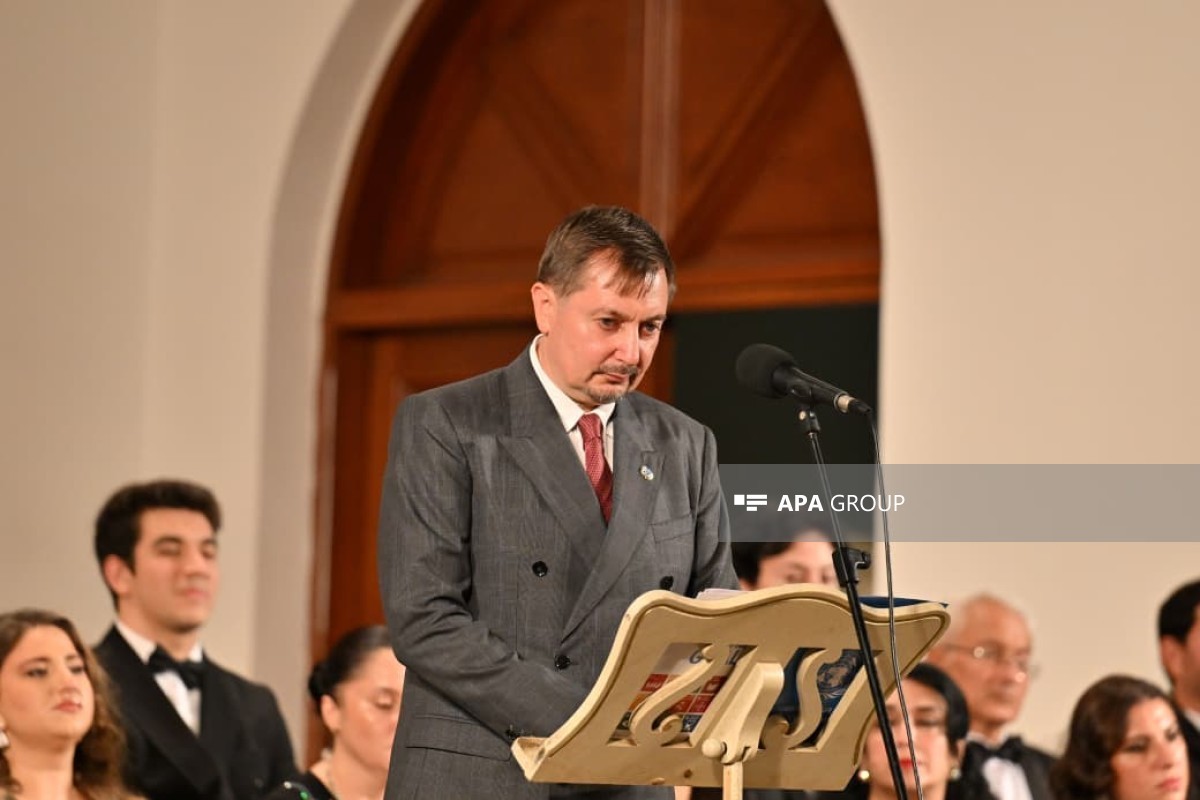
Photo - Ilkin Nabiyev ©️ APA GROUP


 Follow us on Telegram
 t.me/apanewsaz
 Follow us on Instagram
 Follow us on TikTok
 Follow us on Facebook
 Follow us on X