


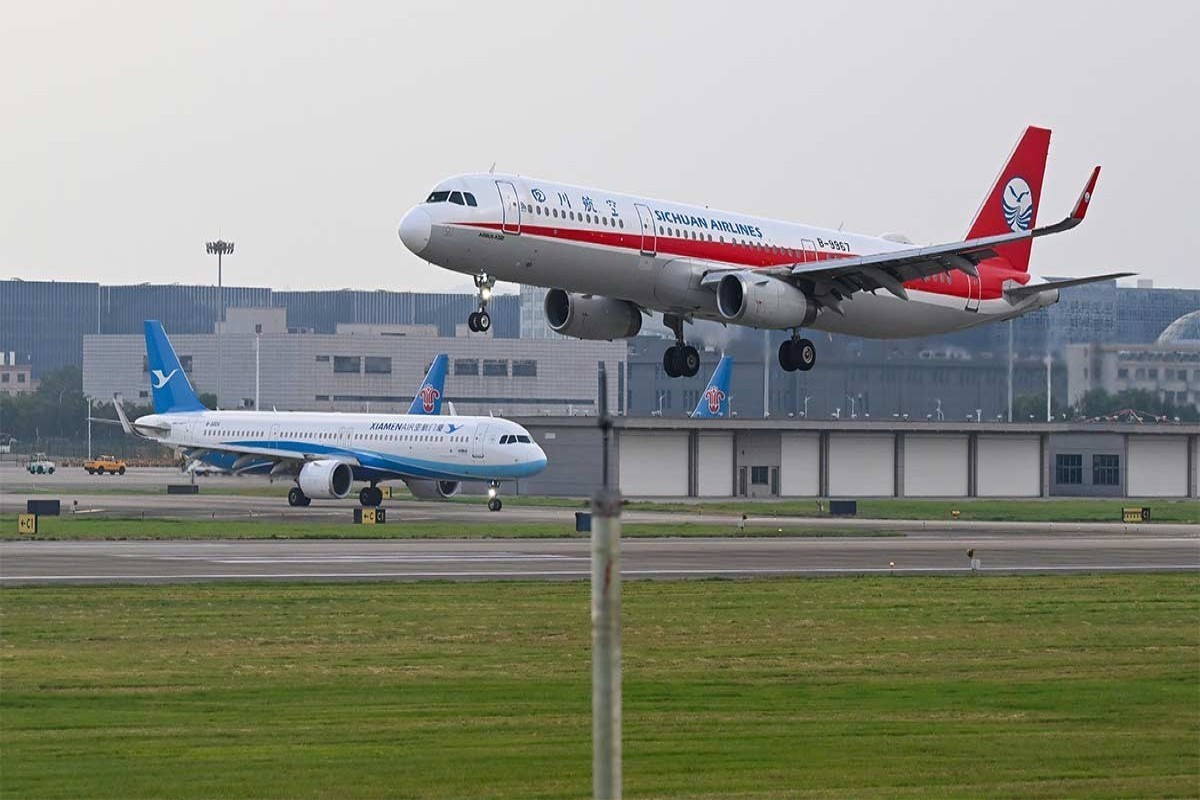


China's three biggest state-owned airlines reported first-half losses for the seventh consecutive year, battered by surging jet fuel prices, with the outlook for the rest of the year clouded by a lacklustre summer season, Reuters reports.
Air China (601111.SS), China Eastern Airlines (600115.SS), and China Southern Airlines (600029.SS), posted combined first-half net losses of about 8.2 billion yuan ($1.22 billion), having warned last month the figure could reach as high as 9 billion yuan.
The losses were a sharp reversal from their combined first-quarter profit of 4.82 billion yuan, which was boosted by strong Lunar New Year demand, and sent their shares lower in mainland China and Hong Kong trading on Monday.
Flag carrier Air China reported a net loss of 2.3 billion yuan, widening from a 1.81 billion yuan loss a year earlier. China Eastern posted a loss of 2.2 billion yuan, versus a 1.43 billion yuan loss in the same period of 2025. China Southern reported a loss of 3.7 billion yuan, compared with a loss of 1.53 billion yuan a year earlier.
Air China, China Eastern Airlines and China Southern Airlines posted combined first-half 2026 net losses of about 8.2 billion yuan ($1.2 billion), battered by surging jet fuel prices.
The weak results underscored the post-pandemic fragility of China's aviation sector, as the trio confronted what China Eastern described as a profit environment "severely undermined" by disrupted international routes and persistently elevated jet fuel prices linked to the Middle East conflict.
Fuel costs at each of the carriers rose between 35% and 38% in the first half.
Unlike many Asian and European rivals, Chinese airlines hedge little of their fuel purchases, leaving them more exposed to oil price swings. China Southern said in its filing there was currently "no effective means available" to manage its exposure to jet fuel price fluctuations.
Revenue growth was strong at the carriers, with Air China up 10.5%, China Eastern up 11.1% and China Southern up 9.7%, driven by international demand. European routes were particularly buoyant as some travellers avoided Middle Eastern hubs disrupted by the Iran war.
But weaker economic conditions and competition from high-speed rail and driving holidays have hindered their ability to make substantial domestic fare hikes like those seen in the U.S. market without depressing demand.
Although jet fuel prices have fallen from their second-quarter peak, they remain more than 50% above prewar levels.


 Follow us on Telegram
 t.me/apanewsaz
 Follow us on Instagram
 Follow us on TikTok
 Follow us on Facebook
 Follow us on X