

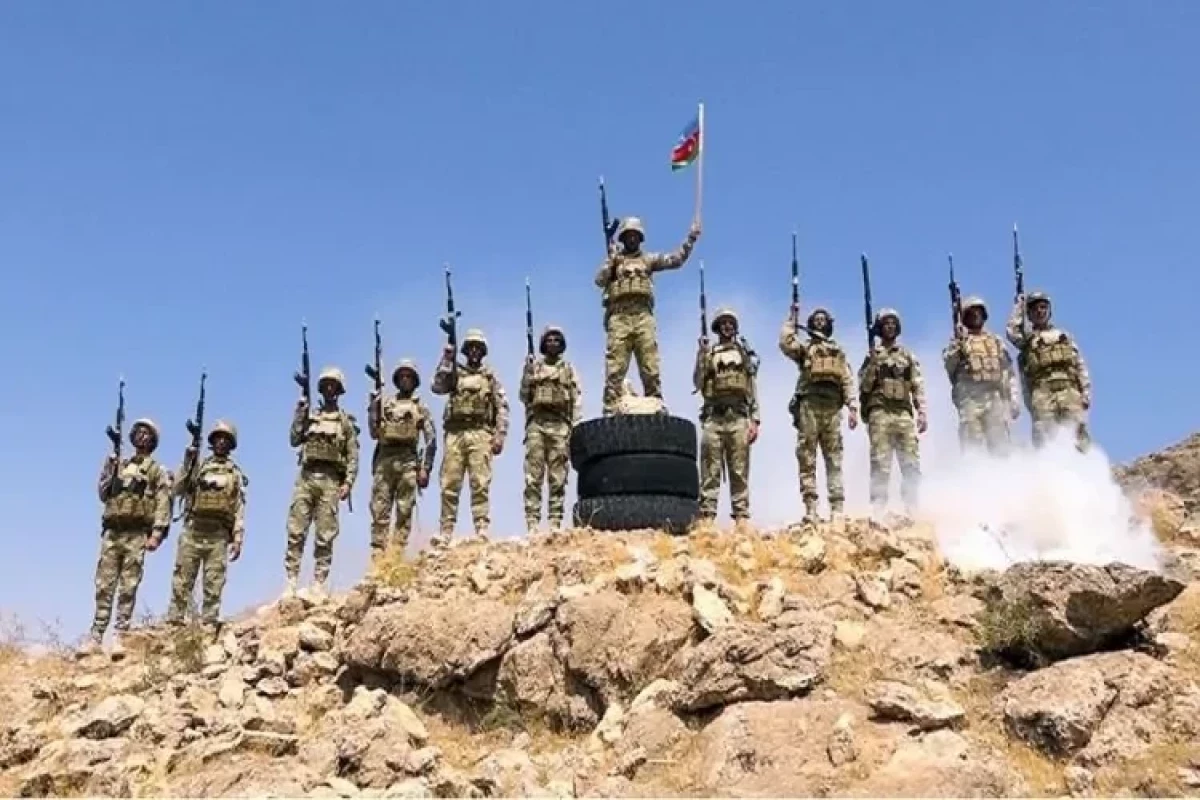


September 2023 marked the final military-political stage of the Karabakh conflict, which had lasted for more than thirty years. While the Patriotic War, which began on September 27, 2020, marked a decisive turning point toward the restoration of Azerbaijan's territorial integrity, three years later, the local anti-terrorist measures carried out on September 19–20, 2023, resulted in the effective restoration of sovereignty throughout the country's entire territory. The events that took place between these two dates show that although military operations ceased after the 44-day war, the security problem arising from the Karabakh issue had not been completely eliminated.
Following the trilateral statement of November 10, 2020, an entirely new situation emerged in the region. Azerbaijan had regained control over most of its formerly occupied territories. However, armed formations continued to exist in the part of Karabakh where Russian peacekeepers were temporarily stationed. This was precisely the main problem for Baku: Azerbaijan was unable to fully ensure the functioning of state institutions and the constitutional order in part of its internationally recognized territory.
Over the following three years, the issue gradually took on an increasingly acute security dimension. The Azerbaijani side repeatedly stated that the continued presence of armed forces and military infrastructure in the region was unacceptable. The Farrukh and Revenge operations were also the result of armed incidents and the existing military tensions during this period. At the same time, disputes surrounding the Lachin road, accusations concerning the mining of territories, and Baku's statements regarding the transportation of military cargo to Karabakh demonstrated that the situation was not developing in accordance with the stability model envisaged following the 2020 agreement.
September 2023: Tensions reach their culmination
By 2023, the process was already approaching its culmination. Azerbaijan was proposing a model of direct dialogue with the Armenian residents of Karabakh and their reintegration into the country's legal, economic, and social systems. In response, the separatist structures in the region sought to preserve their political institutions. Thus, two conflicting political approaches confronted each other over the same territory: Baku sought reintegration within a sovereign state, while the separatist leadership in Khankendi wanted to maintain the existing status.
The first days of September made this contradiction more apparent.
The separatist entity in Karabakh continued holding events related to its so-called "independence" in violation of Azerbaijan's sovereignty and territorial integrity, and its holding of illegal "presidential elections" on September 9 prompted justified objections from Baku.
According to Baku's position, the continued operation of parallel political and military structures in Karabakh at a time when Armenia had declared its recognition of Azerbaijan's territorial integrity was incompatible with the new reality that had emerged.
On the morning of September 19, events occurred that fundamentally changed the situation. Azerbaijani citizens, including police officers, were killed in mine explosions on the Ahmadbayli–Fuzuli–Shusha highway. Subsequently, Azerbaijan's Ministry of Defense announced that armed formations in Karabakh had opened fire on Azerbaijani Army positions.
Thus, the political and military tensions that had accumulated over three years entered an open military phase on September 19.
September 19–20: Anti-terrorist measures lasting 23 hours
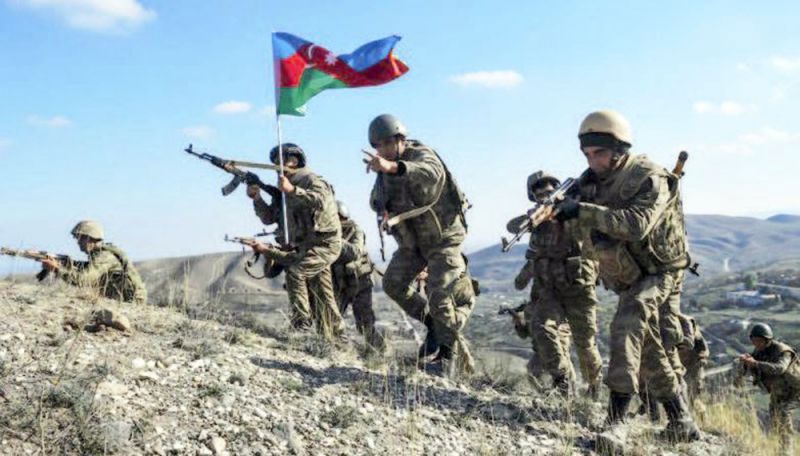
Azerbaijan announced the launch of local anti-terrorist measures that day. The nature of the operation differed from a large-scale territorial war. The Azerbaijani Army's objective was not to acquire new territories, but to neutralize the military capabilities of armed structures operating within the country's internationally recognized borders and achieve their disarmament.
During the operation, the main strikes were directed at military positions, firing positions, combat equipment, command-and-control facilities, and other military infrastructure. The Ministry of Defense separately stated that civilians and civilian facilities were not being targeted. From the first hours of the fighting, the Azerbaijani Army took control of positions in various directions, rapidly weakening the defense system of the separatist armed formations.
The operation continued overnight from September 19 to 20. By the following day, the overall direction of the military situation was already clear: the armed formations' ability to maintain their previous positions had been severely restricted. According to information released by the Azerbaijani side, numerous combat positions and strategic heights had been brought under control, while military equipment and weapons systems had been disabled.
On September 20, the military phase of the process translated into a political outcome. Following an appeal by representatives of the Armenian residents of Karabakh through the Russian peacekeeping contingent, an agreement was reached to halt the operation at 13:00. The conditions essentially envisaged the elimination of the region's previous military status: armed formations were required to abandon their positions, surrender their weapons and heavy equipment, and disband their military structures.
Thus, the operation, which lasted approximately 23 hours, changed a military-political situation that had existed for years.
The most significant outcome of the operation was not merely the seizure of military positions. The fundamental change was the elimination of the possibility of maintaining a model of armed and political governance in Karabakh outside the Azerbaijani state. This effectively brought an end to the problem of "parallel authority over the territory," which had formed the basis of the conflict for decades.
The meeting held in Yevlakh on September 21 between representatives of the Azerbaijani authorities and representatives of the Armenian residents of Karabakh also marked a new stage. The subject of discussion was no longer which state the territory belonged to, but rather the reintegration of the Armenian residents living there within the framework of Azerbaijani legislation. In other words, the issue had shifted from the realm of an interstate territorial conflict to Azerbaijan's domestic legal and administrative sphere.
From the restoration of sovereignty to the peace agenda

For this reason, it is impossible to assess the events of September 19–20 separately from September 27, 2020. September 27 marked the beginning of the process through which Azerbaijan restored its territorial integrity by military-political means, while September 20 marked the final stage of effectively ensuring sovereignty throughout the country's entire territory.
Subsequent developments also confirmed this. The dissolution of the separatist structures in Karabakh was announced, weapons, ammunition, and military equipment were surrendered, and the operation of Azerbaijani state institutions in Khankendi and the surrounding territories was ensured. This essentially brought to a close the long-standing Karabakh conflict chapter in Azerbaijan's history.
Today, the political significance of September 27 and September 20 also complements each other. The first date represents the stage when Azerbaijan began changing the existing status quo in 2020, while the second marks the stage when it effectively ensured its sovereignty throughout its entire territory in 2023. The three years between them demonstrated that unresolved security issues remained serious obstacles to lasting peace.
It was precisely after September 2023 that the nature of the Azerbaijan-Armenia agenda changed. Following the elimination of the issue of parallel military-political structures in Karabakh, the main agenda shifted to a peace agreement, border delimitation, communications, and the normalization of relations between the two states. Thus, the September 19–20 operation went down in history not merely as a military operation that lasted nearly a day, but as an event that changed the structure of a conflict that had lasted for more than thirty years and ushered in a new political stage in the South Caucasus.


 Follow us on Telegram
 t.me/apanewsaz
 Follow us on Instagram
 Follow us on TikTok
 Follow us on Facebook
 Follow us on X