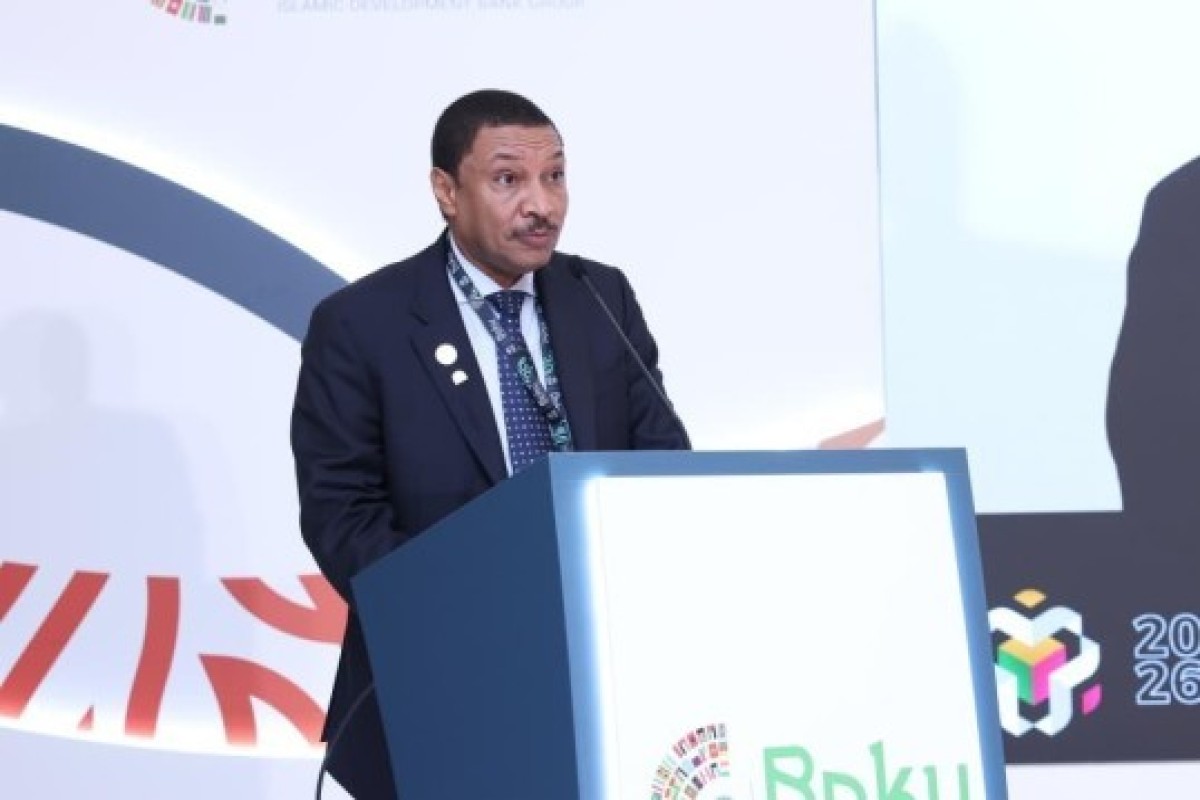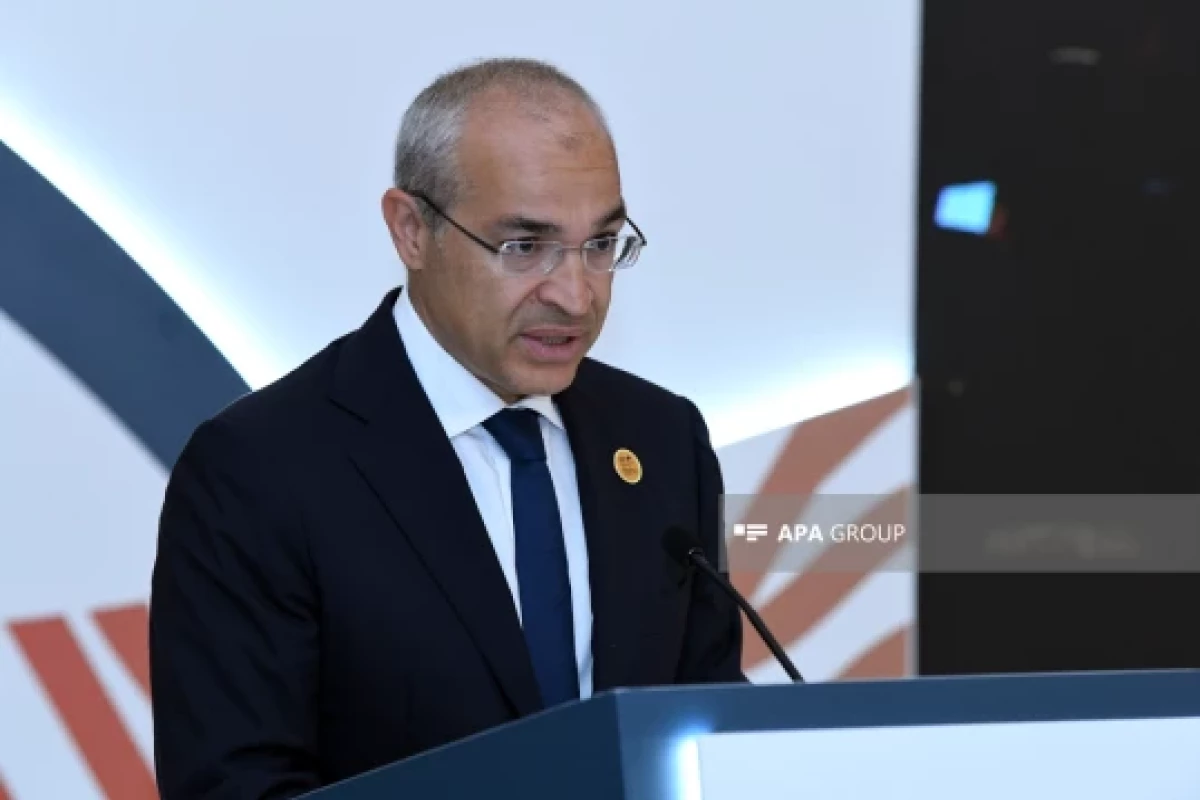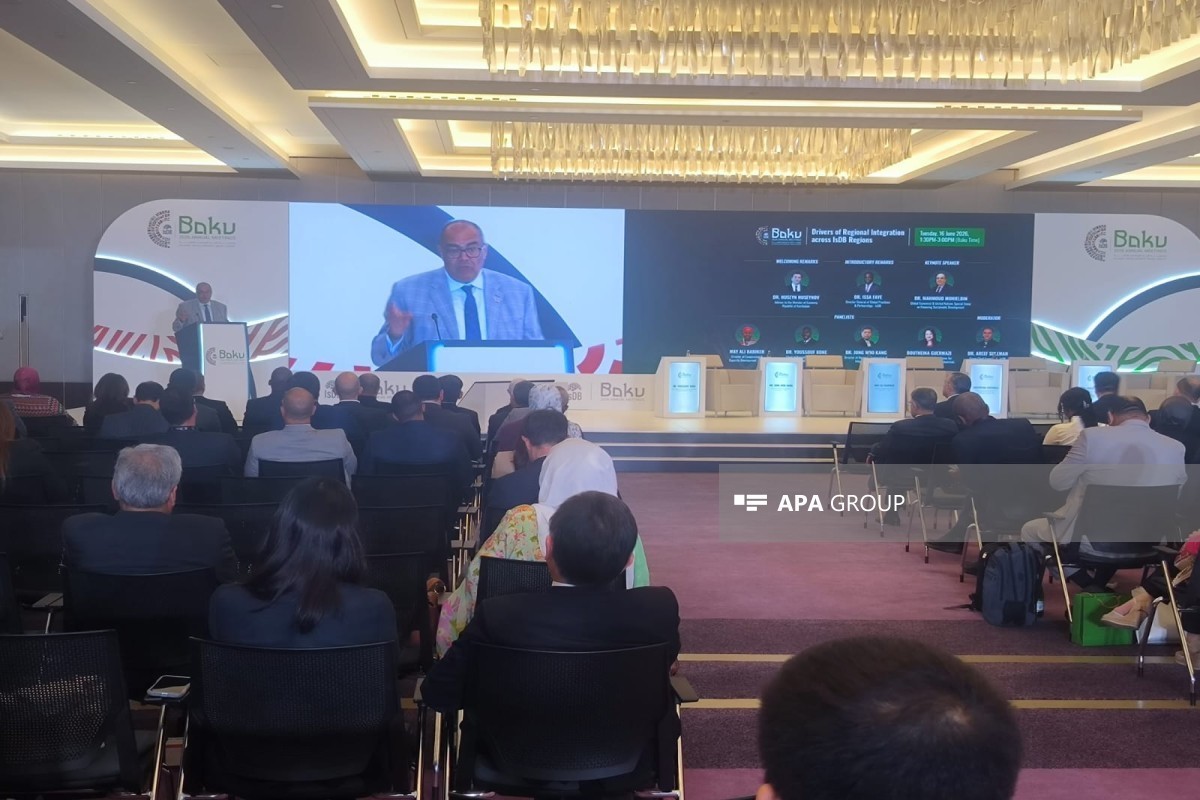

Regional integration enables countries to solve problems together, Mahmoud Mohieldin, the United Nations Secretary-General’s Special Envoy on Financing the 2030 Agenda for Sustainable Development, said during the panel discussion titled “Drivers of Regional Integration in IsDB Regions” held as part of the Islamic Development Bank (IsDB) Group Annual Meetings 2026 in Baku, APA reports.
“Neighboring countries share not only problems, but also solutions. Regional integration is important not only for international organizations, but also in terms of expanding trade, investment and knowledge exchange,” he noted.
He stated that the 57 member countries of the Organization of Islamic Cooperation should be viewed not only as a single bloc, but also from the perspective of regional cooperation opportunities.
“Regional cooperation expands the scale of operations, strengthens complementarities and creates opportunities for knowledge exchange. These opportunities are particularly important for countries that share borders,” he stressed.
Mahmoud Mohieldin noted that the development of transport and communication technologies has expanded the boundaries of the concept of a region.
“Today, the concept of a region is no longer limited to geographical proximity. It is possible to reach any point in the world within a few hours. This creates new opportunities for cooperation and integration,” he said.
According to the UN official, the center of gravity of the global economy has been shifting from the West to the East over recent decades.
He emphasized that although the member states of the Organization of Islamic Cooperation account for approximately one-quarter of the world's population, their share in the global economy and trade is lower.
“About 25% of the world's population lives in OIC countries. However, their share in global GDP is around 10–12%, while their share in global trade is approximately 10–13%. This shows that the existing potential has not been fully realized,” he said.
Mahmoud Mohieldin cited the experience of ASEAN as an example of regional cooperation.
“Today, ASEAN is a major economic area with a population of approximately 700 million people and a total economic output approaching $4 trillion. This success is not the result of a perfect model, but of sustained cooperation, a pragmatic approach and gradual development,” he stressed.
He added that when countries cooperate more closely in trade, investment, knowledge exchange and the mobility of people, they can both overcome crises more easily and create new opportunities for sustainable development.
“We will either develop and prosper together, or face the risk of fragmentation and stagnation. Regional integration is precisely the positive side of that choice,” Mahmoud Mohieldin said.


 Follow us on Telegram
 t.me/apanewsaz
 Follow us on Instagram
 Follow us on TikTok
 Follow us on Facebook
 Follow us on X