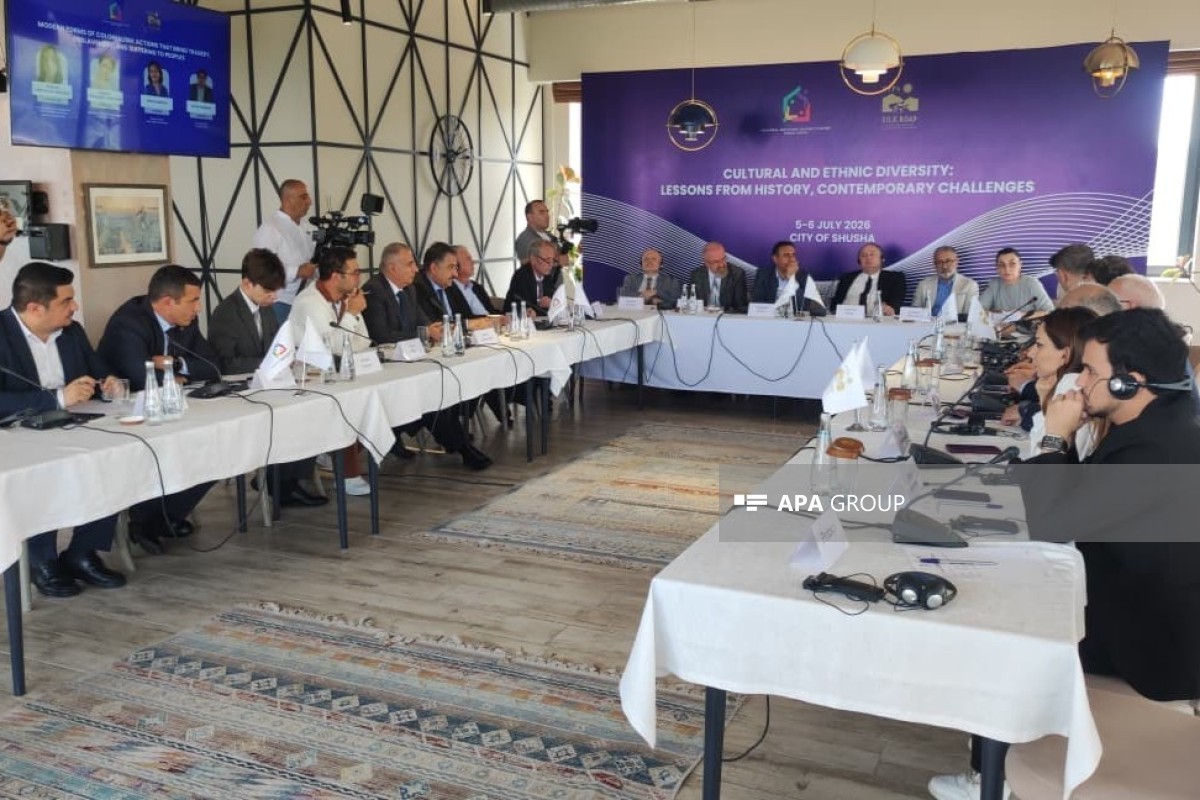


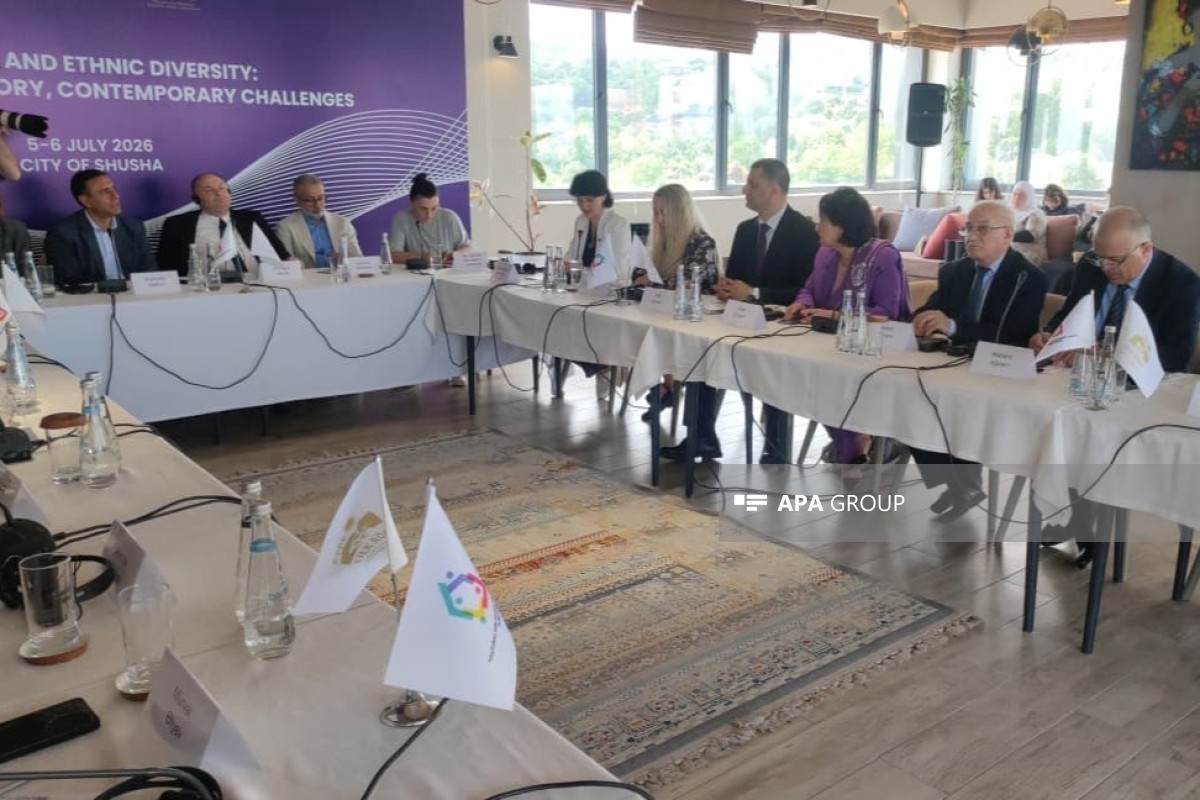
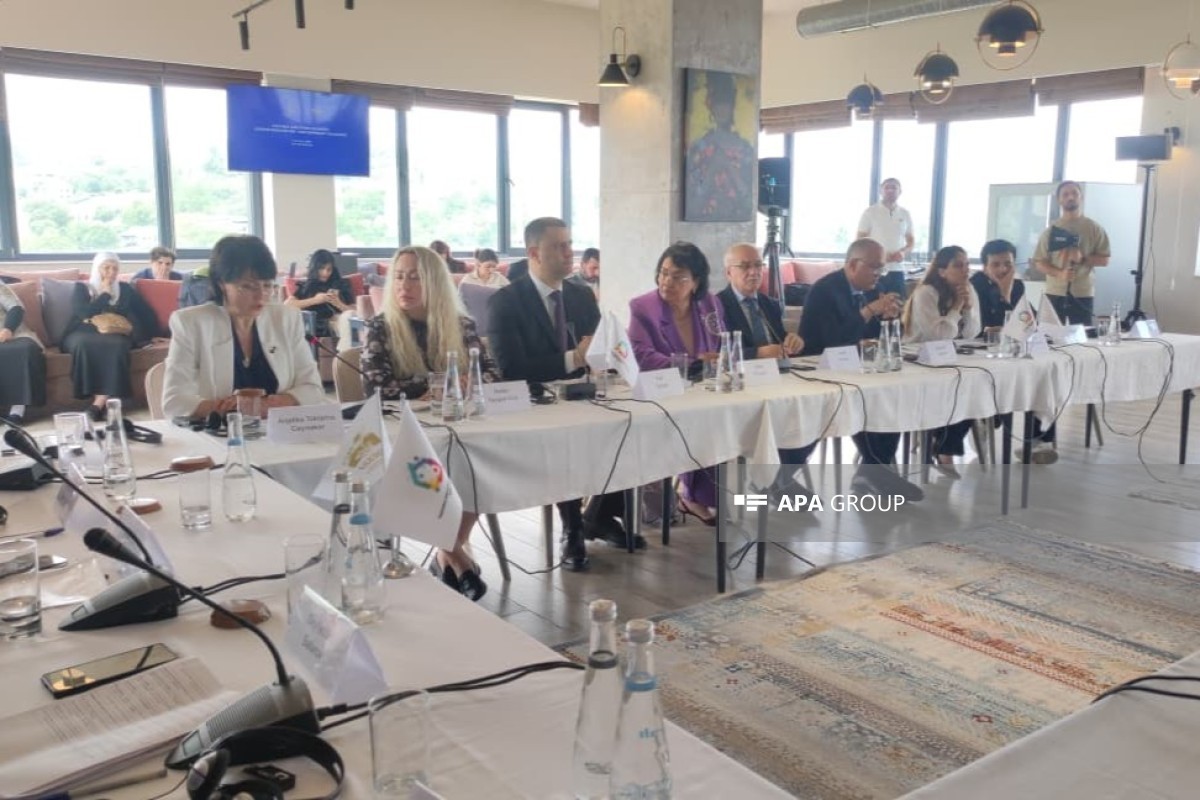
A panel discussion titled "Modern Forms of Colonialism: Actions That Bring Tragedy, Slavery and Suffering to Peoples" was held as part of the international conference "Cultural and Ethnic Diversity: Lessons from History, Modern Challenges" in Shusha, APA reports.
Moderator of the panel, Fatimat Kardanova-Ianonene, co-founder and president of the World Circassian Council in Lithuania, first thanked representatives of Azerbaijani civil society for creating this important international platform.
She said the conference could be considered a significant beginning: "Azerbaijan can host international forums on the history and national memory of the indigenous peoples of the Caucasus. Circassians expect Azerbaijan's support in preserving the Circassian language and culture, which are under pressure from Russia."
Anzhelika Toktamish-Ceyishakar, a member of Türkiye's Circassian Agency Public Movement, delivered a presentation titled "The Potential of Circassian Communities."
"It is extremely valuable for the voices of peoples who have suffered great pain throughout history to be heard and for their future to be discussed. The goal of Circassian communities is not conflict. The goal is justice, cooperation, economic prosperity and lasting peace among peoples. We want to look confidently toward the future without forgetting our past," she said.
Joining the conference via video link from Poland, Raisa Zubareva, leader of the Free Sakha Movement, spoke on "The Essence of the Sakha Independence Movement."
She said the movement emerged not out of hatred but as a result of 400 years of discrimination and pressure.
"Sakha is one of the richest regions in the world. Diamonds, gold, oil, natural gas, coal, rare earth metals and many other natural resources generate enormous revenues. However, decisions are made in Moscow. It is there that the rules governing resource extraction, revenue distribution, tax policy and strategic priorities are determined. Today, the Sakha Republic has effectively become a raw-material colony with no control over its own economic future. As a result, a striking paradox has emerged: one of the world's richest regions in terms of natural resources is struggling with serious social and infrastructure problems," Zubareva said.
She also stated that the Sakha people face discrimination and are humiliated because of their ethnicity.
"Our language has been pushed out of many areas of public life. Although it officially has the status of a state language within the Sakha Republic, it is gradually being replaced by Russian in education, public administration and the information space," she added.
Also joining via video link from Poland, Zurtan Khaltarov, founder of the Buriyad Guren (Buryat Government) movement, delivered remarks on "The Essence of Buryat National Identity."
"Buryats are the largest indigenous colonized people in Siberia. We live on lands stretching from the Yenisei River to the Amur River. Unlike some pseudo-national Buryat organizations that focus mainly on cultural and folklore activities and have failed to develop a unified political agenda on historical memory and collective rights, the modern Circassian movement has demonstrated a higher level of international mobilization. Over recent decades, Circassian organizations have successfully united their diaspora and made recognition of the Circassian genocide a central element of their national identity and political agenda," he said.
Khaltarov also stated that the fundamental rights and freedoms of Buryats are disregarded in Russia.
"The experience of modern Azerbaijan is of particular interest to the Buryat national movement. Azerbaijan has demonstrated that preserving historical memory, strengthening national identity and organizing effective state governance are interconnected processes. Azerbaijan has created a model of sustainable state development in which culture, language and historical memory are regarded as strategic resources of the nation. For the Buryat people, this experience shows that cultural revival and institutional self-assertion do not contradict modernization. On the contrary, they can become its foundation, ensuring the preservation of national identity amid global political and economic changes," he said.
Sherief Batvash, a member of the Board of the Israeli Circassian Community, shared his views on "The Shared Aspirations of Circassians." He said the Circassian people possess a great history and rich cultural heritage and spoke about the challenges of passing that legacy on to future generations.


 Follow us on Telegram
 t.me/apanewsaz
 Follow us on Instagram
 Follow us on TikTok
 Follow us on Facebook
 Follow us on X