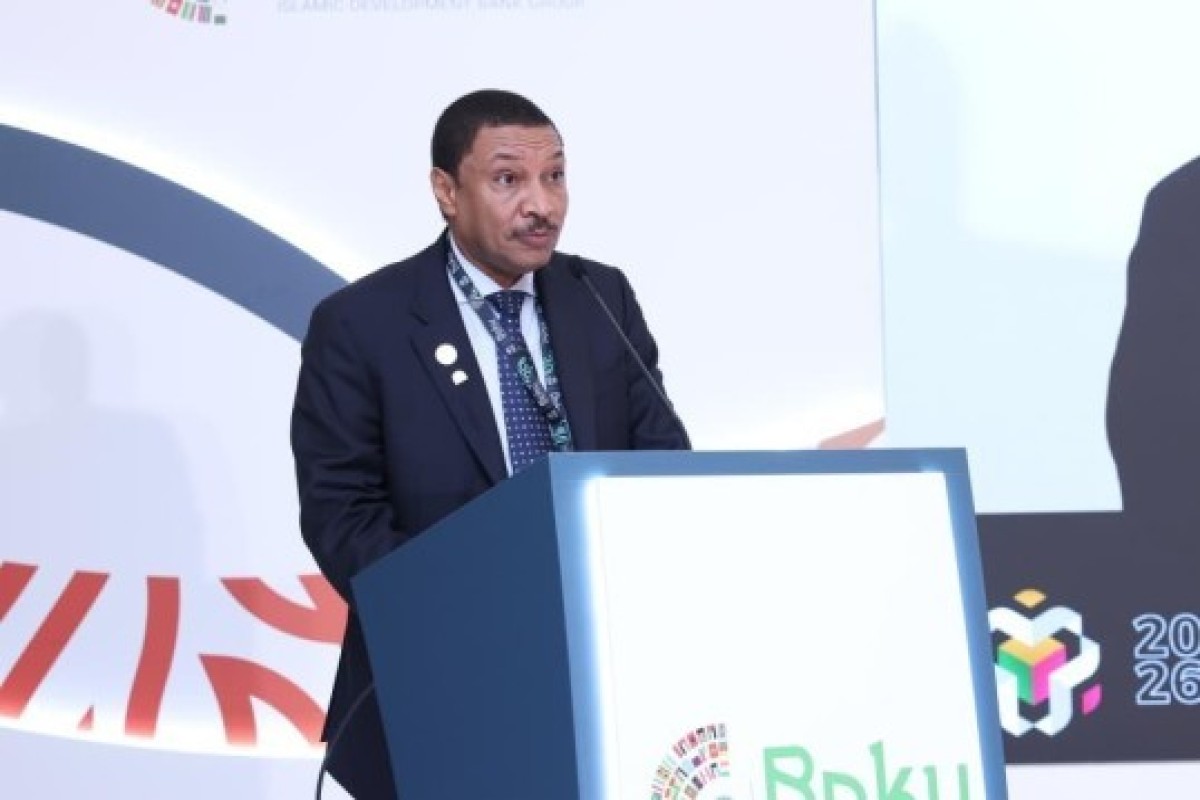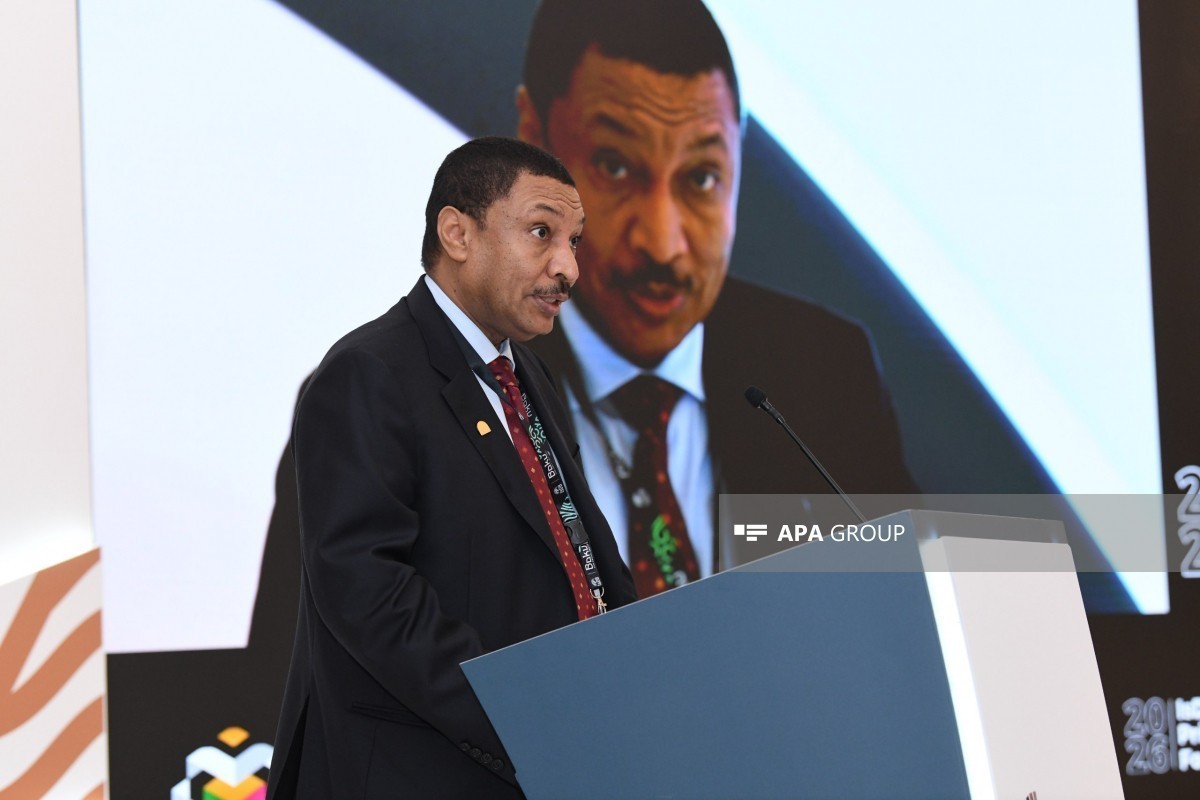

The halal economy has today become one of the most dynamically developing sectors of the global economy, and stronger regional integration, investment and trade ties are required to unlock its potential, said Khalid Khalafalla, Chief Executive Officer of the Islamic Corporation for the Insurance of Investment and Export Credit (ICIEC), during the Ministerial Session titled “Halal Economy for Sustainable Regional Integration” held as part of the Islamic Development Bank (IsDB) Group Annual Meetings 2026 in Baku, APA reports.
He stated that the halal economy is no longer limited to food and consumer products.
“Today, the halal economy is one of the most dynamic segments of the global economy. This sector extends beyond food products to include manufacturing, logistics, tourism, pharmaceuticals, digital solutions and sustainable industrial development,” the ICIEC chief noted.
Khalid Khalafalla emphasized that the halal economy offers significant opportunities for member countries in terms of investment, job creation, industrialization and trade expansion.
“To fully realize the potential of the halal economy, there is a need for stronger regional integration, greater coordination across value chains, and increased trade and investment flows,” he said.
The ICIEC chief noted that the Islamic Development Bank Group views the halal economy as a strategic platform for economic diversification, private sector development, food security and sustainable growth.
According to him, the IsDB Group is implementing various initiatives to support the development of halal ecosystems in member countries:
“The development of the halal economy cannot be achieved through strategies and policies alone. It requires investment, trade, finance and risk mitigation mechanisms that enable companies to operate across borders.”
He added that ICIEC plays an important role in reducing investment and trade risks, insuring export credits and promoting cross-border investments.
“Reliable financial and insurance mechanisms are essential for businesses to enter new markets, attract investment and strengthen the halal value chain,” the Chief Executive Officer said.
Khalid Khalafalla noted that the forum should not only serve as a platform for discussion, but also create concrete outcomes and opportunities for cooperation.
“We see this forum as an opportunity to move from ideas to implementation. Our goal is to build stronger partnerships, increase investment, expand trade opportunities and develop an integrated halal economy that generates real economic results for member countries,” he stressed.


 Follow us on Telegram
 t.me/apanewsaz
 Follow us on Instagram
 Follow us on TikTok
 Follow us on Facebook
 Follow us on X