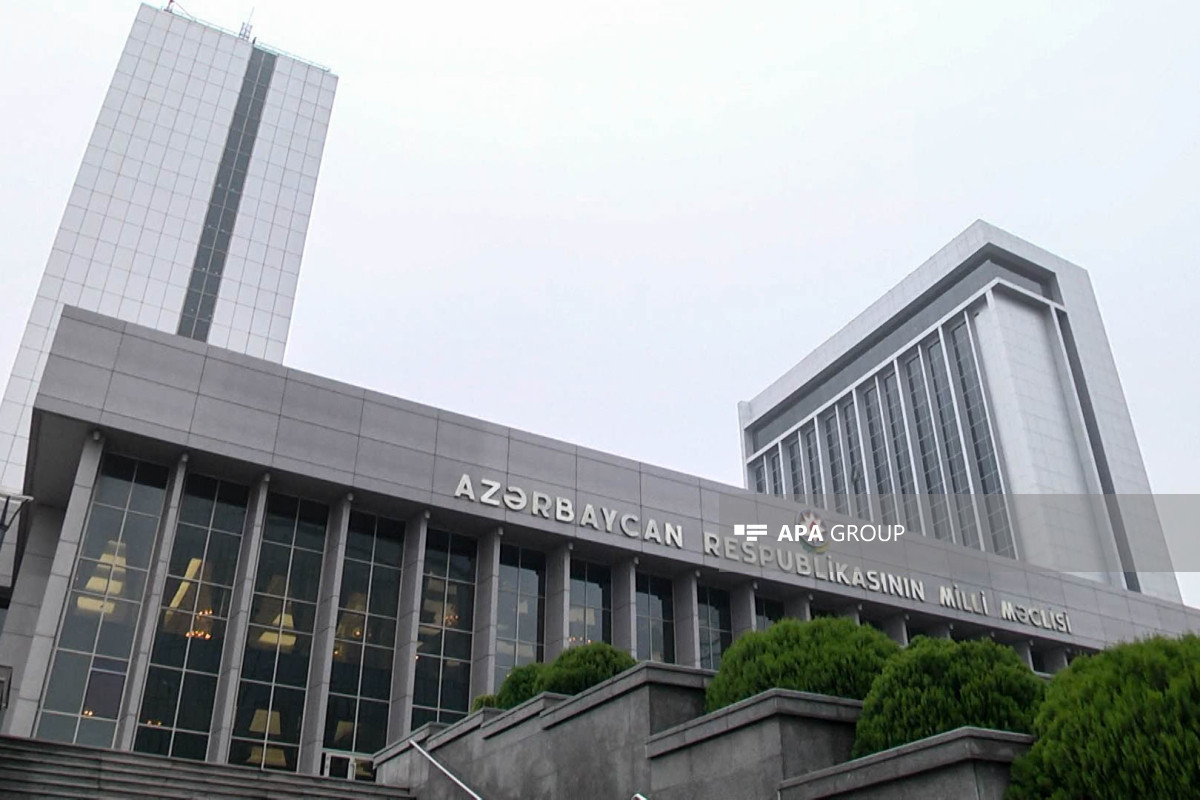


At today’s session of the Milli Majlis, the draft law “On the approval of the Convention of the United Nations on Strengthening International Cooperation in Combating Certain Crimes Committed through the Use of Information and Communication Technology Systems and in the Exchange of Electronic Evidence Related to Serious Crimes” was put up for discussion, APA reports.
Arzu Naghiyev, Chairman of the Milli Majlis Committee on Defense, Security, and Counter-Corruption, stated that the Convention, comprising a preamble, nine chapters, and 68 articles, envisions legal balance mechanisms that ensure respect for state sovereignty, constitutional principles, and human rights.
The parliamentary committee chairman noted that carrying out criminal prosecution measures within the framework of legality, proportionality, and judicial oversight is one of the main requirements of the Convention. By simplifying and standardizing mutual legal assistance procedures, the Convention accelerates cooperation among law enforcement agencies:
“Legal certainty is created for cooperation with foreign digital service providers and platforms, which makes the process of lawful acquisition and use of data more efficient. In addition, the Convention provides for mechanisms that promote the strengthening of institutional capacity, advanced training, and the exchange of experience. If the Convention is ratified by the Milli Majlis, the Republic of Azerbaijan may become one of the first states, potentially the very first state, to ratify this international document. This would strengthen Azerbaijan’s international legal standing and demonstrate our country’s advanced and proactive position in the fight against cybercrime. The ratification of the Convention will significantly strengthen the activities of law enforcement agencies. The document creates an international legal basis for the acquisition, preservation, and transfer of electronic evidence, eliminates legal uncertainties related to electronic evidence, and increases the effectiveness of transnational investigations. It also enables prompt responses to cybercrime incidents through emergency international cooperation mechanisms.”
Following the discussions, the draft law was put to a vote and adopted in the first reading.



 Follow us on Telegram
 t.me/apanewsaz
 Follow us on Instagram
 Follow us on TikTok
 Follow us on Facebook
 Follow us on X