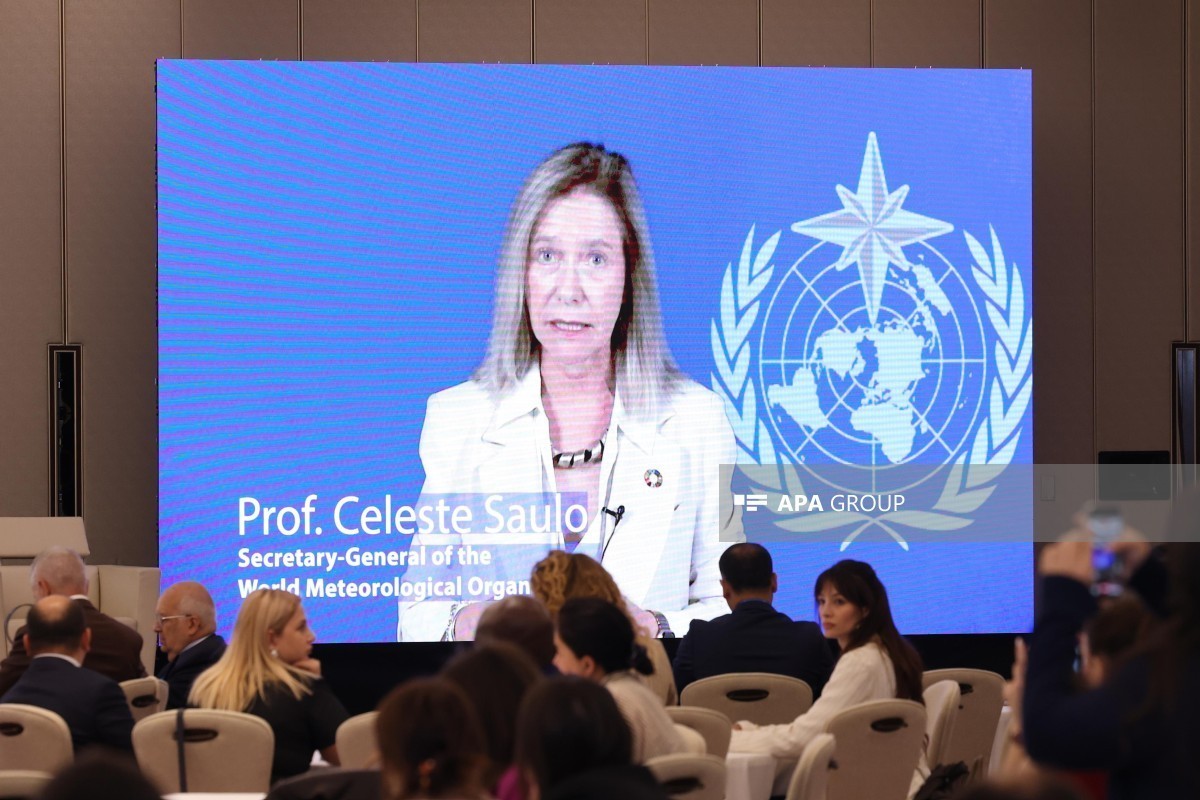


The last 11 years have been the warmest period, Secretary-General of the World Meteorological Organization (WMO), Professor Celeste Saulo, said at a panel discussion titled “Benefits and Challenges of Integrating Artificial Intelligence into Multi-Hazard Early Warning Systems” held as part of Baku Climate Action Week 2026 (BCAW 2026), APA reports.
She noted that the devastating floods in Nepal once again demonstrated that the warming cryosphere can lead to disasters within a matter of hours: “Protecting people and economies from the impacts of forecast events depends on translating scientific knowledge into timely and practical action. To achieve this, all available tools must be used in the fight against climate change. Artificial intelligence creates new opportunities for us to strengthen these capabilities. Artificial intelligence can help produce forecasts within minutes. It can improve the accuracy and precision of forecasts and enable calculations that previously took weeks to be carried out within minutes.”
Celeste Saulo said that multi-hazard early warning systems, climate information services, and observation networks are important public infrastructure.
She noted that these systems protect people, support economic development, and help communities prepare for a changing climate.


 Follow us on Telegram
 t.me/apanewsaz
 Follow us on Instagram
 Follow us on TikTok
 Follow us on Facebook
 Follow us on X