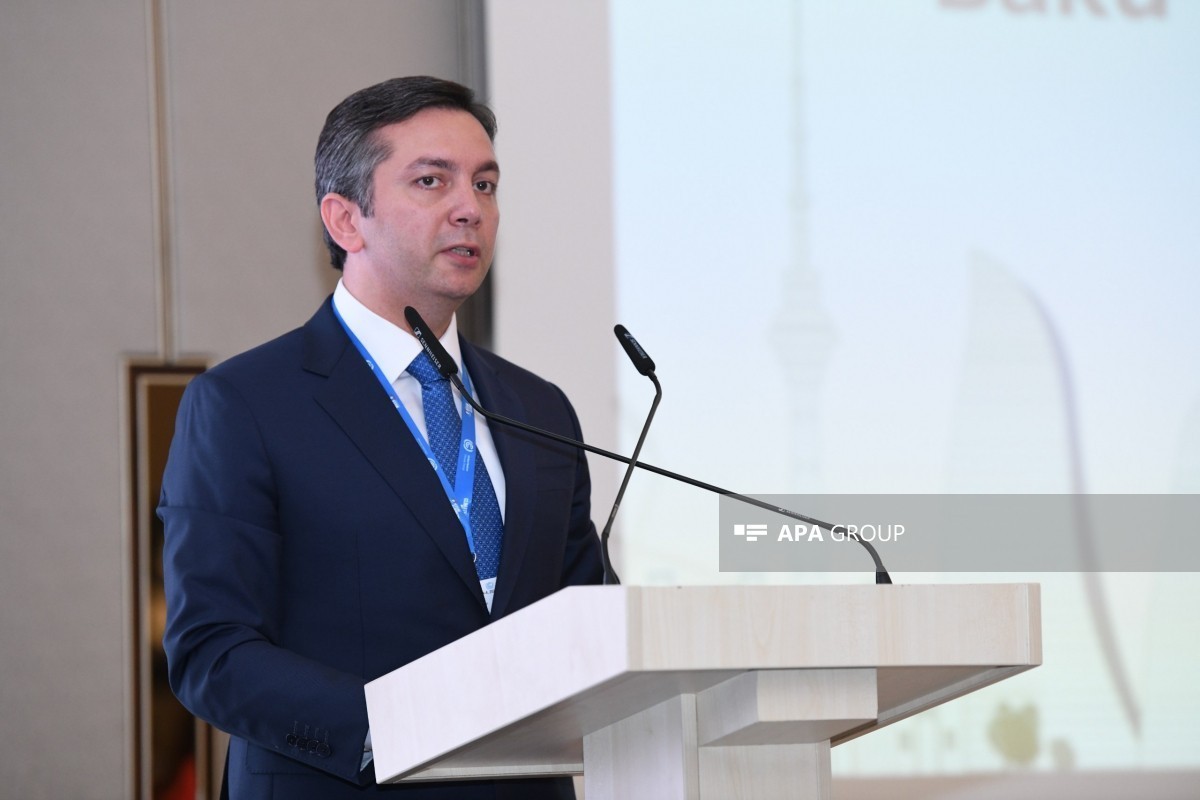


“We have gathered against a rather alarming backdrop. The devastating floods and landslides in Nepal and China have led to the tragic loss of life and a major humanitarian disaster,” Azerbaijan’s Deputy Foreign Minister and COP29 Lead Negotiator Yalchin Rafiyev said during his speech at the Fourth Climate Week (CW4) conference of the United Nations Framework Convention on Climate Change (UNFCCC), organized by the Ministry of Foreign Affairs, APA reports.
Yalchin Rafiyev noted that these tragedies are a reminder that climate change is no longer a warning for tomorrow: “It is today’s reality for millions of people. Extreme weather conditions, whose impact is further intensified by events such as El Niño, affect not only our environment but also our economies, security and development. However, climate change is not only testing our resilience. It is also testing diplomacy itself. At a time marked by geopolitical confrontations, fragmentation, and declining trust, climate change remains a challenge that no country can solve alone. Our experience at COP29 showed that diplomacy can deliver results even when positions seem irreconcilable. Consensus does not mean that nearly 200 parties suddenly arrive at the same position on every issue. It means finding the point at which different national realities can move in the same direction,” he said.


 Follow us on Telegram
 t.me/apanewsaz
 Follow us on Instagram
 Follow us on TikTok
 Follow us on Facebook
 Follow us on X