













Baku-APA. The breathtaking ruins of this Roman Empire port city on the Mediterranean may well hold the key to a brighter economic future for Libya, which under Moammar Gadhafi was dangerously dependent on oil, APA reports.
Some of Libya’s new leaders say the country must develop other revenue sources because even Libya’s vast oil reserves — the biggest in Africa — will one day run out. Tourism, which long stagnated under Gadhafi, is one lucrative realm into which to branch out.
"I think that that’s one of the major shifts, strategically, for the economy of Libya," outgoing Finance and Oil Minister Ali Tarhouni said of the push toward economic diversity.
Leptis Magna, one of ancient Rome’s best-preserved sites, symbolizes both Libya’s economic potential and the long road toward fulfilling it. Tourism officials hope historic places like Leptis Magna, along with hundreds of miles of Mediterranean coastline and dramatic desert vistas, will eventually draw hundreds of thousands of visitors a year.
But they acknowledge that getting the country ready for mass tourism, including building more hotels and paving roads, will take time. "We have a lot to do, but we have the big hope that tourism will be something very important in the future," said Sami Naas, a tourism official. "We try to invest what we have now into tourism."
For now, the aftershocks of Libya’s bloody eight-month civil war, which ended with the October capture and killing of Gadhafi, are keeping visitors away. While there has been little violence since the fall of the Gadhafi regime, the interim government has not yet asserted full authority over some of the militias that brought down the dictator.
The ancient cobblestone streets of Leptis Magna were largely deserted this week. The city, which was settled as far back as the beginning of the 1st millennium B.C., flourished under the Romans and boasts largely unspoiled remains of a forum, baths, triumphal arch and theater.
On Monday, about two dozen employees of the International Committee of the Red Cross, taking a break from visiting detention centers by former anti-Gadhafi fighters, rested in the cool shade of what remains of Leptis Magna’s basilica.
Their Libyan guide, Ziad Siala, said that in the Gadhafi era, tourism was tightly controlled. Visitors had to travel in groups, and could not explore freely on their own, he said. Even then, Libya couldn’t quite cope with the few who came, he said.
"We had a big problem training guides and tour leaders," said the 34-year-old Siala, who led his last foreign group shortly after the outbreak of the anti-Gadhafi uprising in mid-February. "It was difficult to draw them into this industry. If they knew English or French, they would rather work in the oil industry."
The country is trying to rebuild oil output to pre-war levels, but Tarhouni said major economic reform will have to wait for a government to be elected by next summer because the interim government will not have the mandate for significant changes. "Hopefully, the elected government will take this issue seriously, and there enough people who believe in what I just said."
Oil has dominated Libya’s economy since the 1970s, and in recent years provided an estimated 80 percent of the Gadhafi regime’s revenue, though little of that trickled down to ordinary Libyans.
The dictator and his family used Libya as a private bank, Tarhouni said Thursday, noting that the National Oil Corp. had 20 hidden accounts, in addition to eight declared ones. "They were selling oil for cash (that) nobody kept track of," he said of the ruling family.
At the same time, official corruption and a tangle of government restrictions stunted private sector growth. Lack of a skilled work force — the result of a poor education system — and the import of thousands of foreign workers meant high unemployment. Libya had to import most of its food because agriculture was underdeveloped.
The regime tried to keep the social peace through minimal, but large-scale welfare payments.
Tarhouni said Thursday he was astounded by the number of Libyans drawing government benefits. Many Libyans now expect that the incoming government, to run Libya until June parliament elections, will keep paying and even raise benefits, he said.
The new Libya will have to overhaul the entire system to put the economy on a more stable foundation, he said. This will mean encouraging the private sector, particularly tourism and financial services.
"This country has been using a nonrenewable resource, and it does not matter how much reserve we have, we will run out of that, sooner or later," he said of the dependence on oil. "This is the time to diversify sources of income."
Some are not waiting for reforms from above. Mohamed Raied, who runs Libya’s largest dairy, al-Naseem, said he is investing nearly $40 million to triple his current daily output of 400 tons of milk, yoghurt, ice cream and edible oils.
Raied, who employs nearly 1,000 people in his $100 million company, said doing business under the old regime was difficult because rules changed arbitrarily.
"Now there is no more of the one-man show of Gadhafi," he said. "There is less corruption, and we are sure that the government encourages local businesses."
In the difficult transition years, oil wealth will continue to play a major role in Libya’s economy, including to help pay for the reforms and new investment. Production had come to a virtual halt during the civil war, and restarting the flow of oil has been a major focus of the country’s interim leaders.
Today, daily output is about 570,000 barrels, Tarhouni said, and by June it is expected to be close to prewar levels of 1.6 million barrels a day. That’s well ahead of initial predictions, he said.
Analysts say that while the pace of production has been impressive, difficulties may lie ahead.
"The problems that might be caused by disorderly shutdowns of major fields (during the war) are likely to surface toward the later part of the restarts," said energy analyst Samuel Ciszuk.
Further start-ups will also depend on the return of foreign workers, he said.
Jan Willem Eggink, the country chairman for Shell, said it’s too soon to think of coming back because of security concerns and looting damage to the company’s facilities.
"Our return will depend on the security being properly established, which at the moment is not yet the case," he said. "At the moment, there are a lot of weapons around."


 Follow us on Telegram
 t.me/apanewsaz
 Follow us on Instagram
 Follow us on TikTok
 Follow us on Facebook
 Follow us on X
Africa
Two killed, five injured in shooting in S. Africa
 16:09
16:09
 14 October 2026
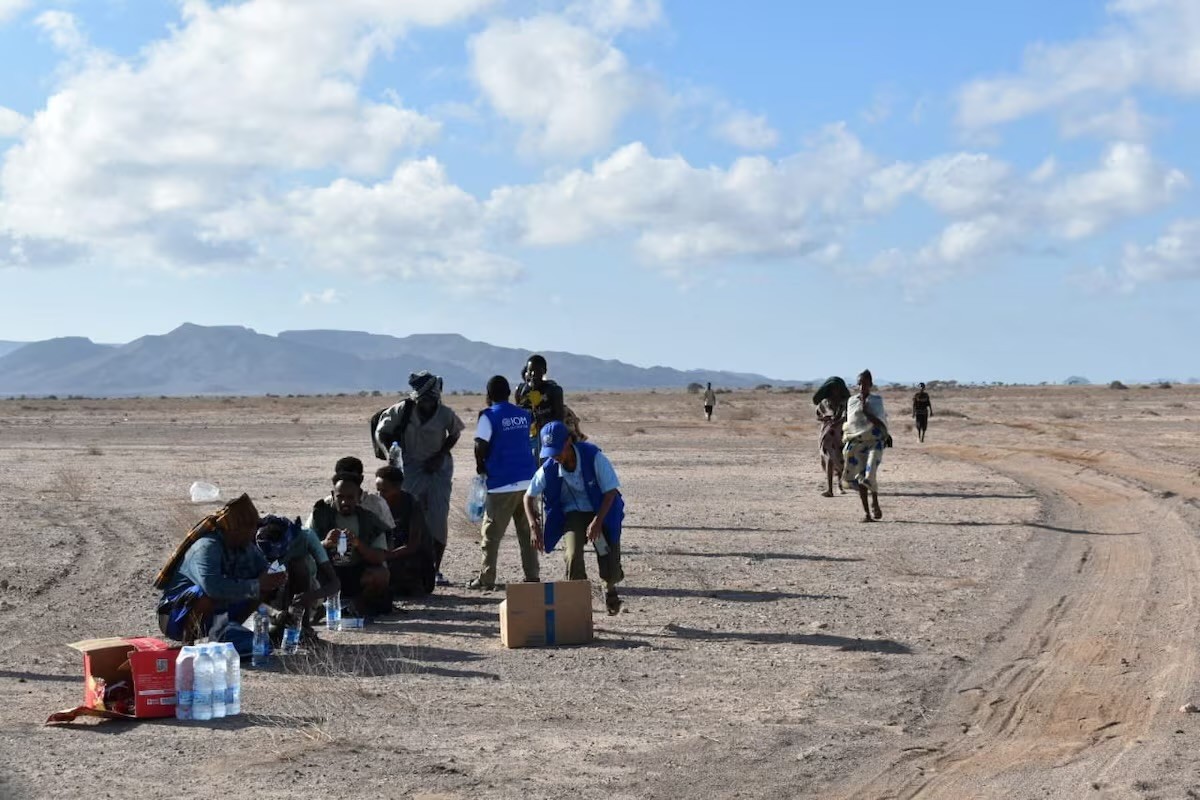
At least 139 migrants dead, including some children, after boat from Djibouti to Yemen capsizes, UN agency says
21:17
11 October 2026
Central African Republic foils planned large-scale militant attack
07:04
11 October 2026
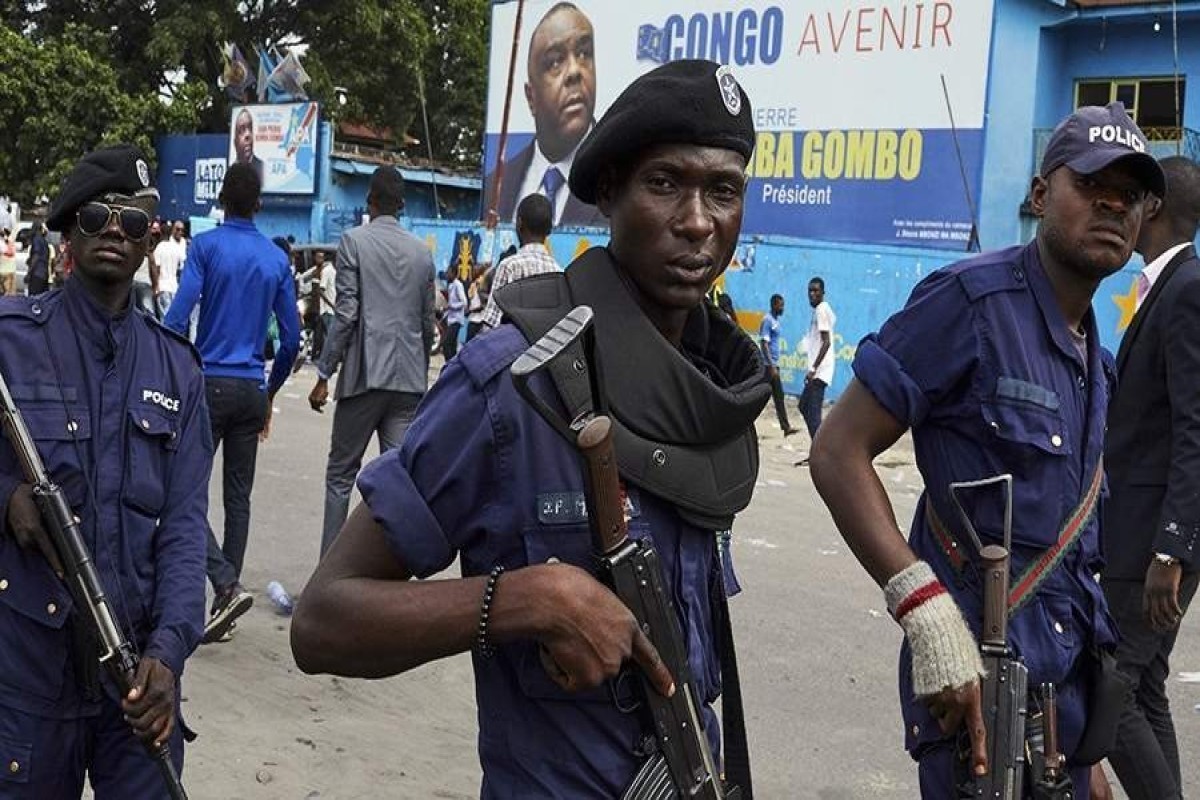
Rebel attack kills 11 civilians in DR Congo
05:16
11 October 2026

NEWS FEED
Foreign Minister Jeyhun Bayramov meets with CICA Secretary General Kairat Sarybay
14:11
16 October 2026
Azerbaijan prevents smuggling of 35 kg of drugs from Iran
14:10
16 October 2026
FM Mirzoyan: Armenia-Türkiye border could open at any moment
14:05
16 October 2026
Media representatives familiarize themselves with demining operation carried out by MES in Aghdam - PHOTO
14:01
16 October 2026
Peskov accuses Zelenskyy of refusing to assume responsibility
14:00
16 October 2026
Lukashenko orders expansion of volunteer defense units in Belarus
13:50
16 October 2026
Death toll from Istanbul floods reaches 4, three people missing
13:39
16 October 2026
Araghchi: Iran concerned about US presence in region, but trusts Armenia
13:37
16 October 2026
Prospects for LNG supplies to Vietnam discussed in Baku
13:16
16 October 2026
9th Congress of Azerbaijani journalists held - PHOTO - UPDATED - 1
13:02
16 October 2026
SOCAR announces intention to purchase gas from Gazprom
12:59
16 October 2026
ADY chairman attends New Silk Way Business Forum in Kazakhstan
12:57
16 October 2026
President Ilham Aliyev awards group of individuals for contributions to development of Paralympic movement
12:55
16 October 2026
President Ilham Aliyev received newly appointed Georgian ambassador to Azerbaijan
12:54
16 October 2026
President Ilham Aliyev received newly appointed Indian ambassador to Azerbaijan
12:50
16 October 2026
Press Council will continue its activities to develop journalism - Chairman
12:37
16 October 2026
Azerbaijan detains six foreigners over attempted illegal border crossings
12:33
16 October 2026
Chemical production indicators in Azerbaijan announced - TABLE
12:30
16 October 2026
High demand could help Azerbaijan increase export potential of halal products - Deputy Chairman
12:25
16 October 2026
New board of Directors of Azerbaijan’s Press Council formed
12:15
16 October 2026
Fuel oil production sharply increases in Azerbaijan - TABLE
12:09
16 October 2026
Azerbaijan Press Council elects new Chairman
12:03
16 October 2026
Parliament committee chairman: Artificial intelligence cannot replace civil servants
12:02
16 October 2026
Nearly 30 bcm of gas transported through Azerbaijan’s main pipelines this year
11:57
16 October 2026
28 state standards reviewed in Azerbaijan
11:57
16 October 2026
State standards to become more accessible to businesses - Deputy Chairman
11:53
16 October 2026
AZSTAND: Nearly 4,000 new regulatory documents to be developed in Azerbaijan
11:50
16 October 2026
Key indicators of Azerbaijan's oil and gas sector - TABLE
11:48
16 October 2026
Russia’s Ryazan Oil Refinery hit by drone attack again
11:48
16 October 2026
Number of state standards adopted in Azerbaijan nearly triples
11:44
16 October 2026
Volume of oil transported via BTC this year announced
11:44
16 October 2026
Speaker: Ilham Aliyev’s election as President in 2003 holds special place in country’s history
11:42
16 October 2026
Azerbaijan drafts new Civil Service Code, plans to repeal 6 laws
11:41
16 October 2026
Nasar Hayat: FAO remains committed to continuing cooperation with Azerbaijani government
11:39
16 October 2026
Natiq Mammadli: Media and Broadcasting Council works intensively to counter disinformation against Azerbaijan
11:38
16 October 2026
Israeli President traveled to Baku on commercial flight – uproar in Türkiye has no basis
11:35
16 October 2026
Azerbaijan changes calculation of insurance part of labor pensions, social insurance reserve to increase
11:30
16 October 2026
Azerbaijan to set retirement age based on maximum service age for each rank
11:30
16 October 2026
Azerbaijan to increase salaries of military personnel
11:26
16 October 2026
Person accused of fraud extradited from Russia to Azerbaijan
11:26
16 October 2026
Azerbaijan to adopt new standards in artificial intelligence and digitalization
11:24
16 October 2026
Azerbaijan to bar clergy and persons with foreign citizenship from civil service positions
11:23
16 October 2026
Azerbaijan's population reaches 10.28 million
11:18
16 October 2026
FAO: Innovation can help address challenges faced by farmers in Azerbaijan
11:16
16 October 2026
Azerbaijani Parliament sends congratulatory letter to President and First Vice-President on Independence Restoration Day
11:10
16 October 2026
Azerbaijan and Uzbekistan hold 2nd Rectors' Forum in Khankendi
11:07
16 October 2026
Azerbaijani Parliament begins its next session
11:05
16 October 2026
Azerbaijani journalists adopt new ethical principle on artificial intelligence
11:03
16 October 2026
Mirzoyan: Iran's concerns over TRIPP have been resolved
10:55
16 October 2026
Water scarcity and land degradation are among main challenges facing Azerbaijan's agricultural sector - MP
10:52
16 October 2026


