













Baku – APA. When Abdeljalil Abdelrahim talks about Abyei, a war-scarred region in central Sudan prized by northern nomads for its grazing land, he has no doubt it belongs to the north, APA reports quoting “Reutersâ€.
"Abyei has been part of the north historically," the 41-year-old laborer said as he unloaded jerricans of food oil in a dusty Khartoum suburb. "If there is a war over it, I’ll be fighting alongside my government, alongside the north."
Some 1,200 kilometres (750 miles) south in Juba, 36-year-old Abel Garang, from the southern Dinka tribe like most of Abyei’s permanent residents, is just as certain the region is southern. "Abyei belongs to the south. It’s our land, it’s our place."
South Sudan will split away to form a new nation on July 9, but north and south have yet to agree who owns Abyei, stirring fears a long-running quarrel over the region will sour the secession and could spark a broader conflict.
In a power play ahead of the split, Khartoum sent tanks and troops into Abyei on May 21, outraging the southern government, human rights groups and regional and global powers who called it a violation of the 2005 deal that ended Sudan’s long civil war.
The move followed an attack on a convoy of northern troops and U.N. peacekeepers which the north blamed on the south and which the U.N. said was likely to have been carried out by southern police or soldiers.
As Khartoum moved in, tens of thousands of villagers fled south in a panicked exodus to escape looting and burning.
Last week the two sides agreed to withdraw troops from Abyei and bring in Ethiopian peacekeepers, but the area’s symbolic and emotional potency could make it a sore point for years to come.
"This could be the start of another prolonged bout of internationally-backed mediation, or it could be the first shot in a long border war," Douglas Johnson, a Sudan expert and former member of the Abyei Boundaries Commission, said.
A return to war, which neither north or south Sudan can afford, would destabilize the region by sending refugees back into neighbors like Kenya and Ethiopia and creating a security vacuum in the heavily-armed south.
ETHNIC DIVISIONS
A volatile mix of politics, history and oil has fueled conflict over Abyei, a microcosm for the ethnic and religious divisions behind a civil war that claimed some 2 million lives.
The Dinka Ngok people, part of the south’s main ethnic group, live and farm the land all year round. The northern Arab Misseriya nomads use it for part of the year to graze cattle.
A major sticking point has been a dispute over who should be allowed to vote in a referendum over whether the region would join the north or the south after the split.
Southerners, many of whom see holding the plebiscite as a major concession in itself, say Abyei’s permanent residents should decide, meaning it would be mostly up to the Dinka.
"They (the Misseriya) are guests who came to graze. What kind of guests invade?" one Juba resident said.
Northern officials like Rabie Abdelati, a senior member of the north’s ruling National Congress Party (NCP), dismiss this as discrimination. "As you know, a nomad is a citizen," he said.
The importance of both constituencies means neither side is likely to budge soon, analysts say. Many Ngok Dinka hold high-ranking posts in the south, and the Misseriya were powerful allies for the NCP during the civil war.
Abyei also contains one significant oilfield, Defra.
Although the region has just a sliver of Sudan’s reserves, Khartoum stands to lose up to three-quarters of the country’s current output of about 500,000 barrels per day when the south secedes, and so may try to hold on to as much as it can.
In the worst case, analysts and aid workers predict a replay of the Ethiopia-Eritrea war, when two other regional countries took up arms over a border dispute after a similar split.
"The Abyei crisis could produce a much wider and deadlier war after July 9 if it isn’t addressed before then," John Prendergast, a former U.S. State Department official who co-founded the anti-genocide Enough Project, said.
A PEACEFUL SOLUTION
If you strip away the politics and history, Abyei may not seem worth all the bloodshed. A flat area about the size of Connecticut dotted with huts made of mud and stick, it has been pummeled by war and has only basic infrastructure.
Many still see hope for a peaceful resolution.
When the north seized Abyei, the south’s President Salva Kiir told its Dinka residents not to despair -- Abyei would remain their land "whatever it costs us," he said. But there seemed to be little appetite to return to armed conflict.
Analysts said this could be a political calculation aimed at securing northern recognition of the south’s independence, but many also see a weakening enthusiasm for war over Abyei, especially among a younger generation less steeped in conflict.
In the north, too, where inflation and a depreciating currency are presenting fresh economic challenges, there may be less zeal to fight for the distant region than there once was.
When asked what Abyei meant to him, one 24-year-old tourism worker in Khartoum just shrugged. "Frankly, we don’t need any problems from the south here in the north," he said as he sat with friends by a juice stand. "We need a peaceful solution."


 Follow us on Telegram
 t.me/apanewsaz
 Follow us on Instagram
 Follow us on TikTok
 Follow us on Facebook
 Follow us on X
Africa
Two killed, five injured in shooting in S. Africa
 16:09
16:09
 14 October 2026
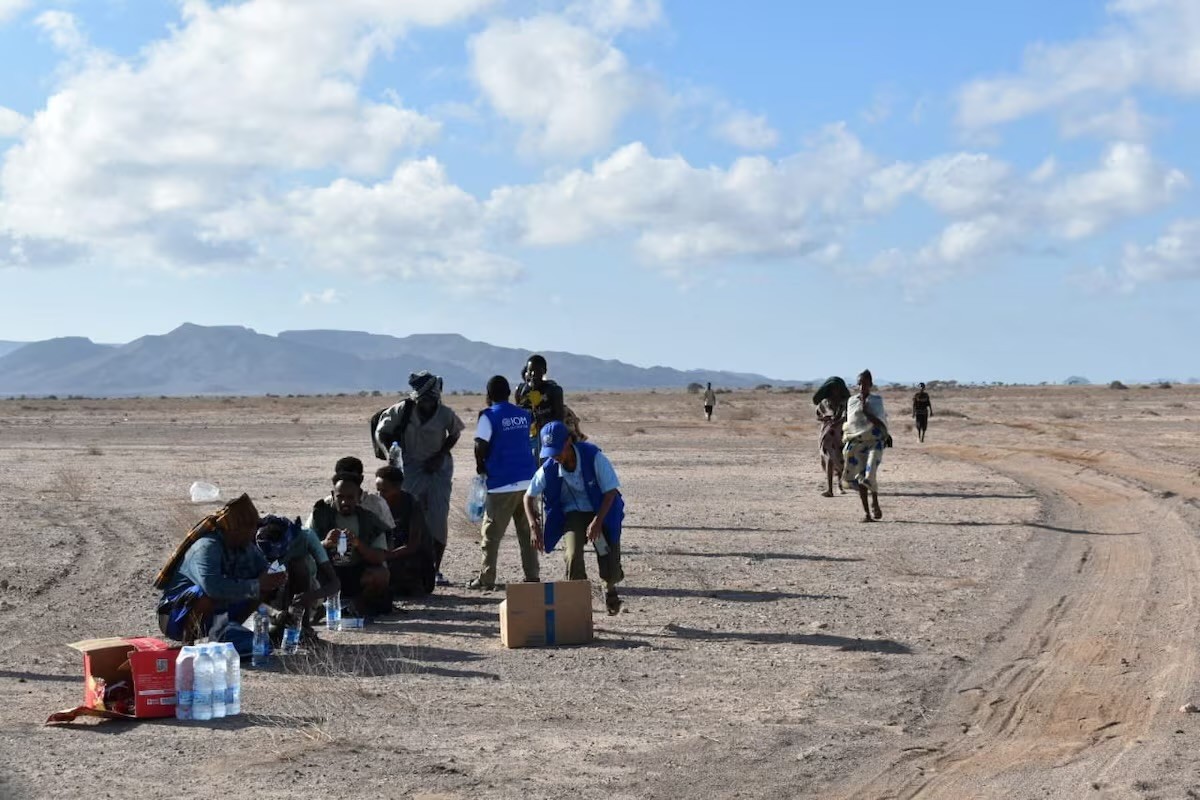
At least 139 migrants dead, including some children, after boat from Djibouti to Yemen capsizes, UN agency says
21:17
11 October 2026
Central African Republic foils planned large-scale militant attack
07:04
11 October 2026
Rebel attack kills 11 civilians in DR Congo
05:16
11 October 2026

NEWS FEED
Trump says US will not use nuclear weapons against Iran
06:46
16 October 2026
Trump claims Zelensky does not want to end war, calls for elections in Ukraine
05:43
16 October 2026
Trump calls Ukrainian strikes on Russian oil refineries a disgrace
04:33
16 October 2026
Conference League: Trabzonspor win as Ajax suffer defeat
03:14
16 October 2026
Europa League Matchday 2 round-up
01:05
16 October 2026
Train, bus collide in Channel Tunnel, injure 19
00:53
16 October 2026
China has not provided any military support to Iran since the beginning of the US operation
00:38
16 October 2026
Azerbaijani, Turkish FMs discuss relations between the two countries
00:10
16 October 2026
Azerbaijan's chairmanship of CICA extended until 2028
23:50
15 October 2026
Trump accused a Senate candidate of having ties to Muslim Brotherhood
23:27
15 October 2026
US: IRGC projectile hit civilian ship
22:50
15 October 2026
Putin: Ukrainian Armed Forces are again attempting to strike Russian oil refineries
22:23
15 October 2026
Ukraine not to be able to protect its infrastructure without PURL program — The Economist
22:10
15 October 2026
US has expanded sanctions against Iran
21:50
15 October 2026
UK provides Ukraine with additional long-range Storm Shadow missiles
21:20
15 October 2026
Video shared on President Ilham Aliyev’s social media accounts on his meeting with Amir of the State of Qatar Sheikh Tamim bin Hamad Al Thani
21:00
15 October 2026
President Ilham Aliyev’s social media accounts shared video on inauguration of Trans-Caspian Fiber-Optic Cable Line
20:55
15 October 2026
Baku hosted 7th CICA Summit, President Ilham Aliyev addressed the event - UPDATED-5
20:40
15 October 2026
Ukrainian President discusses air defense with NATO Secretary General
20:31
15 October 2026
Ukraine runs out of Patriot interceptor missiles as Zelenskyy and Trump clash over war
19:52
15 October 2026
Iran's navy says "violating" oil tanker caught fire east of Hormuz Strait
19:43
15 October 2026
White House official: Trump considering all options to keep Iran from nuclear weapon
19:37
15 October 2026
Houthis fire missiles at presidential palace in Yemen's Aden, officials say
19:00
15 October 2026
President Ilham Aliyev’s social media accounts shared video on 7th CICA Summit
18:28
15 October 2026
President Ilham Aliyev met with Amir of Qatar - UPDATED
18:12
15 October 2026
Armenian and Turkish businesspeople discuss joint cooperation
17:56
15 October 2026
Journalist Alexander Nevzorov added to Russia’s list of terrorists and extremists
17:53
15 October 2026
New head of Republic of Dagestan elected
17:46
15 October 2026
Kobakhidze visits Armenia
17:17
15 October 2026
Georgian opposition announces protest rallies
17:05
15 October 2026
Pashinyan establishes working group to resolve railway issues with Russia
17:02
15 October 2026
Pope Leo recovering as planned after lung cancer surgery, doctors say
16:58
15 October 2026
Papuashvili: EU takes disruptive stance in relations with Georgia
16:40
15 October 2026
Azerbaijan to chair CICA in 2026–2028
16:27
15 October 2026
UN considers CICA's role more important now than ever
16:26
15 October 2026
Meeting held with delegation of international and foreign national Paralympic committees
16:23
15 October 2026
President Ilham Aliyev received Türkiye’s Minister of Foreign Affairs
16:16
15 October 2026
7th CICA Summit concludes
16:12
15 October 2026
CICA Secretary General replaced
16:11
15 October 2026
Lavrov considers it appropriate to hold next "3+3" meeting in Azerbaijan
16:08
15 October 2026
Baku Declaration adopted following 7th CICA Summit
16:05
15 October 2026
Large amount of drugs prevented from being smuggled from Iran into Azerbaijan - PHOTO
16:02
15 October 2026
Signed documents exchanged between Azerbaijan and Kazakhstan
16:00
15 October 2026
Lavrov: Russia ready to participate in TRIPP, but has not yet received invitation
15:50
15 October 2026
Lavrov: Zelenskyy is challenging Trump, not interested in elections
15:47
15 October 2026
Presidents of Azerbaijan and Kazakhstan met in Baku and inaugurated Trans-Caspian Fiber-Optic Cable Line
15:44
15 October 2026
9th Congress of Azerbaijani Journalists to be held tomorrow, candidates for Press Council Board announced
15:43
15 October 2026
Gharibabadi: Current difficulties in Strait of Hormuz caused by military aggression and naval blockade against Iran
15:42
15 October 2026
ING: $10 rise in oil prices could increase Azerbaijan’s exports by 2–4% of GDP
15:39
15 October 2026
UAE Minister: Priorities set during Azerbaijan’s CICA chairmanship align with UAE’s vision
15:33
15 October 2026


