












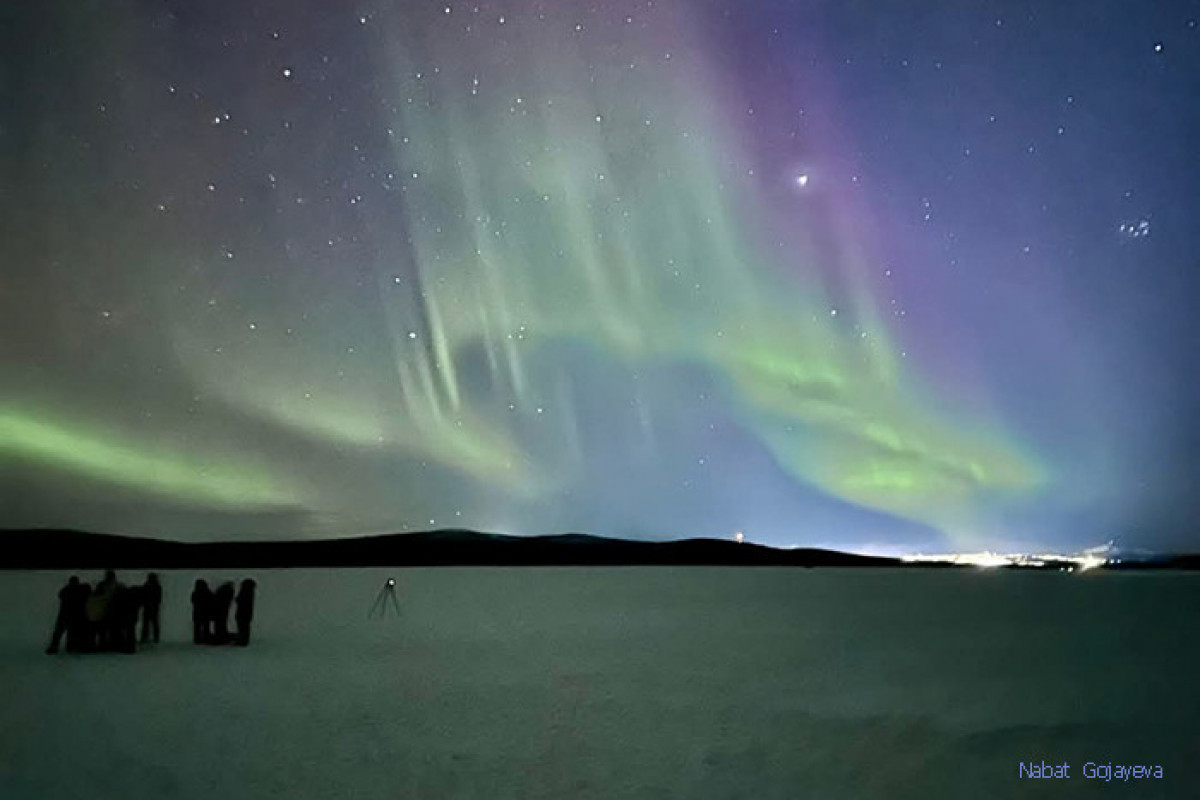


“A magnetic storm is expected,” the Department of Astrophysics of the Faculty of Physics at Baku State University (BSU) told APA.
It was noted that several C-class flares, which have almost no impact on the Earth, have occurred in several regions on the Sun.
“At present, there is no coronal mass ejection directed toward the Earth. Based on the history of previous flares and the potential of the changing active regions on the solar surface, M (R1/R2 – mild to moderate) and X (strong) class flares are expected to occur on December 8–10.
On December 8, a glancing impact of the coronal mass ejection that left the Sun on December 4 may be observed. The impact expected on December 9 will be connected with the coronal mass ejection that left the Sun on December 6. As a result, the Kp index indicating geomagnetic activity will range from 1–4 on December 8 at mid-latitudes, 5–6 on December 9 (relatively higher), and 2–4 on the following dates. At high latitudes, the Kp index will be 2–4 on December 8, 5–7 on December 9, and 5–6 on December 10.
The geomagnetic field will be at the G1 (mild) level due to the coronal mass ejection released from the Sun on December 4. This condition will continue on December 10 due to the coronal mass ejection that occurred on December 6.
“It is forecasted that in the following dates the geomagnetic field will be calm–variable,” the report emphasized.


 Follow us on Telegram
 t.me/apanewsaz
 Follow us on Instagram
 Follow us on TikTok
 Follow us on Facebook
 Follow us on X


