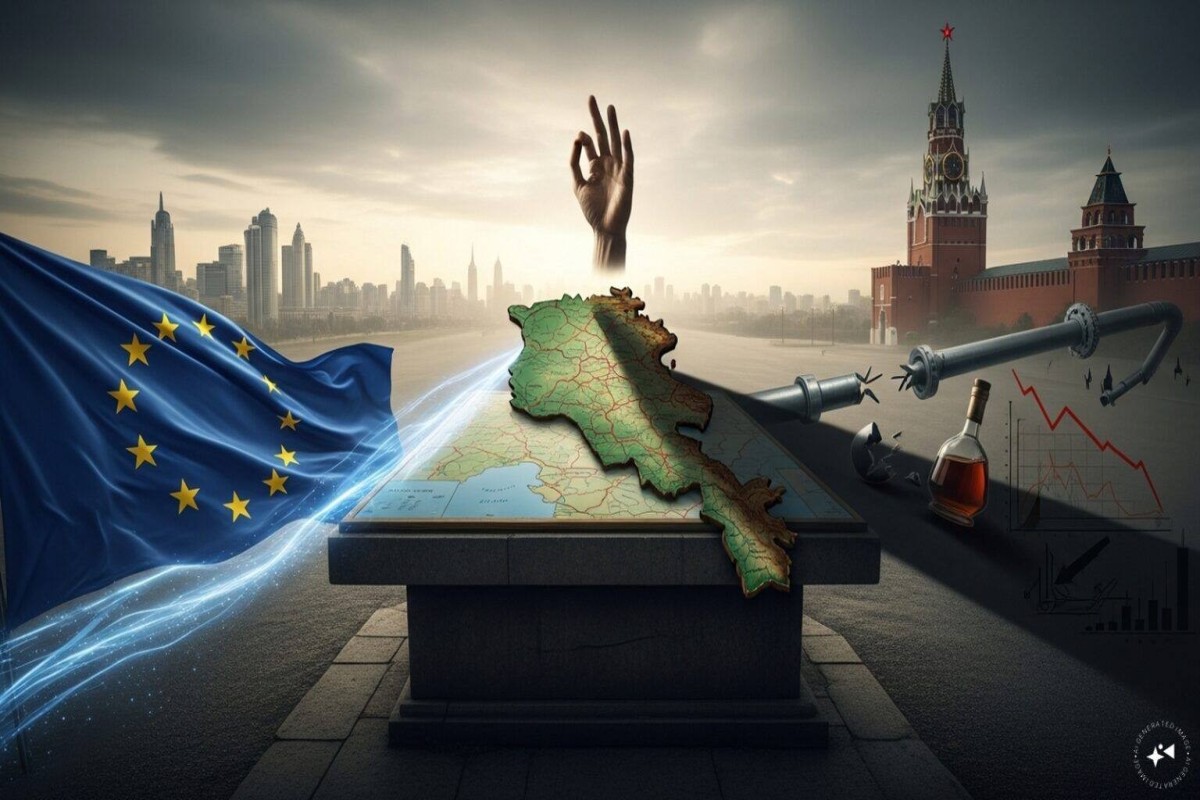


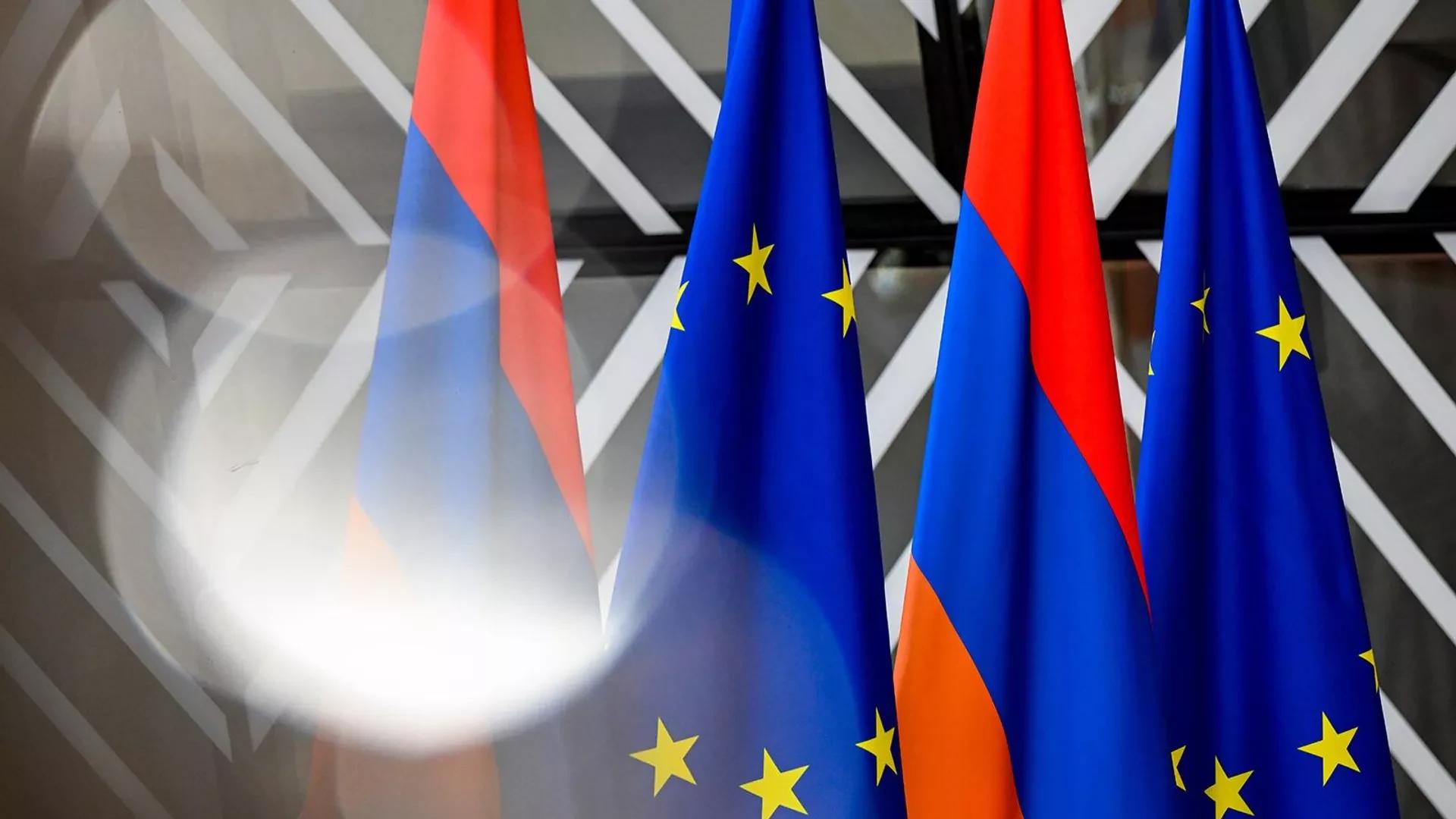
A new phase is beginning in economic relations between the European Union and Armenia. Brussels has put forward an initiative envisaging the suspension of import duties for two years on products accounting for approximately 80% of Armenian exports. The proposal was backed by 35 votes in the European Parliament’s Committee on International Trade, with two members voting against and three abstaining. The preferences are expected to cover a broad range of goods, including agricultural products and beverages. While the move could open up alternative export markets for Armenia, it also raises new questions about the extent to which economic criteria in EU trade policy may be subordinated to political interests.
Murad Muradov, Deputy Director of the Topchubashov Center, told APA that the European Union’s decision concerning Armenia is driven not only by economic considerations but also by political and geopolitical motives.

“Of course, this is a political decision. European Union officials themselves make no secret of the fact that one of the main motives behind the decision is to compensate for the economic losses Armenia could face as it moves closer to Europe,” the expert said.
In his view, the EU’s provision of economic support to Yerevan under such circumstances also demonstrates the influence of political considerations on economic decision-making. The creation of additional economic opportunities for Armenia following changes in its foreign policy orientation brings the EU’s selective approach to market access into sharper focus.
The Russia factor and Armenia’s search for economic alternatives
The EU trade preferences envisaged for Armenia do not appear to be a purely economic decision. Coming in parallel with Yerevan’s foreign policy shift toward the West, the move raises the question of whether Brussels is using economic opportunities as an instrument of geopolitical influence and incentive.
This approach becomes even more apparent against the backdrop of Armenia’s economic ties with Russia. Moscow has for many years been one of Yerevan’s main trading partners and investors. As weakening relations with Russia increase potential economic risks, preferential access to the European market provides Armenia with an alternative avenue for offsetting possible losses. As a result, the preferences not only appear designed to gradually reduce the country’s dependence on the Russian market but also create the impression that a change in political orientation is being encouraged through economic benefits.
According to Murad Muradov, Russia has also used economic instruments to influence Armenia’s political course.

“One of the main tools Russia has used to dissuade Yerevan from pursuing this political course has been economic pressure. For a long time, Russia has been both one of Armenia’s main trading partners and one of its principal investors,” he said.
The expert noted that Moscow has sought to exert economic pressure on Yerevan by imposing certain restrictions, making it more difficult for some Armenian products to enter the Russian market, and creating various difficulties for Armenian citizens and companies operating in Russia.
Muradov also recalled that Russian President Vladimir Putin, in his recent statements, had made it sufficiently clear that Moscow considers Armenia’s rapprochement with the European Union incompatible with its existing economic and political relations with Russia.
EU becoming a major export and import market for Armenia
The European Union holds an important position in Armenia’s foreign trade in both exports and imports. In 2025, the EU was Armenia’s fourth-largest export market, accounting for 7.9% of the country’s total exports. The EU also accounted for 13.5% of Armenia’s total imports. Armenia primarily exports products from the manufacturing and mining sectors to Europe.
However, against the backdrop of existing trade relations, granting additional preferences to Armenia could artificially expand the country’s export opportunities while also raising the risk of undermining the principle of fair competition in the market. The removal of tariffs could give Armenian products an additional advantage over other exporters, creating the impression that economic competition is being shaped through political decisions.
Murad Muradov said these figures demonstrate that Armenia-EU economic relations are no longer limited to political rapprochement.
“The EU is currently Armenia’s third-largest trading partner. In 2025, the European Union accounted for 11.3% of Armenia’s total foreign trade. At the same time, the EU was Armenia’s fourth-largest export market, accounting for 7.9% of the country’s total exports in 2025,” he said.
The expert added that the EU is Armenia’s third-largest source of imports globally, accounting for 13.5% of the country’s total imports. While these figures show that the EU already occupies a significant position in the Armenian economy, the introduction of new preferences could be viewed as granting Yerevan additional advantages and reinforcing a selective approach in trade relations.
Trade in services is also on the rise
Economic relations between Armenia and the EU are not limited to trade in goods. Trade in services between the two sides increased by 20% in 2023–2024. In 2024, the balance of trade in services was in the EU’s favor. Against the backdrop of expanding economic relations, this indicator makes questions surrounding the selective nature of additional preferences for Armenia even more pertinent.
Murad Muradov also drew attention to the diversification of economic ties.
“Economic relations are expanding not only in trade in goods but also in services. Trade in services between Armenia and the EU increased by 20% in 2023–2024, and in 2024 the balance of trade in this area was in favor of the European Union,” the expert said.
Thus, the expansion of Armenia’s economic relations with Europe is not limited to merchandise exports. Against this background, the creation of additional trade advantages for Yerevan further highlights the role of political factors in the EU’s economic policy.
EU’s selective preferences could disrupt the regional economic balance
While countries that have maintained pragmatic and mutually beneficial economic relations with the EU for many years and invested in regional projects do not enjoy the same opportunities, the creation of special preferences for Armenia could lead to unequal competitive conditions in the South Caucasus.
Another controversial aspect of the issue concerns the trade and quality standards established by Brussels itself. Given that stringent requirements are in force in the European market, particularly for food and agricultural products, the influence of geopolitical considerations on economic decisions raises questions about the consistent application of these principles.
Murad Muradov believes this is precisely where a contradiction emerges between the EU’s traditional trade policy and its new geopolitical approach.

According to him, the European Union has traditionally been distinguished by its principled and stringent quality standards and applies numerous strict requirements, particularly to food and agricultural products.
“Of course, Armenia cannot fully comply with all of these procedures and standards within a short period of time, even if it undertakes extensive reforms,” the expert said.
From this perspective, the key issue is how the apparent contradiction between applying preferences solely to customs and tariff policy and maintaining the EU’s product safety and quality standards will be resolved.
Armenia decision could set a precedent for other countries
The preferences envisaged for Armenia also raise the broader issue of precedent. Other non-EU countries that maintain good political relations with Brussels could seek similar trade terms in the future. Although the volume of Armenian exports is relatively small compared with the overall EU market, the situation could change if the same mechanism were extended to a larger number of countries.
According to Murad Muradov, the key question is how Brussels would respond to such requests.

“If such countries were to demand similar preferences for themselves, how would Brussels respond? Armenia’s export volume is not large compared with the EU’s overall market. The fact that the EU accounted for 7.9% of Armenia’s exports in 2025 also illustrates this,” he noted.
According to the expert, granting the same preferences to several countries with greater export potential could intensify competition for producers within the EU. This risk is particularly sensitive in the agricultural and food sectors.
EU faces a choice between geopolitical interests and common rules
The case of Armenia also exposes a broader strategic dilemma facing the EU. On the one hand, Brussels seeks to support its partners as a geopolitical actor and strengthen its position in competition with Russia. On the other hand, it is seeking to preserve a system built over many years on common rules, standards and the principles of fair competition.
According to Murad Muradov, the European Union has long faced a certain dilemma between acting as a geopolitical player and serving as a normative power.
“This dilemma is particularly complex for a union comprising 27 member states because their economic and political interests do not always coincide. Until now, the existence of strict and transparent common rules has made it possible to manage these contradictions to a certain extent,” the expert said.
For this reason, the significance of the decision concerning Armenia extends beyond bilateral trade. It also illustrates the extent to which the EU may be prepared to depart from its economic principles in pursuit of its foreign policy objectives.
Preferences could also trigger discontent within the EU
The EU consists of 27 states with differing economic and political interests. The expansion of preferences granted to third countries for political reasons could generate discontent among European producers, particularly those operating in sectors vulnerable to external competition. This suggests that the issue poses risks not only in terms of the EU’s foreign policy but also for its internal economic balance.
Murad Muradov believes that a growing number of exceptions could ultimately prompt member states to defend their national interests more assertively.
“This could cause a certain degree of discontent within the EU. Individual member states may begin to defend their national economic interests more openly and demand similar exceptions,” the expert said.
In his view, if this process expands, preserving the EU’s common economic and trade policy could ultimately become more difficult. Therefore, the impact of the preferences envisaged for Armenia may not be confined to Yerevan-Brussels relations and could give rise to broader regional and institutional challenges.



 Follow us on Telegram
 t.me/apanewsaz
 Follow us on Instagram
 Follow us on TikTok
 Follow us on Facebook
 Follow us on X