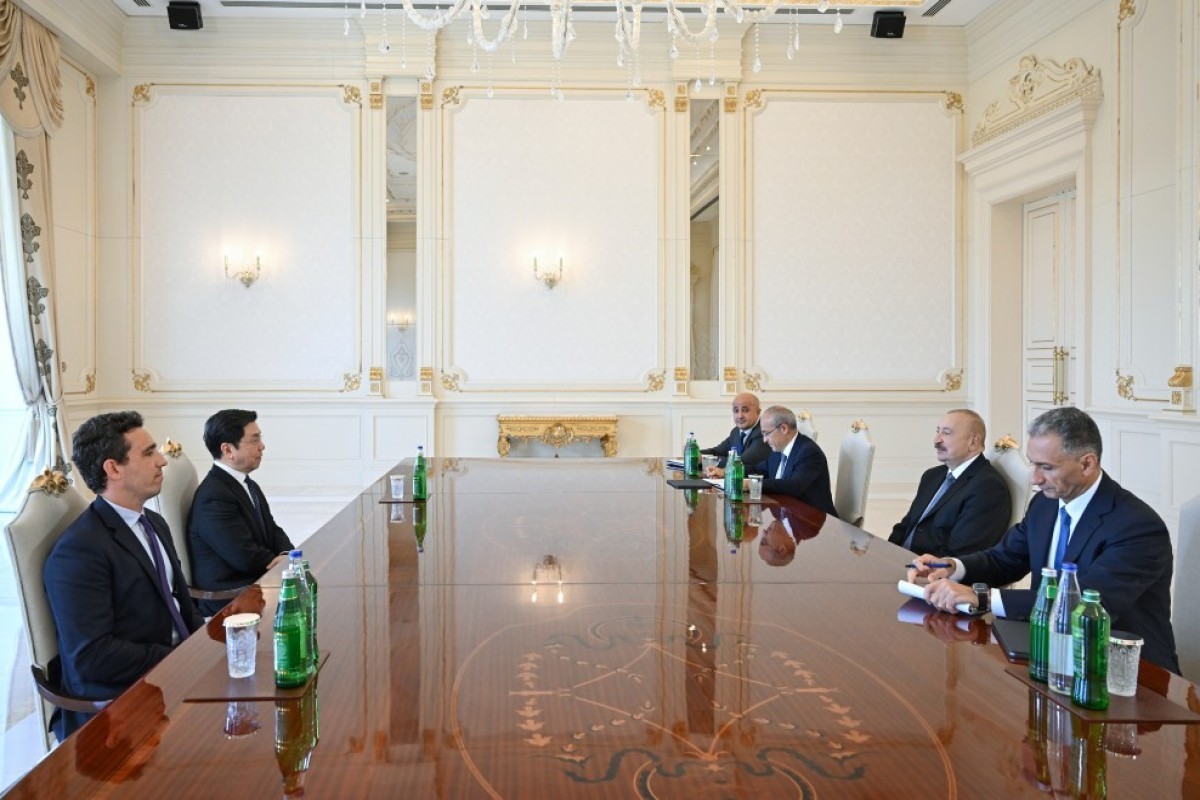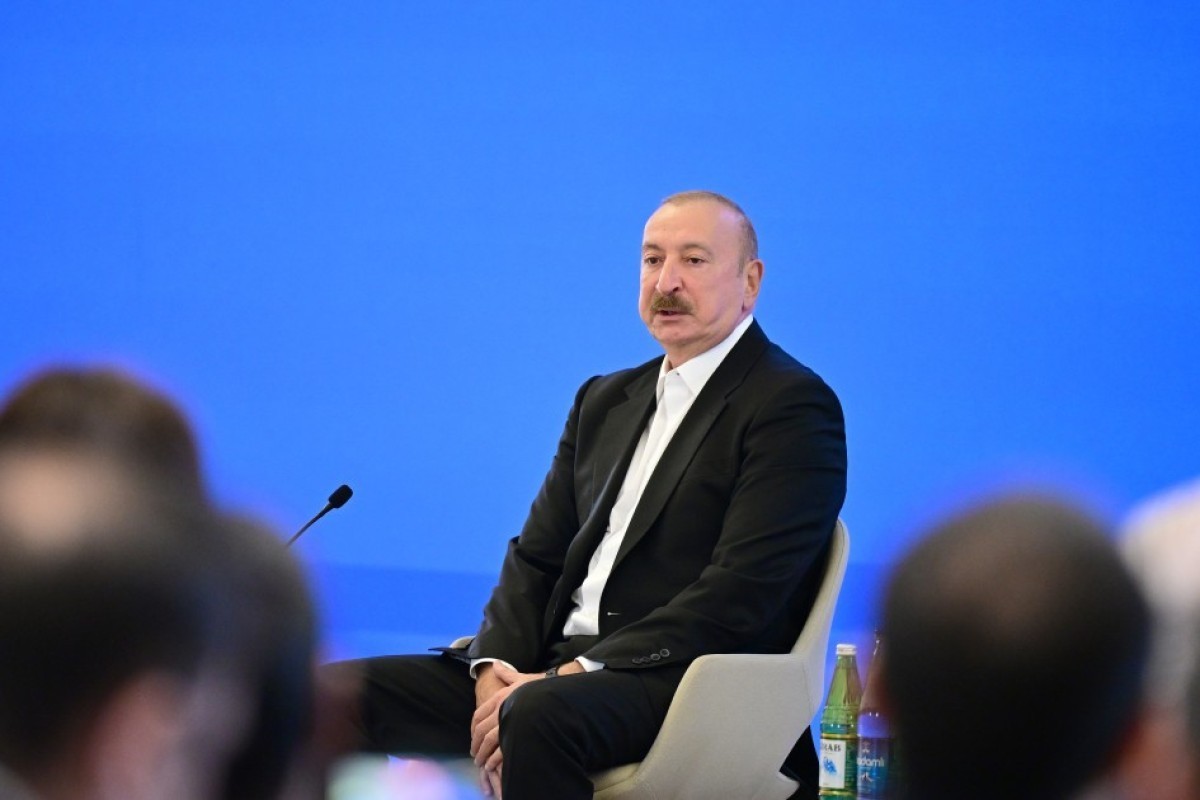


"Azerbaijan has always been an active supporter of strengthening solidarity among Muslim countries," President Ilham Aliyev said at the 4th Shusha Global Media Forum, APA reports.
"Next year, we will host the Summit of the Organization of Islamic Cooperation. This is a great responsibility for us, especially in the current complex and tense period.
Azerbaijan has always been an active supporter of strengthening solidarity among Muslim countries. The numerous events held in our country and the initiatives we have put forward have served precisely to strengthen solidarity, mutual understanding and unity.
We will see how the situation develops before the summit. Unfortunately, at present we do not see sufficient solidarity in the Muslim world. On the contrary, we see increasing tensions, mutual accusations, and the continuation of wars in different parts of the world, not only in the Middle East and the Gulf region but elsewhere as well.
This is very disappointing. I believe that solidarity within the Organization of Islamic Cooperation is one of the key conditions for security and stability. The more unity and mutual understanding there is, the fewer difficulties there will be," the head of state said.
The President noted that Azerbaijan's role in this direction has always been highly appreciated.
"At different times and between different parties, we have acted as a constructive mediator. Our position has always been aimed at reducing tensions and achieving practical results.
By the way, we also demonstrated this capability during our chairmanship of the Non-Aligned Movement. As you know, most members of the Organization of Islamic Cooperation are also members of the Non-Aligned Movement. This organization, which unites 120 states, fully supported Azerbaijan's chairmanship. We were elected chair by the unanimous decision of all member states. Moreover, our chairmanship was unanimously extended for another year. This was recognition of the positive role we played in bringing together parties with widely differing positions.
The same potential also played an important role during our presidency of COP29. That was even more difficult because there were highly conflicting positions, disagreements and confrontations. Nevertheless, a result was achieved.
Today, the legacy of COP29 is of great importance for all future COP conferences and for the global green agenda.
In the period leading up to the summit and during the summit itself, we will use all our capabilities to demonstrate solidarity, and we will do our utmost to achieve this.
How successful we will be is difficult to say now. It is also not easy to predict what the world and our region will look like next summer."


 Follow us on Telegram
 t.me/apanewsaz
 Follow us on Instagram
 Follow us on TikTok
 Follow us on Facebook
 Follow us on X