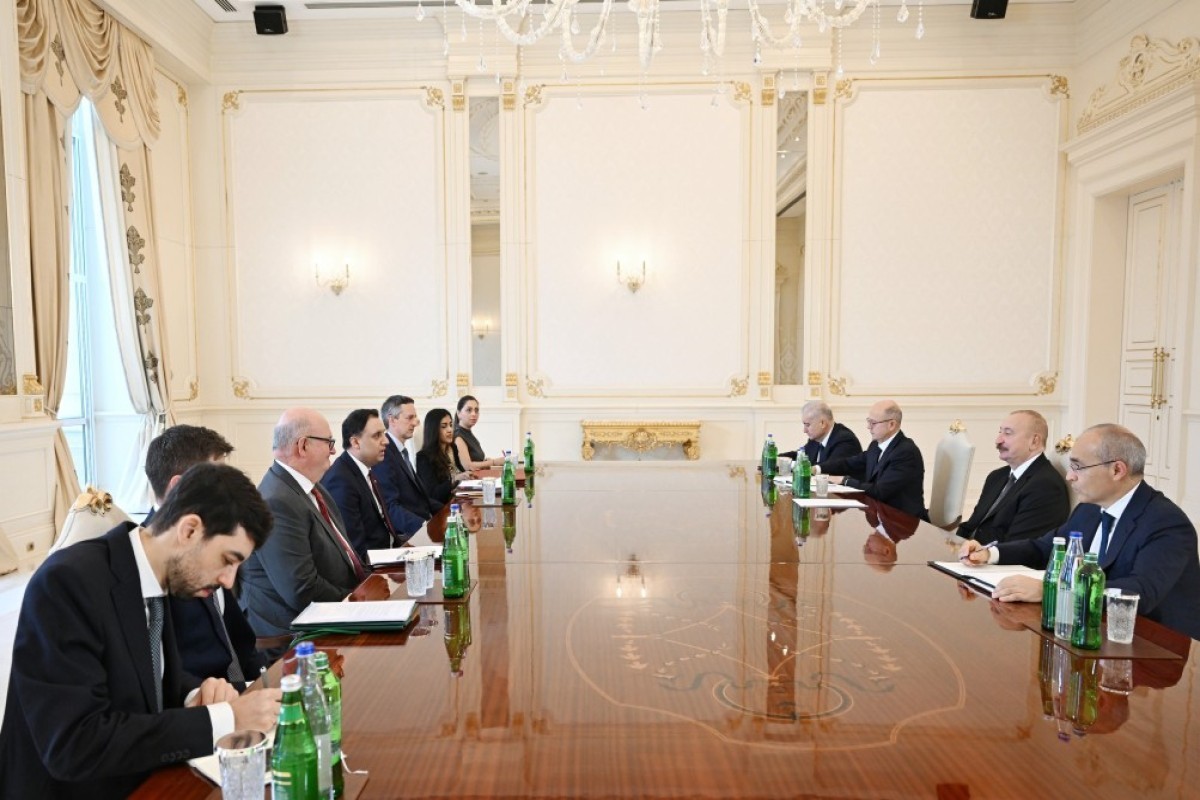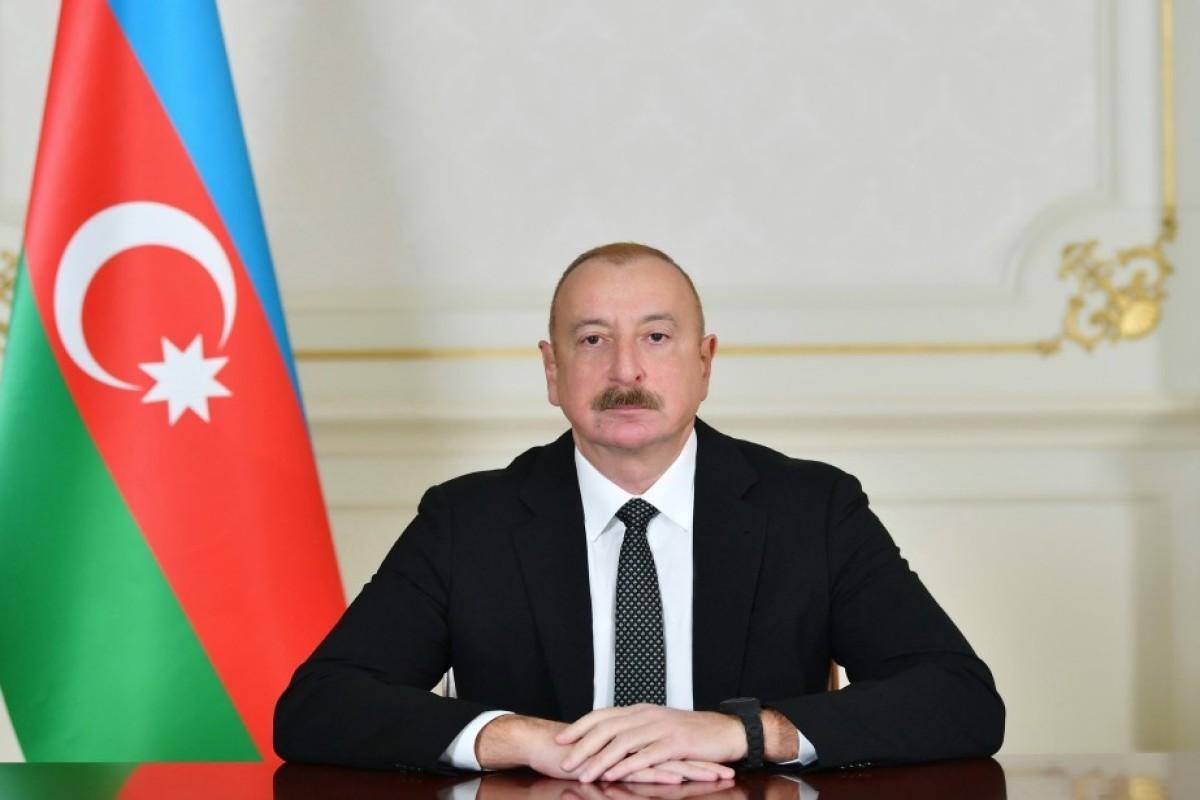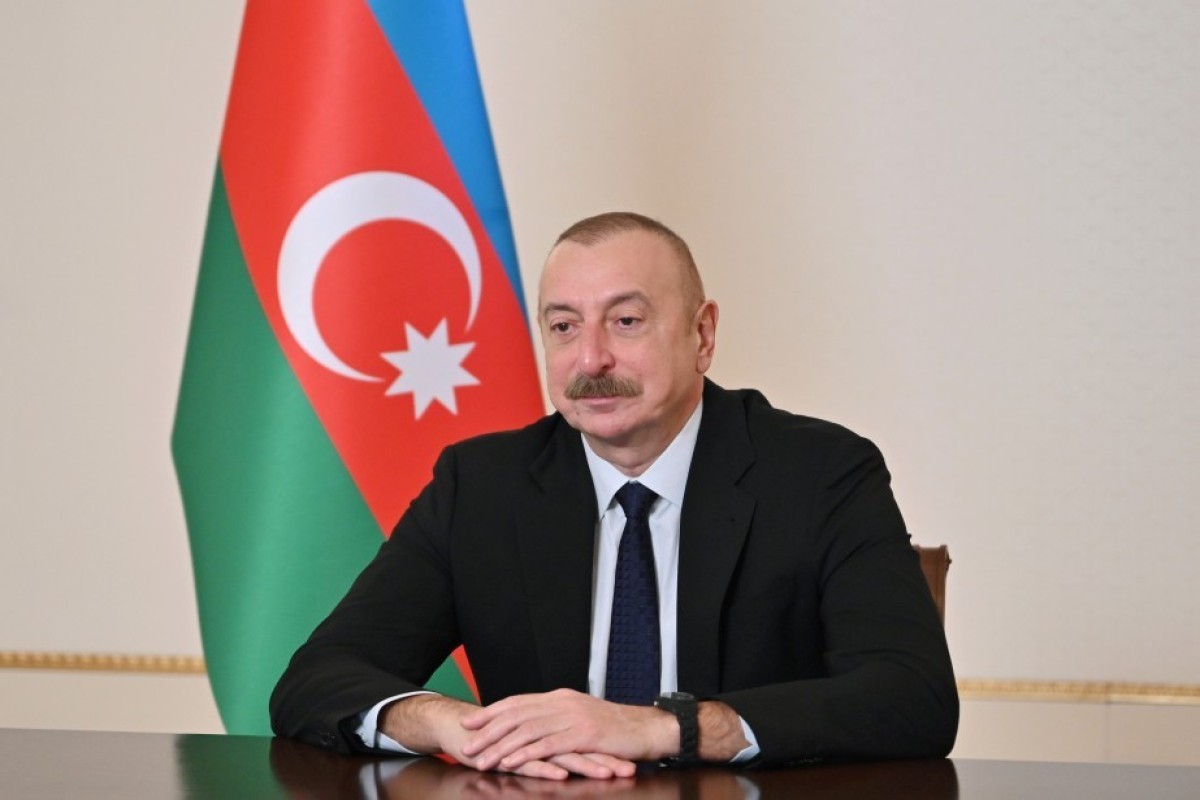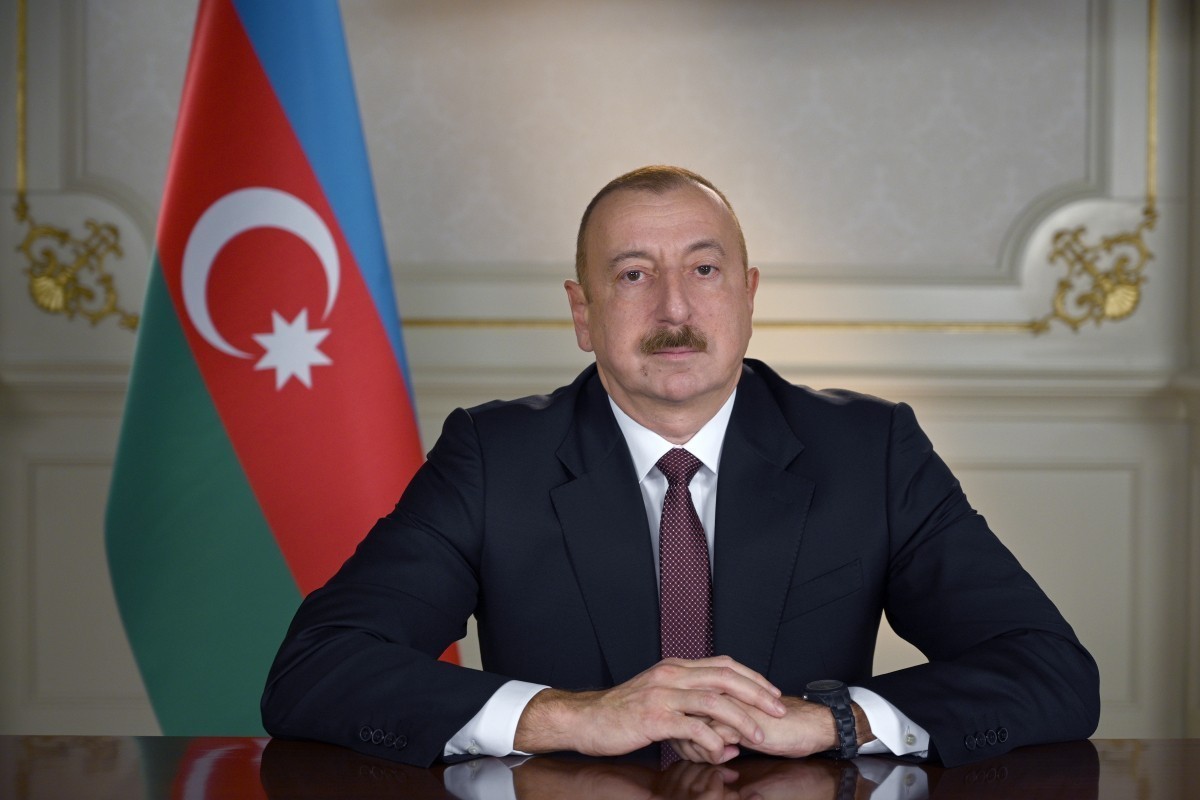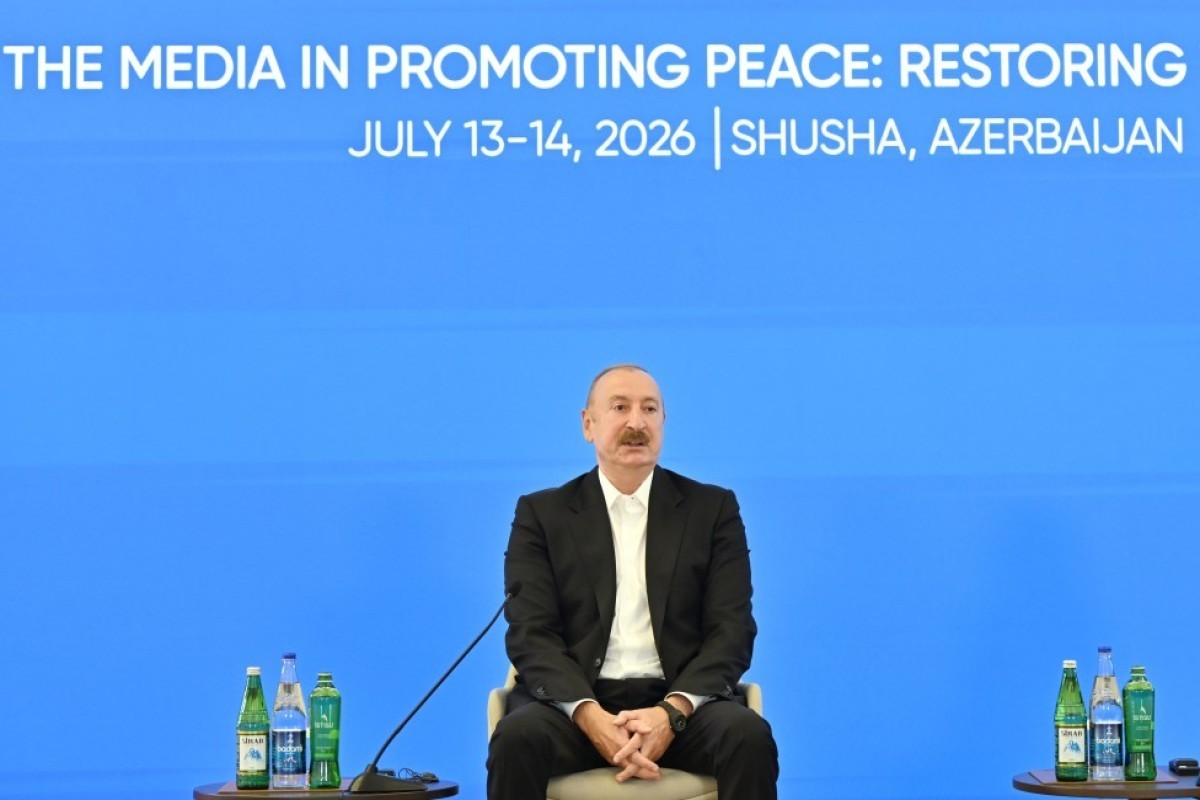


"Never come to terms with occupation," President Ilham Aliyev said in response to a question from Ukrainian journalist Dmytro Gordon at the 4th Shusha Global Media Forum, APA reports.
"I do not think that either the Ukrainian people or the Ukrainian leadership needed my advice. But even today, I would repeat the same recommendation: never come to terms with occupation. This is exactly what Ukraine is doing. It is not accepting the occupation, despite the very difficult moments of the past year. We have witnessed pressure from certain circles to stop the fighting on the condition of effectively formalizing the occupation. However, neither the Ukrainian people nor their leadership agreed to this.
As for what advice I would give to the other side, if they asked me, I would certainly express my opinion. But I do not think it would be appropriate to discuss that within the framework of your question. As for my assessment of the future prospects of the war, I believe it does not differ significantly from yours. I think everyone should have realized long ago that this war must be stopped. And it must be stopped immediately. This is Azerbaijan's position. It is my personal position as well. It is also my position as the leader of a country whose territories were occupied and which later put an end to that occupation.
Azerbaijan's experience is one of the rare examples in history. We experienced occupation and endured various forms of pressure for many years. We were urged to give up Karabakh. I have spoken about this many times. The OSCE Minsk Group, co-chaired by the United States, France and Russia, wanted us to hand over not only the administrative borders of the former Nagorno-Karabakh Autonomous Oblast but also the Lachin and Kalbajar districts to Armenia. In return, we were promised only the restoration of the five districts located east of where we are now. Neither I nor the people of Azerbaijan would ever have agreed to that.
This was the common position of the three permanent members of the UN Security Council, and it was very difficult to withstand such pressure. When the Second Karabakh War began, all of them demanded that we stop immediately. They exerted pressure, issued threats and called us. Some did so insistently, others in a softer manner. All of them wanted us to stop and leave the situation as it was. At one stage of the war, we were told: 'You have liberated Fuzuli, that is enough.' We had to use various diplomatic means. I repeatedly sent our foreign minister to Moscow, Washington and Europe. Their objective was to prevent Azerbaijan from restoring its territorial integrity. But they failed because it is impossible to break the will of a people. A nation striving for independence and preserving its national identity cannot be defeated. Such a people cannot be subjugated or forced to accept someone else's will. Those who still want this war to continue should understand this reality today.
I am aware of President Zelenskyy's position. He has stated it publicly many times. During his visit to Azerbaijan in April this year, we also exchanged views on this issue in detail. His position is an immediate ceasefire along the line of contact. I cannot say how relevant that proposal is now, but as far as I know, he has not publicly retreated from that position. Azerbaijan's position remains unchanged. We have always supported Ukraine's territorial integrity, sovereignty and the inviolability of its internationally recognized borders, and we will continue to do so. No country's borders can be changed by force or without the consent of its people. Our position on this issue is consistent and firm.
As for the Ukrainian people, we are always ready to help within our capabilities. I do not want to speak much about this because we are not doing it for publicity. It is a sincere gesture. Assistance is provided not only by the state. Ordinary people and private companies also take part. It is a unified example of solidarity. We are trying to support people whose territorial integrity has been violated to the best of our ability," the head of state noted.


 Follow us on Telegram
 t.me/apanewsaz
 Follow us on Instagram
 Follow us on TikTok
 Follow us on Facebook
 Follow us on X