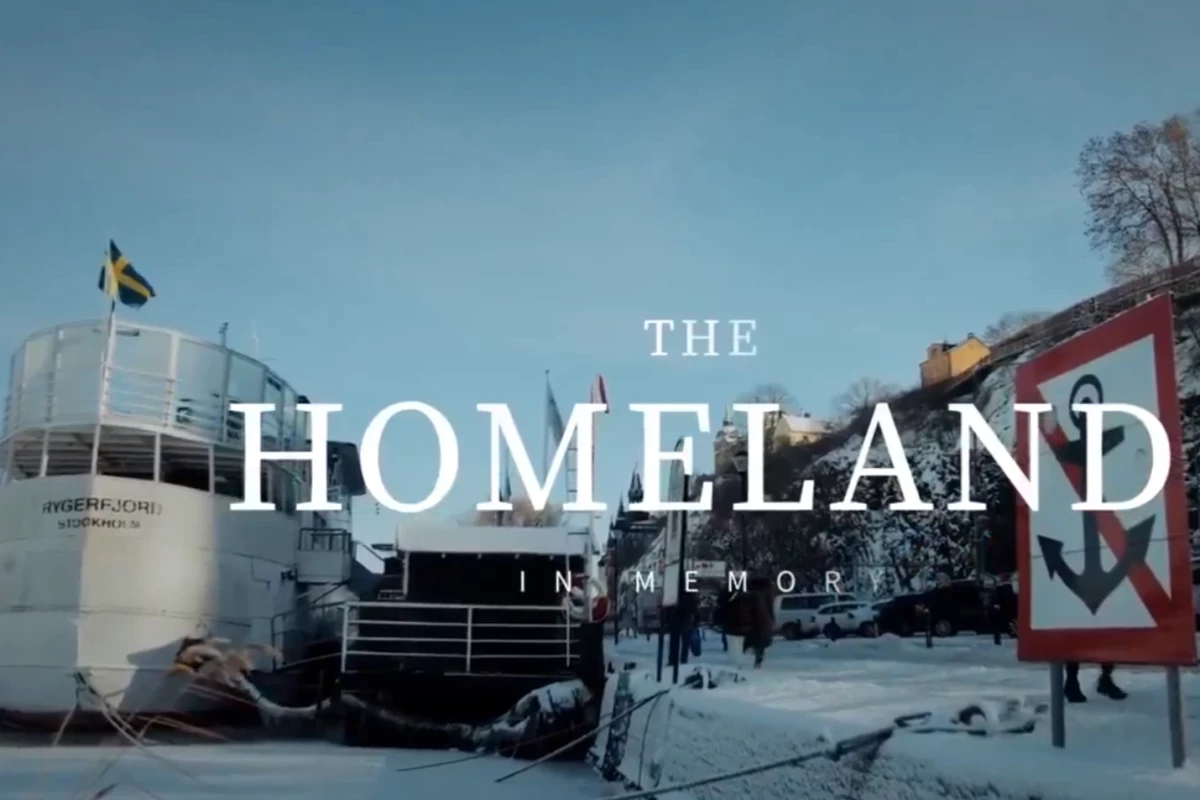


Swedish filmmaker Mikael Silkeberg has produced a documentary titled “A Homeland Living in Memory”, which explores the cultural heritage of Western Azerbaijan, APA reports.
The film was created with the organization and support of the Embassy of Azerbaijan in Sweden.
In a post on his X account, Azerbaijan’s Ambassador to Sweden, Zaur Ahmadov, noted that “A Homeland Living in Memory” is a 55-minute documentary by Swedish director Mikael Silkeberg, built around a cultural journey stretching from Scandinavia to Azerbaijan.
The film explores how memory preserves identity across geographical boundaries.
"The film opens in Sweden, at Uppsala University Library, where Silkeberg encounters a rare 17th-century manuscript — an early translation of the Gospels into Azerbaijani, written in Latin script with French orthography. Preserved far from the Caucasus, this fragile text becomes a powerful symbol: even across centuries and distance, cultural memory endures.
The journey continues in Stockholm, where Silkeberg meets Swedish author and historian Bengt Jangfeldt. Through a brief conversation on the Nobel brothers’ activities in Baku during the late 19th century and the broader Swedish presence in Azerbaijan, the film highlights an often-overlooked chapter of Scandinavian–Caucasian relations.
From this point, reflections on Nordic engagement with the Caucasus evoke the writings of the Norwegian Nobel Prize laureate in literature Knut Hamsun and the memoirs of Danish diplomat and businessman Erik Biering in the late 19th century — voices that sought to understand a region situated at the crossroads of Europe and Asia.
Silkeberg then travels eastward, following not only a geographic route, but a deeper search for continuity.
At its core, the film presents Western Azerbaijan as a cultural landscape sustained through memory — a world of places, traditions, and meanings carried across generations. Through archival maps and testimonies, it reveals a geography that persists not on political borders, but in cultural consciousness.
This continuity finds its most vivid expression in the ashig tradition, where poetry, music, and storytelling converge. The legacy of Ashig Alasgar, born in the Goycha region, forms a central thread throughout the film. His verses preserve landscapes, emotions, and a sense of belonging that transcends physical absence. Through the sounds of saz, balaban, and zurna, and through collective expressions such as yalli dance, memory becomes a shared and living experience.
The film further explores how identity is safeguarded through literature and visual art. In Baku’s cultural institutions, manuscripts, poetry, and artistic works form a cultural map that resists erasure. From classical literary figures to the visual heritage of Mirza Gadim Iravani, art emerges as a durable vessel of historical continuity.
Material culture adds another dimension. Carpets from the Iravan group are presented as encoded archives, where patterns, colours, and compositions reflect a worldview shaped by history, environment, and belief. The documentary also introduces the traditional costumes of Western Azerbaijan and explores the region’s culinary heritage, visually capturing the preparation of traditional dishes and demonstrating how everyday cultural practices carry memory across generations.”
According to Zaur Ahmadov, “Reflective in tone, The Homeland in Memory brings together archival discoveries, literature, music, visual art, traditional craftsmanship, landscapes, and personal testimony into a cohesive narrative. Ultimately, the film poses a universal question: when a homeland cannot be physically reached, how does culture ensure that it is never truly lost?” the ambassador emphasized.
It should be noted that “A Homeland Living in Memory” has already been presented in Baku.
The film was screened on June 16 at the Azerbaijan State Pedagogical University, organized by Vice-Rector Mahira Huseynova and the Western Azerbaijan Research Center, which operates under the university’s Office of the Vice-Rector for International Relations.


 Follow us on Telegram
 t.me/apanewsaz
 Follow us on Instagram
 Follow us on TikTok
 Follow us on Facebook
 Follow us on X