

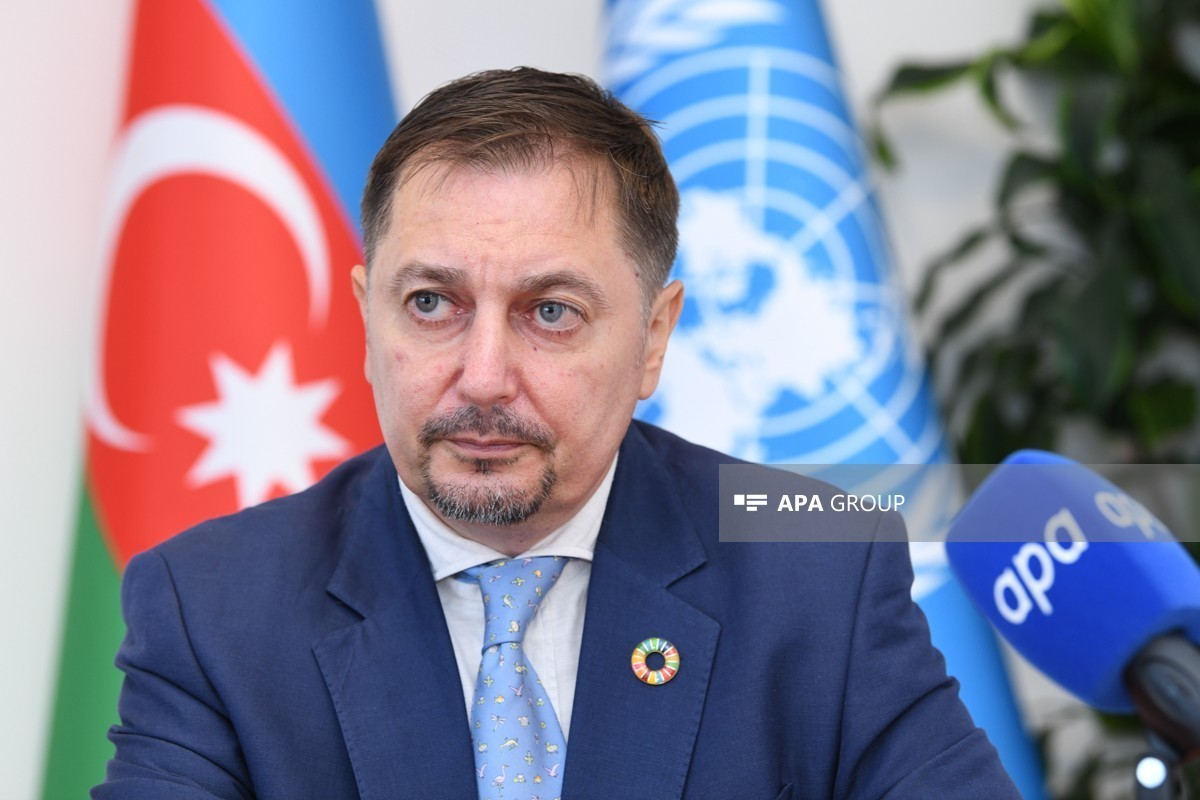


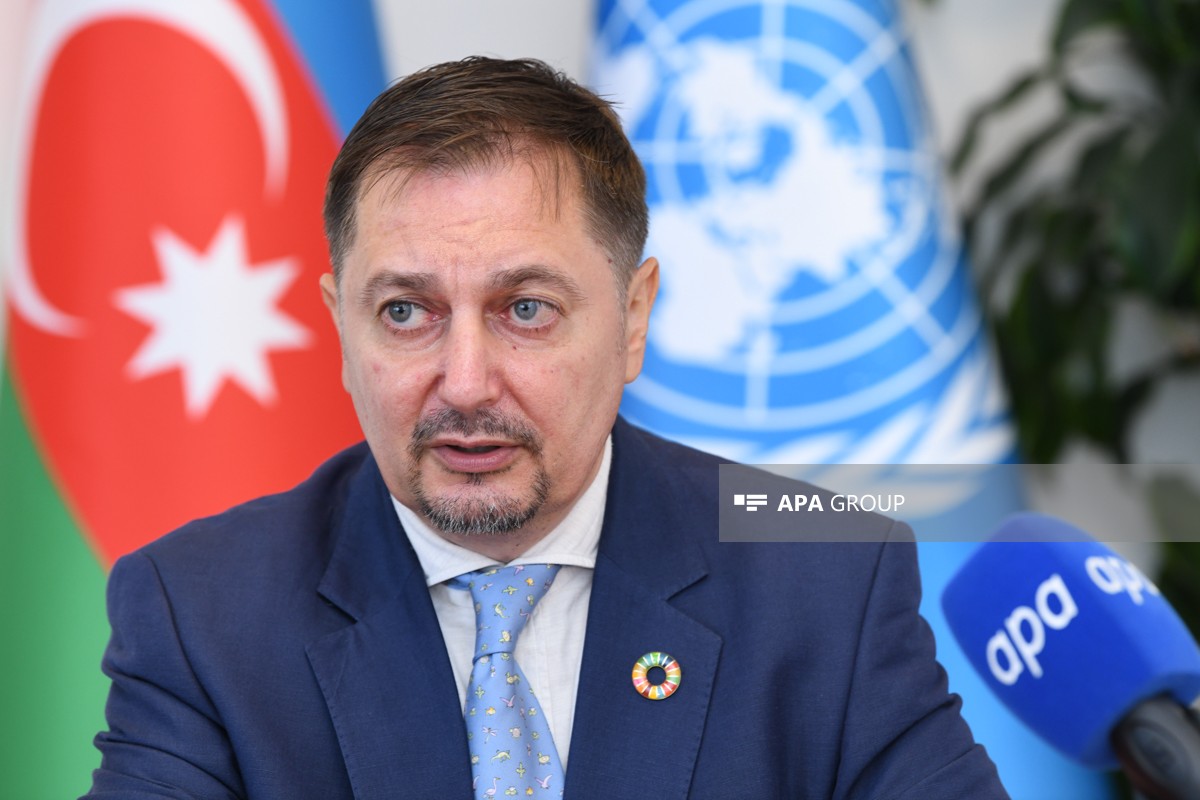
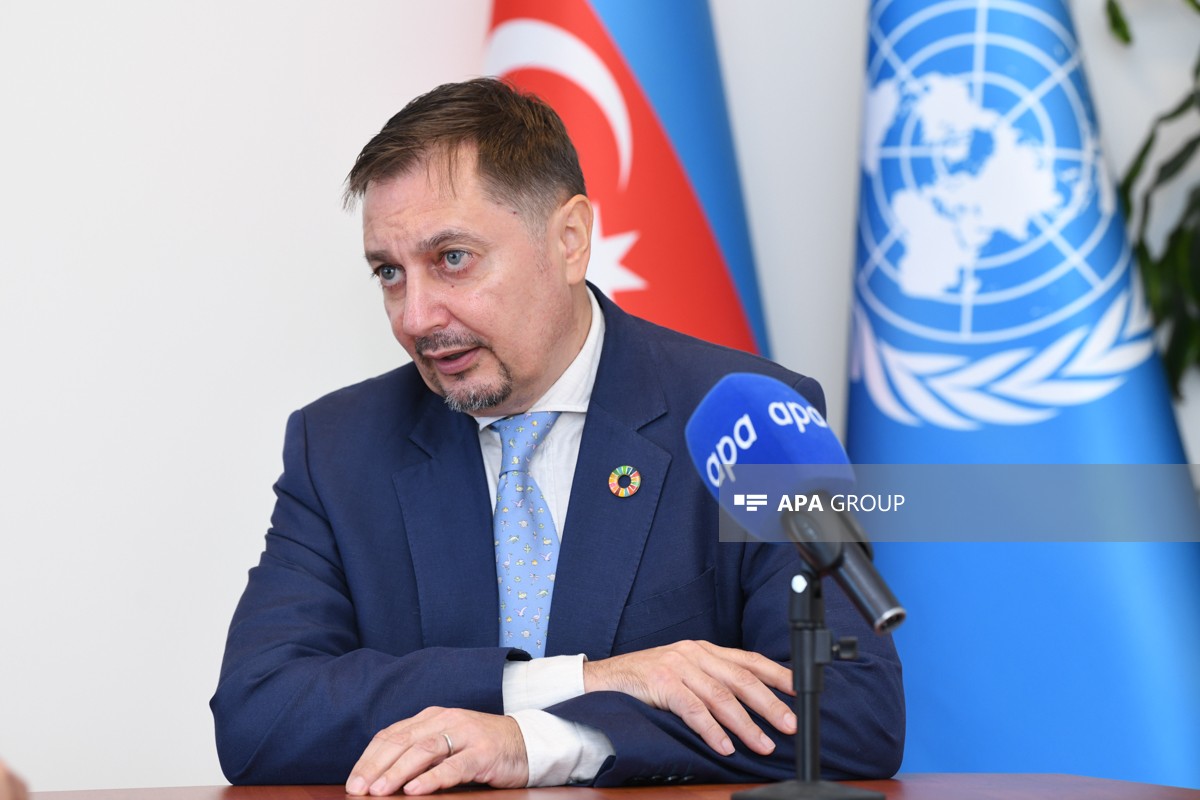
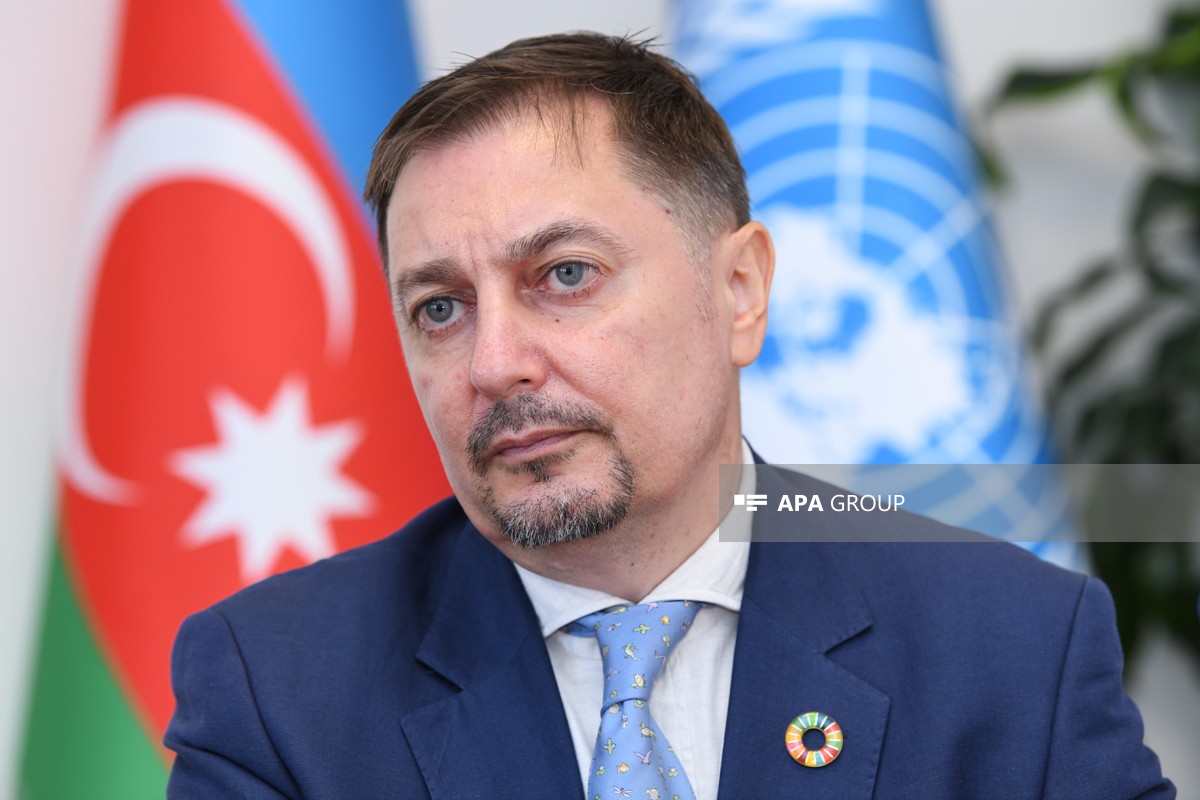
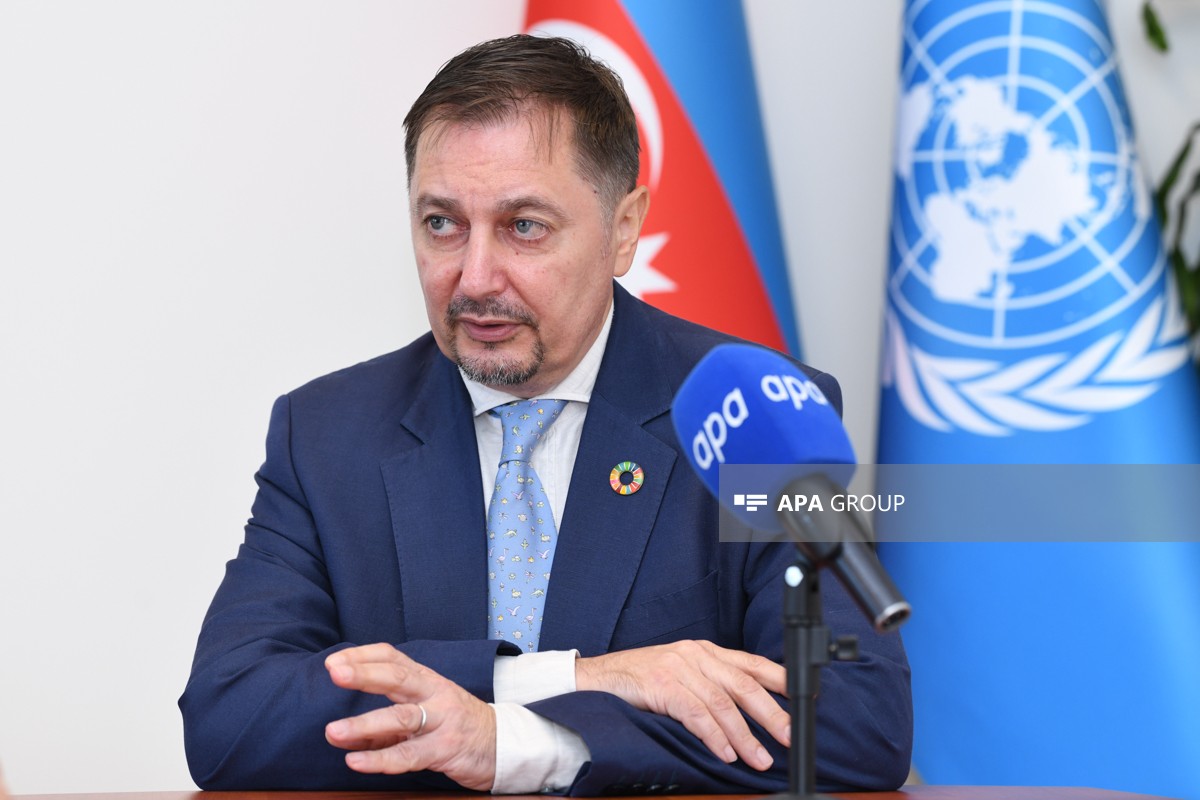
APA conducted an interview with Dmytro Shlapachenko, the newly appointed United Nations Resident Coordinator in Azerbaijan.
I find Baku an amazing city
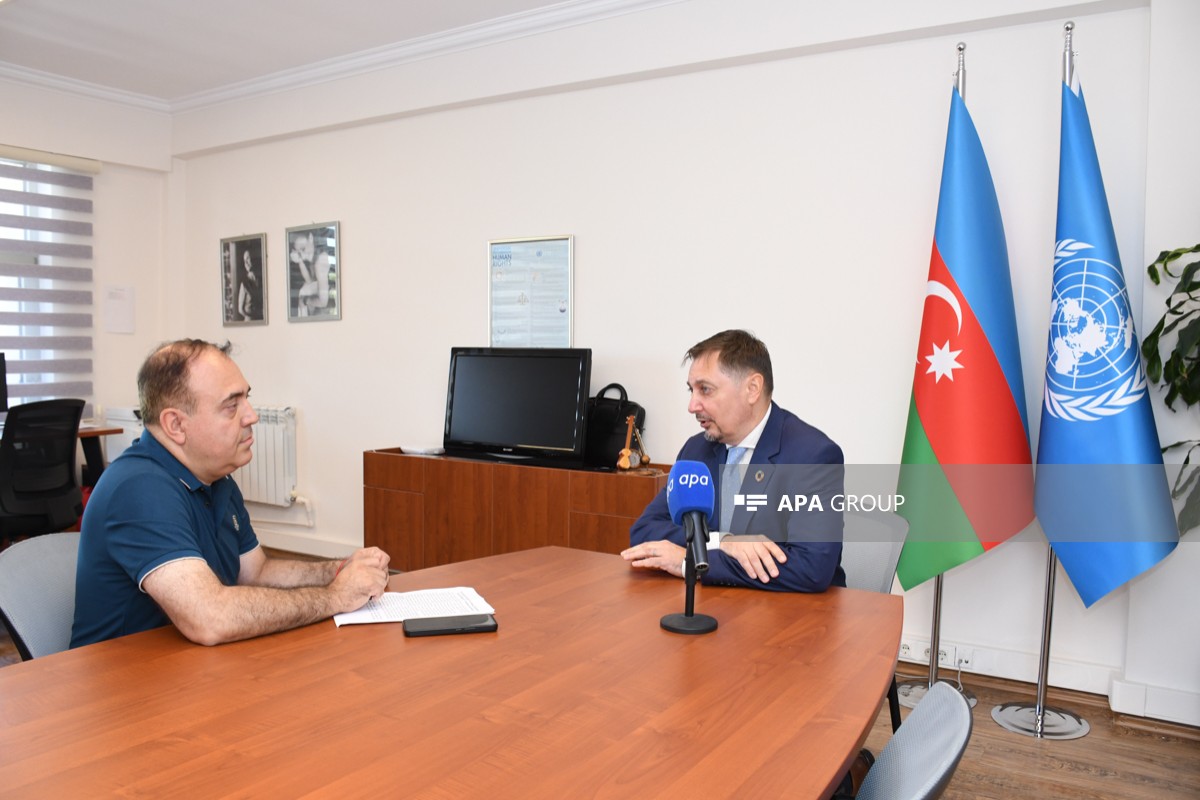
– You have recently assumed your duties as the United Nations Resident Coordinator in Azerbaijan. What are your first impressions of the country, and what priorities have you identified for your mission?
– I have now been in Azerbaijan for slightly more than two months, and my first impression is, as you can probably guess, incredibly good. I find Baku an amazing city. I think there are fantastic museums; cultural life is very rich, but I think the most important thing for me is the people of Azerbaijan.
So far I have encountered phenomenal people here, both in the government and simply on the street. I find a lot of people who are true intellectuals, and for me it was a novelty to meet people in a subway, in some shops, cafes, who are ready to engage with you, talk about virtually any subject, very gentle, very kind. So for me, so far, there has been only one trip outside of Baku.
I have been to Baku with my family, and we truly enjoyed the nature of the city. I love Azerbaijani food. I discovered many different recipes that I was not aware of and had never tried before, and now I have become a big fan.
I have also been to the Philharmonia several times, and truly love the retro Azerbaijani music that speaks to my heart. I think I was very impressed by how professional and well-organized the government is, and overall I think it's an amazing country to be in.
We're trying to set up a strategic dialogue with the government in Karabakh and East Zangezur
– The United Nations Sustainable Development Cooperation Framework for 2026–2030 has recently entered into force. What are the framework's key priorities, and how does it support Azerbaijan's national development agenda?
– Priorities for me, of course, are aligned with the priorities of the government.
And so far, what I have seen is, of course, we have our framework of cooperation between the government of Azerbaijan and the United Nations for the year 2026-2030. They are very broad, and they specifically leave a lot of areas to be determined as we go. So, of course, we talk about the environment, we talk about inclusive growth, but these are just broad strokes.
What concretely would be done would be discussed with the government. What I would like to do more is, I obviously see that the government has priority to rebuild Karabakh and East Zangezur. For the UN, of course, we have to accompany the government on its development priorities.
For this reason, I think we're trying to set up a strategic dialogue with the government in Karabakh and East Zangezur. We will try to do it in October, close to UN Day, and that will become clear where we can support the government in these areas.
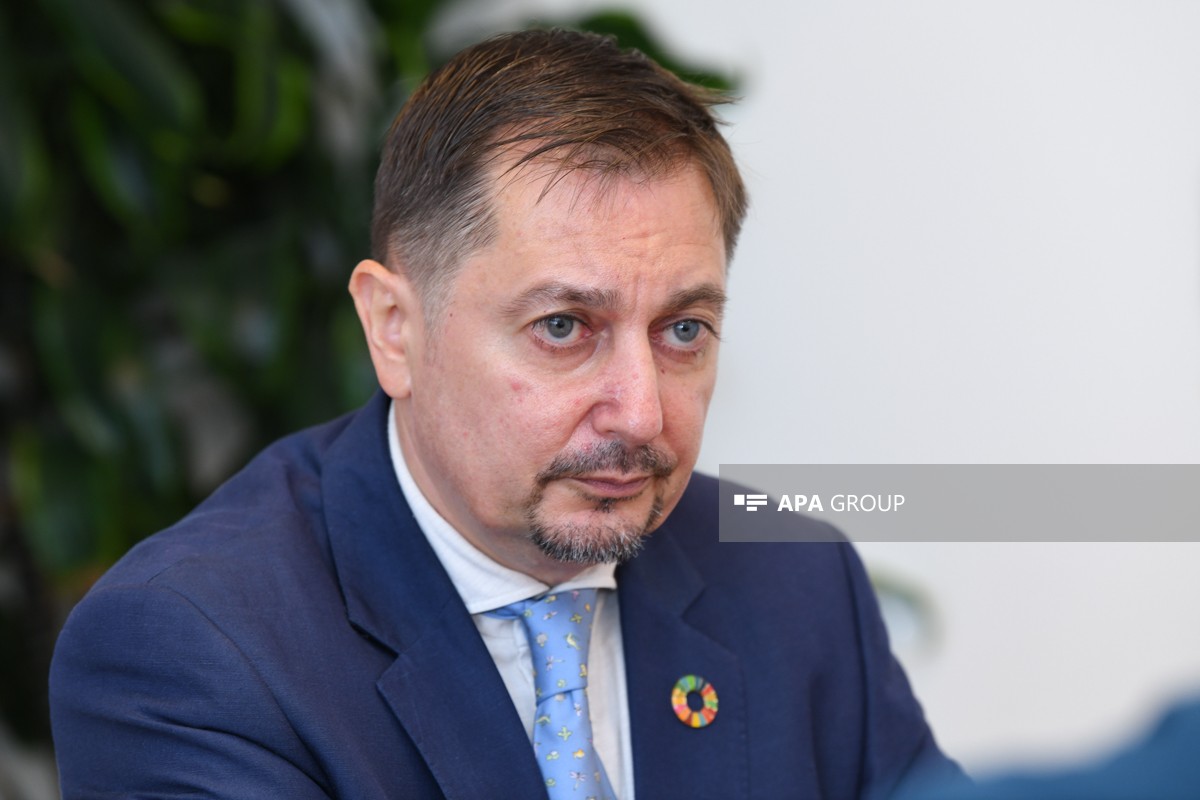
I would like to engage more young people, and for this reason, we are already discussing enhancing our cooperation, which is already excellent, with ADA University.
But also, I would like to do more with young people in other universities, including, of course, the Karabakh University. I think it would be, of course, prudent to continue working on the environment, which is a big priority for this country and, of course, for the United Nations. Engaging, of course, with women, working on economic growth, and how we can support Azerbaijan in this area would also be quite important.
I think what would be key to know going forward is that it's adjustable. So, that's why we will see what the government would require, and therefore we will adjust to accompany the government on this journey.
Azerbaijan is not only our partner, but it also provides aid to other countries
– Next year will mark the 35th anniversary of cooperation between Azerbaijan and the United Nations. How do you assess the current stage of this cooperation? In your view, what have been the most significant achievements of this partnership over the past three and a half decades, and what new opportunities do you see for its future development?
– 35 years is not easy to cover, but I think if we think about where the government was 35 years ago in relations with the UN and where now, we are in a different stage.
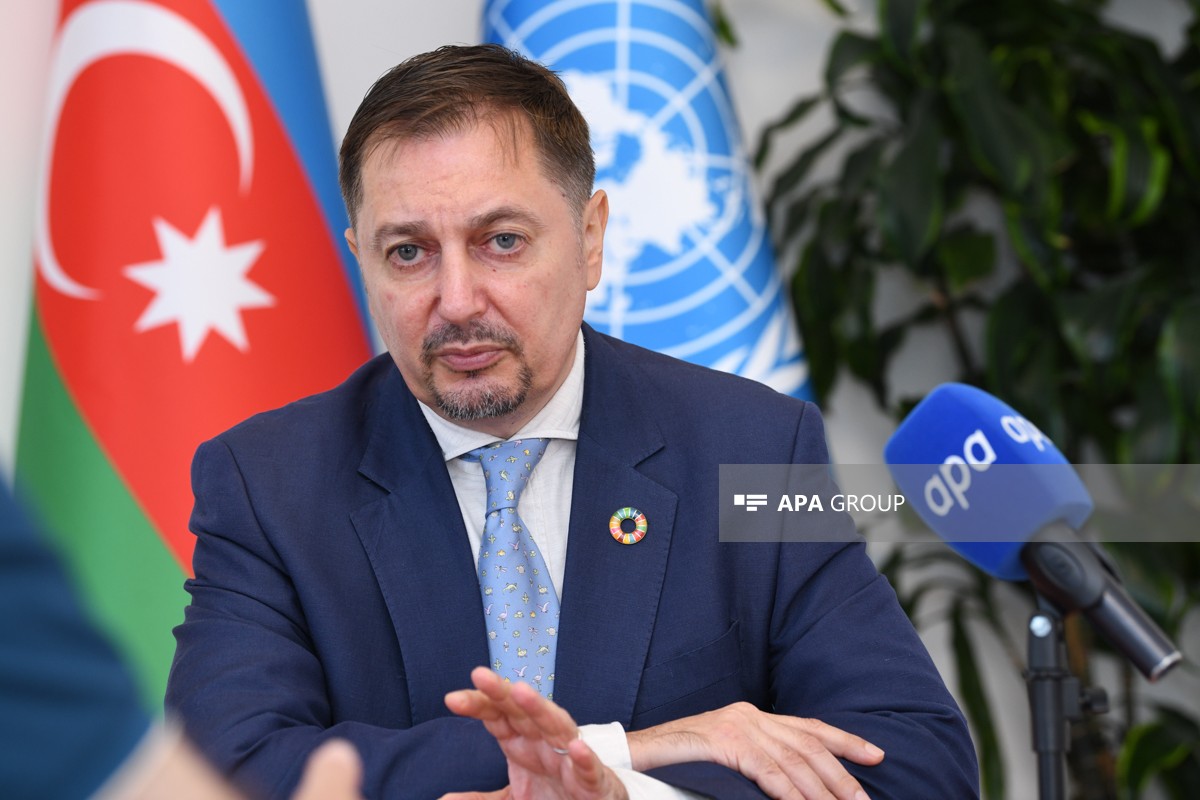
It started with the UN providing humanitarian assistance; now we move as partners. And that's why, ideally, I would like to see the UN being more in an advisory capacity to provide policy advice, sharing, of course, best practices that we gather around the world.
And, of course, what has changed is that now Azerbaijan, not only our partner, but also provides aid to other countries. Sometimes it channels through the UN, and we are very happy about this, but also Azerbaijan has now become a big convenor under the UN auspices of international conferences and dialogues. And that's, I think, also for me a big achievement.
The UN team was fully mobilized to support Azerbaijan in making COP29 a success, and we continued to support the Government’s climate leadership through other key events. We remain committed to supporting the Government in convening and delivering other major international UN events.
Also, let me add that, of course, regional initiatives of the government of Azerbaijan jointly with the UN about the Caspian Sea, about other sub-regional matters, are also very important for the UN.
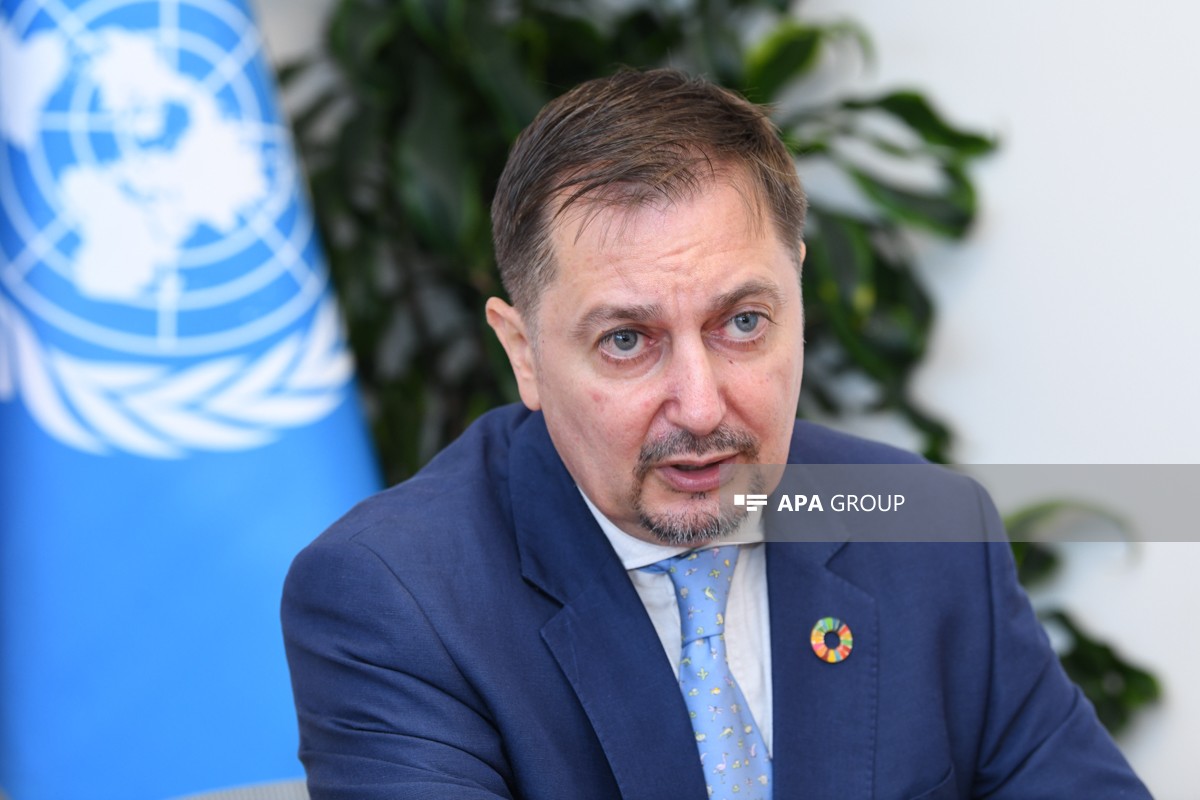
Azerbaijan established itself as an environmental champion
– Climate action remains one of the UN's global priorities. Following Azerbaijan's hosting of COP29 and recently held Baku Climate Action Week, how do you see the country's role in advancing the global climate agenda and green transition?
– Azerbaijan established itself as a climate champion.
From a historical perspective, you may recall that Azerbaijan had less than one year to prepare to host COP29. And there was a monumental task for Azerbaijan to organize it in a much shorter time than all other countries that organized COP before.
We all consider this to be a huge success, and since then, Azerbaijan has always been on the agenda. And Baku Climate Action Week, which you rightfully mentioned, is the third time that it has been held in Azerbaijan. I've been, of course, at many events during this Baku Climate Action Week, and it's very clear that people come to Azerbaijan because they believe it's a genuine dialogue that the government is cultivating for the international community, that the government cares, and the government actually invests a lot in these events.
So if you think about the investment that the country made for the COP, for the Baku Climate Action Week, it's very clear that Azerbaijan doesn't only speak about this, but actually does something about this. And it's important to have this forum and the platform where others feel comfortable coming and discussing. And not only discussing, but the paradigm has now shifted.
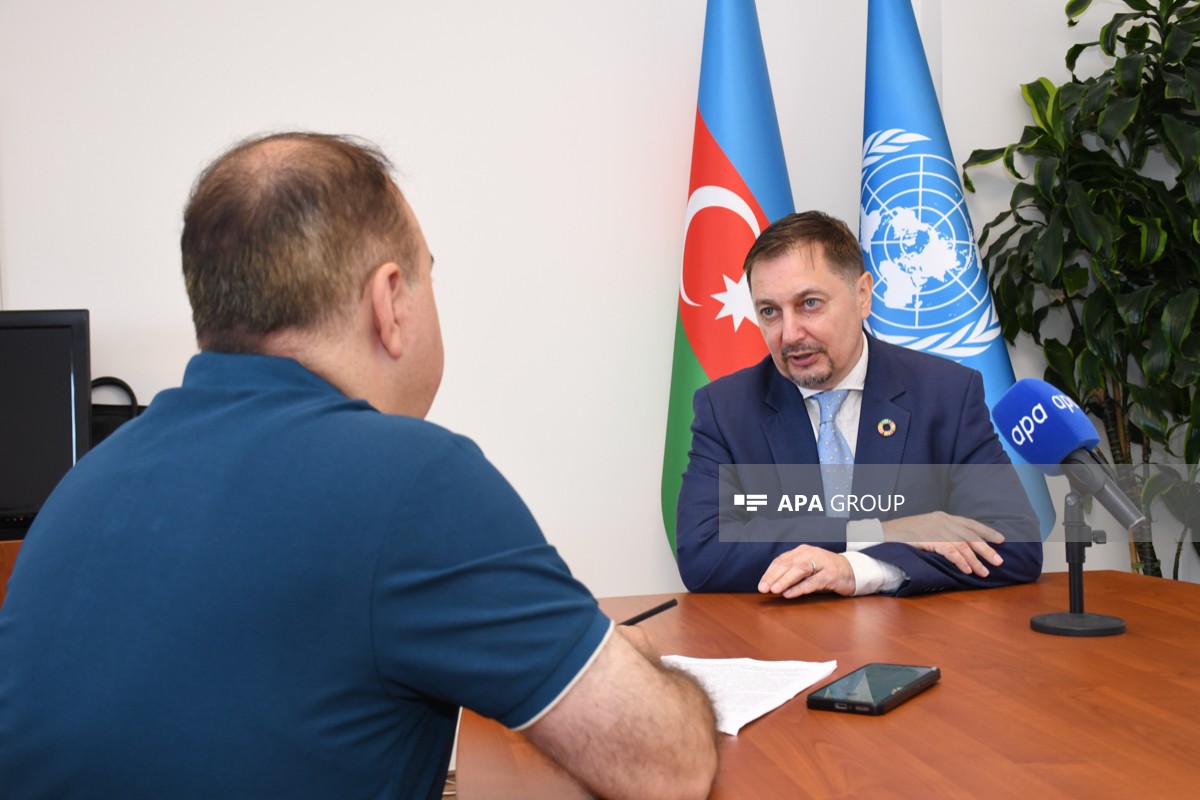
Now it's also, what do we implement? And so people come actually with their achievements, and it's good that they use Baku as a platform where they can advertise what they have achieved. So for me, Azerbaijan will continue to be the champion. We in the UN recognize it.
We are looking forward to Action Week 2027 in Azerbaijan next year, and we, as the UN system, will be ready to support.
There is discussion at the final stage to initiate a project for demining in Karabakh
– Post-conflict recovery and reconstruction were among Azerbaijan’s priority issues. The Government of Azerbaijan has launched large-scale programmes for the safe and dignified return of former internally displaced persons. You have recently visited Azerbaijan’s liberated territories. What were your main impressions from the visit, and how do you see the role of the United Nations in supporting the region’s reconstruction, development and reintegration?
– As I just started as a UN Resident Coordinator, and as the reconstruction of Karabakh and East Zangezur are the key priorities for the government, for me it was very important to see what we are talking about and what is happening there.
What I've seen is enormous financial potential and enormous investment that the government has made. We've seen fully reconstructed roads, we've seen fully reconstructed cities, we've seen housing that was built from scratch, we've seen some restoration of historic monuments. I have to admit I was very impressed, because to do such a reconstruction on such a large scale is difficult for any country, and I was glad to see that the government of Azerbaijan succeeded in this.
Of course, the main task is to bring people back and make Karabakh and East Zangezur fully livable and fully integrated in the economy of Azerbaijan, which I think is happening.
From the UN perspective, we'll be happy to contribute what we can to this process, because we, of course, work with the government very closely and we would like the government to succeed in this area.
Now, as I mentioned before, the Karabakh and East Zangezur are important areas where we, of course, would be supporting, but there could be many other areas.
I know that, for example, UN Habitat is working on redesigning two villages; I know that FAO is working with farmers, but, of course, the main area is going to be demining, because, of course, you cannot have a return of people to the areas which are not safe. So for me, and the Secretary General of the United Nations, Antonio Guterres, said peace without mine action is incomplete peace. So for us, this is a key priority.
There is discussion at the final stage to initiate a project, probably in early 2027, through UNOPS, with money from the European Union for demining in Karabakh, and I think that will be just the beginning. We're talking about a big project, and I think there could be more. So, of course, we need to think about how to improve the livelihood of people who are already relocated to Karabakh, how they would receive medical care, how they would receive, basically how they would find employment.
I know the government has a very clear vision about this, and if we as the UN could accompany them on this, of course, we would be very happy.
– Regional peace and stability are essential for sustainable development. From the UN's perspective, how important is the normalization process between Azerbaijan and Armenia for the wider South Caucasus region and how can the United Nations contribute to confidence-building and sustainable peace in the region while respecting its mandate?
– The peace between Armenia and Azerbaijan is regionally very important.
From our point of view, we are ready to support, but this is a decision of member states. So, if Azerbaijan would like the United Nations to get involved in this process, we will be ready, and we will be very happy.
We are committed to providing support to the governments in this process, but we will wait for the governments to initiate a request on how the UN could get involved.
– Azerbaijan has increasingly positioned itself as a bridge for international dialogue and multilateral cooperation. How is their own pursuit within the UN?
– I think the United Nations welcomes any initiatives that bring better understanding between countries, between people, and foster peace, reconciliation, and good neighborly relations. In this context, of course, there are several conferences that were already held during my time now in Baku. I think there will be more.
I am happy to be part of all these initiatives, and I emphasize that it is only through dialogue that we can achieve some understanding and avoid conflicts and misunderstandings.
So, that is why the role of the government of Azerbaijan in creating such a conducive environment is very highly appreciated.
I am very grateful that Azerbaijan is leading many efforts
– What will you identify as the three main priorities for strengthening the UN-Azerbaijan partnership over the next five years?
– I think we already have incredibly good cooperation for providing platforms for different types of dialogues that bring countries together in a very good, constructive way.
I would imagine that this platform that the government of Azerbaijan is providing through the United Nations will also continue. So, this would be one of the main priorities. I think the second priority would be, of course, to accompany the government of Azerbaijan in Karabakh and East Zangezur.
And whatever the UN can do to contribute to this, we will be happy to do so. Third, perhaps, is the area of the environment broadly. I think we see that all countries in the region are suffering from climate change.
This is not something that one country can do on its own. I am very grateful that Azerbaijan is leading many efforts. And we will, of course, be working with the government to further promote such an outlook.
Whether it would be transboundary rivers, water, whether it would be the Caspian Sea, whether it would be issues related to adaptation, all of this is on our radar screen.
And I think this would be the third big area where we will work quite closely.
– Are there any new initiatives or projects that the UN is planning to launch in Azerbaijan?
– There is a project in the pipeline with UNOPS and UNEP.
The first one is the Blueing the Caspian Sea project that UNEP and UNOPS will be implementing.
The Blueing the Caspian Sea project aims to strengthen pollution monitoring, biodiversity protection, and regional environmental cooperation, helping Azerbaijan and its neighbours build a stronger scientific and institutional foundation for protecting the Caspian Sea.
Basically, the idea is, of course, to make the Caspian cleaner. So, soon they will start recruiting international and national staff. And they will start basically implementing it.
So, they have a similar project for the Black Sea. They have some experience. I mean, of course, the broader area here is that the Caspian Sea has some challenges.
One of the challenges is that the Caspian Sea receives less water. It normally comes from the Volga River. In recent years, the Caspian has received, in our estimates, between 10-15% less.
That impacts many aspects of the Caspian Sea. First is biodiversity, because if the sea becomes shallower, then it means that some of the animals and flora and fauna, actually, are either moving to deeper water, which creates some issues, or they do not procreate at the same sort of rate. So, the population of some of the animals, for example, is being reduced, which is not good for the Caspian Sea.
And then, the second issue is, of course, economic. Now, all the ships, they cannot come close to the port. They have to unload their cargo in the deep waters.
So, of course, you need to spend additional resources to bring it up. So, for the economic exchanges, it's not good. And as we see that the European Union and China see that this middle corridor is becoming more and more important, this will be a big issue going forward.
So, investments have been made to connect China through railroad. And, of course, it has to go through Azerbaijan. So, Azerbaijan would be one of the key countries in this corridor.
And, of course, the Caspian Sea would have an impact on this. So, as you see, there are several issues. So, if we can contribute something to this, we are very happy for this project.
We believe it's the beginning. There will be more projects in the pipeline, but we will see. It's for the Caspian Sea.
Photo: Ilkin Nabiyev © APA GROUP


 Follow us on Telegram
 t.me/apanewsaz
 Follow us on Instagram
 Follow us on TikTok
 Follow us on Facebook
 Follow us on X