










Baku. Viktoriya Dementyeva – APA. Interview of APA with Ambassador Roland Kobia, Head of the European Union Delegation to Azerbaijan
-When will the negotiation on an Association Agreement with the EU start and how long will the negotiation last?
-Azerbaijan and the European Union have both and together pledged to an important and far-reaching roadmap. This has recently materialized in the Eastern Partnerships, which focus on political, trade, economic, immigration, cultural and energy issues. The Eastern Partnerships foresee the conclusion of an Association Agreement, which is a deep and wide type of agreement the EU engages in with privileged countries. The negotiation on the Association agreement will start very soon, once the negotiation guidelines are adopted. We expect these guidelines to be adopted in the first half of 2010. The duration of the negotiation is of course unpredictable, and will depend on the progress in our discussions and on Azerbaijan’s preparedness to move on the various fronts. As many countries have already benefited from, getting closer to the EU offers tremendous opportunities when the correlative adaptations and reforms have been put in place.
-At the end of 2009 the first meeting of experts on visa liberalization process was held. EU and Azerbaijan are negotiating on visa liberalization issues. Could the two sides succeed in this matter?
-The first meeting on visa issues took place quickly, already last December. It shows that the EU understands how important visa issues are to Azerbaijan. It was a technical meeting of experts in matters of migration, visa, border control etc. We reckon the importance of this issue as a concrete means to enable closer relationships between our citizens, to get to know each other better, and thereby walk together on a common path. Visa facilitation and liberalisation go hand in hand with readmission agreements, and require a number of reforms of a technical nature in the field of migration and border management. The European Union will provide Azerbaijan all the necessary assistance in this regard. Once the technical details are solved and the necessary decisions taken, the visa facilitation/readmission agreement will be concluded. This will give to a large number of Azerbaijani citizens – scholars, students, businessmen, sportsmen, artists and many others - simplified access to EU countries and help to build further bridges between Azerbaijan and the EU.
-How do you assess progress of Azerbaijan on implementation of ENP Action plan?
-In the recent years, we have been happy to see that Azerbaijan has achieved positive results in a number of fields. As you can see from the last Azerbaijan Progress Reports, which is prepared every year to trace the implementation of ENP Action Plan, progress was made in particular in the areas of economic development and business environment. In 2008, the World Bank named Azerbaijan “Top Reformer†on the ease of doing business. Moreover, progress is being made in the energy sector, which is of course a key one to the country. On the other hand, as we have also pointed out in our progress report, there are still some outstanding issues to be addressed in the field of governance and economic reforms. This is normal, as every country needs time to deliver when there are so many reforms on the go. The EU itself is in permanently ongoing reform process as we try to constantly improve the situation and make the necessary fine-tunings where needed. The capacity and resources are often there, it is a question of political will mainly. It will be important to also continue strengthening the process of accession to the WTO, as well as reforms in the judiciary and law enforcement sector. We hope that Azerbaijan will carry out the necessary reforms for its own benefit and the benefit of the citizens of Azerbaijan. As you know, the EU is ready to help and assist for any needs that arise.
-Can the recent reforms in the EU (entry into force of Lisbon Treaty) impact on EU relations with third countries? Particularly with Azerbaijan? What changes took place in the EU Delegation office to Azerbaijan after the entry into force of Lisbon Treaty?
-The Lisbon Treaty, which entered into force in December 2009, brought about many significant changes in the field of EU external relations. In view of the importance, I have organized in December a big event with our partners from Azerbaijan, the media and the international community in Baku to explain the consequences of this.
In a nutshell, first of all, it established two new posts, which will allow the EU to enhance its position as a key actor on the global stage. I have in mind the President of the European Council and the High Representative for Foreign Affairs and Security Policy. The President of the European Council, Mr. Van Rompuy will be the counterpart of Heads of State for the next 2.5 years at least, renewable to 5 years. The High Representative, Baroness Catherine Ashton, will represent the foreign policy of the EU. She will be supported by a new European diplomatic corps. How does that impact us? For example since 1 December 2009, all European Commission Delegations were renamed "Delegations of the European Union", and were formally included into the European diplomatic corps I mentioned before. Once all is in place, the Delegations will be representing the EU in third countries, and will take a more prominent role in the EU coordination and negotiation, but always in very close collaboration with the EU member States, which constitute the spine of the EU.
The Lisbon treaty has brought many important changes, even internally. It is certainly too early to assess the full extent of the consequences but I believe these changes will have many positive effects on our relations with Azerbaijan. First, the new institutional structure will simplify and accelerate the management and decision-making in our external relations, which will in turn make it easier for Azerbaijan to deal with us. It will also help us advance our relations with Azerbaijan in the framework of Eastern Partnership. And finally, with new functions assigned to the EU, the field of cooperation between Azerbaijan and the EU will gradually expand. Lisbon Treaty is a chance for the EU and for its partners!
- On 14 January the first meeting of EURONEST (EU-Eastern Partnership countries’ Parliamentary Assembly) took place in Brussels. Could you tell us what is the role of EURONEST? What are its functions? And when will it start its activity?
-To answer your question, I need to explain a specific aspect of the Eastern Partnership. This initiative is aimed at significantly enhancing the relations between the EU and its six partner countries, at shifting our relations into a higher gear. For this reason, it foresees building closer bridges not only between the governments and ministries of the participating countries, but also between parliaments, international organizations, civil societies, businesses and people at large. The primary goal of EU-Eastern Partnership countries’ Parliamentary Assembly (EURONEST) is to bring together European Parliament and Parliaments of the partner countries. The Parliamentary Assembly will be discussing legislative issues related to Eastern Partnership, will be adopting resolutions and making recommendations for EU-Eastern Partnership summits, which will regularly gather the Heads of States participating to the initiative. As such, Euro-Nest will become an important pillar in the Eastern Partnership structure and will facilitate further integration of Eastern Partner countries with the EU. As for the beginning of its activities, the concrete date is not known yet, as preparations are still ongoing.
-I think that before realization of the Eastern Partnership, it would be better to have all the conflict in the region solved. How can EU help in Nagorno-Karabakh conflict resolution in 2010?
-You are absolutely right. Conflicts are per nature, wherever in the world, jeopardising stability and impeding development. The EU is interested in helping to resolve conflicts. I have myself worked for 7 years in conflict zones, and I have seen the disastrous consequences it brings for people, for the economy and for the future generations. Here the conflict is for the time being a low key one in military terms, and the impact on economy is compensated by the energy resources Azerbaijan enjoys. But a full-fledged conflict could jeopardise this equilibrium. The very fact of that potential instability is not good for Azerbaijani citizens, nor foreign direct investments in Azerbaijan. We would like to see Azerbaijan reaps all the fruits of a peaceful settlement. As you know, the European Union has continuously supported swift and peaceful resolution of the Nagorno Karabakh conflict, but we are not a direct party to the negotiating process so our leverage cannot be maximised. Even though the EU is not a formal member of Minsk Group, it supports it. And we are encouraged as the peace process in the recent months has shown many positive signs. We are following the situation closely and are ready to provide any help or assistance, should the conflicting parties wish so.
In this pre-resolution phase, we continue to offer our assistance in confidence building measures, which should help people on both sides to break the mistrust and enter into a more conducive dynamics towards lasting peaceful relations. We hope to work hand in hand with the Government in the implementation of these measures, which constitute a long-term preparatory work. When people meet each other, know better each others’ problems, then they can learn to live together once the conflict is resolved. And as I have mentioned earlier, with the Lisbon Treaty and the ambitious Eastern Partnership, there will be more Europe in the South Caucasus. This should help create favourable conditions to achieve peace and to start building brighter future.
Head of the EU Delegation to Azerbaijan Roland Kobia: Eastern Partnership is a big step forward in our relations with Azerbaijan – INTERVIEW

 29 January 2010 10:37 (UTC +04:00)


 İDMAN XƏBƏR
 Follow us on Telegram
 t.me/apanewsaz
 Follow us on Instagram
 Follow us on TikTok
 Follow us on Facebook
 Follow us on X
Foreign
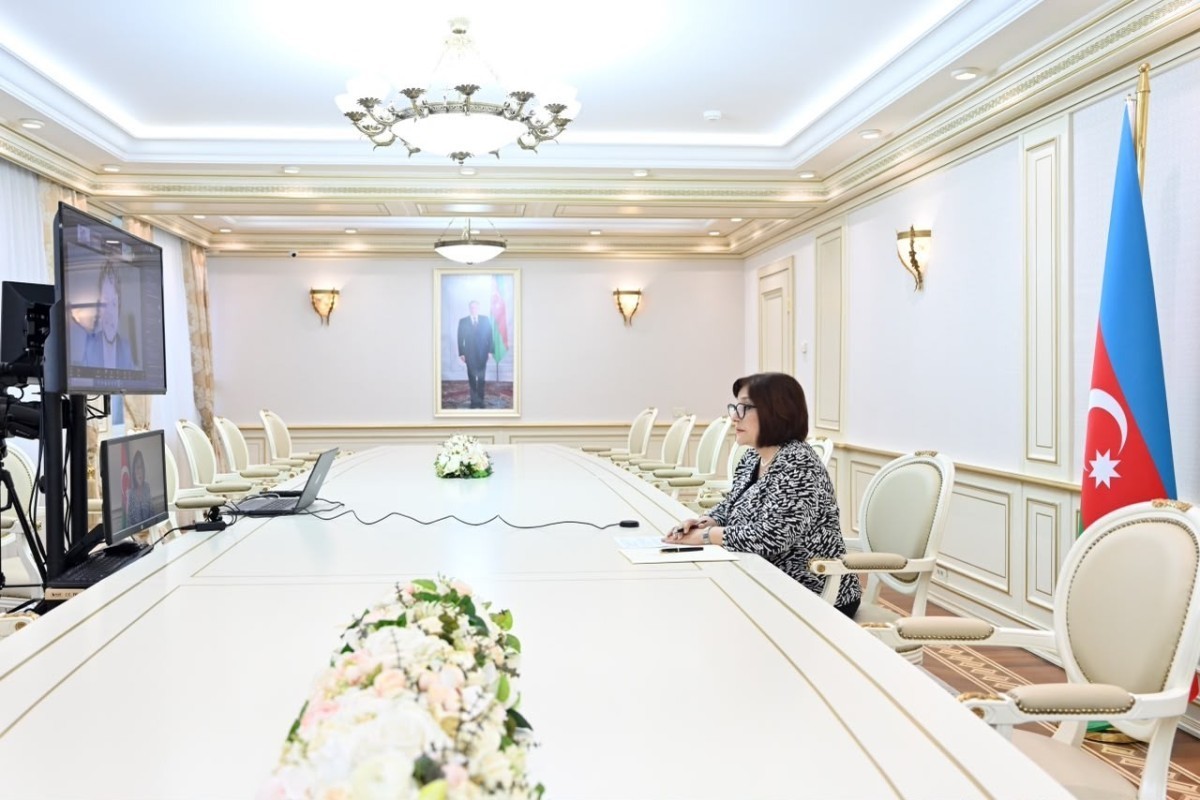
Sahiba Gafarova speaks at IPU high-level dialogue on digital governance
15:37
 10 July 2026
President of Latvia's Constitutional Court visits Azerbaijan
15:10
10 July 2026
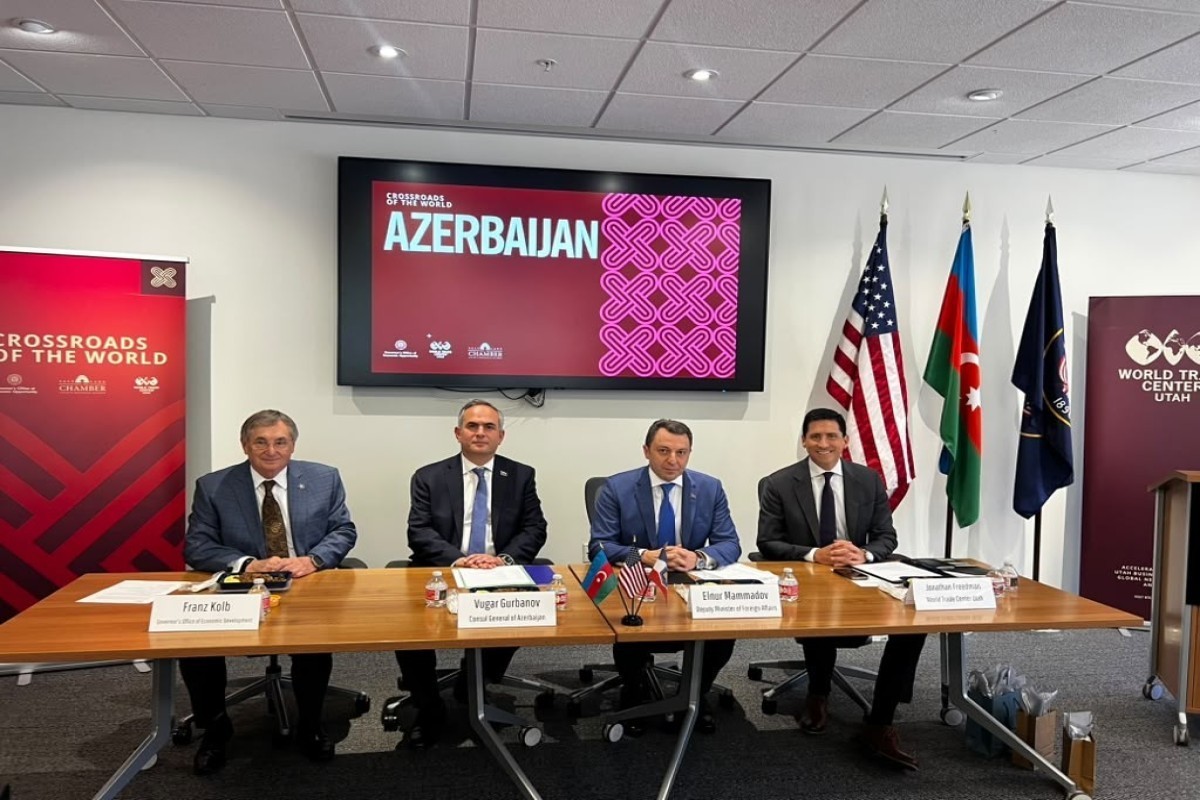
Azerbaijani deputy FM pays working visits to Utah and California
13:04
10 July 2026
Azerbaijan approves natural gas supply agreement with Georgia -DECREE
12:56
10 July 2026

NEWS FEED
Iran has asked to continue talks and the US agreed, Trump says
18:56
10 July 2026
Grain harvesting begins in Khojaly and Aghdara after 34 years - PHOTO
18:50
10 July 2026
Hakan Fidan speaks about possibility of lifting US sanctions
18:47
10 July 2026
Agenda for next Milli Majlis session announced - UPDATED
18:39
10 July 2026
Soldier's body found in river in Armenia
18:14
10 July 2026
Azerbaijan extradites internationally wanted individuals to Uzbekistan
18:09
10 July 2026
Countries must reject Iran efforts to control Hormuz, UN agency document says
17:54
10 July 2026
Qatari mediators arrive in Iran to help ease Tehran-Washington tensions
17:49
10 July 2026
Economic Council discusses state tourism program and mining industry development
17:45
10 July 2026
Ukraine says another 12 vessels from Russia's "shadow fleet" struck in Sea of Azov
17:25
10 July 2026
Iran threatens to strike Israel in response to US attacks
17:09
10 July 2026
Azerbaijan Railways' sulfur transportation rises 31% in first half of 2026
16:49
10 July 2026
Propane and fertilizer shipped to Armenia via transit through Azerbaijan - PHOTO - UPDATED
16:22
10 July 2026
Electronic cigarettes to be banned from civil circulation
16:07
10 July 2026
Georgian opposition leader Aleko Elisashvili sentenced to 13 years in prison for attempted terrorist attack
15:44
10 July 2026
Sahiba Gafarova speaks at IPU high-level dialogue on digital governance
15:37
10 July 2026
Rutte, Zelenskyy to attend Ukraine 'Coalition of the Willing' meeting, Elysee says
15:30
10 July 2026
“AzerGold” CJSC organizes infotour to Dashkasan district and CIRPA for tourism bloggers
15:19
10 July 2026
President of Latvia's Constitutional Court visits Azerbaijan
15:10
10 July 2026
Azerbaijan's Health Ministry dismisses claims of mumps outbreak in Baku, urges parents to rely on official information
14:43
10 July 2026
Russia's air defenses destroy nearly 5,000 drones in one week - MoD
14:35
10 July 2026
Peskov: Kyiv is not in favor of the peace process
14:28
10 July 2026
Russia facing fuel shortage, Deputy PM says
14:07
10 July 2026
Peskov: Türkiye's sale of Russian S-400 systems is a highly sensitive issue
14:02
10 July 2026
Missile alert has been declared in Moscow
13:51
10 July 2026
Azerbaijan to digitalize procedures for extending foreigners' temporary stay
13:44
10 July 2026
Azerbaijan to amend fine for failure to repatriate foreign currency funds, introduce exemption from liability
13:41
10 July 2026
Azerbaijan to introduce fines for violations of cybersecurity requirements
13:38
10 July 2026
Administrative arrest to be imposed for repeated participation in gambling
13:37
10 July 2026
Baku to host international conference on media and decolonization
13:20
10 July 2026
ING: Central Bank of Azerbaijan may keep interest rate unchanged for an extended period
13:12
10 July 2026
Azerbaijani deputy FM pays working visits to Utah and California
13:04
10 July 2026
New sales rules proposed for fisheries products in Azerbaijan
13:03
10 July 2026
Azerbaijan drafts new law to modernize fisheries sector
12:59
10 July 2026
Azerbaijan determines procedure for foreign individuals and legal entities to use its aquatic bioresources
12:59
10 July 2026
Azerbaijan approves natural gas supply agreement with Georgia -DECREE
12:56
10 July 2026
Selçuk Bayraktar visits Bayraktar production facilities in Azerbaijan
12:54
10 July 2026
Azerbaijan's external public debt falls to $4.62 bln
12:39
10 July 2026
Azerbaijan prepares new draft law "On Seed Production", establishes registry
12:32
10 July 2026
Azerbaijan's strategic foreign exchange reserves approach $85.8 billion
12:28
10 July 2026
Azerbaijan's economy grows by 1% in the first half of 2026
12:24
10 July 2026
Gas and condensate production volumes at Absheron field revealed
12:03
10 July 2026
ADB keeps Azerbaijan's inflation forecast unchanged
11:59
10 July 2026
Ebola death toll in DR Congo rises to 625
11:45
10 July 2026
Official reception held at Gulustan Palace to mark Diplomatic Service Day - PHOTO
11:35
10 July 2026
Three new road bridges under construction in Garadagh
11:31
10 July 2026
Azerbaijan identifies new grounds for temporary restriction of internet information resources
11:28
10 July 2026
Penalties for organizing gambling activities in virtual formats to be tightened
11:27
10 July 2026
Azerbaijan to require special permit for circulation of civilian autonomous unmanned aerial vehicles
11:25
10 July 2026
Export incentive to be introduced for products manufactured in the Alat Free Economic Zone
11:23
10 July 2026


