










By Alexander Jackson,
Caucasian Review of International Affairs
(http://www.cria-online.org)
After a lengthy pause, the Turkish-Armenian rapprochement is back on the agenda. The move to normalise relations between the two neighbours first surfaced back in April, but soon stalled. Now, with the mediation of Switzerland, Ankara and Yerevan have announced plans to normalise relations through protocols on establishing diplomatic relations and developing bilateral ties, which are due to be signed into law by the respective parliaments within six weeks (news.am, September 1). The border is due to open within two months of the diplomatic relations protocol coming into force (Reuters, August 31). The stage is potentially set for a serious re-adjustment of the geopolitics of the South Caucasus.
The six week timeframe is worth noting, for two reasons. It ends on October 13, the day before Armenian President Serzh Sarkisian is due to visit Turkey for a football match between the two countries, the first leg of which began the rapprochement last September. So the plan seems to be that the visit to Turkey will see the formal signing of a peace deal, with the border being opened soon afterwards.
More significantly, the six weeks are specifically set aside for ‘political consultations’ with domestic actors. Clearly, persuading constituencies at home to support the agreement is going to be extremely difficult. For decades, Turks and Armenians have viewed each other as an implacable historical enemy, and reaction to the April thaw was fierce. The Armenian Revolutionary Federation (ARF) pulled out of the ruling coalition, and can be expected to staunchly oppose the bill, as will the Turkish MHP and CHP parties. As analyst Yigal Schliefer observes, Turkish voters are also being asked to trust the government’s initiative to make peace with the Kurds at the same time (Eurasianet, September 4).
The whole peace process could conceivably be stalled by domestic pressure from nationalist groups. Armenia is arguably more at risk of this. Unlike Turkey’s ruling AKP, President Sarkisian’s Republican Party of Armenia does not hold a significant parliamentary majority. The Diaspora, traditionally more hardline than Armenians within the country, may also exert pressure.
What may be most explosive, however, is the decision to set up a “dialogue on the historical dimensionâ€. In other words, a commission to reappraise what Armenians view as genocide but which Turkey has only ever viewed as regrettable tragic events during the collapse of the Ottoman Empire in 1915. Although important for Turks, the issue is a cornerstone of Armenia’s national identity, and by signing the mentioned protocols the Armenian government will commit itself to stopping its world-wide campaign to achieve the recognition of the 1915 events as genocide. Therefore, any reappraisal will certainly be rejected by the Armenian opposition and Diaspora.
Providing that both governments pass the protocols smoothly, a host of obstacles await. Chief amongst these is the position of Turkey’s historic ally Azerbaijan. One of the main reasons that the April thaw failed was because of Baku’s opposition to any Turkish-Armenian deal which failed to pressure Yerevan to withdraw from the occupied territories of Azerbaijan. Turkish officials were forced to announce that the opening of the border would be contingent on the Nagorno-Karabakh peace process. The new protocols, by omitting Karabakh or any reference to Azerbaijan, seem to reverse this statement. But there is little doubt that Turkey expects progress on Karabakh – even if the government has no such expectation, the Turkish parliament will. Six weeks seems a fantastically optimistic timeframe to see progress on Karabakh, and most likely Ankara would be satisfied with formal pledges of withdrawal by Armenia.
This marks a surprisingly strong intervention in the Karabakh peace process by Turkey. It is unclear whether Ankara consulted the OSCE Minsk Group of America, Russia and France, the group tasked with the conflict’s resolution. However, reports indicate that the OSCE is sending an observation group for a technical examination of the Lachin corridor, which would link Nagorno-Karabakh with Armenia, in late September (World Bulletin, September 5). This suggests that Turkey has done more to push the peace process forward than the Minsk Group has managed in 15 years.
If no progress is made on Karabakh by the end of the six weeks, what are Baku’s options? The first, and most damaging, would be to hold off on the Nabucco pipeline and increase cooperation with Russia, in order to reroute Azeri gas through Russia’s pipeline network. The costs would be high, and there is little appetite in Baku for becoming vulnerable to Russian political and economic influence, but such is the level of hostility in Azerbaijan to any opening of Turkish-Armenian border without the release of its occupied territories.
Russia’s own attitude to the rapprochement is hard to discern. It has expressed polite approval, but it is undoubtedly watching carefully. An open border with Turkey would allow Russia to ship material to its military base in Armenia (impossible since the closure of the Georgian land route), but would also decrease Armenia’s economic reliance on Moscow and move it towards the West. The ‘loss’ of Armenia may well be compensated by the ‘gain’ of Azerbaijan.
Ironically, this is one area where both Georgia and Russia are inclined to agree. Georgia currently acts as the sole western-oriented trade route for Armenian goods, which are shipped to its Black Sea ports. Open borders will decrease Tbilisi’s leverage in this regard. Iran, for similar reasons, may also be disinclined to approve the opening, although it (like Georgia) would not dream of publicly saying so.
The clock is ticking. Domestic political upheaval in either Armenia or Turkey is a real risk, particularly Armenia, which will have to deal with engaging Turkey and withdrawing from the occupied regions around Nagorno-Karabakh simultaneously. A serious domestic setback could stall all regional peace processes for the near future.
Victory at home does not make victory abroad. Azerbaijan’s position is crucial, and is inflexible. Exactly what it will – or can – do if Turkey opens the border without Armenian gestures on Karabakh is impossible to establish at this stage, but gas projects from the Caspian to the West are clearly under threat. This would ruin Turkey’s reputation as an energy hub, one of its key attractions for the EU. Russia would lose some of its influence over Armenia, but could gain far greater power over Azerbaijan’s energy exports, reshaping the whole oil and gas game in the region. Most strikingly, we could see an end to the Baku-Tbilisi-Ankara axis, which has proved one of the most enduring alliances in Eurasia. The next six weeks could reshape the Caucasus as we know it.
Armenia, Turkey, and Azerbaijan: The clock is ticking – ANALYSIS

 07 September 2009 11:57 (UTC +04:00)


 İDMAN XƏBƏR
 Follow us on Telegram
 t.me/apanewsaz
 Follow us on Instagram
 Follow us on TikTok
 Follow us on Facebook
 Follow us on X
Foreign
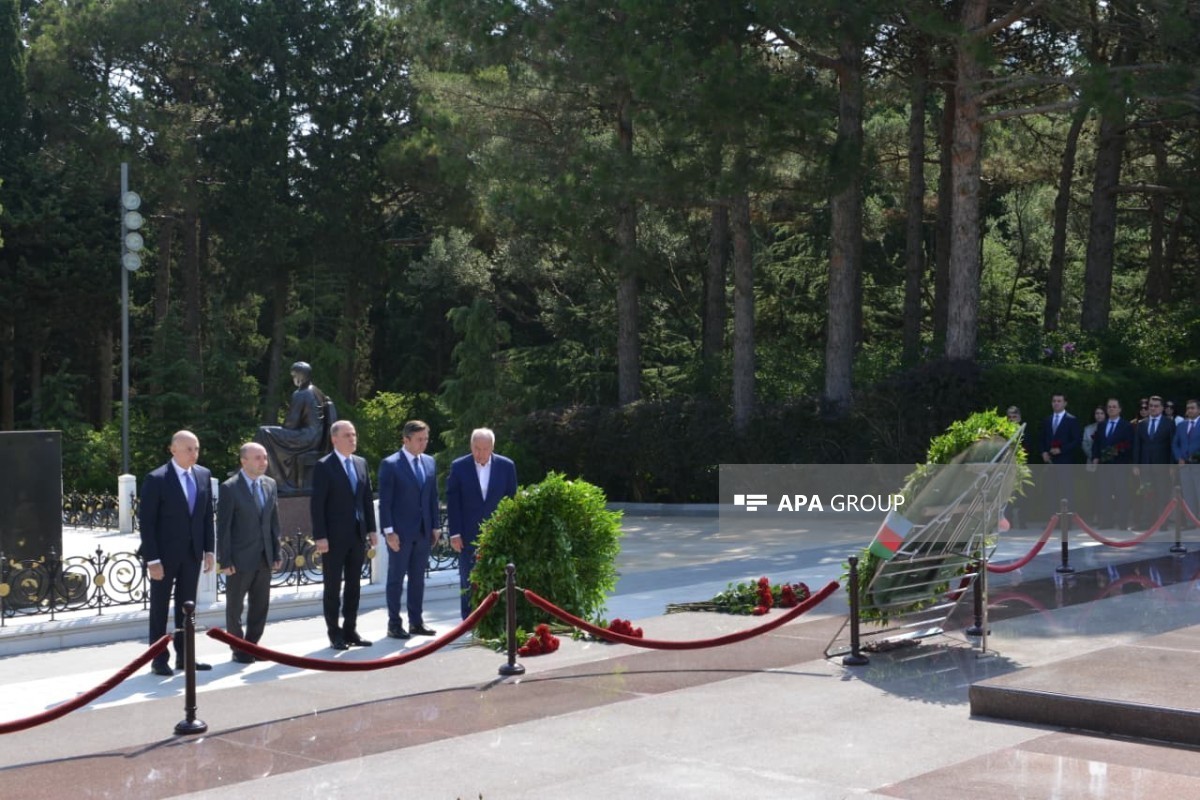
Foreign Ministry leadership visits Alley of Honor - PHOTO
10:14
 9 July 2026
Foreign minister says TRIPP process is underway, documents being prepared
10:06
9 July 2026
Bayramov: Azerbaijan has completed its part of the work on finalizing the peace agreement
10:03
9 July 2026
Bayramov: Azerbaijan and Armenia continue delimitation and demarcation process
09:57
9 July 2026

NEWS FEED
US strikes over 170 Iranian military targets near Strait of Hormuz in two days: NYT
17:07
9 July 2026
Public hearing on protecting children from harmful effects of social media held at Azerbaijan's Parliament
17:03
9 July 2026
Significant casualties in China shoe factory fire, Xi signals
16:42
9 July 2026
Implementation of 58 digital development initiatives launched in Azerbaijan
16:27
9 July 2026
President approves agreement on electricity supply and transit from Azerbaijan to Georgia
16:13
9 July 2026
Jordan intercepts 8 missiles launched from Iran
15:59
9 July 2026
US strike on Sirik pier in southern Iran kills three, official says
15:51
9 July 2026
Ramid Namazov: Work is underway on the creation of the National Data Lake
15:46
9 July 2026
US projectile hit perimeter area of Bushehr nuclear plant, Iran says
15:44
9 July 2026
Chair of the Commission: The number, scale and complexity of cyberattacks are increasing rapidly
15:42
9 July 2026
AZAL increases passenger traffic by 5%
15:35
9 July 2026
Regular flights operate from Heydar Aliyev International Airport to 76 destinations
15:06
9 July 2026
New four-lane highway connecting Georgia with Azerbaijan to be built
15:01
9 July 2026
Interior Ministry: 104 criminal groups involved in serious and especially serious crimes neutralized this year
14:43
9 July 2026
7 killed, 5 injured in Cape Town shootings
14:39
9 July 2026
Flooding in southern China has killed 39 people
14:08
9 July 2026
US strike hit rail bridge used for China, Russia trade – IRGC media
14:05
9 July 2026
Italy expels two Russian military attachés over alleged espionage activities
13:55
9 July 2026
Peskov: Trump has not yet called Putin after NATO summit
13:51
9 July 2026
Explosions heard in Iran's Bushehr province
13:38
9 July 2026
Ukrainian military strikes 12 tankers, tugboat and cargo vessel in the Sea of Azov
13:30
9 July 2026
World Bank: Karabakh has great potential as a tourism destination
13:11
9 July 2026
Pashinyan: High-Tech Industry Minister Mkhitar Hayrapetyan to leave government
13:02
9 July 2026
Pashinyan: There are two options for resolving the enclave and exclave issue with Azerbaijan
12:54
9 July 2026
Explosions, sirens heard in Bahrain’s Manama
12:53
9 July 2026
Official Tehran condemns US attacks on Iran
12:47
9 July 2026
Pashinyan says agreements reached with Russia on import restrictions affecting Armenian products
12:42
9 July 2026
Pashinyan: Draft of Armenia's new Constitution to be published by the end of the year
12:39
9 July 2026
Iran summons UK ambassador over ‘baseless accusations’
12:31
9 July 2026
Israel's Katz rejects Trump’s Lebanon pullout claim
12:25
9 July 2026
Merz says Germany agreed to acquire US Tomahawk missiles
12:13
9 July 2026
New direct flights between Azerbaijan and China to launch next year
11:55
9 July 2026
Iran's former Supreme Leader to be buried in Mashhad today
11:47
9 July 2026
UK removes Azerbaijan's Zangazur vessel from sanctions list - EXCLUSIVE - PHOTO
11:39
9 July 2026
FSB: Large-scale terror plot targeting Russian military personnel foiled in Russia
11:34
9 July 2026
Shaun Mann: Azerbaijan should focus on increasing tourists' spending rather than visitor numbers
11:28
9 July 2026
Florian Sengstschmid: Azerbaijan's recognition as a tourism destination rises to 48%
11:25
9 July 2026
Iran says it has targeted sites in Kuwait, Qatar, Bahrain in response to US strikes
11:19
9 July 2026
World Bank: Azerbaijan's economy to grow by 2% in 2026
11:17
9 July 2026
World Bank outlines key challenges facing Azerbaijan's tourism sector
11:07
9 July 2026
Foreign Ministry staff visit Victory Monument - PHOTO
11:05
9 July 2026
World Bank: Employment growth in Azerbaijan was mainly driven by the private sector
11:02
9 July 2026
Central Bank: Azerbaijan's strategic foreign exchange reserves reach USD 85.8 billion
10:57
9 July 2026
Iran says 14 killed, 78 injured in recent U.S. strikes
10:52
9 July 2026
Central Bank: Azerbaijan's external position remains favorable despite geopolitical tensions
10:49
9 July 2026
Rolande Pryce: Azerbaijan's tourism should shift from a capital-centered model to the regions
10:43
9 July 2026
World Bank: Azerbaijan's sustainable economic growth will depend on the non-oil sector
10:37
9 July 2026
AZAL expands online payment options for passengers from Uzbekistan
10:25
9 July 2026
Confirmed Ebola deaths in DR Congo hit 600
10:20
9 July 2026
Foreign Ministry staff visit Alley of Martyrs
10:16
9 July 2026


