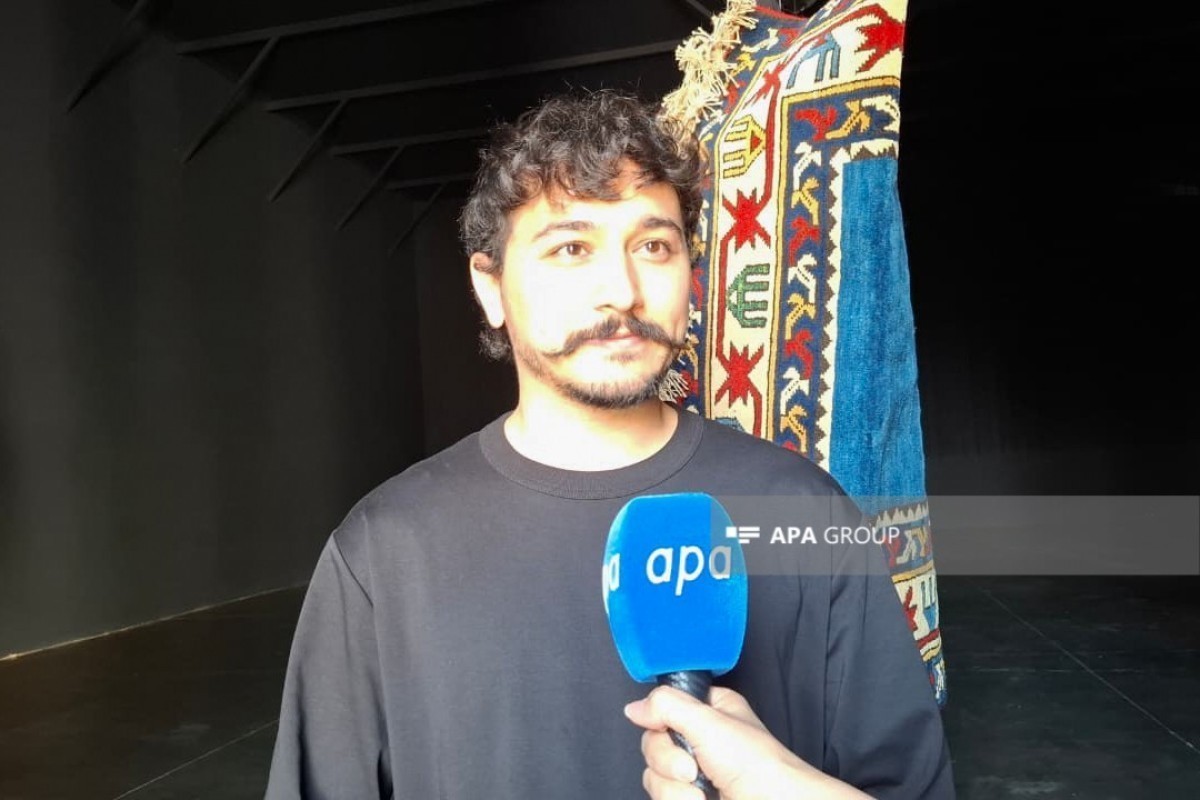


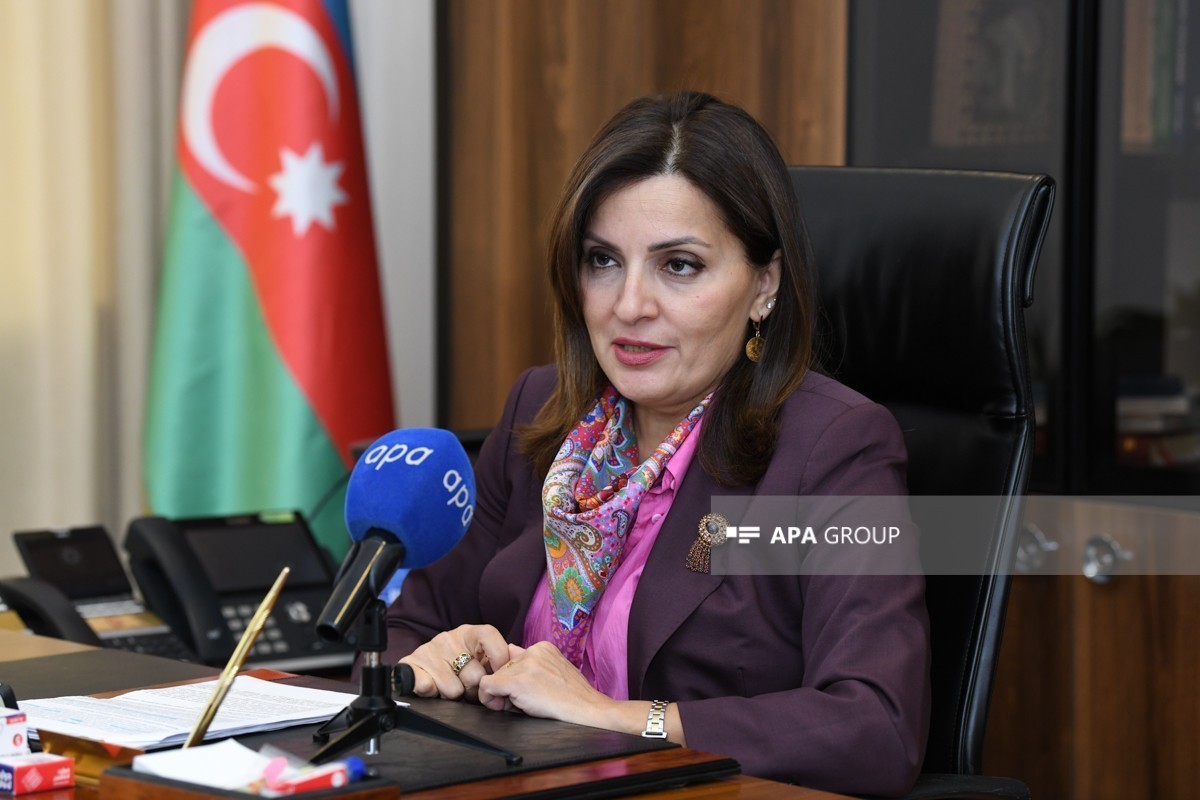


Albanian heritage is confirmed not only by written sources but also by numerous archaeological and architectural monuments, Sabina Hajiyeva, Head of the State Service for Protection, Development and Restoration of Cultural Heritage, told APA.
Main scientific criteria for identifying the Christian heritage of Caucasian Albania
Sabina Hajiyeva stated that various states have historically existed on the territory of Azerbaijan and played an important role in shaping the country's rich cultural and architectural heritage:
"One of these was Caucasian Albania, which existed for more than a thousand years. From the 4th century BC to the 8th century AD, Caucasian Albania covered a vast geographical area stretching from the Araz River northward to Derbent and significantly influenced the emergence and development of rich architectural examples in this territory. The main scientific criteria for identifying this heritage involve a comprehensive examination of monuments based on historical sources, archaeological materials, epigraphic examples, architectural and planning features, and the historical and cultural environment in which they are located.
Since the territory of the Republic of Azerbaijan covers a significant part of this historical area, it is one of the main locations for the study and protection of Caucasian Albania's cultural heritage. In this regard, when determining whether a particular monument belongs to the Christian heritage of Caucasian Albania, its current religious use or the name it acquired in later periods should not be taken as the sole basis. Instead, the monument's initial construction phase, chronology, architectural features, inscriptions, archaeological materials, and historical and cultural context should be assessed together."
According to her, information about the cities and religious centers of Caucasian Albania can be found in the works of ancient authors such as Strabo, Pliny the Elder, Claudius Ptolemy, and others:
"Pliny the Elder mentions Kabalaka (Gabala) as the principal city of Albania, while Claudius Ptolemy provides information about Albania's cities and other settlements in his work. The work of Movses Kaghankatvatsi is also one of the important written sources on Albania's political, religious, and cultural history, including the spread of Christianity. Following the adoption of Christianity as the state religion in the 4th century, the development of Christian religious architecture in Albania gained considerable momentum. Studies of buildings dating back to the early Christian period show that single-nave and three-nave basilica types were widespread in Albanian religious architecture, while centrally domed and cross-domed compositions developed in later stages."
Monuments characteristic of Caucasian Albania's heritage in Karabakh and East Zangezur
The head of the State Service noted that Karabakh and East Zangezur constitute an important historical and cultural region in terms of the Christian architecture of Caucasian Albania:
"Christian religious buildings and monastery complexes dating from various periods, beginning in the early Middle Ages, emerged in these territories. Some of them were expanded and reconstructed in subsequent centuries and transformed into larger religious complexes. Important examples of this heritage include the Khudavang, Gandzasar, Amaras, Aghoghlan, Saint Elishe, Urekvank, and Saint Hakob monasteries.
Khudavang Monastery is one of the most important and architecturally rich complexes of Caucasian Albania's Christian heritage. The initial formation of the complex, located in the village of Vangli in Kalbajar district, dates back to the early Middle Ages. Archaeological research indicates that the monastery was founded in the 6th–7th centuries. The complex underwent significant construction and reconstruction phases in subsequent centuries, particularly in the 13th century.
Following the occupation of Kalbajar district, 'restoration' work was also launched at Khudavang Monastery. The 'restoration' work was carried out between 1997 and 2011 with funding from the Republic of Armenia and the Armenian Apostolic Church.
Starting in 2014, the monastery's unique frescoes were also subjected to 'restoration.' When the occupying forces left Kalbajar district, they looted the Khudavang monastery complex, taking crosses, bells, and other elements belonging to the complex to the Republic of Armenia. The frescoes were also cut from the walls and stolen, and were later displayed at various exhibitions abroad as 'works of art of Armenia.'
In this regard, on October 9, 2025, information about the frescoes and khachkars (cross-stones) dismantled from Khudavang Monastery and illegally removed from the country was entered into Interpol's Stolen Works of Art Database. This provides for international law enforcement mechanisms aimed at returning these artifacts to the Republic of Azerbaijan if they are discovered on the territory of an Interpol member state."
Sabina Hajiyeva emphasized that "restoration" work was also carried out at Gandzasar Monastery during the occupation, and a new seminary building was constructed on the site:
"Since the 'restoration' work was carried out unprofessionally and was of poor quality, problems related to rainwater runoff from the roof were not resolved, resulting in serious erosion of the monument's exterior walls.
The most serious violation identified within the monument's protection zone is the building constructed to the west. The geographical location and scale of the newly constructed building disrupt the monument's historical environment and silhouette.
At the same time, the height of the existing two-story building in the eastern part of the monument's courtyard, as well as the materials used in its construction and renovation — facing stones and modern metal roof coverings — are incompatible with the historical architectural environment and style of the temple grounds. As a result, the historical environment surrounding the monument has been seriously disrupted.
Furthermore, numerous ancient inscriptions engraved on the exterior walls of the Gandzasar complex during the period of the Albanian Patriarchate were of historical significance. Like the inscriptions inside the temple, these inscriptions were also subjected to Armenian 'restoration.' They were repeatedly altered in the 19th and early 20th centuries and in the 1980s, while several surviving inscriptions were covered with new facing stones in 2011. As a result, the Albanian cultural layer has been completely lost."
Distinctive architectural features of monuments characteristic of Caucasian Albania
She stated that one of the main characteristics of Caucasian Albania's Christian architecture is the combination of architectural and planning solutions developed during different construction periods with local building traditions:
"Single-nave and three-nave basilicas predominated in the early period. These buildings widely featured the use of river stones and local stone materials, horseshoe-shaped and semicircular arches, vaulted coverings, and simple facade designs.
More complex compositions emerged in later periods. Particularly noteworthy are central domes, cross-domed plans, the placement of additional structures in corners, the formation of multi-part monastery complexes, and the integration of religious buildings with residential and utility structures into a unified architectural ensemble.
In this regard, although religious buildings in Caucasian Albania were constructed in accordance with common Christian architectural traditions, their architectural and planning features, construction proportions, and structural solutions mainly reflected the influence of local architectural traditions that had developed in these territories.
These characteristics make it possible to observe traces of different religious and cultural traditions in the architecture of individual monuments.
In this context, the presence of elements associated with Islam, Christianity, and Zoroastrianism within the same architectural environment can be regarded as a result of the region's multilayered historical and cultural development. One of the most striking examples of this is the Gandzasar monastery complex."
Research into Caucasian Albania's heritage should be conducted in Armenia
She noted that the territory of Caucasian Albania covered a geographical area larger than the present-day borders of the Republic of Azerbaijan:
"Certain parts of the territory of the present-day Republic of Armenia were also included in the territory of Caucasian Albania. Material cultural examples related to the history and Christian heritage of Caucasian Albania also existed in those territories.
However, the question of whether specific monuments that once existed on the territory of the Republic of Armenia or have now been significantly altered belong to the Albanian Christian heritage must be investigated separately for each monument, based on its initial construction phase, archaeological materials, epigraphic data, architectural features, and historical sources.
At present, the lack of opportunities to conduct on-site archaeological and architectural research in these territories makes it difficult to establish a complete and definitive list of such monuments and determine the dates of their alteration or destruction.
If appropriate scientific and international opportunities become available in the future, the study of archival documents, old photographs, maps, scientific publications, and other sources, as well as on-site archaeological and architectural research, could allow for a more comprehensive identification of this heritage."


 Follow us on Telegram
 t.me/apanewsaz
 Follow us on Instagram
 Follow us on TikTok
 Follow us on Facebook
 Follow us on X