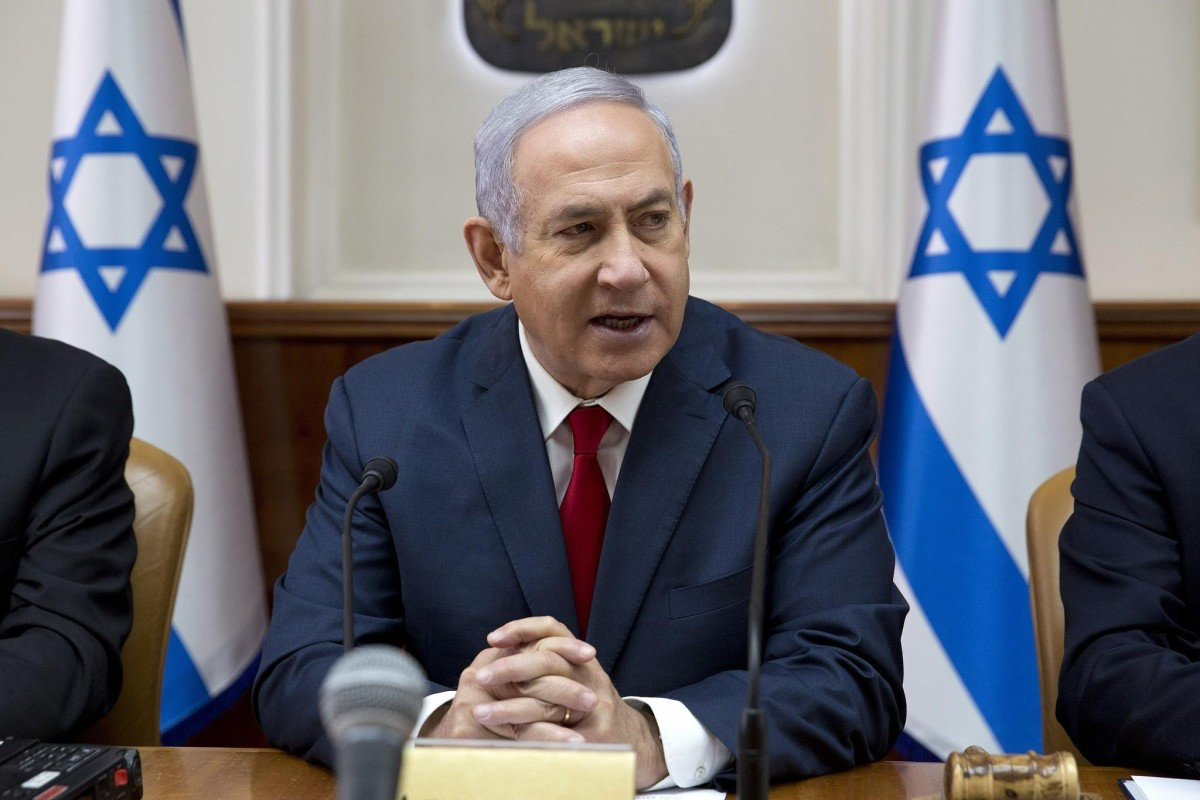


The Israeli government has suspended the process of advancing an initiative to recognize the 1915 Armenian events as a "genocide."
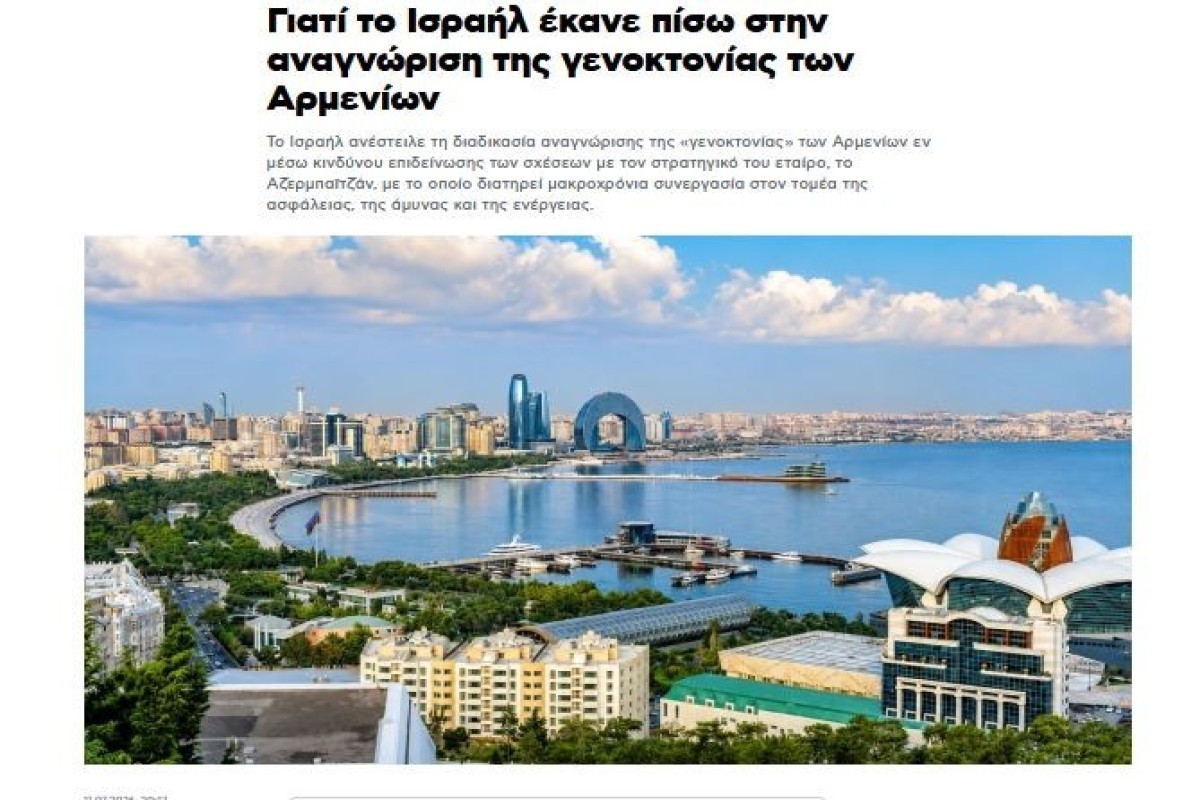
The Greek publication "ProtoThema" writes that the main reason for this decision is the risk of worsening relations with Israel's strategic partner, Azerbaijan.
The article states that in late June, the Israeli Foreign Ministry put forward an initiative to recognize the events that took place in the Ottoman Empire during World War I as the "Armenian genocide," and the government supported it. However, the document also required approval by the Knesset for it to come into force.
According to political commentator Svetlana Kushnir, cited by the publication, this step was primarily aimed at exerting political pressure on Turkey. The author notes that Israel was thus trying to respond to President Recep Tayyip Erdogan's harsh anti-Israeli statements regarding the Gaza war.
However, Azerbaijan strongly opposed this initiative. Official Baku stated that such steps do not serve reconciliation, but rather deepen differences in the region and hinder lasting peace. Azerbaijan called on the Israeli government to reconsider its decision.
The article notes that representatives of the Jewish community in Azerbaijan, as well as a number of Israeli politicians and experts, have also spoken out against the initiative. They said that it would harm the Azerbaijani-Israeli strategic partnership.
Efraim Inbar, head of the Israeli Institute for Strategy and Security, called the initiative "a trivial and childish mistake" and stressed that an attempt to send a message to Turkey should not jeopardize relations with Baku.
The article also notes that the Armenian leadership has recently stated that it does not support the turning of the events of 1915 into a political tool by other states. Prime Minister Nikol Pashinyan stated that the politicization of this issue is not in Armenia's interests.
"ProtoThema" writes that, according to information in the Israeli media, Baku assessed this initiative as "crossing a red line." As a result, Israel stopped advancing the initiative in the Knesset, taking into account Azerbaijan's firm position and the possible impact on bilateral relations.
The author of the article believes that this event demonstrates Azerbaijan's growing role in regional and international politics and shows that Baku's position should now be taken into account on issues affecting the interests of its strategic partners.


 Follow us on Telegram
 t.me/apanewsaz
 Follow us on Instagram
 Follow us on TikTok
 Follow us on Facebook
 Follow us on X