












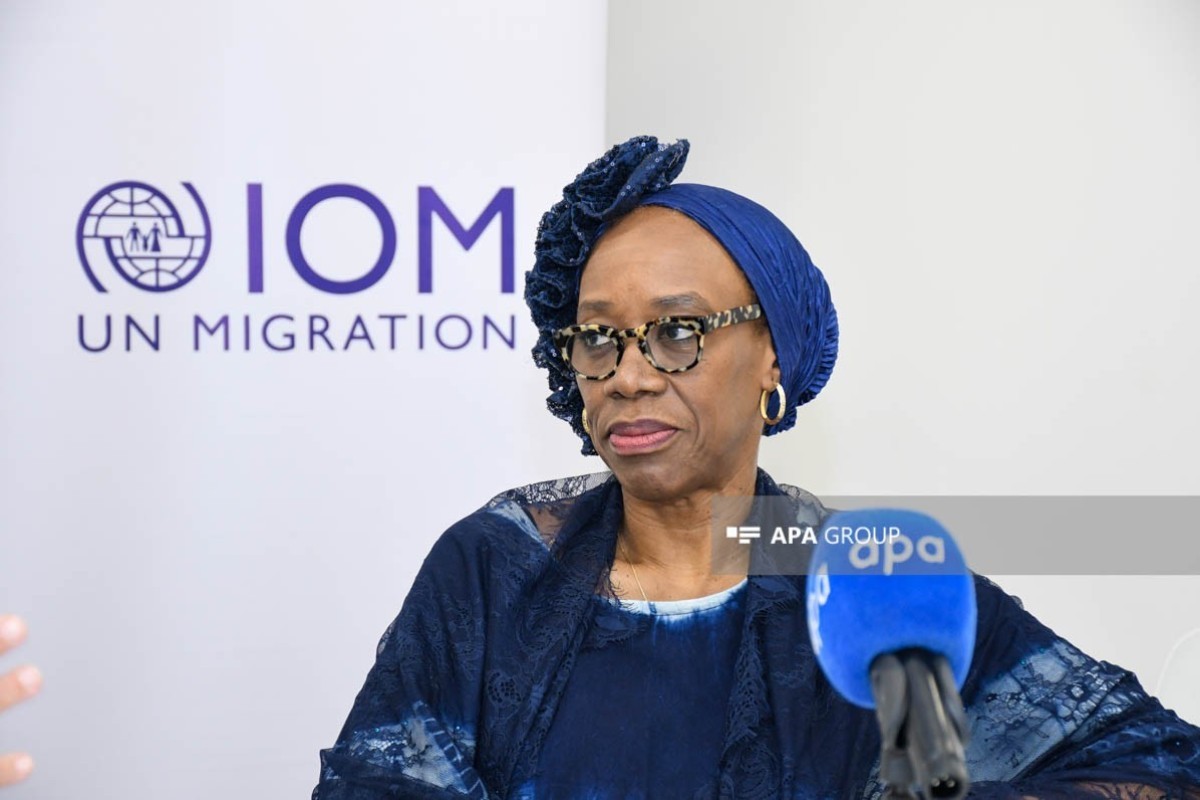


APA News Agency conducted an interview with Ugochi Daniels, Deputy Director General of the International Organization for Migration (IOM)
It is a great honor for IOM to be part of WUF13 held in Baku
- What key messages does the International Organization for Migration aim to deliver at WUF13 in Baku regarding migration, urban resilience, and community-centered development?
- It is a great honor for IOM to be part of WUF13 held in Baku. This is critically important because the recent data tells us that last year, over 82 million people were internally displaced due to the impact of conflict or climate. Therefore, as an organization, we have three main messages.

The first is that displacement is increasingly urban. People are moving to cities. And this of course is putting pressure on cities. If we want to address this, it is important for all partners participating in WUF to understand that migration cannot be viewed as a separate or temporary issue. It must be part of urban policy and urban planning. At the same time, migrants are not only vulnerable groups or internally displaced people moving into cities. They can and will also contribute to urban life. They're part of recovery, they're part of the socioeconomic prosperity, they're innovators, they're entrepreneurs, they're workers. Migration affects how cities grow and develop. The final key message is that we can go two ways. Either we allow rapid urbanization to continue, leading migrants and internally displaced people to live in informal settlements and become more vulnerable, or we achieve sustainable development through proper management of migration and urbanization. As IOM, we're advocating for the second option and we have examples from all around the world on what this looks like on the ground.
The Azerbaijani government and people have extensive experience in managing such global conferences
- How has WUF13 been organized?
- It has been organized very well. This is my third time in Azerbaijan. I was here for COP, and of course WUF is smaller than COP. The Azerbaijani government and people have extensive experience in managing such global conferences. This is really well organized from a logistics perspective, but it's not just that. The government of Azerbaijan is actually showing leadership on the issue in its policies, reconstruction efforts, and in managing urbanization and displacement issues within the country.

This demonstrates that Azerbaijan recognizes the importance of this issue not only for national well-being, but also for global prosperity
- What are the latest outcomes and key conclusions of the International Migration Review Forum (IMRF), and how have these outcomes contributed to strengthening the implementation of the Global Compact for Safe, Orderly and Regular Migration (GCM), particularly in the context of Azerbaijan’s cooperation with IOM as a “champion country”?
- We are extremely happy with the outcome of the IMRF, International Migration Review Forum, which took place first week of May in New York. It happens every four years for member states to come together and take stock of how they are doing in implementing the Global Compact for Safe, Orderly and Regular Migration. As you can imagine, migration is a very hot topic in many countries these days, and it was really reassuring to see member states in New York coming together, wanting to be constructive and reach consensus on how they are going to cooperate in managing migration and in implementing the Global Compact. So coming out of New York, there was consensus on the progress declaration, which is basically belief and reaffirms the role of the multilateral system and global cooperation. We're extremely excited about that. And then just yesterday, in the General Assembly, there was a vote on the progress declaration from the forum, and it also passed with overwhelming majority. So what does this mean going forward? That countries now have, well, they have the framework and the Global Compact, but countries have reaffirmed that that compact is very important for how they cooperate on migration. And then for the government of Azerbaijan, they're not just a GCM champion country, they're also the lead amongst the champions in organizing how the champions are leading in multilateral or discussions among countries on migration, which means that for the government of Azerbaijan, they've recognized not just is it important for Azerbaijan, but it's important for global prosperity, and they want to lead on that, which I think is exemplary.

We have had broad cooperation regarding reconstruction efforts in the Karabakh region
- Azerbaijan is currently carrying out large-scale reconstruction projects in the territories liberated from occupation, and IOM is involved in this process alongside other initiatives. What are your thoughts, particularly regarding projects in the Karabakh region?
- As IOM, we've been a longstanding partner of the government of Azerbaijan. We have had extensive cooperation regarding the reconstruction efforts carried out in the Karabakh region.
In fact, IOM has previously implemented kahriz restoration activities in other settlements as well. One of the most important issues for settlements is water supply. We support the government’s “build back better” approach. In other words, cities are being built in a “smart” way while taking into account the needs of former internally displaced persons who will live there in the future. As IOM, we are very proud of this cooperation.”
Photo - Ilkin Nabiyev ©️ APA GROUP


 Follow us on Telegram
 t.me/apanewsaz
 Follow us on Instagram
 Follow us on TikTok
 Follow us on Facebook
 Follow us on X


