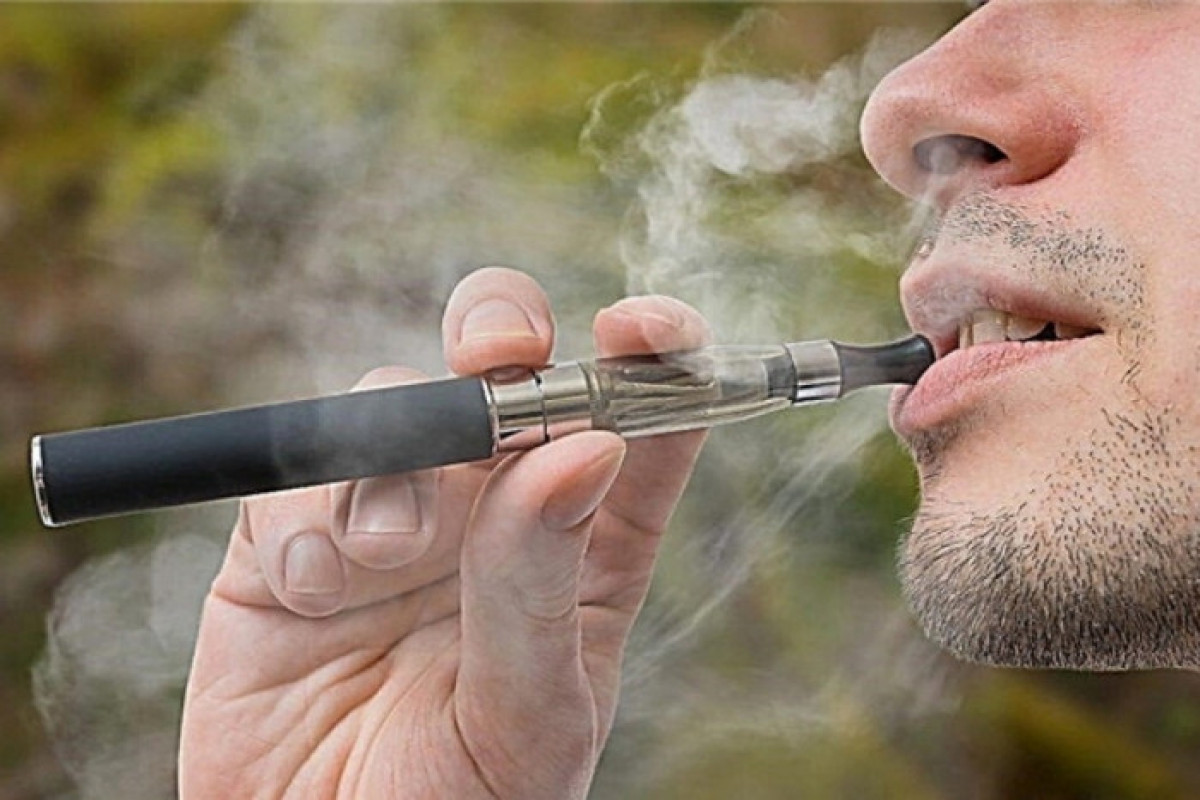


The reason for the ban on electronic cigarettes has been explained, APA reports.
During the discussion of the draft law on amendments to the Tax Code and the laws of the Republic of Azerbaijan “On Tobacco and Tobacco Products,” “On Advertising,” and “On Restricting the Use of Tobacco Products,” at today’s session of the Milli Majlis the Chairman of the Parliamentary Committee on Economic Policy, Industries and Enterprising, Azer Amiraslanov, stated that the Government of Azerbaijan, taking into account the recommendations of the World Health Organization, is implementing a policy of gradually increasing excise taxes on tobacco and tobacco products. According to the recommendation, at least 75 percent of the retail prices of all cigarette segments should consist of taxes.
Azer Amiraslanov said that in Azerbaijan, this figure is currently approaching 60 percent: “The current draft, however, does not envisage an increase in excise taxes on electronic cigarettes, but a more radical approach, namely their complete ban. Although the introduction of such a ban will lead to the loss of customs duties and tax revenues for these products, one of the priority directions of state policy is to protect the safety and health of citizens. The state never pursues fiscal interests in such matters, but rather takes citizen-oriented principles and values as its basis. Undoubtedly, with the banning of electronic cigarettes, the state will incur budget losses in terms of import duties, excise taxes, and value-added tax applied to these products. Nevertheless, the outflow of foreign currency abroad due to the import of electronic cigarettes will also be prevented to a certain extent. This is because, until now, demand for electronic cigarettes has been met not by local production but by imports. Taking into account the appeals of entrepreneurs, as well as the experience of countries that have implemented a strict ban regime on electronic cigarettes, we propose that the law’s entry into force be extended and set for April 1 instead of February 1. During this period, we consider it necessary for relevant authorities to provide entrepreneurs with all possible support so that they do not face material losses and difficulties.”
The chairman of the parliamentary committee noted that after the ban on electronic cigarettes, that is, after the law enters into force, customs and tax authorities, antimonopoly bodies, and law enforcement agencies must take serious preventive measures to avoid the emergence of a “black market” and attempts at smuggling in this segment of business.



 Follow us on Telegram
 t.me/apanewsaz
 Follow us on Instagram
 Follow us on TikTok
 Follow us on Facebook
 Follow us on X