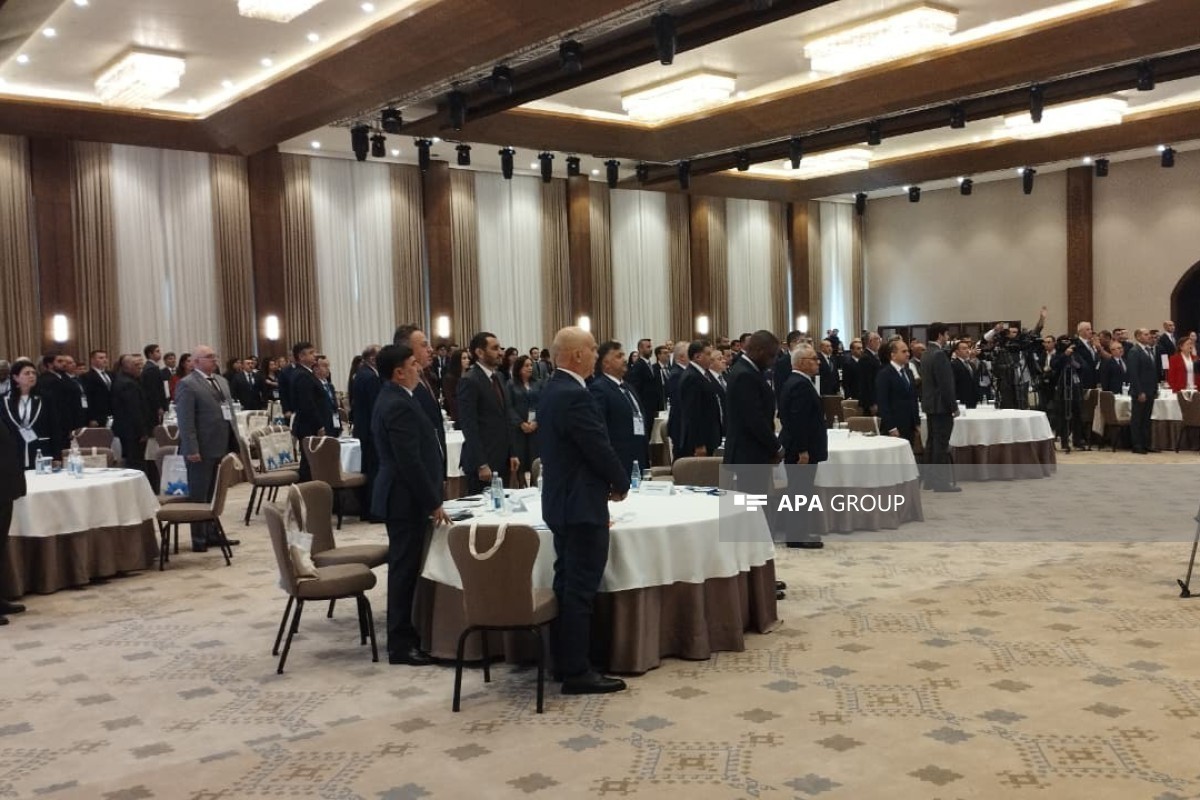
"More than 300 samples have been taken from the Azikh Cave for analysis," APA reports, citing the final reporting meeting of the Institute of Archaeology and Anthropology.
“In 2025, the international Paleolithic archaeological expedition led by Azad Zeynalov conducted research in the Azikh Cave located in the Khojavand district of Karabakh. The research was carried out on the basis of an agreement signed with Aarhus University in 2023. The main objective of this year’s research was to clarify the stratigraphy of the approximately 15-meter-thick deposits in the cave, to collect samples from all layers using various methods, and to obtain biomarkers for the analysis of the sediments,” the meeting stated.
It was noted that research was also conducted in the Taghlar Cave: “The international expedition led by Azad Zeynalov carried out research in the Taghlar Cave based on an agreement signed with the University of Tokyo in 2023. The main result of this year’s research can be considered the discovery of a paleoanthropological remain for the first time since 1968. It is presumed to be a remain belonging to a Neanderthal human approximately 80,000 years old, and the finding is currently being analyzed in Japan. Additionally, for the first time, the boundary separating layers II and III was accurately determined in terms of stratigraphy, and in the entrance area of the cave, previously unexcavated, older layers belonging to the Middle Paleolithic period were discovered. More than 20 samples were taken for radiocarbon and OSL analyses.”
The reporting meeting also noted that in August 2025, an Azerbaijani-German international academic research team conducted studies in the Azikh Cave: “In the current year, excavations were carried out in layers II and V of Azikh 1, the main entrance, along with the Azikh 2 entrance. Samples for archaeometric and microscopic analyses were collected from both Azikh 1 and Azikh 2. For stratigraphic and chronological studies, samples were taken from sediment and deposit layers for OSL analyses, and for paleo-ecosystem research, samples were taken for geomorphological and micromorphological analyses. These samples were sent to Germany, Norway, and Denmark.”


 Follow us on Telegram
 t.me/apanewsaz
 Follow us on Instagram
 Follow us on TikTok
 Follow us on Facebook
 Follow us on X
 UPDATED'>