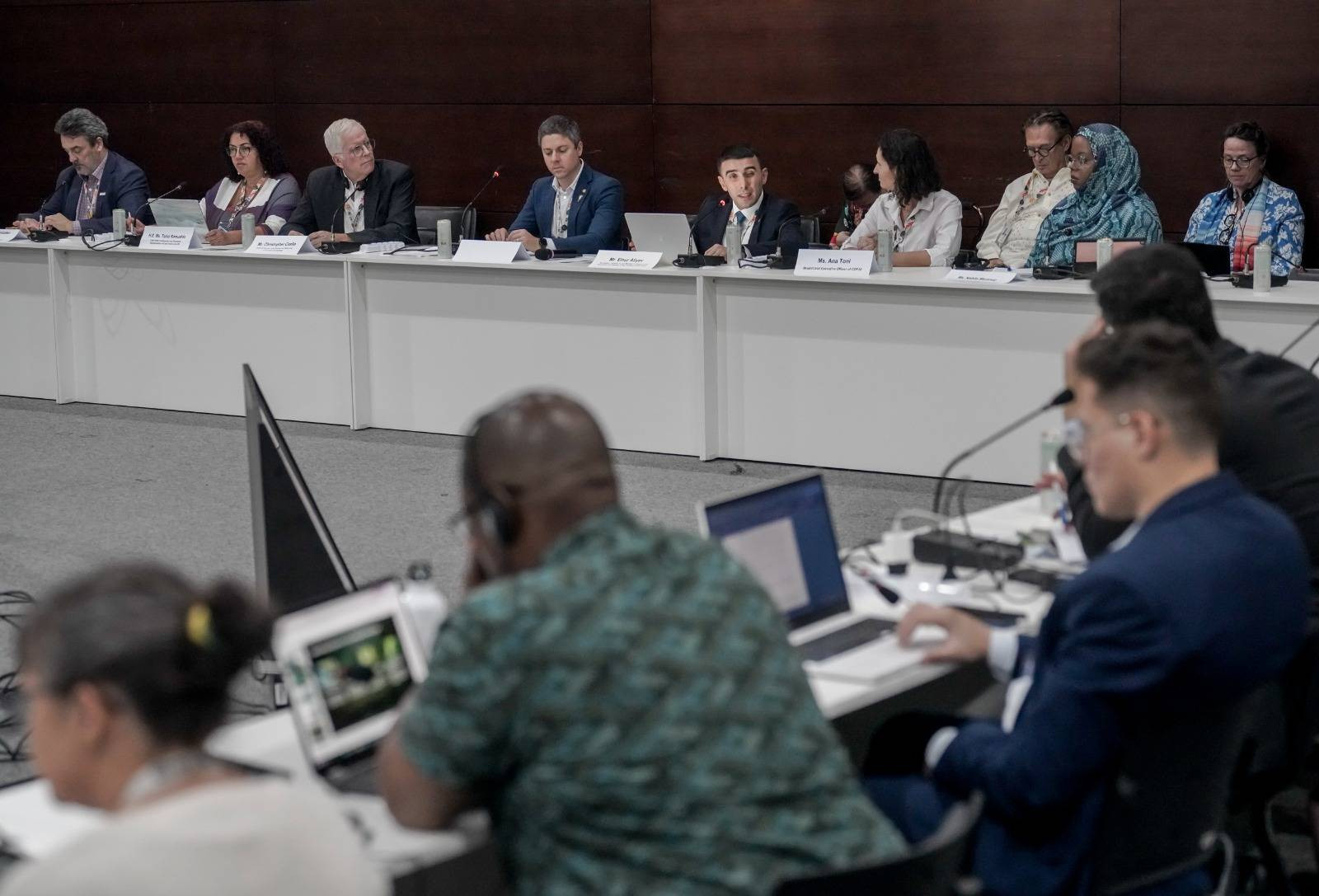
At the 30th session of the Conference of the Parties (COP30) to the UN Framework Convention on Climate Change, held in Belém, Brazil, the results of work carried out over the past year on the initiative jointly proposed by Azerbaijan and the Organisation for Economic Co-operation and Development (OECD) at COP29 — integrating climate literacy into the global education agenda and measuring climate literacy through the Programme for International Student Assessment (PISA) — were discussed, the Ministry of Science and Education told APA.
It was noted that during the high-level roundtable on “Greening Education” held within the framework of the conference, the Azerbaijani delegation provided information on the importance of the initiative, the work carried out, and planned activities.
It was stated that Azerbaijan has taken a historic step by contributing to the reshaping of international education policy and successfully making climate literacy a core component in preparing future generations for upcoming challenges. This initiative is now becoming a global movement that includes integrating climate literacy into PISA and incorporating it into national curricula. The goal of the initiative is to nurture a generation of young people who understand climate processes, make evidence-based decisions, and actively participate in climate action.
Over the past year, within the framework of Azerbaijan’s initiative, a PISA Climate Literacy Framework has been developed, and pilot assessments on climate literacy have been conducted both in Azerbaijan and Brazil. Various countries around the world have begun aligning their curricula, teacher training programmes, and policy priorities with this effort.
According to the views expressed during the conference, incorporating climate literacy into PISA will have profound implications for global education systems. PISA is one of the main driving forces behind national reforms, and once climate literacy becomes part of its assessment framework, countries will naturally begin to align their policies with this new priority. Governments will integrate climate topics, systems thinking skills, and action-oriented approaches into their national curricula not only in natural sciences but also in mathematics, reading literacy, media literacy, and even artificial intelligence literacy. This shift will spur new discussions on students' understanding of climate systems, their ability to critically evaluate information, and their meaningful participation in climate action. With the establishment of an international indicator, education ministries will be able to define policy strategies, identify performance gaps, and implement reforms that prepare students for a sustainable future.
The initiative is not limited to assessment alone. Alongside the development of the assessment tool, Azerbaijan and the OECD aim to create comprehensive resources that will support teachers in integrating climate literacy into teaching.
It was highlighted during the conference that Azerbaijan has taken a historic step in shaping global education policy and that the cooperation model it has established in forming climate literacy has become an example for countries around the world.


 Follow us on Telegram
 t.me/apanewsaz
 Follow us on Instagram
 Follow us on TikTok
 Follow us on Facebook
 Follow us on X