The latest operation carried out by the United States in Venezuela took place against the backdrop of long-standing security and governance problems in the region. In recent years, discussions have intensified about Venezuela’s transformation into a key link in transnational drug trafficking routes, a process that has had a negative impact on both domestic stability and the security of neighboring states. The incident, which happened precisely in this context, is being assessed as a step taken by Washington to curb illegal activities in the region and bring risks under control.
At the same time, the issue of utilizing Venezuela’s rich energy resources continues to remain on the international agenda. The long-standing economic crisis, institutional weakness, and transparency problems have limited the impact of these resources on the country’s economy and the population’s social well-being. The latest operation has once again brought existing concerns on this issue to the forefront, raising questions about Venezuela’s role in regional economic and political processes.
It is precisely within this framework that political commentators from both regions interpret the U.S. move from different perspectives, assessing the possible consequences of what has occurred in terms of both regional security and the broader geopolitical balance.
Trump redefined the balance of power in the American continent with the Caracas operation
American political commentator Peter Tase told APA that the successful operation carried out by U.S. special forces in Caracas on January 3 clearly revealed President Donald Trump’s foreign policy doctrine toward the American continent and effectively brought the 1904 Roosevelt Corollary back into practical relevance. According to him, the operation demonstrated Washington’s intention to reassert its strategic superiority in Latin America and the Caribbean basin.

Tase stated that by cutting off the flow and export of Venezuelan oil to the industrial sector of the People’s Republic of China, the Trump administration sent a clear message to Beijing and Tehran that the United States remains the dominant power in the region and will not allow rival power centers to consolidate. He noted that within the framework of Operation “Absolute Resolve,” the coordinated use of electronic warfare assets, including Growler jamming aircraft, together with the element of surprise provided by special operations forces of the 160th Special Operations Aviation Regiment, highlighted a high level of professionalism and operational superiority within the U.S. Department of Defense.
The political commentator added that the Trump administration’s decision regarding the capture of Nicolás Maduro is linked to Maduro’s ties with Moscow, as well as with the leadership of the Hezbollah terrorist organization in the Middle East, and to authoritarian governance practices in Venezuela.
The Venezuela crisis tightens the regional security agenda

According to Peter Tase, during Maduro’s rule hundreds of political prisoners were detained and subjected to torture. He emphasized that the situation in the region remains unstable, with U.S. Navy assets currently maintained at a high state of readiness in the southern Caribbean Sea. Washington, he said, is also closely monitoring drug production and distribution networks operating in Mexico and Colombia. In this context, it was reported that on January 5 a U.S. Navy P-8 “Poseidon” aircraft conducted surveillance flights near Mexico’s coastline.
Tase further stated that the United States plans to establish a military base in Paraguay in order to strengthen efforts against transnational drug trafficking structures linked to Maduro’s inner circle. In his assessment, these steps have weakened Venezuela’s role as a regional economic and political foothold for Beijing.
He also noted that Colombian President Gustavo Petro’s decision to deploy armed units in the city of Cúcuta near the Venezuelan border indicates that regional tensions have entered a new phase. According to Tase, the Trump administration’s hard-line stance is contributing to a reshaping of the security environment and the balance of power in Latin America.
The U.S. operation in Venezuela reflects power geopolitics beyond oil

Latin American political commentator Pedro Escobar Medina told APA that the latest U.S. military operation in Venezuela has revived long-standing but still relevant debates about the essence of Washington’s policy toward Caracas.
According to him, although the operation itself is extraordinary, the motivations behind it go far beyond oil and are instead connected to the global balance of power, security concerns, and long-term strategic interests. He stressed that the decision should be viewed as strategic rather than tactical.
Escobar Medina pointed out that Venezuela has become a symbol of instability in the Western Hemisphere, with state institutions effectively dismantled, a deep humanitarian crisis unfolding, and increasingly strong ties developing with extra-regional powers. In his view, allowing this situation to persist risks normalizing a governance model that undermines democracy, weakens regional security, and erodes international law.
He added that credibility played a significant role in Washington’s decision. For years, U.S. policy toward Venezuela relied on sanctions, diplomatic initiatives, and multilateral pressure mechanisms, but the absence of real political change gradually reduced their effectiveness. The latest operation, he argued, should be seen as an attempt to restore leverage and send a clear signal that prolonged stagnation is no longer acceptable.
Priorities beyond oil: Venezuela as a geopolitical and security challenge
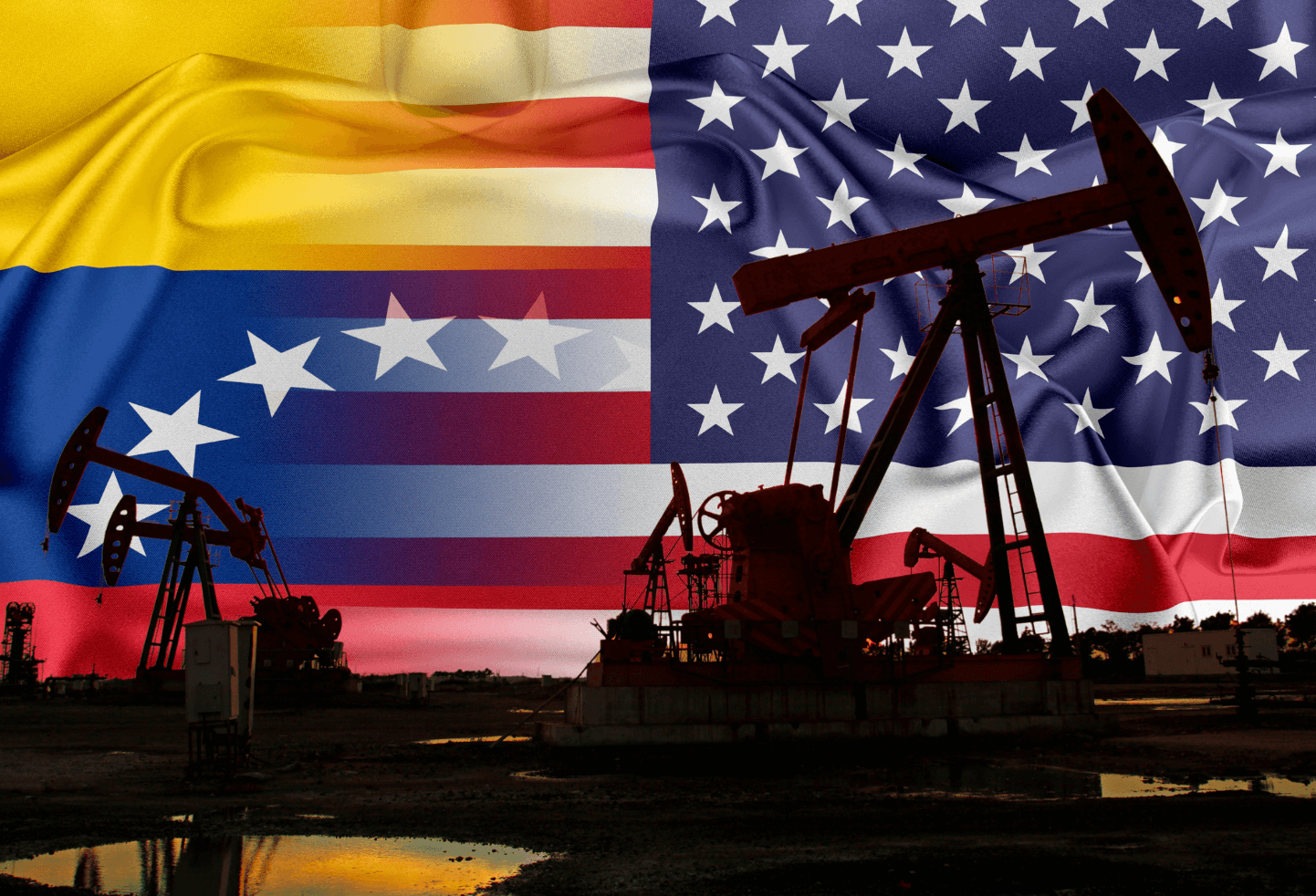
Escobar Medina noted that Secretary of State Marco Rubio’s statement that the United States does not need Venezuelan oil is largely accurate under current conditions. America’s energy independence and diversified supply chains have significantly reduced reliance on Venezuelan crude.
As a result, he emphasized that the primary motivation behind the operation is not oil, but geopolitics and security. Venezuela, he said, has become not only symbolically important but also a practical platform for Russia, China, and Iran in terms of military cooperation, intelligence networks, financial arrangements, and technological ties.
According to him, this creates a serious structural challenge for Washington in a region long regarded as part of its strategic depth. From this perspective, the U.S. move reflects a broader doctrine aimed at preventing the consolidation of rival power centers in the American continent, regardless of economic considerations. He added that the effects of the operation will also be felt in Venezuela’s relations with China and Russia.
Escobar Medina described China’s approach as pragmatic, focused primarily on stability, debt repayment, and long-term market access. While Beijing may criticize unilateral actions and emphasize the principle of sovereignty, he argued that China is unlikely to engage in a direct and sharp confrontation with Washington over Venezuela.
Moscow’s limited room for maneuver and growing uncertainty

Regarding Russia, Escobar Medina stated that Moscow may interpret the operation as another front in its ongoing geopolitical confrontation with the West. However, Russia’s response options are limited due to its commitments in other regions and the declining strategic importance of Venezuela. As a result, stronger rhetoric and symbolic gestures are more likely than concrete countermeasures.
He concluded that in all scenarios, the operation introduces uncertainty, weakens Venezuela’s reliability as a partner, and further complicates its role as a geopolitical foothold. While some governments may quietly support pressure on authoritarian regimes, the methods employed challenge norms of sovereignty and non-intervention, potentially creating a risky precedent.
In conclusion, Escobar Medina emphasized that the U.S. operation in Venezuela cannot be explained by a single motive or outcome. It reflects a combination of security concerns, geopolitical rivalry, and frustration with policy tools that have lost their effectiveness. Oil is no longer central; power, influence, and regional order have become the dominant priorities. Whether this approach leads to stability, he noted, will depend on future steps, and in the long term Venezuela’s crisis can only be resolved through credible, inclusive political solutions supported by the international community.



 Follow us on Telegram
 t.me/apanewsaz
 Follow us on Instagram
 Follow us on TikTok
 Follow us on Facebook
 Follow us on X