

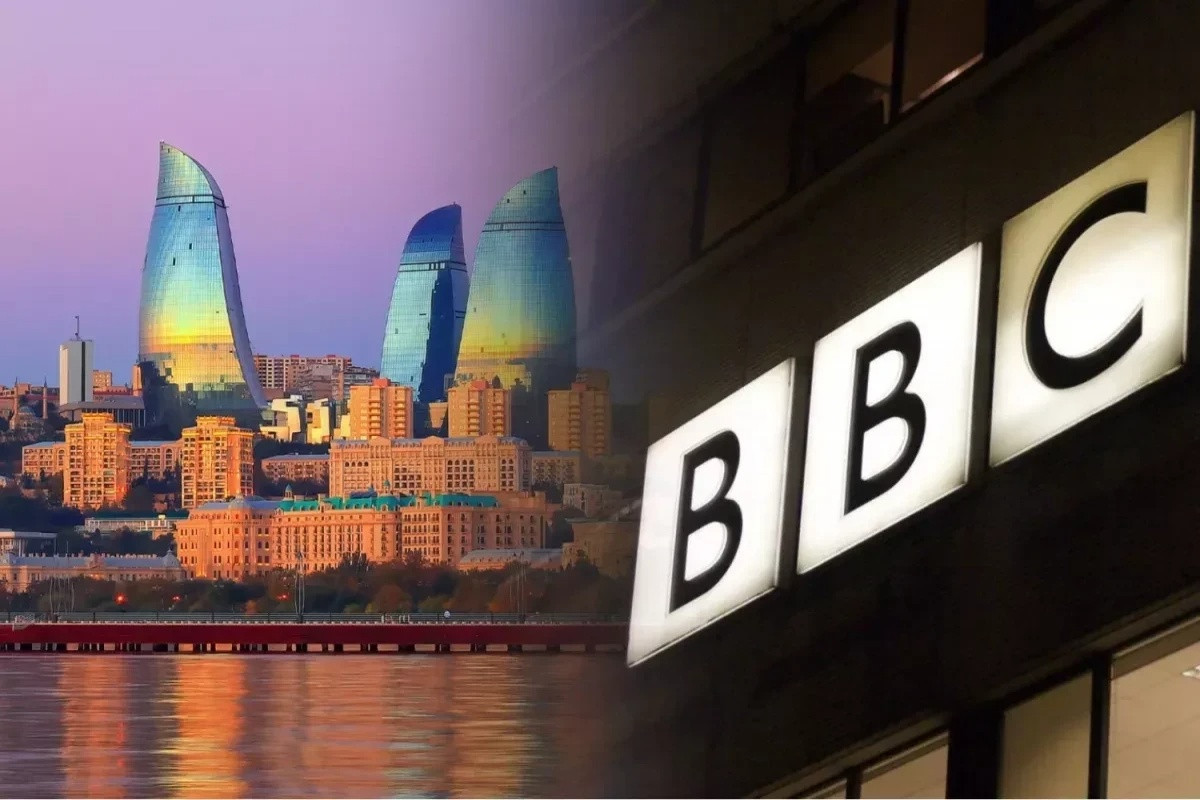


In recent days, serious discussions have been taking place in U.S. media and political circles regarding Donald Trump’s claims against the BBC. The issue concerns the British Broadcasting Corporation’s “Panorama” program, which aired in October 2024, and allegedly featured a manipulated and edited version of Trump’s remarks. This particular segment triggered a sharp reaction from the U.S. President, who announced that he would file a $1 billion lawsuit if the BBC did not remove the broadcast by November 14.
The issue revolves around edited footage in the program that seemingly portrayed Trump as calling for the storming of the U.S. Capitol. In reality, he emphasized the importance of expressing citizen positions through peaceful means during his speech. The scandal also caused significant upheaval within the BBC, forcing the resignations of the corporation’s Director-General Tim Davie and Head of News Deborah Turness.
This incident draws attention as an important example for discussions on media ethics, political information security, and the mechanisms by which public opinion can be influenced.
BBC's fakery factory: How have they been distorting the truth about Azerbaijan for years?

The BBC’s unprofessional falsification of information is nothing new for Azerbaijan. During the Patriotic War, this media outlet published materials that did not reflect the truth about our country and distorted facts. In those days, a narrative aimed at discrediting Azerbaijan dominated Western media coverage, including BBC reports.
As a continuation of such information provocations, in November 2024 — when Baku was hosting COP29 — BBC and “Global Witness” spread new false claims allegedly on behalf of Elnur Soltanov, the COP29 Chief Executive Officer and Deputy Minister of Energy.
Elnur Soltanov told APA that in the run-up to COP29, he held more than 1,000 meetings over 10 months and conducted background research on each participant beforehand. On this occasion, he was approached by a person who introduced himself as a representative of an Asian company requesting a meeting. Although the individual persistently expressed interest in investing in Azerbaijan’s oil and gas sector, Soltanov explained that COP29 was not a platform for such discussions. Even though the person was not well-informed about the COP process, Soltanov remained courteous throughout the meeting and provided general information about Azerbaijan’s climate policy, the role of gas as a transition fuel, emission reduction efforts, and SOCAR’s green energy projects. However, he emphasized that discussions related to oil and gas were beyond the scope of COP.
Elnur Soltanov stated that he was ultimately prepared to connect the individual with SOCAR. Since no prior consent was discussed for recording, there is no video of the meeting. It later emerged that the person was actually an agent of “Global Witness” who secretly recorded the conversation. BBC and “Global Witness” claim that Soltanov was allegedly “discussing” and “facilitating” oil and gas deals with the Asian company in the covert recording.
Elnur Soltanov has stated that these allegations are completely unfounded. According to him, the other party persistently asked questions about oil and gas, while he explained the COP framework and clarified that the topic was outside the COP Office’s mandate, suggesting that the questions be directed to SOCAR: “BBC and ‘Global Witness’ deliberately manipulate this as a ‘negotiation.’ The notion of a ‘secret recording’ itself is manipulative because one cannot secretly record something that did not occur, even secretly. My responses were based transparently on scientific consensus and official authority. Even if the agent had revealed their identity, the same answers would have been given. The terms “secret recording,” “fossil deal,” and “negotiations” were introduced to create sensationalism, rather than reflecting reality—they align with the prearranged scenario set by the BBC and "Global Witness." To ‘prove’ their claims, they created highly favorable conditions for themselves—a fake company, fake websites, a pseudo-compassionate representative, a secret recording, and extensive preparation. However, in the end, they broadcast only 40 seconds of a 25-minute conversation, most of which involved discussions on green energy projects. The remaining 98% was hidden because it did not fit their narrative.
This demonstrates that even under their so-called ‘ideal laboratory conditions,’ they could not substantiate their allegations. The published material is nothing more than baseless conjecture, and releasing such a campaign without facts during the UN climate conference in Baku is both unprofessional and unethical.”
BBC expose: Trump scandal reveals manipulation mechanism hidden by Western media for years
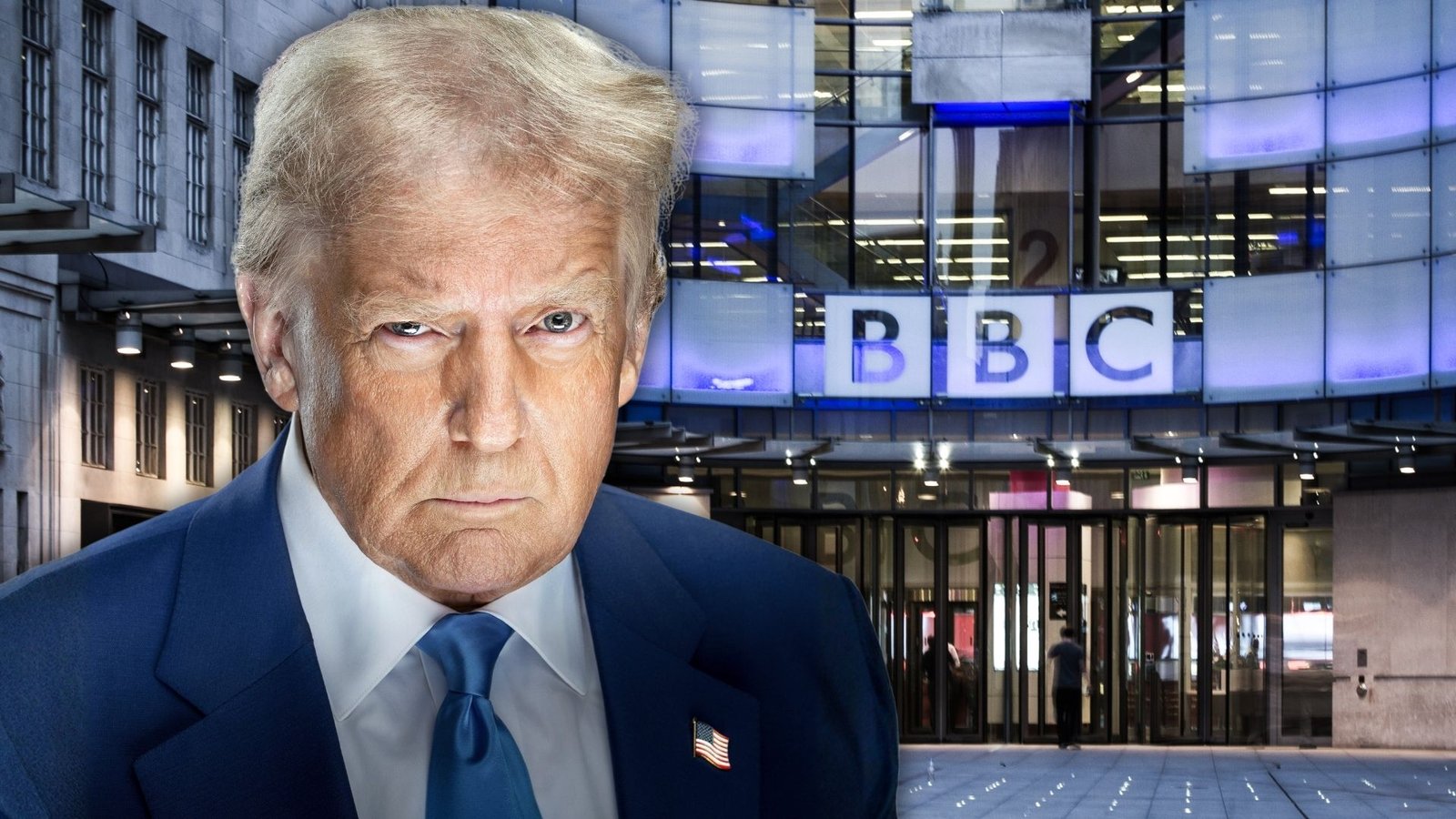
The fact that the BBC deliberately distorted Donald Trump’s speech is no longer merely unprofessional behavior – it clearly demonstrates that bias is deeply rooted, systematic, and deliberately executed in the institution’s information policy. This incident further proves that the narratives the BBC constructed against Azerbaijan during the Patriotic War were prepared using the same methodology: taking content out of context, falsifying chronology, selectively presenting facts, relying solely on one-sided sources, and politically motivated editing. This was not coincidental – it was the essence of an editorial line maintained over the years.
The Trump scandal, in fact, revealed a larger truth: the information engineering carried out by Western media under the guise of “objectivity” is now being exposed from within. Evidence presented by the BBC’s own staff shows that the information disseminated by this institution is not factual or truthful, but rather shaped according to political directives.
The facts circulating today regarding the purposeful manipulation of Trump's speech both reveal a deep decay in the international media system and fully confirm how justified the remarks that Azerbaijan has been making for years on all platforms, from the UN to European institutions. The internal exposure at the BBC demonstrated that their information policy serves political influence mechanisms rather than the fundamental principles of journalism.
This incident is no longer merely a media scandal – it is the naked exposure of the manipulation mechanism that Western media has hidden for many years.
The BBC's lying mechanism

Elnur Soltanov, who has suffered from the BBC’s falsification policy, emphasized that just as the BBC distorted Trump’s speech, its concealment of the full video behind the secretly recorded claims about him on the eve of COP29 also demonstrates that the organization systematically conducts political manipulation:
“I was not surprised that the BBC, by manipulating facts about the US President, spread political disinformation just days before the 2024 elections to influence them. Similarly, in November of the same year—three days before the start of COP29—the same BBC falsified facts about me, spreading disinformation aimed at negatively affecting global climate negotiations. However, the BBC, having sunk a little below the level of its Capitol Hill adventure, has not yet released to the public the full version of the secretly recorded conversation that it presented as the basis for its fabricated allegations about me in relation to COP29. However, that conversation is the main evidence confirming my professional and moral integrity, contrary to the BBC’s claims. I first appealed directly to the author of this fraud, the BBC’s Chief Climate Editor Justin Rowlatt, and to the BBC’s Director General, Mr. Shah, and then to all the BBC’s internal complaints mechanisms and Ofcom. But the result at all stages was the same: the BBC still refuses to disclose the evidence – the secretly recorded conversation – in full."
Elnur Soltanov noted that since the original video speech on Capitol Hill was open to the public, the real facts were compared with the news that the BBC falsified, and the truth was revealed: "As for me, the BBC continues to hide the evidence - the video recording. Because it knows that comparing the original evidence with disinformation will expose the lies. The main principle of journalism is transparency and evidence. If evidence is hidden, the claim is invalid. Insisting on an invalid claim contradicts the principles of morality, professionalism, and the law. Recent events show that the BBC's political manipulation in reporting is not individual in nature, but an institutionalized behavior. There is no doubt that the BBC has repeatedly carried out similar falsifications, and these will gradually be revealed. The behavior of this huge and powerful organization, which claims to be the standard-bearer of universal human values, in the poor quality of the provincial yellow press should be taken seriously. Because, unlike the yellow press, organizations like the BBC can hide their lies behind their reputation and have the potential to create serious consequences based on lies."
The recent developments surrounding the BBC once again demonstrate that the issue is no longer about simple editorial errors — it concerns a politically driven manipulation mechanism that has taken shape over the years and operates at an institutional level. The Trump scandal became its largest exposure on a global scale, yet Azerbaijan had already experienced the consequences of this behavior openly during the Patriotic War. The false narrative spread about Elnur Soltanov on the eve of COP29 further showed that the BBC, relying on its reputation, believes it has the power to shape public opinion on any issue. However, the concealed evidence, edited fragments, and one-sided sources are now being exposed from within the BBC itself.
These developments once again bring to the forefront the importance of transparency, evidence-based journalism, and ethical responsibility in the media environment. The impact of information manipulation undermines not only politics but also international relations and public trust.


 Follow us on Telegram
 t.me/apanewsaz
 Follow us on Instagram
 Follow us on TikTok
 Follow us on Facebook
 Follow us on X