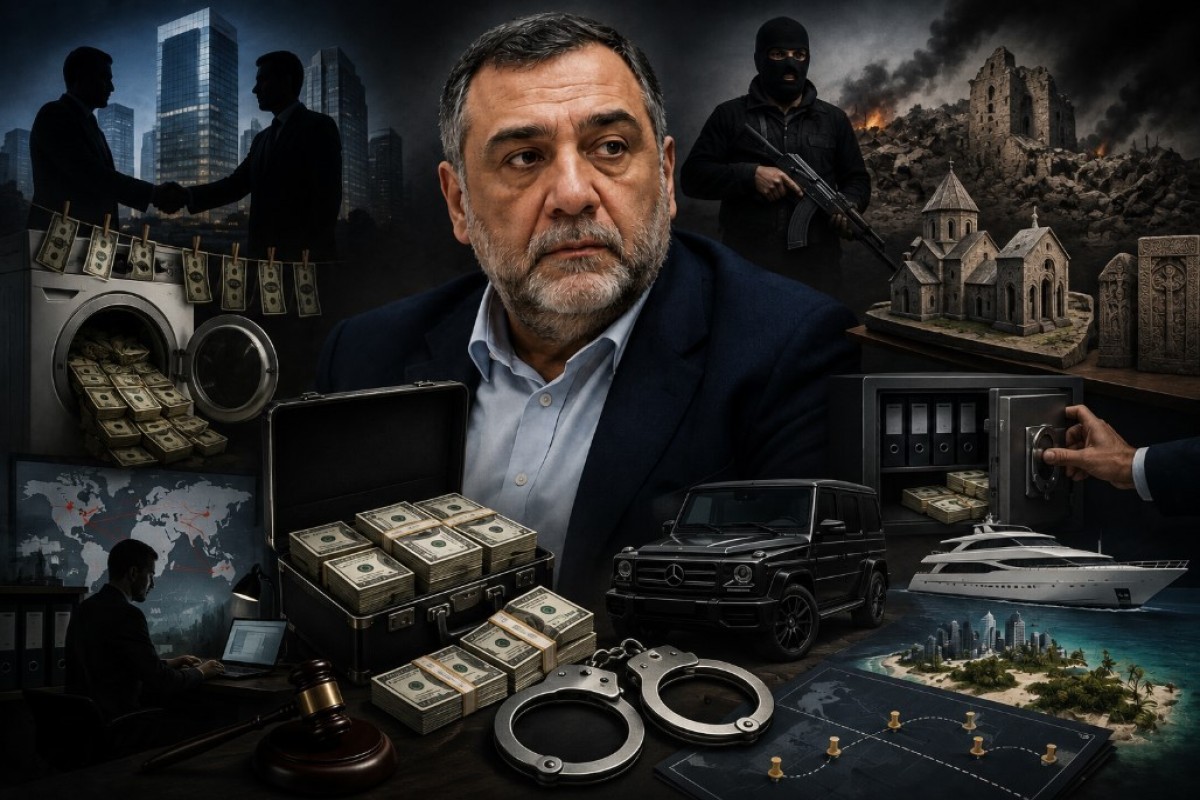


Ruben Vardanyan's alleged involvement in various criminal activities, including financial fraud, has long been known internationally. An open letter by Turkish-American engineer, researcher, and author Ergün Kırlıkovalı addressed to Lebanese-American writer and economist Nassim Nicholas Taleb has once again brought attention to evidence portraying Vardanyan as an international criminal.
In his letter, Kırlıkovalı criticizes Taleb for defending Ruben Vardanyan, arguing that the man widely portrayed as a "philanthropist" and "humanitarian businessman" has, for years, been associated with transnational financial networks, offshore companies, money laundering investigations, and numerous legal disputes. The internationally recognized engineer contends that the public image carefully cultivated around Vardanyan has overshadowed the extensive body of evidence accumulated against him over the years.
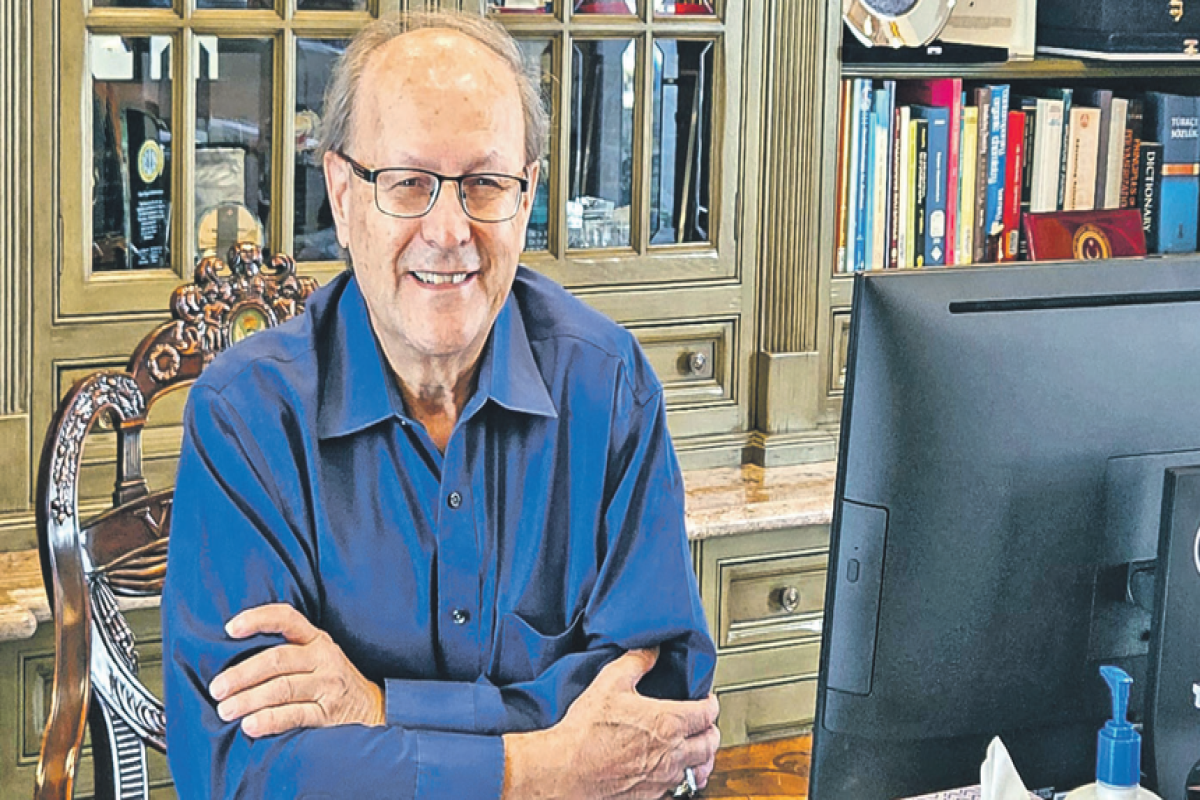
In reality, the letter does not introduce new allegations. Instead, it revisits facts that have already appeared in international investigative journalism and court materials, emphasizing the need to examine the Ruben Vardanyan phenomenon through a broader financial and geopolitical lens.
The Digimarket case raises new questions about Vardanyan's financial empire
Ruben Vardanyan's name recently resurfaced in connection with an ongoing financial dispute in Russia.
The case concerns an offshore company, Digimarket Holdings Limited. According to available information, in 2013 the company extended a loan of US$35 million to the DoubleTree by Hilton hotel project in Moscow, managed by Avtokontsept KO LLC. Following the borrower's failure to repay the debt, the dispute dragged on for years before ultimately reaching the courts in 2024.
In early 2026, Russia's Supreme Court prohibited the transfer of loan proceeds to a creditor registered in a foreign jurisdiction. As a result, the offshore company was required to re-register under Russian jurisdiction in order to pursue its legal claim.
Consequently, in the spring of 2026, Digimarket Holdings Limited was re-registered as Digimarket LLC within the Special Administrative Region of Russia's Kaliningrad Region. According to Russia's Unified State Register of Legal Entities (EGRUL), the company's owner is listed as Veronika Zonabend, Ruben Vardanyan's wife.
Shortly after the re-registration, Digimarket LLC filed a lawsuit seeking to recover 5.1 billion rubles—approximately US$64 million—from Avtokontsept KO. Legal proceedings remain ongoing, and no final court ruling has yet been announced.
The case has once again directed attention to the financial structures built by Vardanyan over many years and the mechanisms through which they allegedly operated.
"Troika Laundromat" – the financial network at the center of international investigations
The Digimarket case is far from the first financial controversy associated with Ruben Vardanyan.
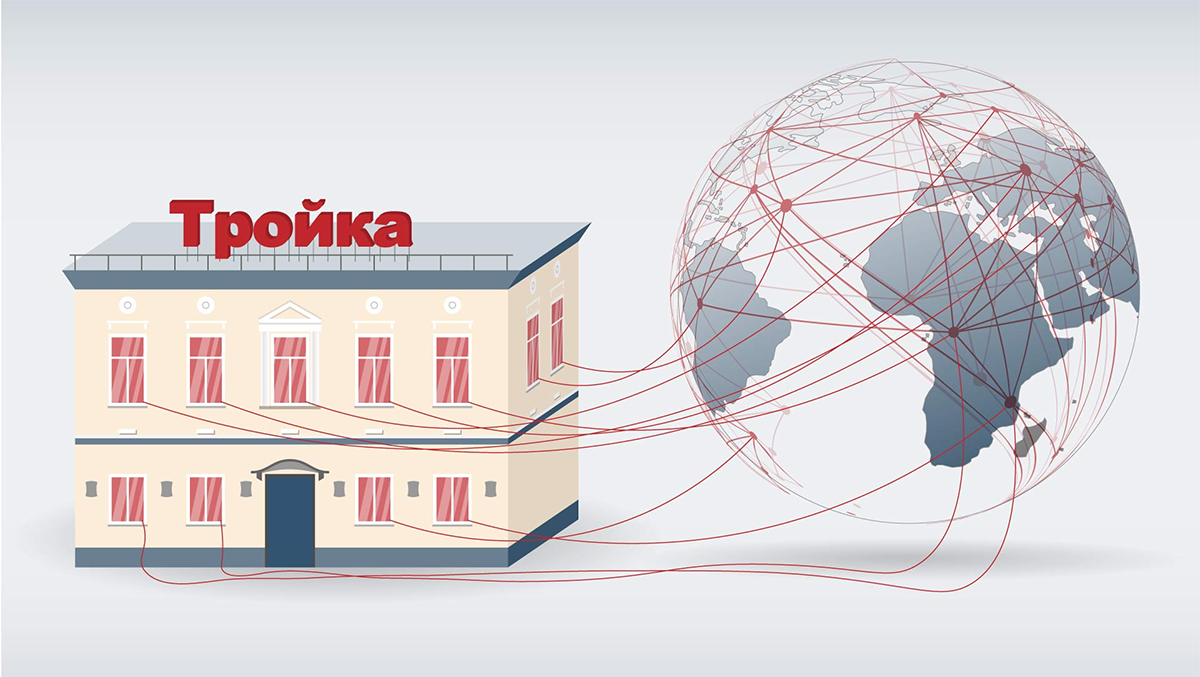
His name gained particular international prominence following the 2019 "Troika Laundromat" investigation conducted by the Organized Crime and Corruption Reporting Project (OCCRP) together with its media partners.
According to the investigation, Troika Dialog—the investment bank headed by Vardanyan for many years—was one of the key participants in a sophisticated financial network comprising approximately 75 offshore companies.
The authors of the investigation concluded that between 2006 and 2013, approximately US$4.6 billion had been transferred through this network across multiple countries.
According to OCCRP, the scheme relied on fictitious trade agreements, sham commercial transactions, fabricated invoices, and multilayered corporate structures. Transactions were reportedly documented as payments for "food products," "metal goods," and "automotive spare parts," while the actual flow of funds was allegedly concealed behind this documentation.
Journalists stated that they had analyzed more than 1.3 million banking transactions, information on 238,000 companies and individuals, as well as thousands of emails and contracts. This extensive investigation became known as the "Troika Laundromat."
Alleged schemes involving billions of dollars
The investigations focused not only on offshore companies but also on major financial operations allegedly conducted through the network.
One example was the fuel scheme commonly referred to as the "Sheremetyevo fraud." According to OCCRP, between 2003 and 2008, artificial inflation of aviation fuel prices caused tens of millions of dollars in losses to the Russian state budget, while more than US$27 million from companies involved in the scheme allegedly moved through accounts linked to Troika Dialog.
The investigation also alleged that insurance companies accused of tax evasion transferred approximately US$17 million through the bank.
Another notable allegation involved transfers totaling US$69 million to companies linked to renowned Russian cellist Sergei Roldugin.
In addition, companies implicated in the widely publicized US$230 million tax fraud uncovered by lawyer Sergei Magnitsky were reportedly connected to transfers exceeding US$130 million into the Troika Dialog network.
Each of these allegations has been subject to separate legal assessment. Nevertheless, the fact that they all centered on the same financial network has been cited as one of the reasons Vardanyan's name has remained associated with international financial scandals for years.
Investigations also examined Vardanyan's personal financial transactions
One of the most notable aspects of the Troika Laundromat investigation concerned allegations regarding Ruben Vardanyan and his family's use of the financial network.

According to documents presented by the investigators, more than US$3.2 million in expenses charged to Vardanyan's American Express card were financed by various offshore companies.
The investigation alleged that these funds were transferred to the family's personal accounts and used to cover tuition fees for children studying in the United Kingdom, purchase real estate, and finance other personal expenditures.
The report further stated that clients using Troika Dialog's services allegedly acquired real estate in the United Kingdom, Spain, and Montenegro, purchased yachts and valuable works of art, and carried out other major financial transactions through the same network.
Experts warn about the risks posed by such mechanisms
Professor Louise Shelley, Director of the Terrorism, Transnational Crime and Corruption Center at George Mason University, has repeatedly warned about the dangers posed by such financial mechanisms.
According to Shelley, fictitious trade agreements and multilayered offshore structures are among the most common methods used for money laundering.
She argues that such systems reduce government tax revenues, fuel corruption, weaken economic development, and facilitate the concealment of illicit financial flows. In her assessment, these funds may subsequently be used to finance political influence campaigns, disinformation activities, and illegal investment projects.
For Azerbaijan, the principal issue is not financial scandals
Regardless of the significance of these international financial investigations and court disputes, Ruben Vardanyan's importance for Azerbaijan lies in an entirely different context.
For Azerbaijan, Vardanyan is a person convicted of crimes against the country's sovereignty, territorial integrity, and constitutional order, who has received what Azerbaijani authorities regard as a deserved sentence through a fair judicial process.
The charges against him stem from his arrival in the illegally controlled part of the Karabakh region in 2022, his role within the self-proclaimed separatist administration, his unlawful activities on Azerbaijan's internationally recognized territory, and his alleged participation in strengthening the political and financial foundations of separatist structures.
Ruben Vardanyan was found guilty of a number of serious crimes, including financing terrorism, establishing and supporting illegal armed groups, and committing acts directed against the territorial integrity, sovereignty, and constitutional order of the Republic of Azerbaijan. He was sentenced by the court to 20 years' imprisonment.
From financial networks to an instrument of geopolitical influence
Certain logical parallels can also be observed between the international financial investigations surrounding Vardanyan and the charges brought against him in Azerbaijan.
In today's world, substantial financial resources, opaque economic mechanisms, and extensive international connections are regarded not only as instruments of business activity but also as important tools for projecting geopolitical influence.
Developments in Karabakh demonstrated that considerable financial capabilities can, in some cases, be used to support political projects, separatist structures, and unlawful activities.
The overall picture surrounding Ruben Vardanyan cannot be assessed from a single perspective. On one side stand the offshore financial networks mentioned in the Troika Laundromat investigation, the Digimarket case, and other international investigations, together with alleged multi-billion-dollar financial operations and ongoing court proceedings. On the other side are the charges related to activities directed against Azerbaijan's national security, sovereignty, and territorial integrity—charges that were upheld by the court.
The decision by Taleb and others to defend Vardanyan despite what the author describes as numerous crimes established through court proceedings raises further questions.
What remains certain, however, is that the international financial scandals associated with Ruben Vardanyan are likely to remain the subject of public debate and investigation for a long time to come.


 Follow us on Telegram
 t.me/apanewsaz
 Follow us on Instagram
 Follow us on TikTok
 Follow us on Facebook
 Follow us on X