












Baku – APA. A bitter dispute over limited water resources is fueling India-Pakistan tensions at a time when the South Asian neighbors are trying to rebuild trust and resume peace talks, APA reports quoting “Associated Pressâ€.
It’s a long-running feud that has worsened in recent months as a dry spell focuses attention on Pakistan’s growing water shortage. Three days of talks in March ended with both sides trading barbs and failing to reach a resolution.
The issue was raised Thursday when the leaders of the two countries met at a regional summit in Bhutan and agreed on the need to normalize relations, the Pakistani side said.
Further complicating the situation, Islamic extremists are trying to capitalize on allegations that India is stealing water from glacier-fed rivers that start in the disputed territory of Kashmir.
Independent experts say there is no evidence to support those charges, but they warn that Pakistani concerns about India’s plans to build at least 15 new dams need to be addressed to avoid conflict.
"If you want to give Lashkar-e-Taiba and other Pakistani militants an issue that really rallies people, give them water," said John Briscoe, who has worked on water issues in the two countries for 35 years and was the World Bank’s senior water adviser.
Farmers in Pakistan’s central breadbasket are certainly angry.
"India has blocked our water because they are our enemy," said Mohammad, a 65-year-old farmer in the town of Gujrat who goes by only one name.
His farm sits a few miles (kilometers) from the Chenab River, which residents say has been shrinking since India completed a hydroelectric dam in its part of Kashmir in 2008. In some sections, water flows in only a tenth of the river bed, and nearby irrigation canals have dried up.
Indian officials blame any reduction on natural variation and climate change, which have hurt India as well. They add that Pakistan’s antiquated irrigation system wastes large quantities of water.
"Preposterous and completely unwarranted allegations of stealing water and waging a water war are being made against India," the Indian ambassador to Pakistan, Sharat Sabharwal, said in a speech in April.
The animosity over water could make it more difficult to resolve the signature dispute between the two countries: the decades-long struggle over Kashmir.
The United States has been seeking to reduce India-Pakistan tensions, hoping that would free Pakistan to move troops away from the Indian front to fight militants attacking U.S. and NATO troops in Afghanistan from sanctuaries near the Afghan border.
"The issues of Kashmir and terrorism are going to be much more difficult if we don’t have an agreement on water," said water expert Briscoe, now a professor at the Harvard School of Public Health.
The origin of the water dispute can be traced to the creation of Pakistan and India in 1947, when the British Indian empire was partitioned. The split gave India control of the part of Kashmir that is the source of six rivers that irrigate crops in Pakistan’s agricultural heartland of Punjab province and elsewhere.
Under a 1960 agreement, Pakistan has the use of the three western rivers — the Indus, Jhelum and Chenab — and India, the three eastern ones — the Sutlej, Beas and Ravi.
India was granted limited use of Pakistan’s rivers for agricultural purposes, plus the right to build hydroelectric dams, as long as they don’t store or divert large amounts of water.
Pakistan is one of the driest countries in the world, and water availability per person has fallen from about 5,000 cubic meters (175,000 cubic feet) in 1947 to around 1,000 cubic meters (35,000 cubic feet) today. Most of the drop is a result of rapid population growth, but recent shortages have heightened suspicion about India.
Pakistan’s Indus water commissioner, Jamat Ali Shah, doesn’t accuse India of stealing water, but he says India isn’t providing information required under the 1960 pact to prove that it’s not.
"There should be nothing in the track record that shows India has violated the treaty," said Shah. "But it is a fact that the track record is not clear."
India denies any intention to cut off water to Pakistan and maintains that it has complied with the treaty. But as with other issues between the two countries, mistrust runs high.
"If he has the capacity to hurt me, the best that can be said about him is that he will use it for blackmailing and the worst is that he will use it to harm me," said Shams ul Mulk, the former head of Pakistan’s Ministry of Water and Power.
Briscoe said the dams India is planning to build could give it the ability to choke off water to Pakistan if it wanted to pressure its neighbor.
India should provide automatic flow data to Pakistan, he said, while also warning that heated rhetoric on the Pakistan side would only embolden extremists.
Jamaat-e-Dawa, an alleged front group for the militant Lashkar-e-Taiba organization, issued a statement recently accusing India of using "her disputed occupation of Kashmir to carry out a deep conspiracy of turning Pakistan’s agricultural lands into barren lands and economically annihilating her through building dams and water theft."
"If India continues with her water terrorism," it added, "Pakistan must keep open the option of using force."


 Follow us on Telegram
 t.me/apanewsaz
 Follow us on Instagram
 Follow us on TikTok
 Follow us on Facebook
 Follow us on X
Media
Azerbaijani journalists’ congress postponed by one day
 12:59
12:59
 7 October 2026
Media and Broadcasting Council: Linking Azerbaijan to former German intelligence chief is disinformation
10:25
7 October 2026
Ahmad Ismayilov meets RTÜK chairman
16:40
1 October 2026
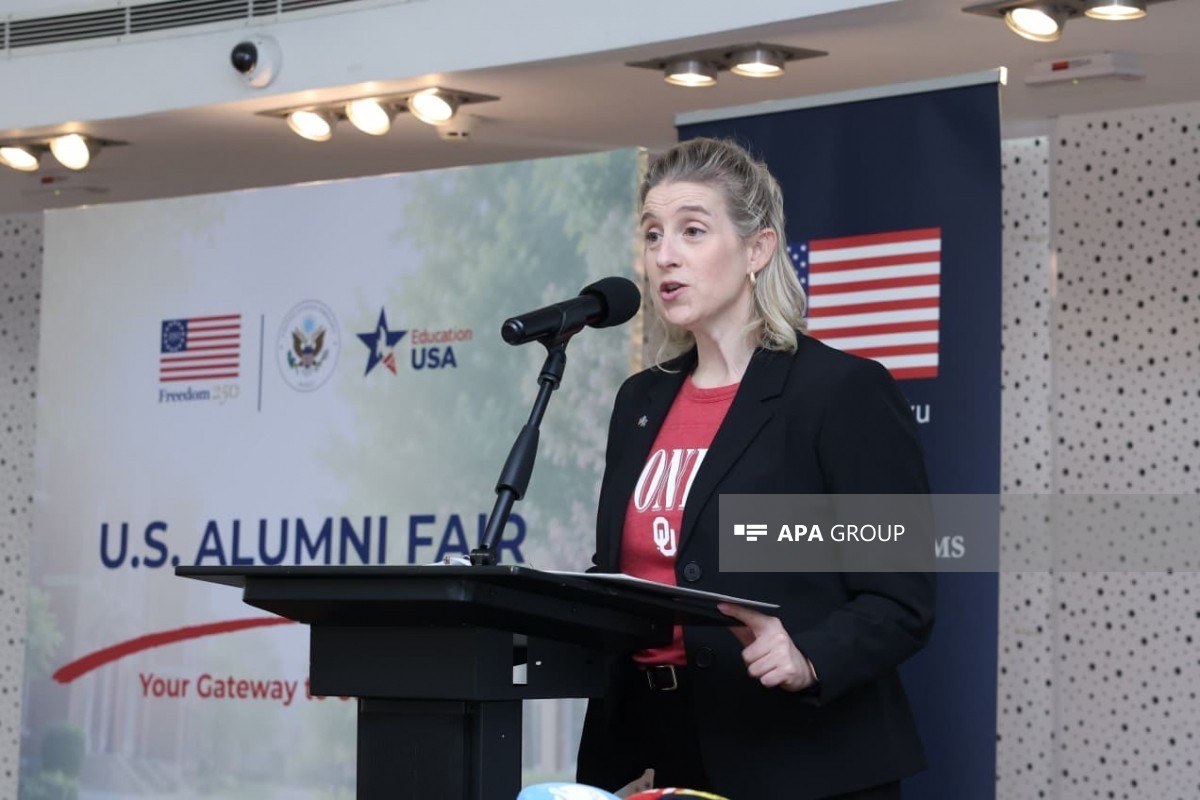
US Embassy Chargé d’Affaires meets with representatives of leading media outlets in Baku
16:27
28 September 2026

NEWS FEED
Shehbaz Sharif calls President Ilham Aliyev
13:58
10 October 2026
Kremlin says Putin relayed Iran's position on resolving conflict to Trump
13:30
10 October 2026
Azerbaijan’s revenue from cotton exports rises by more than 23%
13:00
10 October 2026
Pezeshkian: Regional diplomacy must become a tool to prevent expansion of conflict
12:59
10 October 2026
Five shot dead at residence in Georgia's Douglas, police says
12:48
10 October 2026
Russia made no concessions on Ukraine in exchange for diesel deal
12:35
10 October 2026
Ukraine strikes oil terminal, railway bridge and two vessels in Rostov region
12:34
10 October 2026
International travelers familiarize themselves with work carried out on Horadiz-Aghband highway - PHOTO - UPDATED
12:32
10 October 2026
Ambassador: No force can harm Azerbaijan-Türkiye brotherly relations, ties will further develop
12:15
10 October 2026
Kürşad Zorlu: No provocation aimed at undermining Türkiye-Azerbaijan relations will succeed
11:59
10 October 2026
Participants of international conference on missing persons visit Lachin - PHOTO
11:35
10 October 2026
Death toll from Russian strike on Zaporizhzhia rises to 8 - UPDATED
11:33
10 October 2026
Investment in fixed capital in Azerbaijan rises by nearly 11%
11:26
10 October 2026
American traveler: Restoration work in Karabakh is amazing
11:15
10 October 2026
Milli Majlis MPs appeal to US senators and members of House of Representatives
11:06
10 October 2026
Composition of State Commission on delimitation and demarcation of Azerbaijan-Georgia border amended
10:58
10 October 2026
Judges appointed to several courts of first instance
10:57
10 October 2026
Talks between Ukraine, Europe and the United States in Miami ended early
10:48
10 October 2026
JetSMART flight JA850 declares emergency and turns back toward Santiago
10:46
10 October 2026
Azerbaijani oil sells for $130.81
10:44
10 October 2026
American traveler: Large-scale construction underway toward Zangezur corridor
10:30
10 October 2026
United States threatened to leave Ukraine without intelligence over strikes on Russian oil refineries
10:11
10 October 2026
Latest on crypto market: Bitcoin rises
09:58
10 October 2026
Health Ministry: Average life expectancy in Azerbaijan exceeds 77 years
09:37
10 October 2026
Global stock market indices
09:35
10 October 2026
Oil prices rise on global markets
09:15
10 October 2026
Trump threatens Iran with destruction unless it accepts US terms
08:47
10 October 2026
Trump says he discussed resolution of Armenia-Azerbaijan conflict with Putin
07:48
10 October 2026
Ushakov: Timing of next Putin-Trump meeting has not been discussed
07:22
10 October 2026
Witkoff: Ukraine’s energy security and post-war recovery discussed in Miami
05:25
10 October 2026
Zelensky criticizes Trump over diesel deal with Putin amid Ukraine-US talks
03:19
10 October 2026
US talks on Ukraine address European security architecture — media
02:51
10 October 2026
Ushakov: Putin, Trump did not discuss new meeting
02:39
10 October 2026
Zelenskyy: Ukrainian negotiating team used as “smokescreen” amid US-Russia diesel deal
01:58
10 October 2026
Ukrainian President: Letting Russia sell fuel means investing in its war
01:46
10 October 2026
Russia ready to supply oil to US, global markets — Putin after call with Trump
01:00
10 October 2026
Russia begins lifting diesel exports restrictions immediately — deputy PM
00:43
10 October 2026
Magnitude 7.6 earthquake rocks Panama, tremors reach Colombia
00:22
10 October 2026
United States lifts sanctions on Russian diesel fuel supplies to global markets
23:57
9 October 2026
Trump selects Katie Zacharia as White House press secretary
23:42
9 October 2026
Trump: Russia to release 300k tons of diesel now
23:26
9 October 2026
Araghchi: Agreement reached on joint projects involving Russia, Iran, and Azerbaijan
22:55
9 October 2026
Posts targeting relations between Türkiye and Azerbaijan called as disinformation
22:37
9 October 2026
Türkiye parts ways with national team coach Vincenzo Montella
22:25
9 October 2026
Match between Azerbaijani football clubs Neftçi and Sabah ends with goalless draw
21:59
9 October 2026
Telegraph: Spain and Greece have refused to supply Patriot missiles to Ukraine
21:47
9 October 2026
Russian budget deficit total $61.1 bln in 9M 2026 — Finance Ministry
21:32
9 October 2026
Dutch parliament to vote on country's exit from ICC
21:15
9 October 2026
Video shared on President Ilham Aliyev’s social media accounts on his visit to Turkmenistan-VIDEO
20:55
9 October 2026
One person dies, one in serious condition after Greek refinery incident
20:30
9 October 2026


