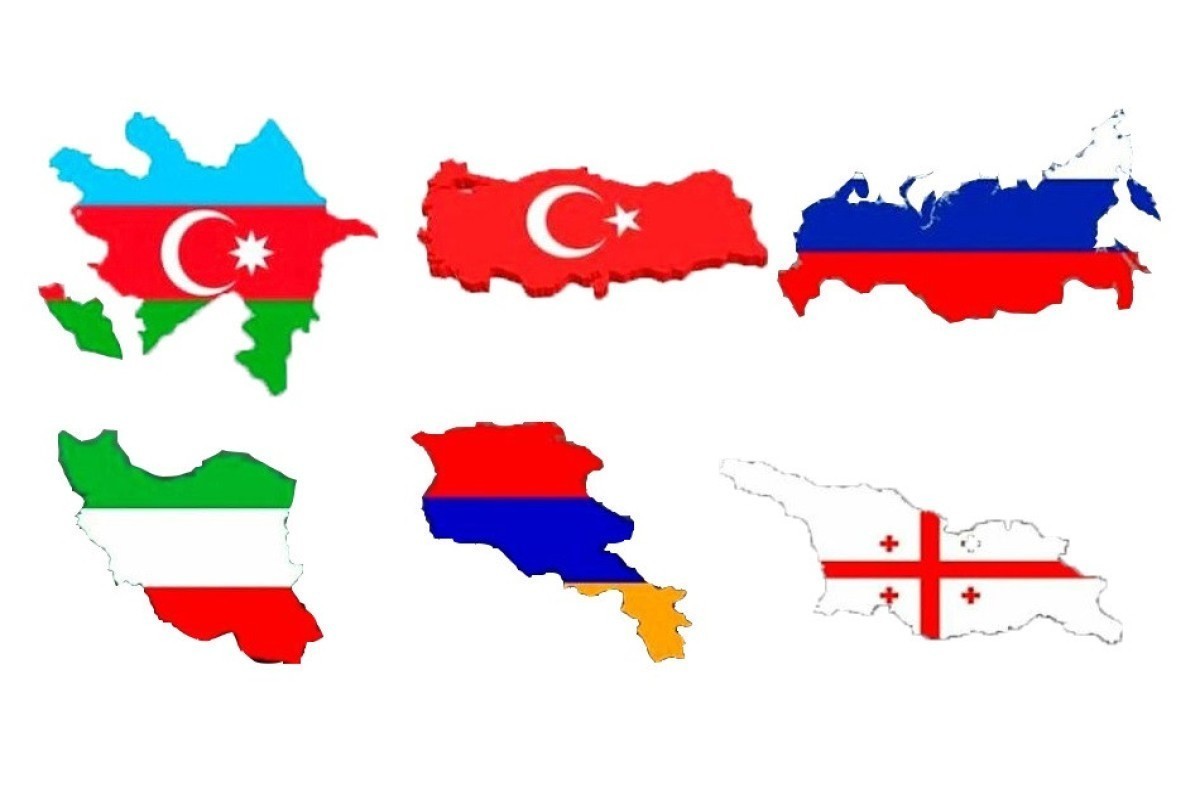
Baku. Victoria Dementyeva – APA. “There is a point where three great powers — Russia, Turkey and Persia — meet: the Caucasus. At the moment they converge in a country called Azerbaijan. That fact makes Azerbaijan a battleground for these three great powers, which have competed with each other along various borders for centuries” says the article “Why Azerbaijan Should Matter To America” by George Friedman, Founder and Chairman of Stratfor, a geopolitical intelligence firm published in famous Forbes magazine.
George Friedman mentions that Azerbaijan also emerged as a major energy producer: “Azerbaijan was once the prize of empire. It is now independent in a very dangerous place.”
The author regarded Azerbaijan as critical to the United States. According to him, the number of people interested in the country has risen dramatically: “My own interest in Azerbaijan requires greater explanation. In The Next 100 Years I forecast a number of events, beginning with the serious weakening of the European Union and the increase in relative power of Russia. Russia had its own problems, but between Europe’s dependence on Russian energy and the fact that Russia had cash available to buy assets in Europe, the decline of Europe meant a more powerful Russia. The countries that would feel that power would be those bordering the former Soviet Union — a line from Poland to Turkey and then from Turkey to Azerbaijan, the eastern anchor of Europe on the Caspian Sea.”
Friedman says that the United States would continue to be the dominant power in the world, economically the most viable and with the most powerful military, but an adolescent power without foresight or balance in its actions: “The point is that the United States is the world’s global power but is lurching from conflict to conflict and from concept to concept. It takes awhile to understand how to use power.”
The author considers that the Russian strategy has been to maintain and deepen European dependence on Russian energy: “The second phase of this strategy has been to limit alternatives for the Europeans, including Turkey. The complex tension over oil and natural gas pipelines boils down to the fact that the Russians do not want significant energy sources that are outside of Russian control to be available to Europe. It is in the American interest to try to limit Russian influence around its periphery in order to stabilize the pro-Western states there at a time when Europe is weak and disorganized. Azerbaijan has all the characteristics of a full American ally. It is strategically located and provides options for both influencing events in Iran and limiting Russian power in Europe by providing an energy alternative, including the possibility of a pipeline under the Caspian Sea to Central Asia.”
According to the author, given its location it needs access to weapons, for which it is prepared to pay: “Yet the United States limits its access to weapons. There are two reasons for this. One is the strong Armenian-American community. The Azerbaijani lobby in the United States has failed to gain the influence of its Armenian counterpart. Therefore, there is pressure on Congress to block weapons shipments, and even appointing ambassadors is difficult. The second reason is related with the human rights situation in Azerbaijan.”
The article notes that the loss of Azerbaijani oil to either Russia or Iran would increase the pressure on Turkey and eliminate energy alternatives along the periphery of Russia.
“The United States must adopt a strategy of early and low-risk support for strategic partners rather than sudden, spasmodic military responses to unanticipated crises. An independent Azerbaijan is a bone in Russia’s and Iran’s throat and an energy source for Turkey. Both Hitler and Stalin understood that control of Baku meant control of the Eurasian landmass. The realities of energy have shifted but not to the extent that Baku doesn’t remain critical.”


 Follow us on Telegram
 t.me/apanewsaz
 Follow us on Instagram
 Follow us on TikTok
 Follow us on Facebook
 Follow us on X