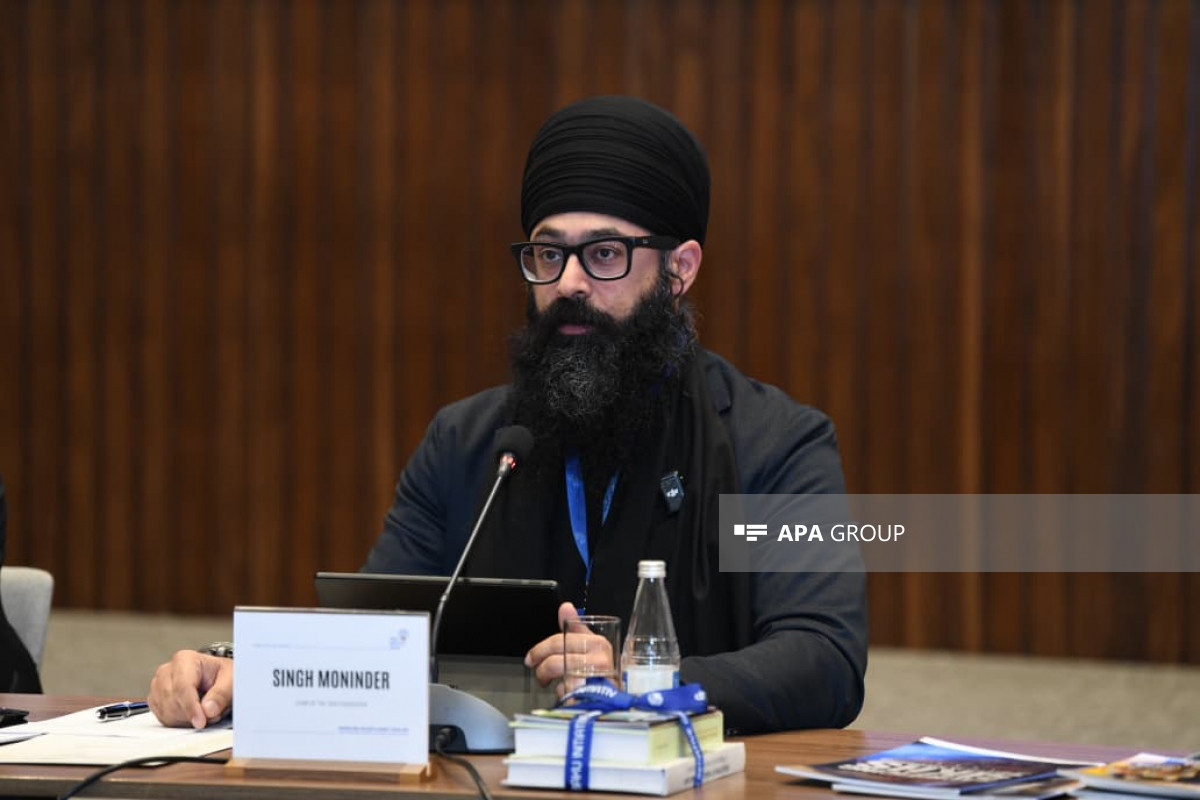

The genocide against Sikhs marked the beginning of a new movement that shifted from demands for greater autonomy for Punjab toward the idea of full independence and sovereignty, Bhai Moninder Singh, Chairman of the Sikh Federation, said during his speech at the international conference titled “Racism and Violence Against Sikhs and Other National Minorities in India: The Reality on the Ground,” dedicated to the Indian government’s repressive policies against ethnic minorities, APA reports.
The speaker spoke about discrimination and violence faced by various communities in India over the centuries. He noted that Dalit communities have been subjected to caste-based oppression for millennia, while Muslims and other minorities have suffered for decades from communal violence perpetrated by right-wing Hindutva groups.
Maninder Singh emphasized that the attack by the Indian army on the Golden Temple, the holiest site of the Sikhs, during “Operation Blue Star” in 1984 left deep scars in the collective memory of the Sikh community. According to him, this event marked the start of a new movement that moved beyond demands for greater autonomy for Punjab toward the idea of full freedom and sovereignty.
“Subsequently, the assassination of Prime Minister Indira Gandhi became a pretext for mass killings that took place in Delhi and other cities in November 1984. During those events, gangs armed by politicians burned the homes of Sikh families, killed men and children, and committed violence against women. This process was initiated by the state and amounted to large-scale genocide. Despite more than 40 years having passed since the 1984 genocide, most victims have still not seen justice, and the Indian state has not demonstrated real legal accountability for this tragedy,” he added.


 Follow us on Telegram
 t.me/apanewsaz
 Follow us on Instagram
 Follow us on TikTok
 Follow us on Facebook
 Follow us on X