


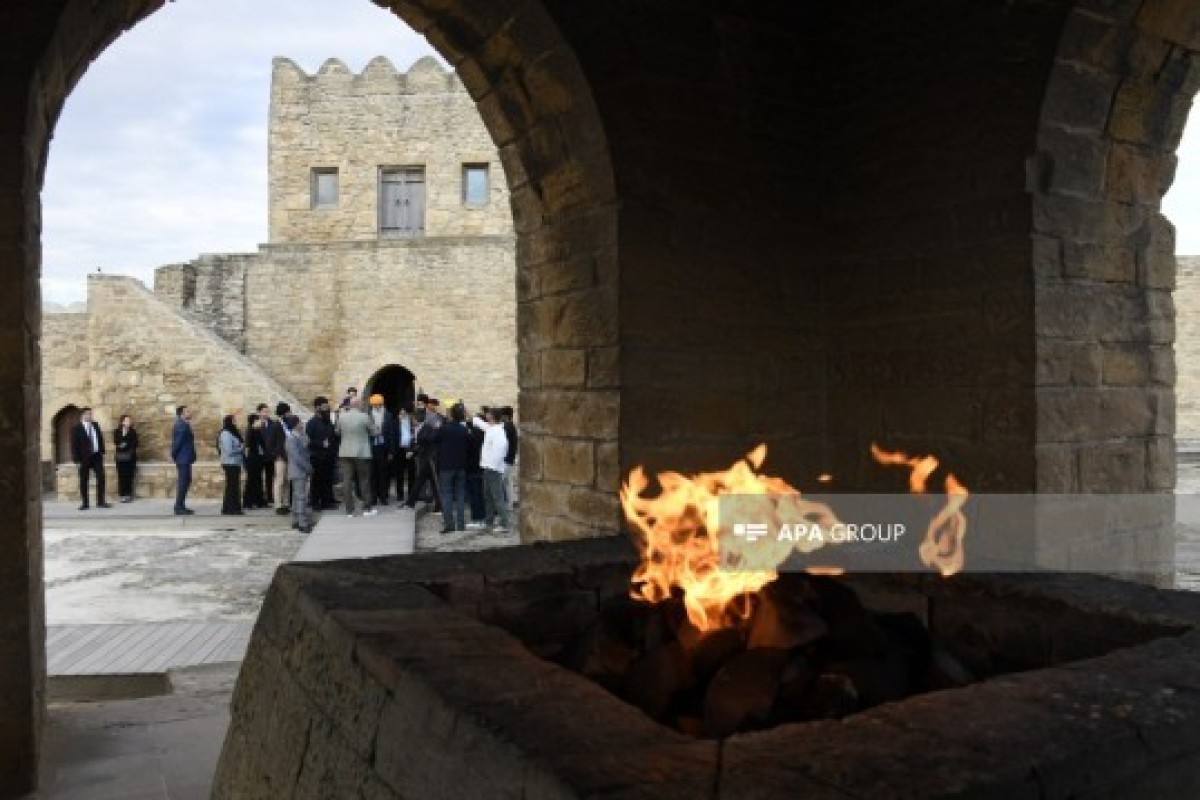

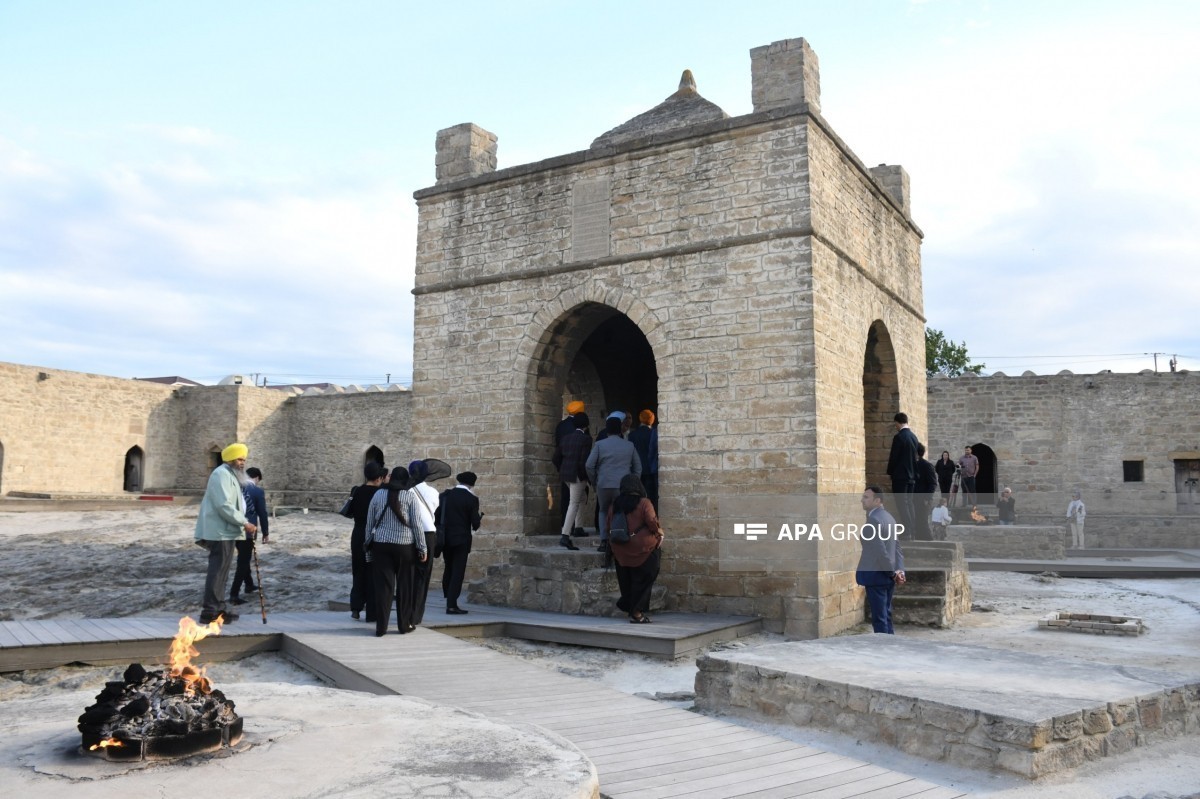
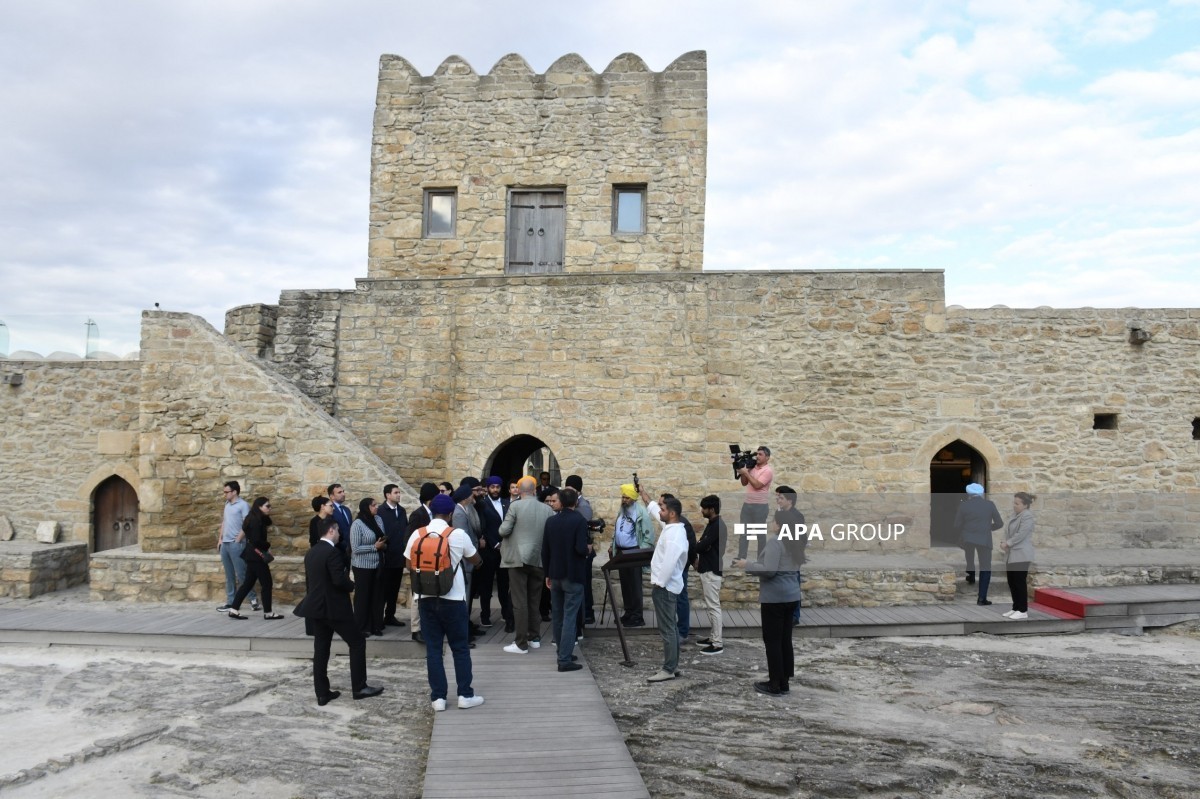
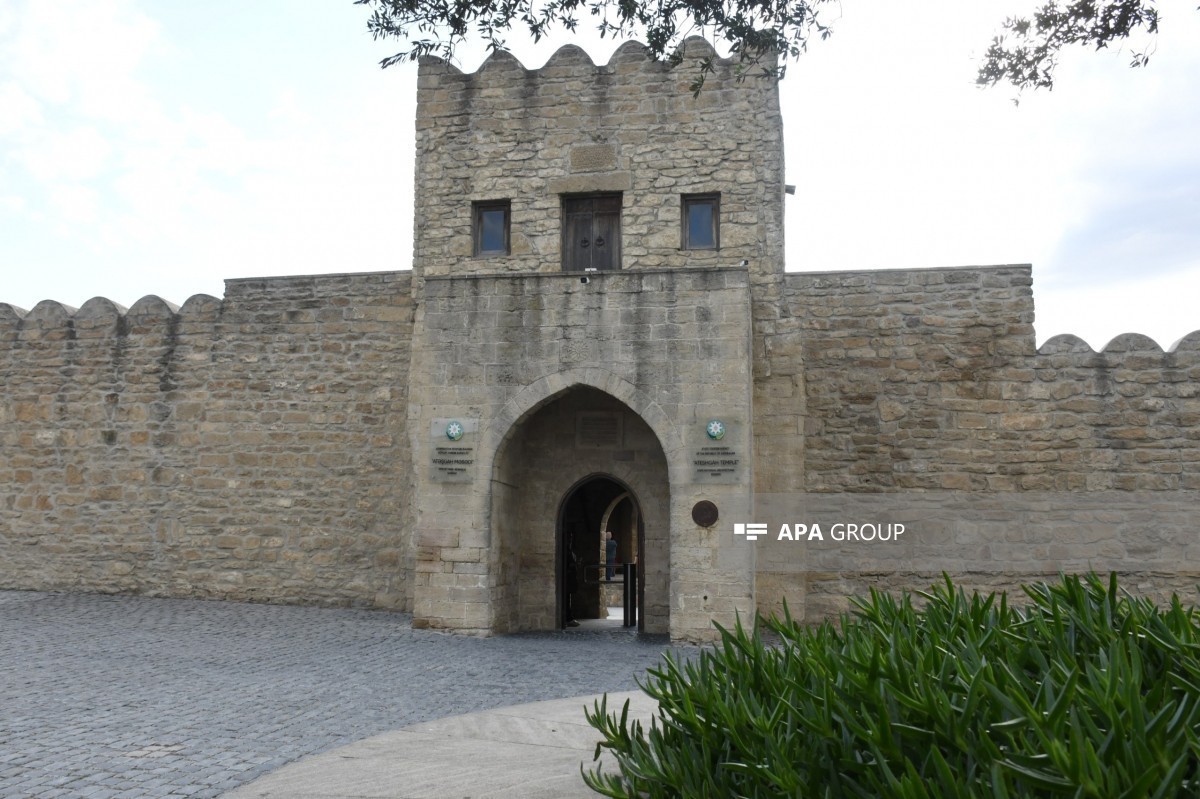
Participants of the international conference titled “June 1984, Amritsar Events: India’s Transnational Repressions Against Ethnic Minorities in the Context of Genocide,” organized by the Baku Initiative Group and dedicated to the Indian government's repressive policy toward ethnic minorities, visited the Ateshgah Temple Complex, APA reports.
The guests were provided with detailed information about the rich historical and cultural heritage of the temple, which was visited by Sikh merchants and pilgrims arriving from India in the 17th and 18th centuries, as well as by Guru Nanak, the founder of Sikhism, who performed religious rituals there during his travels.
One of the guests, Sulkit Singh, stated that the attack on the temple in Amritsar in June 1984 was one of the most significant events of that year. According to him, the incident attracted the attention of the international community and was condemned by many human rights organizations.
Singh said that a large number of innocent people lost their lives during the attack. He claimed that the operation involved tanks, heavily armed helicopters, and special military forces, resulting in the deaths of more than 10,000 people.
Leader of the Canadian Sikhs Moninder Singh, in his speech, referred to the events of June 1984 and recalled the operation conducted by the Indian Army at the Darbar Sahib (Golden Temple) complex in Amritsar, saying that those events had a profound impact on the political and national consciousness of the Sikh community.
Moninder Singh also highly praised the meetings and conferences held in Baku, emphasizing that discussions with media representatives, academics, and politicians had enabled broader international discussion of Sikh issues.
It should be noted that the international conference titled “June 1984, Amritsar Events: India’s Transnational Repressions Against Ethnic Minorities in the Context of Genocide” will be held tomorrow.











 Follow us on Telegram
 t.me/apanewsaz
 Follow us on Instagram
 Follow us on TikTok
 Follow us on Facebook
 Follow us on X