










By Alexander Jackson
Caucasus Update No. 55,
Caucasian Review of International Affairs (CRIA)
www.cria-online.org
For all the talk of Turkey moving away from Europe, the real story of a Western ally slowly turning East has been ignored. In recent weeks Azerbaijan has undertaken a series of moves which could, in the long term, lead to the loss of EU access to Caspian gas and a major reorientation in the region’s geopolitics.
If this occurs then Europe and Turkey will only have themselves to blame. Europe has repeatedly failed to make progress on the Nabucco project, which would carry Caspian and Middle Eastern gas to the heart of Europe and partially liberate it from reliance on Russian gas. This hugely expensive and ambitious project required firm political and financial commitments which Brussels has not delivered. Instead, individual European governments have been successfully courted by Russia’s Gazprom for its rival South Stream pipeline under the Black Sea. Turkey’s obstructionism and failure to acknowledge the links between energy and conflict-resolution in the region make it also responsible.
The Nabucco problem has been one of demand – insufficient commitment by the EU – but also one of supply. The only confirmed source of gas is Azerbaijan. Other possible suppliers – Iran, Central Asia, Iraq, and Egypt – have their own specific problems.
Now it looks as if even Azerbaijan is starting to slip away. In June, Azerbaijan’s state energy company SOCAR signed a deal with Russia’s Gazprom. The quantities involved (500 million cubic metres (mcm)) were insignificant, but this was a warning shot to Brussels and Ankara to hurry up with Nabucco. In November Baku has upped the stakes by making some serious overtures elsewhere.
Firstly, SOCAR signed a deal with Iran, promising over 500mcm a year from 2010 (Press TV, November 12). Like the Gazprom deal, this is another placeholder, since the amounts involved are negligible. The significance is political: the agreement holds open the possibility of increasing the contracted amount in years to come. Iran is also a pariah in the West, and expanding energy ties with it is a clear message from Baku. Secondly, Azerbaijan agreed to ship 7 to 8 billion cubic meters (bcm) of its gas annually via tankers in a compressed form to Bulgaria, bypassing Turkey (Eurasia Daily Monitor, November 16).
Shortly afterwards, Baku made its bluntest threat yet. “If Europe takes too long putting together a solution, then all the gas in the Caspian will go to Asia,†said a SOCAR official. “It’s more serious than it seems†(Bloomberg, November 19). China – which has been hungrily expanding its energy presence in Central Asia recently - is the obvious target market. Currently, the infrastructure to send Azerbaijani gas to China does not exist. But SOCAR’s threat seems to be genuine.
Ironically, the main obstacle to Azerbaijani gas heading east is also the main obstacle to Nabucco. A Trans-Caspian Pipeline (TCP) between Turkmenistan and Azerbaijan, long in the planning, is still far from being built. Russian and Iranian objections are partly responsible; so is a recent dispute between Ashgabat and Baku over the ownership of disputed gas fields. Turkmenistan has even threatened to take Azerbaijan before a court of international arbitration.
Alarmed at the prospect of losing Turkmen gas for the foreseeable future, the US has taken the unusual step of offering to mediate in the dispute (APA, November 18). If the dispute is resolved and a TCP is built, it may ultimately be used to send Azerbaijani gas east, not Turkmen gas west.
Why the sudden activity by Baku? Partly, the moves are designed to call Europe’s bluff and provoke it into action on Nabucco. Unfortunately, Brussels doesn’t seem to have heard the message. The timing of the moves, however, indicates at a deeper and more alarming reason: growing disenchantment with Azerbaijan’s longstanding ally, Turkey.
For years Ankara has obstructed Nabucco by insisting on preferential price tariffs and a share of the allocated gas for its own domestic market. Negotiations have continued for some time, and Baku was willing to politely discuss the issue – up to a point. This changed when Turkey’s government decided to press on with normalising relations with Armenia, before any progress has been made on the Nagorno-Karabakh conflict between Armenia and Azerbaijan. Turkey’s decision has been widely viewed in Azerbaijan as a betrayal of the fraternal relationship between the two countries, and prompted Baku to take an increasingly tough stance on gas negotiations. Ankara needs Nabucco to fulfill its goal of being a regional energy hub, and appears unwilling to back down. Whilst previously the disagreement was largely commercial, Baku’s fury over the ‘Armenian thaw’ has made the pricing dispute extremely political.
There is a very real risk that the sense of inertia created by these obstacles will finally kill off Nabucco’s prospects. Although a deal with Turkey will almost certainly be struck in the end, the long-term damage will have been done.
The implication could well be Azerbaijan’s gradual shift away from the West’s geopolitical orbit. The role of oil and gas pipelines in tying states together is sometimes overstated but, in the long run, Baku could find itself closely linked with Moscow and Tehran through commercial relationships. Oil and gas underpin Azerbaijan’s economy: its energy ties inevitably influence its foreign policy.
As always in the Caspian region, business is politics. The tension over Nabucco has been building for some time, but the immediate trigger of Azerbaijan’s energy shift was the Turkish decision to negotiate with Armenia without progress on Karabakh. Unless Ankara alters its position, there is no reason to doubt that Azerbaijan’s long-term gas strategy will change.
Policymakers in Brussels and in Washington should acknowledge the dangers involved and commit themselves to resolving this situation through serious, frank dialogue with Ankara and Baku. Failure to act now will have severe consequences for energy security, and geopolitics, in the long term.
Europe and Turkey will only have themselves to blame if EU loses access to Caspian gas

 24 November 2009 08:13 (UTC +04:00)


 İDMAN XƏBƏR
 Follow us on Telegram
 t.me/apanewsaz
 Follow us on Instagram
 Follow us on TikTok
 Follow us on Facebook
 Follow us on X
Foreign
Idea of single European Union army deadlocked amid political ambitions-COMMENTARY
22:35
 9 July 2026
Speaker highlights environmental damage caused by Armenia's occupation at IPU conference
17:54
9 July 2026
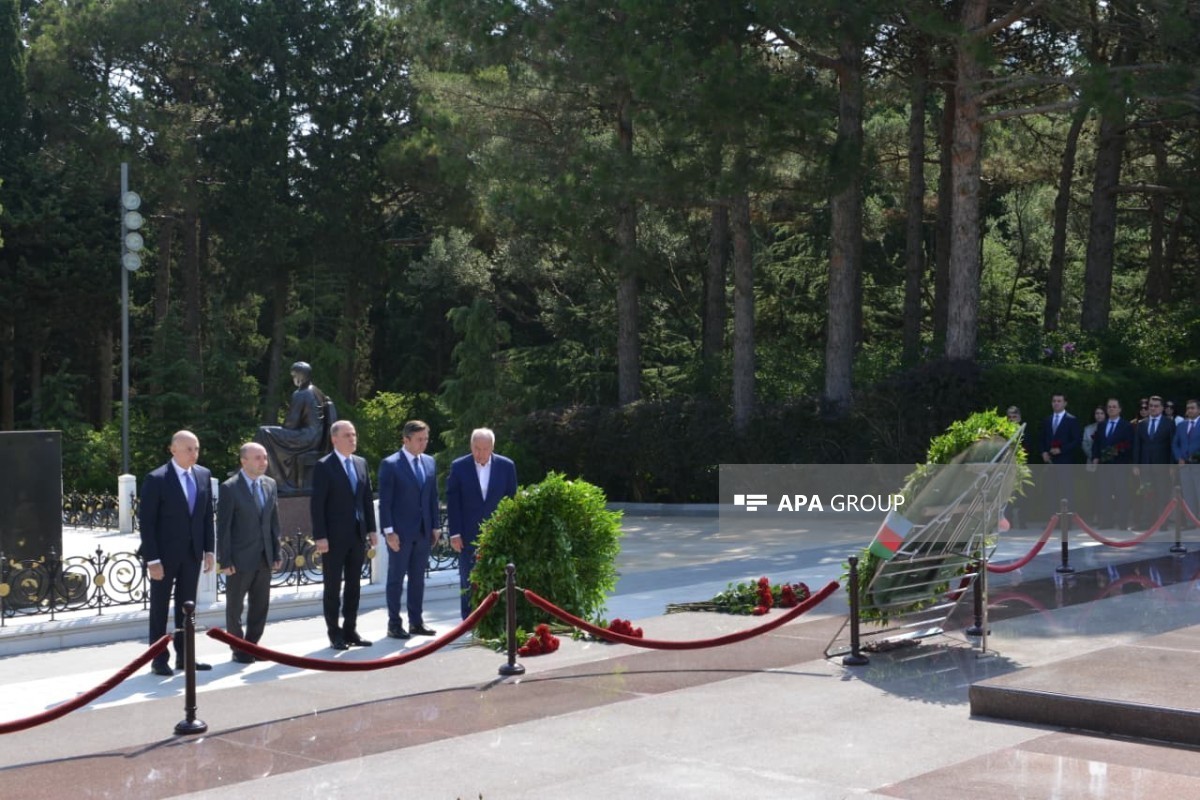
Foreign Ministry leadership visits Alley of Honor - PHOTO
10:14
9 July 2026
Foreign minister says TRIPP process is underway, documents being prepared
10:06
9 July 2026

NEWS FEED
Reuters: Technical consultations between the US and Iran continue
07:47
10 July 2026
12 killed in southern Spain wildfire
06:33
10 July 2026
Ali Khamenei buried after week-long funeral
03:43
10 July 2026
France beats Morocco 2-0 to reach 3rd straight World Cup SF
02:29
10 July 2026
WSJ: Some Iranian strikes on US bases in the Middle East achieved their goals
01:37
10 July 2026
Trump and Netanyahu just held a phone call to brief on "American moves in the Gulf"
01:18
10 July 2026
Merz told Netanyahu that steps to annex the West Bank are unacceptable
00:30
10 July 2026
Zelenskyy: Ukraine will soon receive Patriot missiles from US
00:10
10 July 2026
Ukraine can produce Freya anti-ballistic system fast if one condition is met
23:51
9 July 2026
CNN: Pakistan and Qatar are trying to bring Iran and US to negotiating table
23:30
9 July 2026
Erdogan: Türkiye keeps channels of communication open for peaceful settlement in Ukraine
23:19
9 July 2026
Explosions heard in two cities of Iran
22:57
9 July 2026
Idea of single European Union army deadlocked amid political ambitions-COMMENTARY
22:35
9 July 2026
Lagarde says she will not run for France's president
22:14
9 July 2026
Europa League: FK Qarabag defeated Iceland's Vestri
21:58
9 July 2026
Katz says Israel ready for third military campaign against Iran
21:36
9 July 2026
Netanyahu: IDF will remain in southern Lebanon as long as necessary for Israel's security
21:18
9 July 2026
Iran's foreign minister holds calls with Turkish and Omani counterparts
21:00
9 July 2026
Iranian FM warns US against new strikes, says armed forces ready to respond
20:48
Audio
9 July 2026
Iran's late Supreme Leader Khamenei to be laid to rest in hometown
20:40
9 July 2026
Azerbaijan and Türkiye discuss further development of military-technical cooperation
19:34
9 July 2026
Samvel Karapetyan's house arrest extended by another two months
19:11
9 July 2026
Illegal structures of Seyran Ohanyan and other former officials on shore of Lake Goycha demolished
18:17
9 July 2026
Türkiye and Iran FMs discuss ceasefire
18:14
9 July 2026
Azerbaijan and Italy discuss defense cooperation
18:12
9 July 2026
Death toll from shoe factory fire in China rises to 28 - UPDATED
18:08
9 July 2026
Speaker highlights environmental damage caused by Armenia's occupation at IPU conference
17:54
9 July 2026
NATO's Ankara Summit: Türkiye further strengthens its position as the Alliance's strategic center -ANALYSIS
17:51
9 July 2026
Oil tanker traffic through Hormuz at near standstill as attacks strain Iran truce
17:49
9 July 2026
Iran fired ten ballistic missiles on Jordan's Azraq military base
17:44
9 July 2026
US strikes over 170 Iranian military targets near Strait of Hormuz in two days: NYT
17:07
9 July 2026
Public hearing on protecting children from harmful effects of social media held at Azerbaijan's Parliament
17:03
9 July 2026
Implementation of 58 digital development initiatives launched in Azerbaijan
16:27
9 July 2026
President approves agreement on electricity supply and transit from Azerbaijan to Georgia
16:13
9 July 2026
Jordan intercepts 8 missiles launched from Iran
15:59
9 July 2026
US strike on Sirik pier in southern Iran kills three, official says
15:51
9 July 2026
Ramid Namazov: Work is underway on the creation of the National Data Lake
15:46
9 July 2026
US projectile hit perimeter area of Bushehr nuclear plant, Iran says
15:44
9 July 2026
Chair of the Commission: The number, scale and complexity of cyberattacks are increasing rapidly
15:42
9 July 2026
AZAL increases passenger traffic by 5%
15:35
9 July 2026
Regular flights operate from Heydar Aliyev International Airport to 76 destinations
15:06
9 July 2026
New four-lane highway connecting Georgia with Azerbaijan to be built
15:01
9 July 2026
Interior Ministry: 104 criminal groups involved in serious and especially serious crimes neutralized this year
14:43
9 July 2026
7 killed, 5 injured in Cape Town shootings
14:39
9 July 2026
Flooding in southern China has killed 39 people
14:08
9 July 2026
US strike hit rail bridge used for China, Russia trade – IRGC media
14:05
9 July 2026
Italy expels two Russian military attachés over alleged espionage activities
13:55
9 July 2026
Peskov: Trump has not yet called Putin after NATO summit
13:51
9 July 2026
Explosions heard in Iran's Bushehr province
13:38
9 July 2026
Ukrainian military strikes 12 tankers, tugboat and cargo vessel in the Sea of Azov
13:30
9 July 2026


