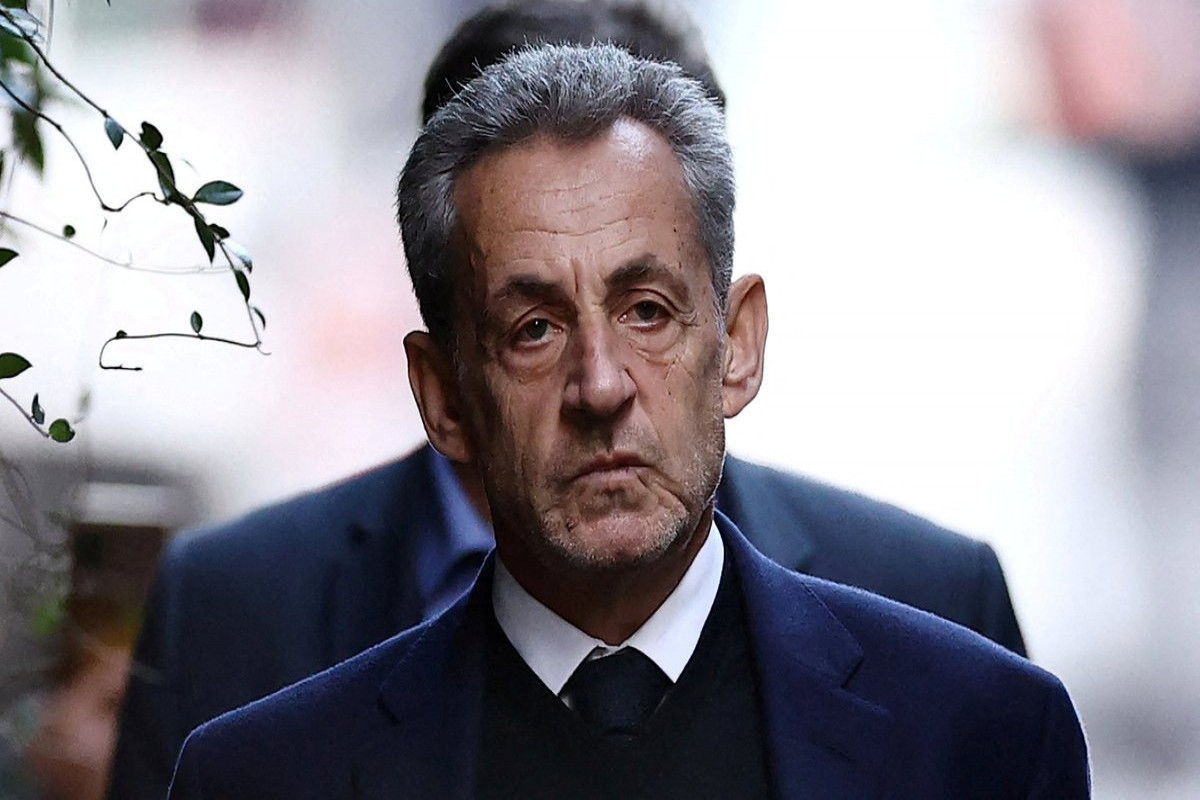


Former French president Nicolas Sarkozy on Monday was set to be freed from prison as a judge ordered his release from jail pending an appeal hearing over Libyan funding, APA reports, citing Al Arabiya.
During the examination of Sarkozy’s request in court earlier Monday, prosecutors had requested Sarkozy, 70, be freed after 20 days in jail that the former president called a “nightmare.”
A lower court in September found the right-wing politician -- who was head of state from 2007 to 2012 -- guilty of seeking to acquire funding from Moamer Kadhafi’s Libya for the campaign that saw him elected, and sentenced him to five years behind bars.
He entered jail on October 21, becoming the first former head of a European Union state to be incarcerated, and his lawyers swiftly sought his release.
Sarkozy was expected to be released from La Sante prison in Paris later Monday.
The appeal hearing is due to take place in March.
During the court hearing earlier Monday, the former leader appeared via video call from prison, wearing a dark blue jacket and flanked by lawyers, saying being incarcerated was “grueling.”
“It’s hard, very hard, certainly for any prisoner. I would even say it’s grueling,” he said.
He thanked the prison staff, who he said “showed exceptional humanity and made this nightmare -- because it is a nightmare -- bearable.”
Prosecutor Damien Brunet asked that Sarkozy’s request for release be granted.
“The risks of collusion and pressure on witnesses justify the request for release under judicial supervision,” he said.
In the courtroom showing their support were his wife, the singer and model Carla Bruni-Sarkozy, and two of the former president’s sons.
The lower court in late September ordered Sarkozy to go to jail, even if he appealed, due to the “exceptional gravity” of the conviction.
But the appeals case means that Sarkozy is now presumed innocent again, and the court therefore evaluated his need for pre-trial detention.
Under French law, he can only be kept behind bars if no other way can be found to safeguard evidence, prevent witness tampering, stop him from escaping or reoffending, or to protect him.


 Follow us on Telegram
 t.me/apanewsaz
 Follow us on Instagram
 Follow us on TikTok
 Follow us on Facebook
 Follow us on X