

Unmanned underwater vehicles have moved beyond the laboratory and become an essential tool for business and science, enabling safe operations in environments where human presence is difficult or dangerous.
Today, we will discuss their applications in marine biology and seabed research, search and rescue operations, the inspection of pipelines and other underwater infrastructure, as well as their role in the military sector.
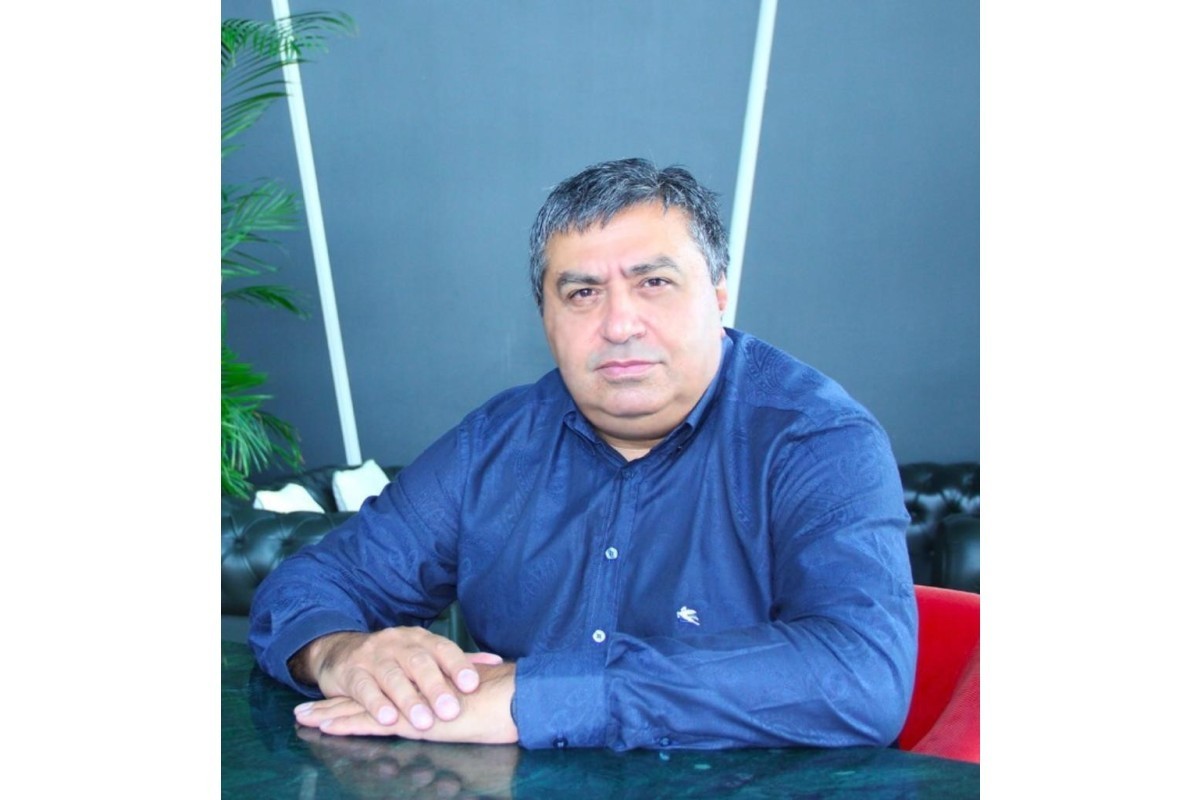
Our guest today is Avtandil Mammadov, representing one of the world's leading developers of unmanned underwater vehicles.
- Dear Avtandil, what explains your interest in unmanned underwater vehicles? Is it just a trend, or does it have real practical value?
— To begin with, the term "unmanned underwater vehicle" is somewhat inaccurate. In my opinion, that name is more applicable to large submersible crafts. Instead, we should distinguish between two separate categories: Remotely Operated Vehicles (ROVs) and Autonomous Underwater Vehicles (AUVs). An ROV is controlled by an operator via a tether cable, whereas an AUV operates with greater autonomy, though it can still receive individual commands through various communication channels—such as acoustic links, radio communication when the AUV is at the surface, and other methods.
As for my interest, it is based on the highly practical applications of these vehicles, expanding rapidly—especially with the integration of artificial intelligence.
- What is the current state of the ROV and AUV market? What is the balance between supply and demand in this industry?
— In today’s rapidly developing high-technological environment , as you know, there is no shortage of offerings, including in the ROV and AUV sectors.
However, without exaggeration, global leadership in this field—as in many others—currently belongs to Chinese companies. In particular, Pelagix is what I would call the number one developer of ROVs and AUVs today.
Without advertising, in my view there are two other companies—from the US and France—that, while perhaps lagging behind Pelagix, still hold very respectable positions in the global rankings of AUV and ROV developers and manufacturers.
- By what criteria do you consider the Chinese company Pelagix to be unique compared to other AUV developers and manufacturers?
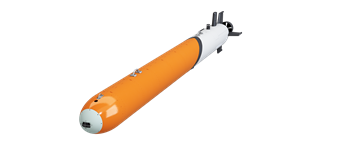
— First and foremost, it is their broad range of developments, inclusive operational endurance from 6 hours up to 270 hours of autonomous operation, and an operational diving depth of up to 6,000 meters. No other company offers such a wide selection tailored to the specific tasks facing an AUV.
Furthermore, the ease of operation and low operating costs of AUVs developed by Pelagix makes their technology truly unique.
For example, the most costly aspect of operating an AUV is the between-operational charging and data offloading.
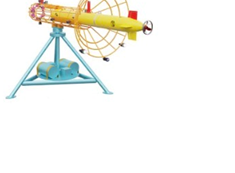
All developers worldwide approach this by servicing AUVs either onshore or on board a vessel. Pelagix, along with these traditional servicing methods, offers an unprecedented system consisting of a marine catcher and an at-sea docking station. This system does not require bringing the AUV aboard a vessel or back to shore. All maintenance operations, including battery recharging, are performed directly on the water at the offshore docking station.
No one else in the world currently offers such an AUV service infrastructure.
- One final question about the prospects for the practical application of AUVs and ROVs in Azerbaijan?
- As we mentioned above, AUVs and ROVs can perform a very wide range of tasks. You are asking for the most illustrative example of these prospects.
Let's recall the tragic event of June 21, 2026, when an accident resulted in oil leaking from a pipeline into the Caspian Sea. Regular inspections of the condition of pipelines, cables, piles, supports, and underwater sections of bridges and platforms—including for the oil and gas and energy sectors—using AUVs can prevent such accidents.
Furthermore, seabed mapping and generating seabed relief maps using multibeam echosounders and side-scan sonars, as well as providing these maps to vessels, can completely eliminate damage to pipelines and cables caused by ship anchors.
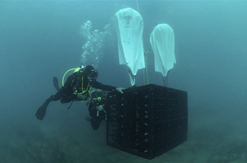
Over time, the seabed will become a specialized production site—a trend that is already noticeable today. For example, China operates an underwater data center with artificial intelligence computing infrastructure directly on the seafloor. In Spain, aging wines are placed on the seabed, where the darkness and stable temperatures create ideal conditions for maturation.
While all these examples are impressive, maintaining them solely through divers is quite complex. However, using autonomous underwater vehicles makes these operational cycles economically viable and technologically far more accessible.


 Follow us on Telegram
 t.me/apanewsaz
 Follow us on Instagram
 Follow us on TikTok
 Follow us on Facebook
 Follow us on X