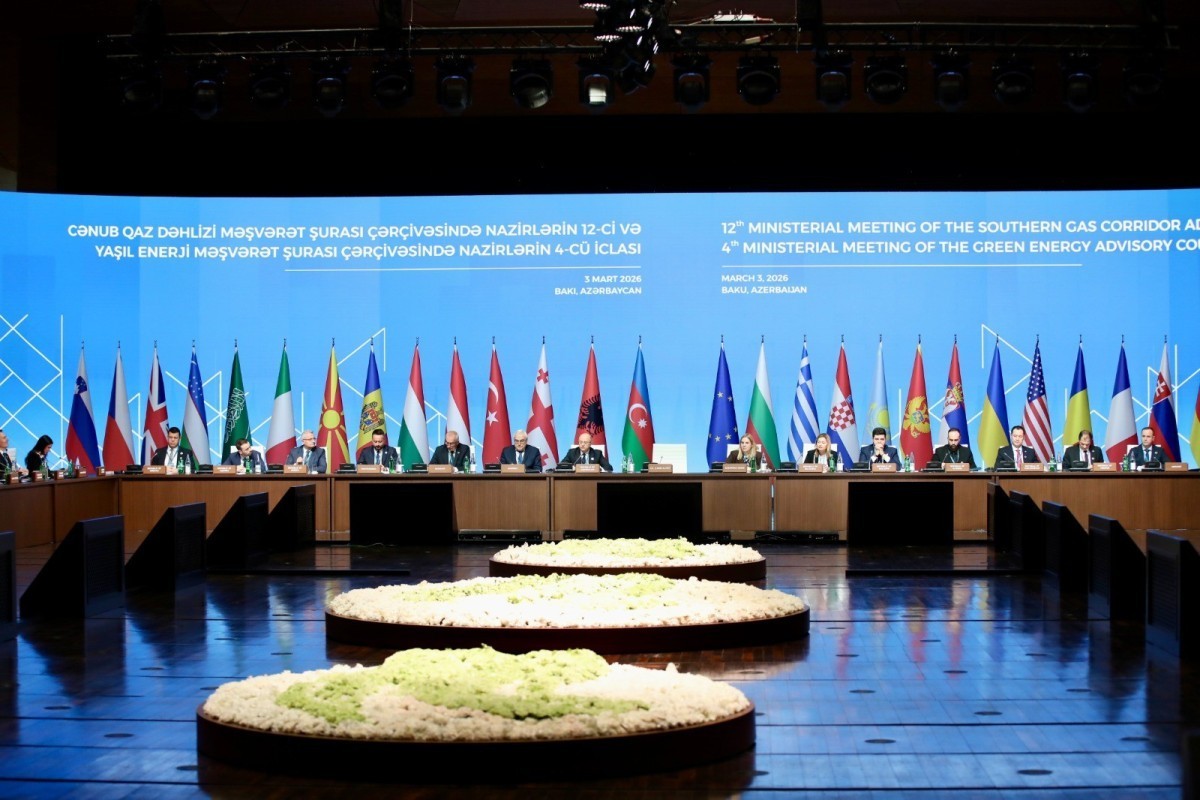


Azerbaijan’s energy future in the coming years will depend on decisions to be made regarding the grid, energy storage systems, and market integration, the World Bank’s Country Manager for Azerbaijan, Stefanie Stallmeister, said at a meeting of the Green Energy Advisory Council, APA-Economics reports.
Stallmeister noted that there is strong synergy between the Black Sea submarine cable and the Green Energy Corridor initiatives, and that both projects serve to increase energy connectivity.
She stated that the preparedness level of the domestic energy system is among the priority directions. In this context, the “Expansion of Renewable Energy in Azerbaijan” project, implemented by Azerenerji and financed by the World Bank, is aimed at strengthening the transmission grid and integrating renewable energy.
Stefanie Stallmeister emphasized that energy storage systems are playing an increasingly important role in terms of grid stability and project sustainability, and that the World Bank is ready to provide both financial and regulatory support in this area. She added that infrastructure alone is not sufficient — market mechanisms, grid flexibility, and the development of interconnectors must be advanced in parallel.
The World Bank’s Country Manager for Azerbaijan stated that the institution, as a long-term partner, will continue to provide support in financing, global expertise, and the mobilization of private capital.


 Follow us on Telegram
 t.me/apanewsaz
 Follow us on Instagram
 Follow us on TikTok
 Follow us on Facebook
 Follow us on X