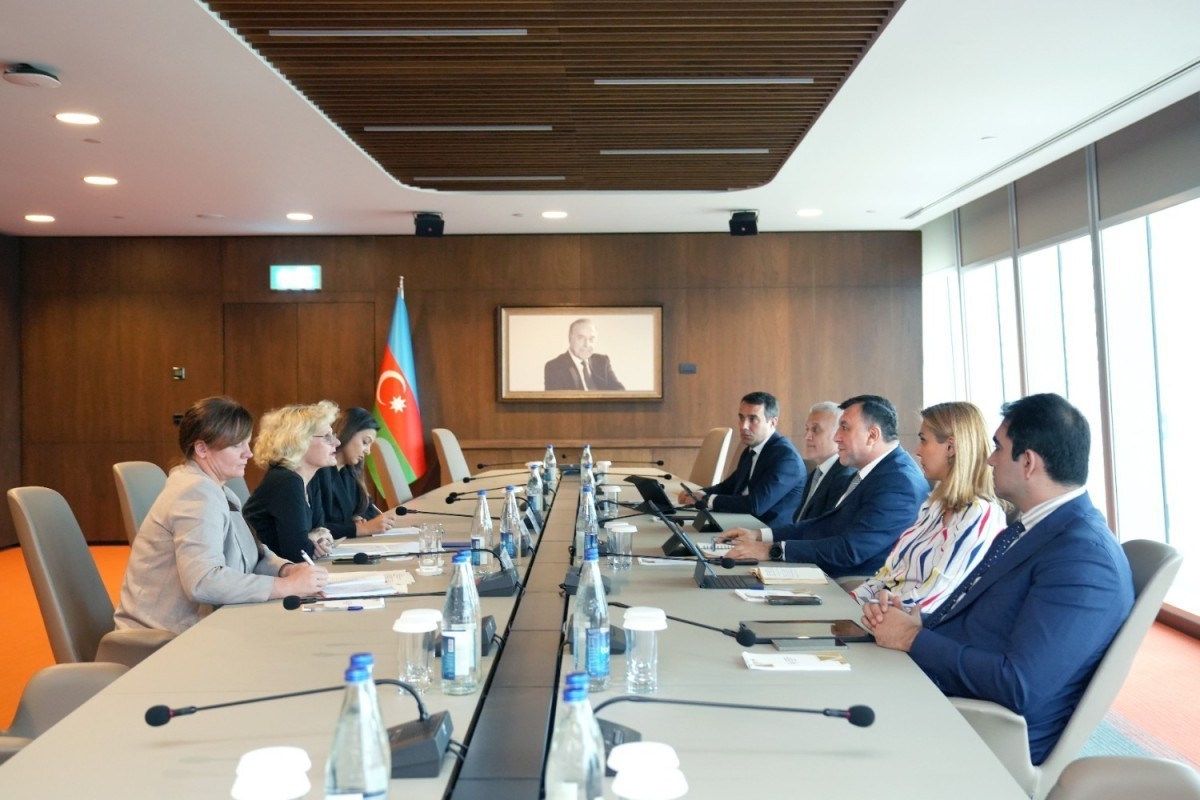


“To drive a low-carbon transition, Azerbaijan will benefit from diversifying its economy away from fossil fuels and harnessing the capital and know-how of the private sector—but time is of the essence,” said Ivana Fernandes Duarte, IFC's Regional Manager for the South Caucasus, APA-Economics reports.
Note that this releases in the World Bank Group’s Azerbaijan Country Climate and Development Report (CCDR) today.
Seizing the opportunities outlined in this report will help the country future-proof its economy and safeguard the population from climate change, said Ivana Fernandes Duarte.
The decarbonization and resilience actions outlined in the report will require large investments of an estimated US$44 billion, or about 3.2% of GDP, until 2060, when the global economy goes to net-zero. A significant share of this cost should be resourced from commercial and private sector financing.
"A gradual but steady phase-out of fossil fuel subsidies – a measure already contained in the government’s 2022-2026 strategy – will be key to achieving the transition, especially if accompanied by targeted social protection measures to protect the poorest," noted in the report.
The report sets out a strategic roadmap for a resilient and net zero development pathway for Azerbaijan.
Note that Azerbaijan has abundant renewable energy resources, wind and solar, which could be exploited to produce green hydrogen and electricity for exports and domestic use in power generation, industry, and transport. This will require substantial public investment in enabling electricity infrastructure and private investment in renewable energy generation, which could be unlocked also through public-private partnerships (PPPs).
Energy efficiency is a government priority and efforts in this direction should include a program of energy efficiency in public and private buildings as well as the transport sector. Stricter fuel efficiency and emissions standards, use of electric vehicles, tax incentives and financial support programs should be part of an array of offerings to encourage energy efficiency by the public and commercial users.


 Follow us on Telegram
 t.me/apanewsaz
 Follow us on Instagram
 Follow us on TikTok
 Follow us on Facebook
 Follow us on X